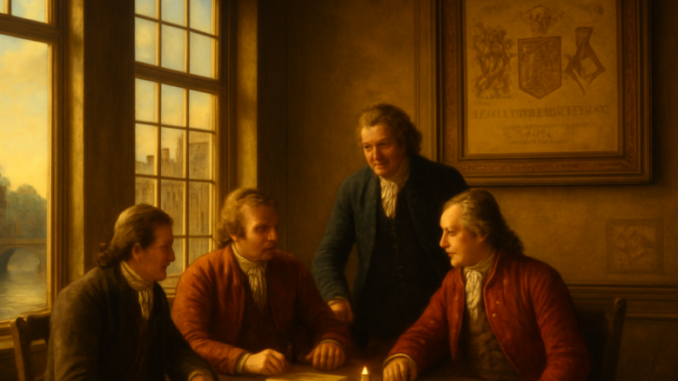
The history of Freemasonry in the Netherlands is a fascinating journey through more than three centuries of brotherhood, Enlightenment ideals, and civic engagement. From the founding of the first Dutch lodge in the early eighteenth century, Freemasons have played a remarkable role in the cultural, intellectual, and social life of the country. While the story mirrors broader European developments, Dutch Freemasonry has a distinctive character of its own — shaped by the Netherlands’ deep-rooted traditions of tolerance, commerce, and civic idealism.
The Earliest Roots: Freemasonry in Europe Before the Netherlands
To understand the history of Freemasonry in the Netherlands, it helps to first consider its European origins. Modern Freemasonry is typically traced back to the founding of the Grand Lodge of London in 1717 — widely regarded as the official beginning of speculative or symbolic Freemasonry. Before that pivotal moment, guilds of operative masons — skilled craftsmen who built the great cathedrals and castles of Europe — had already established traditions, symbols, and rituals that would form the foundation for a new, more philosophically oriented movement.
The English Enlightenment fostered a climate of rational thinking, religious tolerance, and scientific curiosity. In that spirit, intellectuals, nobles, and merchants came together in lodges — spaces where social rank and birth were temporarily set aside, and where conversation centered on morality, philosophy, and brotherhood. These ideas quickly crossed the English Channel and found fertile ground in the Low Countries.
The First Lodges in the Netherlands: The Eighteenth Century
The Founding of the First Dutch Lodge
The first documented Masonic lodge on Dutch soil was established in The Hague in 1734. Known as La Bien Aimée, it was founded under the influence of English and French Freemasons who resided in the city, facilitated by the extensive diplomatic and commercial ties the Dutch Republic maintained with the rest of Europe. Other cities soon followed: Amsterdam, Rotterdam, and Leiden each established their own lodges, each with its own character but united by the same symbolic traditions.
In Amsterdam, a lodge also named La Bien Aimée was founded in 1756 — not to be confused with its namesake in The Hague. This Amsterdam lodge grew into one of the most influential in Dutch Masonic history, attracting members from the city’s merchant elite, its scholars, and its artists, and contributing to a thriving network of like-minded individuals.
The Grand Orient of the Netherlands
A decisive moment in the institutional history of Dutch Freemasonry was the founding of the Grand Orient of the Netherlands (Grootoosten der Nederlanden) in 1756. This governing body, which still exists today, united the scattered lodges under a single organizational umbrella and gave Dutch Freemasonry a clear institutional identity. Prince Frederik of Orange-Nassau, son of Stadtholder William IV, was installed as Grand Master in 1756 — an appointment that lent the movement both prestige and protection at a time when Freemasonry was viewed with suspicion in several other European countries.
The involvement of the House of Orange with Freemasonry is a recurring theme in Dutch history. Various members of the royal family have played active roles in the Craft over the centuries, contributing to its respected position within Dutch society.
Freemasonry During the Batavian-French Period (1795–1813)
The arrival of the Batavian Republic in 1795 and the subsequent period of French domination brought sweeping changes to Dutch society. For Freemasonry, this era presented both challenges and opportunities. On the one hand, French centralization policies influenced the organization of the lodges. On the other hand, the ideals of liberté, égalité, fraternité aligned closely with the Masonic commitment to brotherhood and equality.
Under the reign of Louis Napoleon, who served as King of Holland from 1806 to 1810, Freemasonry was tolerated and even enjoyed a degree of protection. Louis Napoleon was himself a Freemason, which strengthened the movement’s position in the Netherlands. However, the annexation of the country into Napoleon Bonaparte’s French Empire in 1810 put further pressure on the organizational structure of Dutch lodges.
After liberation from French rule in 1813 and the proclamation of the Kingdom of the Netherlands, Freemasonry recovered quickly. The Grand Orient of the Netherlands was re-established and resumed its central role in the Dutch Masonic landscape.
The Nineteenth Century: Growth and Consolidation
Expansion of the Lodge System
The nineteenth century was a period of significant growth for Freemasonry in the Netherlands. The number of lodges increased considerably, and the movement expanded into cities and regions that had previously had little or no Masonic presence. Cities such as Utrecht, Groningen, Maastricht, Arnhem, and Nijmegen each established their own lodges, firmly embedding Freemasonry into the fabric of Dutch urban life.
The membership of nineteenth-century lodges was drawn predominantly from the upper and middle classes: physicians, lawyers, notaries, merchants, military officers, and intellectuals. This gave the movement a distinctly bourgeois character, which aligned with the broader societal developments of the rising middle class during this period.
Civic Engagement and Philanthropy
A striking feature of Dutch Freemasonry in the nineteenth century was its strong sense of civic responsibility. Masonic lodges were actively involved in philanthropic initiatives, including the founding and support of orphanages, schools, and charitable institutions. This commitment to the common good reflected the broader Masonic ideal of building a better world — not merely through philosophical reflection, but through concrete action in service of society.
This tradition of philanthropy became one of the hallmarks of Dutch Freemasonry and helped establish the Craft as a respected institution in the eyes of the wider public. Lodges served not only as spaces for ritual and reflection but as engines of social improvement, channeling the resources and influence of their members toward causes that benefited the communities around them.
A Legacy of Tolerance and Brotherhood
Throughout its history, Dutch Freemasonry has been shaped by the same values that define the Netherlands itself: tolerance, open-mindedness, and a commitment to dialogue. The lodges provided — and continue to provide — a space where people from different backgrounds can meet as equals, united by a shared pursuit of personal growth and moral development. The long-standing connection between the House of Orange and the Craft has only reinforced the movement’s integration into the national identity.
From the candlelit rooms of the first Hague lodge in 1734 to the vibrant Masonic community that exists in the Netherlands today, the story of Dutch Freemasonry is one of resilience, adaptation, and enduring relevance. It is a story that reflects not only the evolution of a fraternal order but the broader currents of European intellectual and social history.
The history of Freemasonry in the Netherlands offers a compelling window into how Enlightenment ideals took root and flourished in a society known for its tolerance and pragmatism. Over more than three centuries, Dutch Freemasons have navigated political upheaval, foreign occupation, and social transformation — emerging each time with their core values intact. Whether through the founding of the Grand Orient in 1756, the resilience shown during the French period, or the philanthropic spirit of the nineteenth century, this history demonstrates the enduring power of brotherhood, moral reflection, and civic engagement. For anyone interested in the Craft, the Dutch story is an inspiring and essential chapter in the larger history of Freemasonry worldwide.
Copyright text & image: devrijmetselaar.nl
Texts are based on the ideas and content of the author of devrijmetselaar.nl, reviewed, corrected, and supplemented with the assistance of OpenAI. Images are created based on the ideas of the author of devrijmetselaar.nl using OpenAI/DALL-E.
Frequently Asked Questions
When was the first Masonic lodge established in the Netherlands?
The first documented Masonic lodge in the Netherlands was established in The Hague in 1734, under the name La Bien Aimée. This lodge was founded through the influence of English and French Freemasons who resided in the city, taking advantage of the Dutch Republic's strong diplomatic and commercial ties with other European nations.
What is the Grand Orient of the Netherlands and when was it founded?
The Grand Orient of the Netherlands (Grootoosten der Nederlanden) was founded in 1756 as the governing body that united all scattered Dutch lodges under a single organizational structure. This institution, which still exists today, gave Dutch Freemasonry a clear institutional identity and helped establish it as a cohesive movement throughout the country.
What made Freemasonry appeal to Dutch society in the eighteenth century?
Freemasonry appealed to the Netherlands because it aligned with the country's deep-rooted traditions of tolerance, commerce, and civic idealism, as well as the broader European spirit of Enlightenment values. The lodges attracted members from the merchant elite, scholars, and artists, creating spaces where social rank was set aside and individuals could engage in meaningful conversation about morality, philosophy, and brotherhood.
Which Dutch cities established Masonic lodges in the eighteenth century?
The Hague, Amsterdam, Rotterdam, and Leiden all established their own Masonic lodges during the eighteenth century, each with its own character while maintaining the same symbolic traditions. The Amsterdam lodge, also named La Bien Aimée (founded in 1756), grew to become one of the most influential in Dutch Masonic history.
How does Dutch Freemasonry differ from other European Freemasonry?
While Dutch Freemasonry mirrors broader European developments, it has a distinctive character shaped by the Netherlands' unique traditions of tolerance, commerce, and civic engagement. This distinctive approach reflected the Dutch Republic's enlightened values and made Freemasonry an integral part of the country's cultural, intellectual, and social life for over three centuries.

Be the first to comment