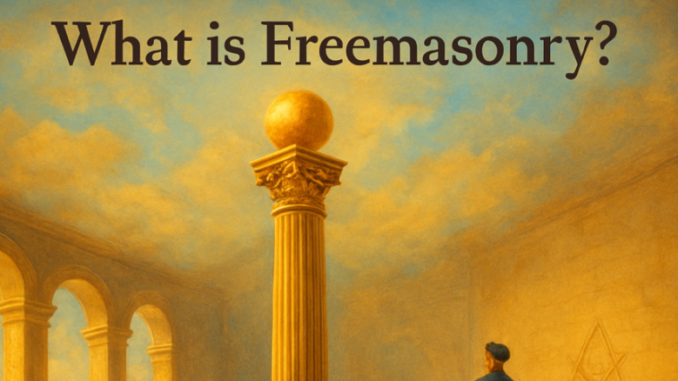
What Is Freemasonry? A Comprehensive Guide to the World’s Most Enduring Fraternity
Few organizations in human history have inspired as much curiosity, admiration, and mythology as Freemasonry. From the grand lodge halls of London and Paris to modest meeting rooms in small towns across the globe, Freemasons have gathered for centuries to pursue personal development, practice ancient rituals, and build bonds of brotherhood. But what is Freemasonry, exactly? Is it a religion, a secret society, a philosophical school, or simply a club for like-minded men? The answer, as with most things worth understanding, is both simpler and more profound than popular imagination tends to suggest.
This page offers a thorough, honest, and respectful overview of Freemasonry — what it is, where it comes from, what its members believe and practice, and why it continues to attract thoughtful people in the twenty-first century. Whether you are considering membership, conducting research, or simply curious, you will find everything you need to know here.
Definition: What Is Freemasonry?
Freemasonry is a fraternal organization built around a system of moral philosophy, symbolism, and ritual. It brings together men from diverse backgrounds — different professions, religions, and nationalities — under a shared commitment to self-improvement, ethical living, and mutual support. Its members are called Freemasons, or simply Masons.
At its core, Freemasonry teaches that every person has a duty to improve themselves and to contribute positively to the world around them. This is expressed through a rich tradition of allegorical ritual, drawn primarily from the working tools and practices of medieval stonemasons. Just as a craftsman must learn to shape rough stone into something beautiful and functional, a Freemason is encouraged to refine his own character — removing the “rough edges” of selfishness, ignorance, and vice, and replacing them with virtue, wisdom, and integrity.
Freemasonry is not a religion, nor is it a substitute for one. It has no theology, no creed, and no claim to offer a path to salvation. What it does require is that every member believe in a Supreme Being — though the nature of that being is left entirely to the individual’s own faith and conscience. This openness has allowed men of many different religious traditions to sit together as brothers: Christians alongside Jews, Muslims beside Buddhists, Hindus and atheists notwithstanding the latter’s general exclusion from most traditional lodges.
Freemasonry is also not, despite persistent legend, a secret society. It is better described as a society with secrets — an important distinction. The existence of Masonic lodges, the names of members, and the general nature of Masonic teachings are all publicly known. What remains private are certain ritual passwords, signs of recognition, and the internal ceremonial content of lodge meetings. These elements of privacy are not sinister; they serve a functional and symbolic purpose, lending the ritual experience a sense of gravity and exclusivity that enhances its personal meaning.
Historical Background: The Origins of Freemasonry
Medieval Stonemason Guilds
To understand the roots of Freemasonry, one must look back to the great cathedral-building era of medieval Europe. Between roughly the tenth and fifteenth centuries, skilled stonemasons traveled across the continent constructing the magnificent Gothic cathedrals, castles, and public buildings that still define the European landscape today. These craftsmen were organized into guilds — professional associations that regulated training, protected trade secrets, and ensured quality workmanship.
Because their work frequently took them across borders, traveling masons needed a reliable way to identify themselves to potential employers and to fellow craftsmen in unfamiliar cities. The guilds developed systems of recognition: particular handshakes, words, and signs that could be exchanged discreetly to establish a craftsman’s credentials and level of skill. The lodge — originally a temporary building erected near a construction site where workers could eat, sleep, and store tools — became the social and administrative center of guild life.
Over time, as cathedral construction declined and the operative craft gave way to other forms of architecture, the social and philosophical dimensions of these guilds took on greater importance. The practical tools of the trade — the square, the compass, the plumb line, the level — began to be used as moral metaphors. The Lodge became less a physical workspace and more a meeting place for shared reflection and mutual improvement.
The Transition to Speculative Masonry
The critical historical transition from “operative” Freemasonry (actual stoneworking) to “speculative” Freemasonry (philosophical and moral inquiry) is generally traced to the seventeenth century. By this period, lodges in Scotland and England were already admitting “accepted” members who were not working craftsmen but gentlemen, intellectuals, and scholars who were drawn to the symbolic and philosophical richness of Masonic tradition.
One of the earliest recorded initiations of a non-operative Mason occurred in 1646, when the antiquarian Elias Ashmole — founder of the Ashmolean Museum in Oxford — recorded his initiation into a lodge in Warrington, England. Ashmole was a man of deep intellectual curiosity, interested in alchemy, Hermeticism, and Renaissance natural philosophy. His entry into Freemasonry suggests that by the mid-seventeenth century, speculative Masonry was already blossoming as an intellectual and philosophical tradition.
The Grand Lodge Era and Global Expansion
The founding of the Premier Grand Lodge of England in London on June 24, 1717 — St. John the Baptist’s Day — is traditionally regarded as the beginning of modern, organized Freemasonry. Four London lodges met at the Goose and Gridiron Ale House in St. Paul’s Churchyard and formed a governing body, electing Anthony Sayer as the first Grand Master.
This event marked the beginning of an extraordinary period of Masonic growth. Within decades, lodges had been established across Europe, in the American colonies, and eventually throughout the British Empire and beyond. The first Grand Lodge of Ireland was formed in 1725, the Grand Lodge of Scotland in 1736, and within a generation, Freemasonry had taken root in France, Germany, Sweden, Russia, and the Americas.
The Enlightenment proved to be enormously fertile ground for Masonic ideas. The lodge offered something rare and valuable in eighteenth-century society: a space where men of different social classes and religious backgrounds could meet on equal terms, governed by reason, mutual respect, and shared ethical commitments rather than birth, wealth, or rank. It is no surprise, then, that Freemasonry attracted some of the most remarkable figures of the age.
Among the most celebrated Freemasons in history are Benjamin Franklin, one of the Founding Fathers of the United States, who became Grand Master of Pennsylvania in 1734; George Washington, the first President of the United States, who was initiated at Fredericksburg Lodge No. 4 in Virginia in 1752; Wolfgang Amadeus Mozart, who joined Zur Wohltätigkeit lodge in Vienna in 1784 and whose opera The Magic Flute is widely understood as a Masonic allegory; and Frederick the Great of Prussia, who was initiated in 1738. The list extends to include Voltaire, who was initiated into the famous Lodge of the Nine Sisters in Paris just weeks before his death in 1778; Simón Bolívar, liberator of South America; and Rudyard Kipling, whose poem The Mother Lodge remains one of the most beautiful literary tributes to Masonic brotherhood.
Core Concepts and Philosophy
The Three Degrees
The foundational structure of Freemasonry consists of three degrees of initiation, known collectively as the “Craft” or “Blue Lodge” degrees. Each degree involves a ritual ceremony in which the candidate encounters a series of symbolic teachings, moral lessons, and allegorical drama drawn from the legend of the building of King Solomon’s Temple in Jerusalem.
The first degree, Entered Apprentice, represents birth, new beginnings, and the entry into the world of Masonic learning. The candidate is introduced to the basic principles of the fraternity and its fundamental moral teachings.
The second degree, Fellow Craft, symbolizes intellectual development, the pursuit of learning, and the exercise of reason and skill. The candidate is invited to explore the seven liberal arts and sciences — grammar, rhetoric, logic, arithmetic, geometry, music, and astronomy — as tools for personal growth.
The third degree, Master Mason, is the culmination of the Craft degrees and the most profound of the three. Its central drama — drawn from the legendary story of Hiram Abiff, the master architect of Solomon’s Temple — explores themes of fidelity, mortality, and the immortality of the soul. It is this degree that has most captured the imagination of outsiders and has been most richly explored in Masonic literature and philosophy.
The Working Tools and Their Symbolism
Freemasonry makes extensive use of the tools of the stonemason’s trade as moral and philosophical symbols. The Square teaches fairness and right conduct in all dealings with others. The Compass teaches the Freemason to circumscribe his passions and desires, keeping behavior within the boundaries of virtue. The Plumb Line represents uprightness of character. The Level reminds all Masons that, whatever their differences in the outside world, they meet on equal ground within the lodge. The Rough and Perfect Ashlar — an unfinished and a finished block of stone — symbolize the work of self-improvement: the transformation of an imperfect individual into a polished, virtuous person.
These symbols are not merely decorative. They form the backbone of Masonic moral teaching, providing concrete, memorable images that help members internalize abstract ethical principles. The genius of this system is that it makes philosophy tangible and personal.
The Volume of Sacred Law
In every Masonic lodge, an open book — known as the Volume of Sacred Law — rests on the altar during meetings. In predominantly Christian lodges, this is typically the Bible. In lodges with members of other faiths, it may be the Torah, the Quran, the Bhagavad Gita, or another sacred text relevant to the lodge’s membership. The Volume of Sacred Law is not a doctrinal statement but a symbol of the member’s obligation to a higher moral authority — a reminder that the Masonic promises made within the lodge are solemn commitments, witnessed before God as each man understands Him.
Brotherhood and Mutual Support
One of the most practically meaningful aspects of Freemasonry throughout its history has been the commitment to brotherhood — the obligation each Mason feels toward his fellow members and, by extension, toward the wider community. In an era before state welfare systems, Masonic lodges frequently provided financial assistance, employment connections, and personal support to members and their families in times of hardship. While modern welfare systems have taken over many of these functions, the tradition of mutual aid and genuine fraternal concern remains deeply embedded in Masonic culture.
This sense of brotherhood extends beyond lodge walls. Many Masonic organizations worldwide operate substantial charitable programs. In the United States, the Shriners — an appendant body of Freemasonry — have operated a network of children’s hospitals providing free care regardless of a family’s ability to pay. Masonic lodges in Britain raise tens of millions of pounds annually for charitable causes. In the Netherlands and Belgium, Masonic charities support a wide range of educational, medical, and humanitarian initiatives.
Freemasonry in the Modern World
Who Can Become a Freemason?
In most traditional Masonic jurisdictions, membership is open to adult men who believe in a Supreme Being, are of good moral character, and come freely and of their own accord — no one should be pressured or recruited into Freemasonry. The candidate must be proposed by an existing member, balloted upon by the lodge, and accepted unanimously or near-unanimously by the membership. This process ensures that new members are welcomed genuinely and that the harmony of the lodge is preserved.
There are also separate Masonic organizations for women. Co-Masonry — practiced in organizations such as Le Droit Humain, founded in France in 1893 — admits both men and women on equal terms. Women’s Masonic lodges operate independently in several countries, including England, where the Order of Women Freemasons was established in 1908. The question of mixed-gender and women-only Masonry remains a point of discussion within the broader Masonic world, with different jurisdictions taking different positions.
Freemasonry Today
Today, Freemasonry remains a global organization with an estimated three to six million members worldwide. The United Grand Lodge of England, headquartered at Freemasons’ Hall in London, is one of the world’s largest and most prestigious Masonic bodies, with authority over thousands of lodges. In the United States, each state has its own Grand Lodge, and membership — though smaller than its mid-twentieth century peak — remains in the hundreds of thousands. Active Masonic communities can be found across Europe, Latin America, Africa, Asia, and Australasia.
Modern lodges vary widely in their culture and emphasis. Some maintain a strong focus on traditional ritual and philosophy; others place greater emphasis on fellowship, charitable work, or cultural programming. Many lodges actively seek to engage younger men, adapting their communication and social activities to suit contemporary life while preserving the integrity of their ritual tradition.
Common Misconceptions
Perhaps no organization has been more consistently misrepresented in popular culture than Freemasonry. It has been accused — without credible evidence — of everything from plotting global domination to practicing occult religion. These claims have been circulated for centuries, often driven by political, religious, or ideological antagonism rather than honest inquiry.
The reality is considerably more straightforward. Freemasonry is a fraternal organization that encourages its members to be better people — better husbands, fathers, citizens, and friends. It has no political agenda, no secret government, and no hidden doctrine beyond what it openly presents in its ritual and literature. Its “secrets” are the ceremonial details of its initiations, not conspiratorial plans or mystical revelations.
That said, Freemasonry is genuinely philosophically rich, and those who engage seriously with its teachings and symbolism do encounter ideas that reward deep reflection — ideas drawn from Neoplatonism, Hermeticism, Kabbalah, Christian mysticism, and Enlightenment rationalism. This richness is a feature, not a threat; it has attracted some of the finest minds in Western history and continues to offer genuine intellectual and spiritual nourishment to those who seek it.
Frequently Asked Questions About Freemasonry
Is Freemasonry a religion?
No. Freemasonry is not a religion and does not seek to replace the religious commitments of its members. It has no sacraments, no theology, no clergy, and no promise of salvation. However, it does require a belief in a Supreme Being and encourages all members to be faithful to the obligations of their own religion. Many devoutly religious men have found that Freemasonry deepens and enriches their existing faith rather than conflicting with it.
What actually happens in a Masonic lodge meeting?
A typical lodge meeting has two parts. The first is a formal business meeting in which the lodge discusses its administration, finances, charitable activities, and the progress of candidates. The second is a ceremonial or “degree” meeting in which a candidate is initiated, passed, or raised through one of the three Craft degrees, or in which an already-familiar ritual is worked for the benefit of its members. After the formal meeting, members typically share a meal together — called the “festive board” in British tradition — at which toasts are offered, songs may be sung, and the bonds of brotherhood are informally renewed.
Do Freemasons help each other unfairly in business or public life?
This is one of the most persistent concerns raised about Freemasonry, and it deserves a direct answer. Masonic teachings explicitly forbid using lodge membership for personal advancement or the preferential treatment of fellow Masons in business, legal, or public matters. To do so would be a violation of the very principles Masonry teaches. Most lodges take this obligation seriously. Like any human organization, Freemasonry is not immune to individual abuses, but such behavior is not condoned and is contrary to the spirit and letter of Masonic law.
Can anyone join Freemasonry?
In most traditional jurisdictions, Freemasonry is open to adult men who believe in a Supreme Being, live by good moral principles, and approach membership entirely of their own free will. Freemasonry does not recruit; the tradition is that a man should ask to join, rather than be asked. If you are interested in becoming a Freemason, the appropriate step is to approach a local lodge directly, or to reach out through an official national Masonic body, and express your interest. You will typically be invited to meet with lodge members informally before any formal steps are taken.
What is the relationship between Freemasonry and the number of conspiracy theories about it?
The very qualities that make Freemasonry appealing — its antiquity, its use of symbolic ritual, its atmosphere of privacy, and its historical membership of powerful and influential figures — have also made it a perennial subject of speculation and conspiracy theorizing. Throughout history, Masonry has been blamed for the French Revolution, the assassination of presidents, and the management of world affairs by shadowy elites. None of these claims has ever been substantiated. Historians who have examined Freemasonry carefully — including Margaret Jacob, whose landmark work The Radical Enlightenment traces Masonry’s intellectual influence — consistently describe it as a genuine philosophical and fraternal movement, not a vehicle for hidden power.
Conclusion: The Enduring Relevance of Freemasonry
So, what is Freemasonry? It is, at its heart, an ancient and continuing experiment in human improvement — an attempt to create, within a structured ceremonial framework, the conditions under which men can reflect seriously on their own character, their obligations to others, and their place in a larger moral and metaphysical order. It is a fraternity in the truest sense: a bond of brotherhood that transcends the accidents of birth, nationality, and social position.
It draws on the rich inheritance of Western philosophy, medieval craft tradition, Renaissance Hermeticism, and Enlightenment rationalism to create a system of moral education that is, in its best expression, both intellectually serious and humanly warm. It has produced some of history’s most remarkable men and shaped some of its most important events — not through conspiracy, but through the quiet, cumulative effect of men striving to live better lives and treat others with greater fairness and compassion.
For those drawn to questions of meaning, character, and community — for those who value the life of the mind alongside the warmth of genuine fellowship — Freemasonry offers something genuinely rare: a tradition old enough to carry real wisdom, yet flexible enough to remain relevant in a changing world. That is why, after more than three centuries of organized existence, it endures.
Frequently Asked Questions
Is Freemasonry a religion?
No, Freemasonry is not a religion and does not serve as a substitute for one. It has no theology, creed, or claim to offer salvation. However, it does require members to believe in a Supreme Being, while respecting each individual's personal faith and conscience. This allows men of many different religious traditions—Christians, Jews, Muslims, Buddhists, and others—to come together as brothers.
Is Freemasonry a secret society?
Freemasonry is better described as a society with secrets rather than a secret society. Lodge locations, member names, and general teachings are publicly known and open to the community. What remains private are certain ritual passwords, signs of recognition, and ceremonial details, which serve functional purposes rather than sinister ones.
What is the main purpose of Freemasonry?
The core purpose of Freemasonry is to promote self-improvement, ethical living, and mutual support among its members. Using allegorical rituals based on the practices of medieval stonemasons, Freemasonry encourages men to refine their character by removing selfishness and ignorance while cultivating virtue, wisdom, and integrity. Members are taught that they have a duty to improve themselves and contribute positively to the world around them.
Who can become a Freemason?
Freemasonry brings together men from diverse backgrounds—different professions, religions, nationalities, and social classes. While specific membership requirements vary by lodge, the organization welcomes thoughtful individuals who are committed to personal development and ethical living. All prospective members must be proposed and sponsored by existing members before being considered for membership.
What do Freemasons actually do in their meetings?
Freemasons gather in lodges to participate in ritual ceremonies, engage in philosophical discussion, and strengthen bonds of brotherhood. These meetings incorporate allegorical teachings drawn from stonemason symbolism and working tools to impart moral lessons. Members also conduct charitable work, support one another through life's challenges, and participate in community service initiatives.

Be the first to comment