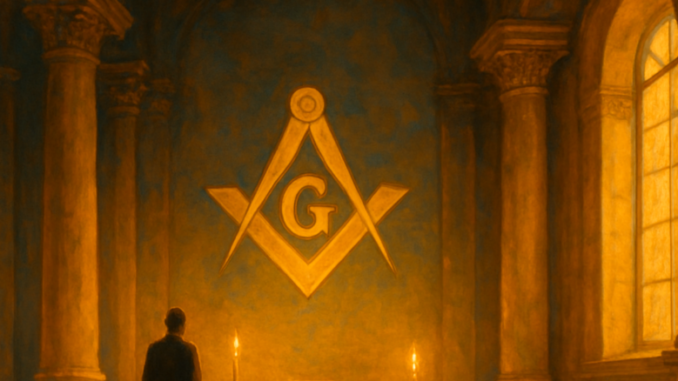
Freemasonry is one of the world’s oldest and most widely recognized fraternal organizations, uniting men across cultures, borders, and centuries through shared values, symbolic ritual, and a commitment to personal and moral development. To ask what is Freemasonry is to open a door to a fascinating tradition that has shaped philosophers, statesmen, architects, and artists — and continues to offer meaning and brotherhood to hundreds of thousands of members worldwide today. Far from the shadowy caricature sometimes painted in popular culture, Freemasonry is a transparent, structured, and deeply thoughtful institution rooted in timeless human ideals.
Historical Background: The Origins of Freemasonry
Understanding what Freemasonry is requires looking back at its origins, which are both historical and, in part, deliberately symbolic. The organization traces its operative roots to the medieval stonemason guilds of Europe — skilled craftsmen who built the great cathedrals, castles, and civic buildings of the Middle Ages. These guilds developed systems of recognition, mutual aid, and graduated knowledge to protect their craft and regulate entry into the profession. The tools they used — the square, the compass, the level, and the plumb line — became the symbolic vocabulary of the fraternity that would eventually evolve from their ranks.
The transition from “operative” masonry (actual stonework) to “speculative” masonry (philosophical and moral inquiry) took place gradually over the sixteenth and seventeenth centuries, particularly in Scotland and England. Intellectual men with no trade in stonemasonry began to be admitted to lodges as “accepted” members, drawn by the lodge’s structured rituals and its tradition of moral allegory. By the early eighteenth century, this speculative dimension had fully taken over.
The Founding of the Premier Grand Lodge
The landmark moment in Masonic history came on 24 June 1717, when four London lodges gathered at the Goose and Gridiron Ale-House in St. Paul’s Churchyard and formed the first Grand Lodge of England. This date is widely considered the official founding of modern, organized Freemasonry. The early Grand Lodge brought together prominent figures of the Enlightenment era, and its first Grand Masters included Anthony Sayer, George Payne, and the influential theologian and natural philosopher John Theophilus Desaguliers — a close associate of Sir Isaac Newton.
In 1723, James Anderson published the Constitutions of the Free-Masons, a foundational document that codified the rules, history, and charges of the fraternity. Anderson’s Constitutions remain historically significant because they established the principle of religious tolerance within the lodge — members were required to believe in a Supreme Being, but no specific religion was mandated, a remarkably progressive stance for the early eighteenth century.
Freemasonry’s Global Spread
From England, Freemasonry spread rapidly across Europe and into the Americas, Africa, and Asia. France developed its own vibrant Masonic culture; lodges appeared in the Dutch Republic, Germany, and the Habsburg lands. In North America, colonial lodges played a notable role in the intellectual climate of the revolutionary period. Among the American Founding Fathers, figures such as George Washington, Benjamin Franklin, Paul Revere, and John Hancock were active Freemasons. Franklin served as Grand Master of Pennsylvania and represented the lodge in diplomatic circles in France.
In continental Europe, Freemasonry attracted Enlightenment thinkers including Voltaire (who was initiated just weeks before his death), Johann Wolfgang von Goethe, and Wolfgang Amadeus Mozart — whose opera The Magic Flute is widely regarded as a Masonic allegory exploring the themes of initiation, light, and wisdom.
By the nineteenth and twentieth centuries, Freemasonry had established lodges in virtually every country on Earth. Today, it is estimated that there are between three and six million Freemasons worldwide, organized into thousands of lodges under hundreds of Grand Lodges and Grand Orients.
Core Concepts and Values
At its heart, Freemasonry is a system of moral philosophy expressed through allegory and symbolism. To understand what Freemasonry stands for, one must look at the values it places at the center of its teachings.
Brotherly Love, Relief, and Truth
The three grand principles of Freemasonry are Brotherly Love, Relief, and Truth. These are not mere slogans but active commitments that shape how members relate to one another and to the wider world.
Brotherly Love calls upon Freemasons to regard every human being as a fellow traveler deserving of respect, care, and goodwill. The lodge is a space where men of different backgrounds, professions, and beliefs sit together as equals. Social hierarchies are symbolically leveled inside the lodge room — a duke and a bricklayer may both hold the same Masonic rank.
Relief speaks to the duty of charity: Freemasons are expected to aid those in distress, whether fellow members or members of the broader community. Masonic lodges and their associated charities have historically contributed enormous sums to hospitals, schools, disaster relief, and community programs. In the United Kingdom alone, Freemasonry donates tens of millions of pounds to charitable causes annually.
Truth encompasses honesty, integrity, and the continuous pursuit of knowledge and self-understanding. Freemasons are encouraged to reflect on their own character, to examine their motivations, and to strive toward a more complete and virtuous life.
The Belief in a Supreme Being
One of the consistent requirements of mainstream Freemasonry is a belief in a Supreme Being — referred to in Masonic literature as the “Great Architect of the Universe” (GAOTU). This terminology is deliberately non-denominational, allowing Christians, Jews, Muslims, Hindus, Sikhs, and members of other faiths to participate fully without compromising their individual religious convictions. Freemasonry is not a religion, does not offer sacraments, and makes no claims about salvation or the afterlife. It is, rather, a fraternity that respects religion and encourages its members to be devout within their own traditions.
The Volume of the Sacred Law
In every regular lodge, a “Volume of the Sacred Law” (VSL) must be open on the altar during meetings. For lodges in predominantly Christian countries, this is typically the Bible; in lodges with members of other faiths, a Quran, Torah, or other scripture may be used alongside or in place of the Bible. This practice underlines the organization’s commitment to spiritual sincerity while honoring religious diversity.
Structure and Degrees of Freemasonry
Freemasonry is organized around a degree system — a series of ceremonial initiations that progressively reveal deeper layers of symbolic and philosophical meaning. The degree structure varies between different Masonic jurisdictions, but the foundational system recognized by virtually all mainstream lodges consists of three “Craft” degrees.
The Three Craft Degrees
The first degree is that of Entered Apprentice. A new member — called a candidate — undergoes a ritual initiation ceremony in which he is symbolically introduced to the lodge and its principles. The ceremony uses elements drawn from the operative mason’s trade as metaphors for moral lessons. The Entered Apprentice begins his Masonic journey with a focus on learning and listening.
The second degree is that of Fellow Craft. This degree expands the member’s exposure to Masonic symbolism and philosophy, with particular emphasis on the liberal arts and sciences, intellectual development, and the pursuit of knowledge. The Fellow Craft is encouraged to study, to grow, and to engage with ideas beyond the merely practical.
The third degree is that of Master Mason. This is the most significant degree in Craft Freemasonry and is centered around the legend of Hiram Abiff, the legendary chief architect of Solomon’s Temple, whose story serves as a powerful allegory about integrity, loyalty, and the immortality of the soul. Becoming a Master Mason confers full membership in the fraternity and entitles a brother to visit and participate in any regular lodge worldwide.
The Lodge and Its Officers
A Masonic lodge is the basic unit of the fraternity. Each lodge is led by a Worshipful Master (the elected chair), assisted by Senior and Junior Wardens, a Secretary, a Treasurer, and various other officers. Lodges meet regularly — typically monthly — for ritual work (degree ceremonies), administrative business, and fellowship. The lodge room itself is arranged symbolically, with specific positions in the room assigned to particular roles and compass points, all reflecting the allegorical geography of Solomon’s Temple.
Beyond the Craft: Higher Degrees and Side Orders
Beyond the three Craft degrees, numerous additional degree systems exist for Master Masons who wish to explore further. The most widely practiced include the Royal Arch (considered in English Freemasonry to complete the Master Mason degree), the Ancient and Accepted Scottish Rite (which offers degrees numbered 4 through 32, culminating in the honorary 33rd degree), and the York Rite, which includes Royal Arch Chapters, Cryptic Councils, and the Chivalric Orders of the Knights Templar. There are also many appendant bodies and social lodges, such as the Shriners (formally the Ancient Arabic Order of the Nobles of the Mystic Shrine) in North America, famous for their charitable hospitals for children.
Masonic Ritual and Symbolism
The ritual dimension is central to what Freemasonry is and how it works. Masonic ceremonies are theatrical, carefully scripted, and rich in symbolic meaning. They use drama, costume, and the arrangement of physical space to convey moral and philosophical messages in a way that goes beyond what words alone can achieve.
The Working Tools
Each degree presents the candidate with a set of “working tools” — instruments taken from the builder’s trade and reinterpreted as moral symbols. The twenty-four inch gauge, for instance, teaches the Mason to divide his day wisely among work, service, and rest. The common gavel instructs him to chip away at the rough edges of his own character. The square reminds him to act with moral rectitude; the compass to keep his desires within due bounds. These tools, displayed prominently in lodge imagery and regalia, give Freemasonry its instantly recognizable visual identity.
Light and Darkness
A recurring theme in Masonic ritual is the journey from darkness to light — representing ignorance giving way to knowledge, and moral confusion yielding to clarity and virtue. The initiation ceremony enacts this symbolically, with the candidate first blindfolded and then progressively introduced to the light of the lodge. This motif places Freemasonry firmly within the broader tradition of initiatory wisdom, alongside the mystery schools of antiquity and the great philosophical traditions of the Western world.
The Legend of Hiram Abiff
Perhaps the most distinctive and profound element of Masonic ritual is the legend enacted in the third degree. Hiram Abiff, described in the biblical books of Kings and Chronicles as the master craftsman sent by King Hiram of Tyre to assist King Solomon in building the Temple in Jerusalem, becomes in Masonic tradition the central figure of an allegory about fidelity, death, and resurrection. The third degree ceremony is a morally and emotionally powerful experience that many Masons describe as transformative. It teaches that a man’s integrity — his word, his commitment, his moral core — is worth more than life itself.
Freemasonry Today
Modern Freemasonry continues to thrive as a meaningful institution for men seeking community, self-improvement, and purpose. While membership numbers declined in the latter half of the twentieth century in some Western countries — reflecting broader trends away from traditional civic organizations — many grand lodges report renewed interest in the twenty-first century, particularly among younger men drawn to the lodge’s combination of tradition, philosophy, and genuine brotherhood.
Contemporary Freemasonry actively engages with its communities through charity, cultural events, and open days. Many grand lodges have significantly increased their public communications, maintaining professional websites, social media presence, and visitor programs. The Grand Lodge of the Netherlands (Grootoosten der Nederlanden), for instance, has worked to demystify the fraternity and present it as the open, values-driven organization it has always been.
Women’s Freemasonry also deserves mention. While mainstream (“regular”) Freemasonry admits only men, several recognized bodies practice a form of Freemasonry open to women or to both men and women. These organizations, including the Order of Women Freemasons in the United Kingdom and the mixed-gender Le Droit Humain (founded in France in 1893 by Maria Deraismes and Georges Martin), carry forward the same core values and degree structure in their own distinct traditions.
Common Misconceptions
Because Freemasonry has historically maintained a degree of discretion about its internal rituals — not secrecy about its existence, principles, or membership, but privacy about specific ceremonial details — it has attracted speculation and mythology over the centuries. It is worth addressing several of the most persistent misunderstandings.
Freemasonry is not a religion and does not compete with or replace any faith. It is not a political organization, and lodges strictly prohibit the discussion of partisan politics at meetings. It is not an exclusive elite club in any sinister sense — men of all social backgrounds join and rise through the degrees on equal terms. And it is decidedly not a secret society in the popular sense: the existence of lodges is publicly known, grand lodges publish their membership lists in many jurisdictions, and members openly acknowledge their affiliation. What is private is the ceremonial content of the degrees — kept so in order to preserve the experience of initiation for future candidates, not to hide something shameful.
Frequently Asked Questions
Who can become a Freemason?
In mainstream (regular) Freemasonry, candidates must be adult men who believe in a Supreme Being, come forward of their own free will, are of good moral character, and are proposed and vouched for by existing members. There are no racial, ethnic, national, or class barriers to membership. A candidate is typically proposed by a Mason he knows, undergoes a background inquiry, and is then voted upon by the lodge. The process is designed to ensure that new members join genuinely and freely, not under pressure or for ulterior motives.
Is Freemasonry compatible with Christianity (or other religions)?
The vast majority of Freemasons throughout history have been practicing Christians, and many lodges have a predominantly Christian membership. The fraternity’s respect for religion and its non-denominational approach means it is compatible with most mainstream faiths. Some individual churches and denominations have historically expressed reservations about certain aspects of Masonic ritual, and members of any faith are encouraged to evaluate compatibility for themselves. That said, millions of devout Christians, Jews, Muslims, and members of other faiths have found that lodge membership complements and even enriches their spiritual lives.
What happens in a Masonic lodge meeting?
A typical lodge meeting has two main components: the formal ritual and business portions. Ritual work may involve performing a degree ceremony for one or more candidates or for educational purposes. The business portion covers lodge administration — finances, upcoming events, correspondence with the grand lodge, and charitable activities. Meetings are conducted with a degree of ceremony and decorum but are not somber affairs; fellowship, good humor, and camaraderie are central to lodge culture. Many lodges conclude their meetings with a festive board — a shared meal with toasts and informal conversation.
What does Freemasonry actually do for its members?
Members consistently report that Freemasonry provides a unique combination of benefits: a meaningful philosophical framework for thinking about life’s big questions; a warm and genuine network of brothers across professional and social backgrounds; structured opportunities for self-reflection and character development; and a sense of connection to a centuries-old tradition shared with some of history’s most remarkable individuals. Beyond personal development, active Masons participate in charitable fundraising and community service that provides tangible help to people in need.
How does someone join a Masonic lodge?
The traditional path to membership begins with expressing interest — either to a Mason one knows personally or by contacting a local lodge or grand lodge directly. Most grand lodges today have contact forms or membership inquiry pages on their websites. After an initial conversation and a formal petition, the lodge will conduct a friendly inquiry and then vote on whether to admit the candidate. If accepted, the candidate will be scheduled for the initiation ceremony of the first degree. The entire process typically takes several months and is designed to be thorough but welcoming.
Frequently Asked Questions
What are the main requirements to become a Freemason?
While specific requirements may vary by lodge, candidates must generally be adult men of good character who believe in a Supreme Being. Most lodges require petitioners to be recommended by current members and to undergo an interview process to ensure they understand Freemasonry's principles of brotherhood, charitable work, and personal development.
Is Freemasonry a religion?
No, Freemasonry is not a religion, though it is deeply spiritual and ethical in nature. The organization welcomes men of all faiths and requires only that members believe in a Supreme Being, making it compatible with Christianity, Judaism, Islam, and other world religions. Freemasonry complements rather than replaces personal religious practice.
What is the purpose of Masonic rituals and symbols?
Masonic rituals and symbols are tools for teaching moral and philosophical lessons in a memorable, meaningful way. The symbols—such as the square, compass, and level—represent virtues like integrity, balance, and equality, while rituals guide members through their personal and moral development in a structured, time-honored tradition.
What does Freemasonry do in the community?
Freemasonry has a strong commitment to charitable work and community service, with lodges worldwide supporting hospitals, children's homes, disaster relief, and educational scholarships. Members are encouraged to contribute their time and resources to improving their communities, making Freemasonry an active force for positive social change.
How old is Freemasonry and is it still relevant today?
Modern organized Freemasonry was officially founded in 1717, though its roots trace back to medieval stonemason guilds, making it centuries old. Today, Freemasonry remains highly relevant, with hundreds of thousands of active members worldwide who value its emphasis on personal growth, brotherhood, moral development, and community service in an increasingly disconnected world.

Be the first to comment