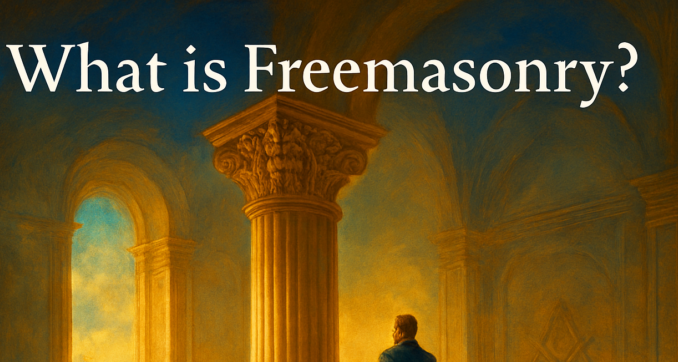
What Is Freemasonry? A Comprehensive Guide
nWhat is Freemasonry? It is one of the oldest and most widely recognised fraternal organisations in the world — a brotherhood dedicated to moral development, mutual support, and charitable service. Freemasonry brings together men of good character from every background, profession, and belief system under a shared commitment to self-improvement and the betterment of society. With lodges in virtually every country on earth and a history stretching back several centuries, it remains one of the most enduring institutions of civil society.
nYet despite its long presence in public life, Freemasonry is also one of the most frequently misunderstood organisations. Popular culture often portrays it as secretive or conspiratorial, but the reality is far more straightforward. Freemasonry is, at its heart, a system of moral philosophy taught through allegory and symbolism — using the tools of the medieval stonemason as metaphors for building a virtuous life. This pillar page aims to provide a thorough, factual, and accessible answer to the question “what is Freemasonry?” — covering its origins, its core principles, its rituals and symbols, and what it means to be a Freemason today.
nnHistorical Background of Freemasonry
nnMedieval Origins and the Operative Masons
nThe roots of Freemasonry are found in the medieval stonemasons’ guilds that flourished across Europe from the 12th century onward. These were the skilled craftsmen who designed and built the great cathedrals, castles, and public buildings of the Middle Ages. Because their work required them to travel from site to site, they developed systems of signs, grips, and passwords to identify qualified craftsmen and distinguish them from unskilled labourers. They gathered in temporary buildings called “lodges” adjacent to their construction sites, where they discussed the craft, trained apprentices, and looked after their members’ welfare.
nThese operative masons — so called because they physically worked with stone — organised themselves into a hierarchy of Apprentice, Fellow Craft (or Journeyman), and Master Mason. Each level corresponded to increasing skill, responsibility, and knowledge. The guild system also imposed ethical standards: masons were expected to deal honestly with their employers, treat their fellow craftsmen with respect, and maintain the quality of their work. These principles would later become the moral foundation of speculative Freemasonry.
nImportant early documents, known as the “Old Charges” or “Gothic Constitutions,” shed light on the traditions of the operative masons. The Regius Poem (or Halliwell Manuscript), dating to approximately 1390, is the oldest known Masonic document. Written in verse, it sets out rules of conduct for masons and traces the origins of the craft back to ancient geometry. The Cooke Manuscript, from around 1450, similarly describes the history and regulations of the craft. These documents reveal that even in the medieval period, masonry was understood as something more than mere labour — it was a craft with moral and philosophical dimensions.
nnThe Transition to Speculative Freemasonry
nOver the course of the 16th and 17th centuries, the operative lodges in Britain — particularly in Scotland and England — began to admit members who were not working stonemasons. These “accepted” or “speculative” masons were gentlemen, scholars, and professionals drawn to the fraternity’s traditions of fellowship, moral teaching, and intellectual inquiry. The earliest recorded initiation of a non-operative mason is that of John Boswell, Laird of Auchinleck, who attended a lodge meeting in Edinburgh in 1600. In England, the antiquarian Elias Ashmole recorded his initiation into a lodge at Warrington in 1646.
nThis gradual transformation — from a guild of working builders to a philosophical and social fraternity — is one of the most distinctive features of Freemasonry’s history. By the late 1600s, many lodges were predominantly or entirely speculative. The tools of the stonemason — the square, the compass, the level, the plumb line — were retained, but now served as symbols for moral instruction rather than instruments of physical labour.
nnThe Grand Lodge Era
nThe formal organisation of modern Freemasonry is traditionally dated to 24 June 1717, when four London lodges came together at the Goose and Gridiron Ale House to form the first Grand Lodge of England. This body, later known as the Premier Grand Lodge, established a centralised structure for governing lodges, standardising rituals, and maintaining records. Anthony Sayer was elected as the first Grand Master.
nA pivotal moment came in 1723 with the publication of The Constitutions of the Free-Masons, compiled by the Reverend James Anderson and endorsed by Grand Master the Duke of Montagu. Anderson’s Constitutions set out the fundamental principles of the fraternity, including its landmark position on religion: a Mason was required to believe in God but was not bound to any particular denomination or creed. This principle of religious tolerance was remarkably progressive for its time and became a defining characteristic of Freemasonry worldwide.
nThe Grand Lodge model quickly spread. The Grand Lodge of Ireland was founded in 1725, the Grand Lodge of Scotland in 1736, and lodges were soon established across the European continent, in the American colonies, and beyond. By the mid-18th century, Freemasonry had become a truly international phenomenon.
nnFreemasonry and the Enlightenment
nThe 18th century was the golden age of Freemasonry’s expansion, and its growth was closely intertwined with the intellectual currents of the Enlightenment. The lodges provided a space where men of different social classes, nationalities, and religious backgrounds could meet as equals, exchange ideas, and pursue knowledge — values that resonated deeply with Enlightenment ideals of reason, tolerance, and human progress.
nMany of the era’s most prominent thinkers and leaders were Freemasons. Voltaire was initiated in Paris in 1778, just weeks before his death. Wolfgang Amadeus Mozart was an enthusiastic Mason whose opera The Magic Flute is rich with Masonic symbolism. In the American colonies, Benjamin Franklin served as Grand Master of Pennsylvania and was instrumental in establishing Masonic networks. George Washington was initiated in 1752 and later served as Worshipful Master of his lodge in Alexandria, Virginia. Other Founding Fathers who were Masons include Paul Revere, John Hancock, and the Marquis de Lafayette, the French general who fought in the American Revolution.
nAcross Europe, Freemasons contributed to movements for constitutional government, civil liberties, and religious tolerance. In the Netherlands, Freemasonry took root in the early 18th century, with the first Dutch lodge established in The Hague around 1734. The Order of Freemasons under the Grand East of the Netherlands (Orde van Vrijmetselaren onder het Grootoosten der Nederlanden), founded in 1756, remains one of the oldest continuously operating Grand Lodges in the world.
nnThe 19th and 20th Centuries
nThroughout the 19th century, Freemasonry continued to grow and diversify. New rites and degrees were developed, including the Ancient and Accepted Scottish Rite (with its system of 33 degrees) and the York Rite. Masonic lodges played significant roles in community building, education, and philanthropy. Many hospitals, orphanages, and schools were founded by Masonic organisations during this period.
nThe 20th century brought both challenges and renewal. Freemasonry was suppressed by totalitarian regimes — it was banned by the Nazis in Germany and occupied Europe, by the Fascists in Italy, and by Communist governments in the Soviet Union and Eastern Europe. Many Freemasons suffered persecution, imprisonment, and death for their membership. After the Second World War, the fraternity experienced a period of significant growth, particularly in the United States, followed by a decline in membership from the 1960s onward as social habits changed. In recent decades, however, there has been a renewed interest in Freemasonry among younger men drawn to its traditions, its emphasis on personal growth, and its sense of community.
nnCore Principles and Values of Freemasonry
nnBrotherly Love, Relief, and Truth
nWhen people ask “what is Freemasonry,” the answer often begins with its three foundational principles: Brotherly Love, Relief, and Truth. These are not abstract concepts but practical commitments that every Mason undertakes.
nBrotherly Love refers to the bond of fellowship that unites all Freemasons, regardless of their social standing, nationality, or personal beliefs. Masons are taught to treat every person with kindness, respect, and understanding — not only their fellow lodge members, but all people.
nRelief encompasses the obligation of charity and mutual support. Freemasons commit to helping those in need, whether through organised philanthropic programmes or through personal acts of generosity. Masonic charities around the world support medical research, disaster relief, education, and care for the elderly and disadvantaged.
nTruth is the pursuit of knowledge, honesty, and moral integrity. Masons are encouraged to seek truth in all aspects of life — to be honest in their dealings, to pursue learning and self-improvement, and to uphold high ethical standards in both their personal and professional lives.
nnBelief in a Supreme Being
nFreemasonry requires its members to profess a belief in a Supreme Being — often referred to in Masonic tradition as the Great Architect of the Universe. This requirement reflects the fraternity’s conviction that moral life is grounded in something greater than the individual. However, Freemasonry is emphatically not a religion. It has no theology, no sacraments, no clergy, and no path to salvation. It does not tell its members what to believe about God, the afterlife, or the nature of the divine. Members are free to follow whatever religious tradition they choose — or none in particular, so long as they acknowledge a higher power.
nThis open approach to spiritual belief has been one of Freemasonry’s most distinctive and enduring features. It allows men of different faiths — Christians, Jews, Muslims, Hindus, Buddhists, and others — to sit together in lodge, share in the same rituals, and work toward the same moral goals without conflict or conversion. The Volume of Sacred Law (often a Bible, but it may also be the Torah, the Quran, or another sacred text, depending on the members present) is always open during lodge meetings as a symbol of the members’ shared reverence for the divine.
nnTolerance and Equality
nFrom its earliest organised form, Freemasonry has championed the principle that all men meet “on the level” — that within the lodge, distinctions of wealth, rank, and social status are set aside. This egalitarian ethos was revolutionary in the 18th century, when rigid class structures governed nearly every aspect of social life. In the lodge, a tradesman and a nobleman were equals, bound by the same obligations and entitled to the same respect.
nFreemasonry also promotes tolerance of different opinions and beliefs. Discussions of partisan politics and sectarian religion are traditionally prohibited within the lodge, not because these topics are unimportant, but because the lodge is meant to be a space of harmony and mutual respect where differences do not divide.
nnPersonal Development and Moral Growth
nAt the core of the Masonic experience is the idea of building oneself — of working to become a better person, day by day. The metaphor of the rough ashlar (an unfinished stone) being shaped into a perfect ashlar (a smooth, polished stone fit for building) is central to Masonic teaching. Every Mason is a work in progress, and the lodge provides the tools, the guidance, and the supportive community to help him in that ongoing work.
nThis emphasis on self-improvement is not abstract. Masons are encouraged to reflect on their conduct, to practice virtues such as prudence, temperance, fortitude, and justice, and to apply the lessons of the lodge in their daily lives — as husbands, fathers, professionals, and citizens.
nnSymbols and Rituals of Freemasonry
nnThe Working Tools
nMasonic symbolism draws extensively on the tools and terminology of the stonemason’s craft. Among the most recognisable symbols are:
nThe Square and Compasses: The most widely recognised Masonic emblem, often depicted with a letter “G” at the centre (standing for both God and Geometry). The square symbolises morality and fairness — to “act on the square” means to act honestly. The compasses represent self-restraint and the ability to circumscribe one’s desires and passions within proper bounds.
nThe Level: A tool used to check that surfaces are horizontal, the level symbolises equality. It reminds Masons that all people stand on the same level before the divine.
nThe Plumb Line: Used to ensure that a wall is perfectly vertical, the plumb line represents uprightness and integrity of conduct.
nThe Trowel: Used to spread cement between stones, the trowel symbolises the bond of fellowship that unites Masons and the effort to spread love and kindness.
nThe Rough and Perfect Ashlars: The rough ashlar (an unworked stone) and the perfect ashlar (a finished stone) represent the Mason’s journey from an unrefined state to one of moral and intellectual polish.
nnDegrees of Freemasonry
nThe basic structure of Freemasonry, known as Craft Masonry or Blue Lodge Masonry, consists of three degrees:
n1st Degree — Entered Apprentice: The degree of initiation, in which the candidate is introduced to the fundamental principles and symbols of Freemasonry. The emphasis is on self-knowledge and the beginning of the journey.
n2nd Degree — Fellow Craft: This degree focuses on learning, intellectual development, and the liberal arts and sciences. The candidate is encouraged to deepen his understanding of the world and of himself.
n3rd Degree — Master Mason: The culminating degree of Craft Masonry, which explores themes of integrity, mortality, and the enduring legacy of a well-lived life. The central allegory of this degree — the legend of Hiram Abiff, the master builder of King Solomon’s Temple — is one of Freemasonry’s most powerful and moving narratives.
nBeyond the three Craft degrees, numerous additional or “side” degrees are available through bodies such as the Scottish Rite, the York Rite, and various other orders. These offer further philosophical and symbolic exploration but are considered supplementary to, not superior to, the foundational three degrees.
nnThe Nature of Masonic Ritual
nMasonic rituals are ceremonial dramas that use allegory, symbolism, and narrative to convey moral lessons. They are not religious ceremonies, nor are they magical or occult in nature. Rather, they are carefully crafted experiences designed to engage the mind and emotions of the participant, making abstract moral principles vivid and memorable.
nThe rituals are conducted from memory by lodge officers, and each ceremony follows a carefully preserved structure that has been passed down, often in remarkably consistent form, over centuries. The experiential quality of these rituals — the fact that they are lived through rather than merely read about — is a key reason why Freemasonry has endured as a vehicle for moral education. Many Masons describe the experience of their initiation as profoundly meaningful, a turning point that deepened their commitment to living with greater purpose and integrity.
nIt is worth addressing the common perception that Freemasonry is a “secret society.” In reality, the existence of Freemasonry, its meeting places, its general principles, and the identities of its members are not secret at all. What is kept private are the specific details of the rituals and certain modes of recognition — a tradition inherited from the operative masons and maintained as a matter of tradition and shared identity rather than concealment.
nnFreemasonry in the Netherlands
nThe Netherlands has a rich and distinguished Masonic tradition. Freemasonry arrived in the Dutch Republic in the early 18th century, with the first lodge meeting in The Hague around 1734. The Grand East of the Netherlands (Grootoosten der Nederlanden) was established in 1756 and has governed Dutch Freemasonry ever since. It is one of the most respected Grand Lodges in the world and maintains fraternal relations with recognised Grand Lodges across the globe.
nDutch Freemasonry has historically been characterised by its intellectual seriousness, its commitment to tolerance and pluralism, and its engagement with the broader currents of Dutch civil society. Many prominent Dutch citizens have been Freemasons, contributing to the nation’s traditions of openness, civic responsibility, and cultural achievement.
nToday, there are lodges throughout the Netherlands, welcoming men from all walks of life who share a desire for personal growth, meaningful fellowship, and service to their communities. Dutch Freemasonry continues to evolve while remaining anchored in the timeless principles that have defined the craft for centuries.
nnFreemasonry and Charity
nCharitable work is one of the most visible and impactful aspects of Freemasonry worldwide. Masonic organisations collectively donate billions of dollars each year to charitable causes. In the United States alone, Masonic charities contribute approximately $2 million per day to various causes, including children’s hospitals (such as the Shriners Hospitals for Children), medical research, disaster relief, and educational scholarships.
nIn Europe and the Netherlands, Masonic lodges support a wide range of charitable activities, from local community projects to international humanitarian initiatives. This commitment to “Relief” — one of the three foundational principles — is not merely institutional but personal. Individual Masons are encouraged to give of their time, talent, and resources to those in need, and many do so quietly and without seeking recognition.
nnWhat Visitors and Prospective Members Can Expect
nnWho Can Become a Freemason?
nThe basic requirements for membership in a regular Masonic lodge are straightforward. A candidate must be:
n- n
- A man of good character and reputation n
- Of mature age (typically 18 or 21, depending on the jurisdiction) n
- A believer in a Supreme Being n
- Motivated by a genuine desire for self-improvement and fellowship, rather than by curiosity alone or the expectation of personal gain n
The traditional principle is that Freemasonry does not recruit. A man must come of his own free will and ask to join. In practice, many lodges today are open and welcoming to enquiries, and many prospective members first learn about the fraternity through a friend, family member, or colleague who is already a Mason.
nnThe Application Process
nThe process of joining a lodge typically begins with an informal conversation with lodge members, often over dinner or at an open event. This allows the prospective member and the lodge to get to know each other. If both sides feel the fit is right, the candidate submits a formal petition. The lodge then conducts a background investigation — not an intrusive examination, but a good-faith effort to confirm the candidate’s character and sincerity. A vote is taken by the lodge members, and if the candidate is accepted, he is invited to undergo the initiation ceremony for the first degree.
nnWhat Happens in a Lodge Meeting?
nA typical lodge meeting consists of two main parts. The first is the “business” portion, in which the lodge conducts its administrative affairs — minutes, correspondence, financial matters, charitable activities, and planning for future events. The second is the “ceremonial” or “degree” portion, in which the rituals of Freemasonry are performed, either as initiations of new members or as educational presentations of Masonic symbolism and philosophy.
nLodge meetings are conducted with dignity and decorum. Officers wear formal regalia, including aprons — a direct link to the craft’s operative origins. The atmosphere is one of respect, seriousness of purpose, and warm fellowship. After the formal proceedings, members typically gather for dinner and conversation, which is often the most enjoyable part of the evening.
nnThe Social and Personal Benefits
nFor many Masons, the most valued aspect of membership is the deep and lasting friendships they form within the lodge. Freemasonry creates a unique social bond — one built not merely on shared interests but on shared values and shared experience. The lodge provides a community of men who hold each other to high standards, offer support in times of difficulty, and celebrate each other’s achievements.
nBeyond fellowship, many Masons report that their involvement has helped them develop greater self-awareness, improved public speaking skills, leadership abilities, and a stronger sense of purpose. The progressive journey through the degrees provides an ongoing framework for reflection and growth that many members find deeply rewarding.
nnCommon Misconceptions About Freemasonry
nBecause of its long history and its tradition of keeping certain rituals private, Freemasonry has been the subject of many myths and misconceptions. It is useful to address a few of the most common ones:
n“Freemasonry is a religion.” It is not. While it requires belief in a Supreme Being and incorporates moral teachings, it offers no theology, no doctrine of salvation, and no religious worship. It encourages its members to be active in their own faith traditions.
n“Freemasonry is a secret society.” Freemasonry is more accurately described as a “society with secrets.” Its existence, meeting places, and general principles are public knowledge. Only certain elements of its rituals and modes of recognition are kept private, as a matter of tradition.
n“Freemasonry is a political organisation.” Freemasonry does not endorse political parties, candidates, or ideologies. Discussion of partisan politics is prohibited in the lodge. While individual Masons have held political office throughout history, they have done so as individuals, not as representatives of the fraternity.
n“Freemasonry is elitist or exclusive.” While Freemasonry has historically included many prominent individuals, it is fundamentally an organisation of ordinary men. Its membership spans every profession, income level, and social background. The principle of meeting “on the level” means that all members are treated as equals within the lodge.
nnFrequently Asked Questions About Freemasonry
nnIs Freemasonry compatible with my religion?
nFreemasonry is compatible with virtually all religious traditions that acknowledge a Supreme Being. It does not compete with, replace, or contradict any religion. Many deeply devout men — Christians, Jews, Muslims, Hindus, Sikhs, and others — are active Freemasons and find that the fraternity’s moral teachings complement and reinforce their personal faith. Some religious denominations have historically expressed reservations about Freemasonry, and individuals with concerns are encouraged to consult their religious leaders and to learn about Freemasonry directly before making a decision.
nnWhat does it cost to be a Freemason?
nThe costs of Freemasonry are modest and vary by lodge and jurisdiction. Members typically pay an initiation fee when they join and annual dues thereafter. These funds cover the lodge’s operating expenses, charitable contributions, and social activities. Freemasonry is not a profit-making organisation, and no one should be deterred from joining because of financial concerns — many lodges have provisions to assist members who face financial hardship.
nnHow much time does Freemasonry require?
nMost lodges meet once or twice a month, typically in the evening. In addition to regular meetings, there may be social events, charitable activities, and educational programmes throughout the year. The time commitment is flexible, and members are encouraged to participate at a level that is sustainable alongside their family and professional responsibilities. Freemasonry should enrich a
Frequently Asked Questions
Is Freemasonry a secret society?
No, Freemasonry is not a secret society but rather a society with secrets. Its existence, locations, and membership are public knowledge, with lodges openly listed in communities worldwide. What remains private are certain rituals and modes of recognition, which are protected to preserve the integrity of the member experience and the philosophical teachings.
What do Freemasons believe in?
Freemasons are united by shared values of moral development, self-improvement, and charitable service to society. The organization welcomes men of all faiths and backgrounds who are committed to virtue, integrity, and mutual support. Freemasonry teaches moral philosophy through symbolism and allegory, using the tools of medieval stonemasons as metaphors for building a virtuous life.
Where did Freemasonry come from?
Freemasonry traces its origins to the medieval stonemasons' guilds of Europe, dating back to the 12th century. These skilled craftsmen developed systems of signs, passwords, and hierarchical ranks (Apprentice, Fellow Craft, and Master Mason) to identify qualified workers and maintain ethical standards. Over time, these operative mason traditions evolved into the speculative philosophy and fraternal organization known as Freemasonry today.
How many Freemasons are there worldwide?
Freemasonry has a global presence with lodges in virtually every country on earth, making it one of the world's oldest and most widely recognized fraternal organizations. The exact membership numbers vary by jurisdiction, but millions of men have been initiated into Freemasonry throughout its centuries of existence.
What are Masonic symbols and what do they mean?
Masonic symbols—such as the square and compass, the letter G, and various architectural tools—represent moral and philosophical principles central to Freemasonry's teachings. These symbols are used in rituals and allegories to convey lessons about virtue, self-improvement, and the building of a better character and society, much like a stonemason uses tools to construct buildings.

Be the first to comment