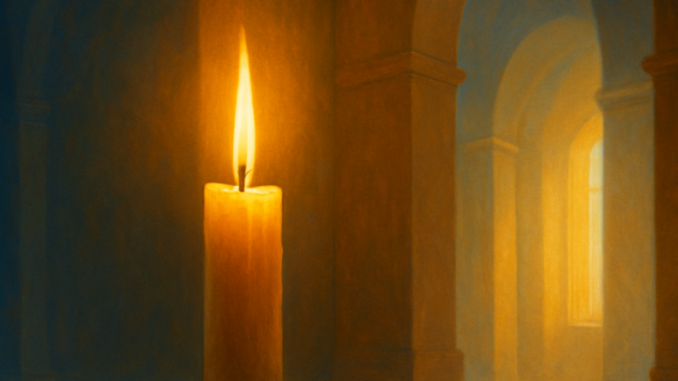
Sometimes a person disappears from view — not out of weakness, but out of necessity. Recently, a well-known news anchor announced her return to work after months of absence. Her words touched on something universal: stepping back into the world after a period of silence is an act of courage. In Freemasonry, this principle is deeply familiar. Consciously stepping back in order to return stronger is not failure — it is an essential part of building character. How can we apply this insight in our own lives?
The Courage to Temporarily Disappear
We live in a culture that worships visibility. Be constantly present, stay productive, make yourself seen. When someone withdraws, questions follow almost immediately. What happened? Is something wrong? These reflexes reveal just how uncomfortable we have become with silence and absence.
Yet philosophers through the ages have understood that withdrawal can be a precondition for growth. Marcus Aurelius wrote in his personal meditations about the importance of inner calm amid external pressure. Montaigne literally retreated to his tower study to reflect on life and the human condition.
Freemasonry incorporates this principle directly into its rituals. The candidate entering the lodge for the first time is first isolated in a dark room known as the Chamber of Reflection. This is not a punishment — it is a gift. In that silence, space is created for self-examination. The outside world temporarily fades away so that the inner world can speak.
What Silence Reveals About Who You Are
A period of absence acts as a mirror. When the daily noise falls away, only what is essential remains. Many people discover during illness, leave, or a forced pause what truly matters to them. This is not abstract philosophy — it is a concrete experience that countless people recognize. You discover which relationships you genuinely miss, which work gives you energy, and which habits were merely filler.
In silence, we meet ourselves — not as we wish to be, but as we truly are.
This self-confrontation is not always pleasant. But it forms the foundation for authentic growth. Spinoza argued that self-knowledge is the highest form of knowledge. Freemasons speak in this context of working the rough stone, or rough ashlar. Silence is the workshop where this work takes place — far from the gaze of others.
Practical Steps for a Conscious Return
The moment of returning requires care and intention. If you are stepping back into the world after a period of absence, there are several concrete insights from the Masonic tradition worth considering.
First, don’t pick everything back up. Choose deliberately which activities and obligations you resume. Silence has taught you what is essential — respect that lesson. Second, communicate clearly but without excessive explanation. You do not owe everyone a full account. A simple “I’m back” is often enough.
Third, do not expect others to immediately understand what you have been through. Inner transformation is, by definition, invisible. And fourth, build gradually. Just as a building rises stone by stone, a return demands patience and step-by-step progress.
The Return as an Act of Character
Returning may be braver than leaving. Leaving can be an escape, but returning is always a choice. You expose yourself once again to judgments, expectations, and the scrutiny of others. In Freemasonry, this moment is marked by ritual actions that emphasize the transition from inside to outside, from darkness to light. It is no coincidence that light serves as a symbol for knowledge and awareness in virtually every tradition.
Aristotle wrote that character is formed through repeated action. Every time we rise again after a setback, we strengthen our inner resilience. This applies to major life crises, but also to the small moments of withdrawal that we all experience — the day you simply couldn’t, the project you had to pause, the conversation you kept postponing.
Recognizable Moments in Everyday Life
You don’t need to be a public figure to experience this. Think of the colleague who returns to work after burnout. The friend who reaches out again after a difficult period. The parent who takes the first step toward reconciliation after a conflict. All these moments require the same inner strength: the willingness to make yourself vulnerable and begin again.
Freemasonry teaches that life is a continuous process of building, breaking down, and rebuilding. The inner temple we construct is never definitively complete. Every return after a period of silence is a new stone we lay — not in spite of the absence, but because of what that absence has taught us.
The words “I’m coming back” carry more weight than they might seem at first glance. They mark the end of an inner journey and the beginning of a new phase. Whether you are a well-known television presenter or someone quietly picking up the thread after a difficult time, the moment of return is an act of character. Freemasonry reminds us that silence is not emptiness — it is a workshop. And returning after that silence is a sign of the courage to keep building the person you are meant to become.
Copyright text & image: devrijmetselaar.nl
Texts are based on the ideas and content of the author of devrijmetselaar.nl, reviewed, corrected, and supplemented with the assistance of OpenAI. Images are created based on the ideas of the author of devrijmetselaar.nl using OpenAI/DALL-E.
Frequently Asked Questions
What is the Chamber of Reflection in Freemasonry?
The Chamber of Reflection is a dark room where candidates entering the lodge experience a period of solitude and self-examination during their first initiation. Far from being a punishment, it is a gift that creates space for inner contemplation away from the distractions of the outside world. This practice embodies the Masonic principle that withdrawal and silence are essential preconditions for genuine personal growth and character development.
Why does Freemasonry value periods of silence and absence?
Freemasonry recognizes that stepping back from constant visibility and activity allows for authentic self-reflection and inner transformation. The tradition teaches that silence acts as a mirror, revealing what is truly essential in life and helping individuals confront themselves honestly. This practice, inspired by philosophers throughout history, forms the foundation for working on oneself—what Masons call 'working the rough ashlar'—to build genuine character.
How does the Masonic concept of 'rough ashlar' relate to personal growth?
The rough ashlar is a Masonic symbol representing the unfinished stone of human character that must be shaped and refined through deliberate work. Silence and periods of absence provide the workshop where this inner work takes place, away from external judgment or distraction. By embracing this process, individuals can transform themselves authentically, much like a stone is polished from rough form into something refined and valuable.
Does taking time away from work or society conflict with Masonic values?
Not at all—in fact, Freemasonry teaches that conscious withdrawal for self-examination is a sign of strength, not weakness, and is essential to building character. The tradition understands that constant visibility and productivity can prevent the inner reflection necessary for genuine growth. Returning to the world after a period of absence, with lessons learned and renewed purpose, is presented as an act of courage deeply aligned with Masonic principles.


Be the first to comment