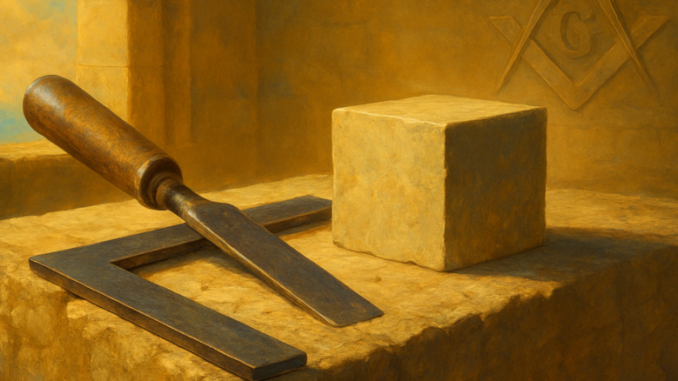
Freemasonry is one of the oldest and most fascinating fraternities in the world, and its symbolism lies at the very heart of everything it stands for. The symbols in Freemasonry are not random decorations — they are carefully chosen images that embody deep moral, philosophical, and spiritual lessons. From the square and compasses to the All-Seeing Eye and the rough ashlar, each symbol invites the Freemason to engage in self-reflection, personal growth, and the pursuit of a better world. In this article, we explore the most important Masonic symbols, their historical origins, and what they mean within the Craft.
The Historical Background of Masonic Symbols
To truly understand the symbols in Freemasonry, it is essential to look back at the roots of the fraternity. Modern speculative Freemasonry as we know it was formally established on June 24, 1717, when four lodges in London united to form the first Grand Lodge of England. However, the symbolic traditions they inherited reach much further back — to the operative stonemasons and cathedral builders of the Middle Ages.
These medieval craftsmen — the so-called operative masons — used tools like the compasses, the square, and the level in their daily work. When the fraternity gradually transformed during the seventeenth and eighteenth centuries into a speculative movement — that is, a philosophical and moral brotherhood — these practical tools were reimagined as metaphors for virtuous living. The gavel became a symbol of willpower. The compasses came to represent the ability to measure the boundaries of one’s own conduct. This transition from the literal to the allegorical is what gives Freemasonry its uniquely rich character.
The Enlightenment thinkers of the eighteenth century played a major role in deepening this symbolism further. Figures like James Anderson, who authored the famous Constitutions in 1723, and later Chevalier Ramsay, who drew connections between Freemasonry and the chivalric orders of the Crusades, contributed to an ever richer symbolic universe. In the nineteenth century, Albert Pike — the American Freemason and author of the hugely influential Morals and Dogma (1871) — expanded this system with profound philosophical and comparative religious interpretations.
What makes Masonic symbols particularly powerful is that they are not dogmatic. They are never imposed as absolute truths but offered as mirrors: each member gives them his or her own meaning, guided by personal experience, study, and conversation with fellow brethren. This open-ended quality is what makes Masonic symbolism timeless and universally applicable.
The Square and Compasses: The Central Emblem of Freemasonry
Of all the symbols in Freemasonry, the square and compasses are undoubtedly the most recognizable. Together they form the central emblem of the fraternity, often depicted with the letter G placed between them.
In the building trade, the square was the tool used to construct right angles — the absolute foundation of stable architecture. In its moral interpretation, the square represents righteousness, honesty, and acting according to firm principles. A Freemason who is said to be “on the square” is someone who lives with integrity and sincerity, free from deceit or dishonesty.
The compasses are used to draw circles and measure distances. In Freemasonry, they symbolize the ability to set boundaries — on one’s own behavior, on one’s passions, and in one’s relationships with others. The compasses remind the Freemason that he must not overstep the circle of his duties: his obligations to God or the Supreme Being, to his brethren, and to himself.
The combination of both tools represents the balance between the spiritual and the material, between the ideal and the practical, between freedom and discipline. In the First Degree of initiation, the square is placed on top of the compasses, emphasizing the material and moral dimensions of life. In higher degrees, this arrangement shifts, reflecting the increasing integration of spiritual insight.
The Letter G: Geometry and the Grand Architect
The letter G, placed at the center of the square and compasses emblem, carries two primary meanings that are deeply intertwined: Geometry and God — or more precisely, the Grand Architect of the Universe (often abbreviated as GAOTU).
Geometry was regarded by the ancients as the mother of all sciences. In Greek philosophy — particularly in the traditions of Pythagoras and Plato — geometric knowledge was considered the key to understanding the very structure of the cosmos. Freemasonry inherited this conviction and views the practice of geometric virtues — precision, honesty, careful measurement — as a path toward self-improvement.
At the same time, the G refers to the Grand Architect of the Universe, a non-denominational term for a higher power or ordering principle. Freemasonry deliberately leaves the specific interpretation of this concept open, allowing people of all faith traditions and worldviews to join the fraternity. The letter G invites every Freemason to reflect on his or her relationship to the greater whole — to the universe and the forces that shape it.
The Rough Ashlar and the Perfect Ashlar
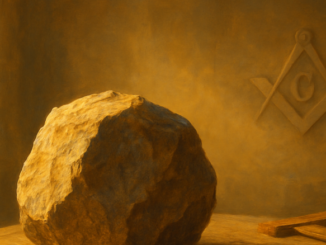
One of the most insightful symbols in Freemasonry is the contrast between the rough ashlar and the perfect ashlar. Both are traditionally displayed in the lodge during meetings, serving as constant visual reminders of the Mason’s journey.
The rough ashlar represents the individual as he is at the time of his initiation: unworked, full of rough edges, with untapped potential. The perfect ashlar — smooth, precisely shaped, fit to serve as a building block in a greater structure — symbolizes the individual who has refined himself through study, moral discipline, and fraternal fellowship.
The image of the stone that must be worked upon is a deeply compelling one. The idea of personal labor — travail sur soi, or inner work — lies at the very core of the Masonic experience. Every member is encouraged to see himself as a rough stone that can, through effort and dedication, be shaped into something that contributes to the temple of humanity. This is not a destination but a lifelong process, one that unfolds through the rituals, lessons, and relationships that Freemasonry provides.
Why Masonic Symbols Still Matter Today
In an age of constant distraction and information overload, the symbolic language of Freemasonry offers something increasingly rare: an invitation to slow down, look inward, and engage with meaning on a deeper level. These symbols are not relics of a bygone era — they are living tools for reflection that remain as relevant now as they were centuries ago.
Whether it is the square reminding us to act with integrity, the compasses urging us to exercise restraint, or the rough ashlar challenging us to keep improving ourselves, each symbol speaks to universal human aspirations. They transcend cultural, religious, and national boundaries, which is precisely why Freemasonry has endured and flourished across the globe for over three hundred years.
The beauty of these symbols lies in their openness. They do not demand a single interpretation. Instead, they invite each Freemason — and indeed each thoughtful observer — to bring their own life experience to the table and discover personal truths within these timeless images.
The symbols in Freemasonry are far more than historical curiosities or decorative motifs. They form a carefully constructed language of moral and philosophical instruction that has guided generations of men and women toward greater self-awareness, ethical living, and a deeper connection to the world around them. From the square and compasses to the rough and perfect ashlar, each symbol carries within it an invitation — to reflect, to grow, and to build. Not just a building of stone, but a life of meaning and purpose.
Copyright text & image: devrijmetselaar.nl
Texts are based on the ideas and content of the author of devrijmetselaar.nl, reviewed, corrected, and supplemented with the assistance of OpenAI. Images are created based on the ideas of the author of devrijmetselaar.nl using OpenAI/DALL-E.
Frequently Asked Questions
What is the main purpose of symbols in Freemasonry?
Masonic symbols are carefully chosen images that embody deep moral, philosophical, and spiritual lessons designed to encourage self-reflection and personal growth. Rather than being random decorations, each symbol invites Freemasons to engage in introspection and pursue a better understanding of themselves and the world around them.
Where do Masonic symbols come from historically?
Masonic symbols originated with medieval operative stonemasons and cathedral builders who used tools like the compasses, square, and level in their daily work. During the seventeenth and eighteenth centuries, as Freemasonry transformed into a speculative and philosophical movement, these practical tools were reimagined as powerful metaphors for virtuous living and moral conduct.
What do the square and compasses represent in Freemasonry?
The square and compasses are the most recognizable symbols of Freemasonry and form the central emblem of the fraternity. The square, historically used to construct right angles in building, represents precision and moral rectitude, while the compasses symbolize the ability to measure and set boundaries on one's own conduct and actions.
Are Masonic symbols interpreted the same way by all members?
No—one of the unique strengths of Masonic symbolism is that it is not dogmatic or absolute. Instead, symbols are offered as mirrors where each member can find personal meaning guided by their own experience, study, and conversations with fellow brethren, which helps make Masonic teachings timeless and universally applicable.
Who helped develop the deeper philosophical meaning of Masonic symbols?
Enlightenment thinkers and Masonic scholars played crucial roles in enriching Masonic symbolism, including James Anderson (author of the Constitutions in 1723), Chevalier Ramsay (who connected Freemasonry to chivalric traditions), and Albert Pike (whose 1871 work Morals and Dogma provided profound philosophical interpretations). Their contributions transformed Masonic symbols into a rich and meaningful system of spiritual and moral instruction.

Be the first to comment