Explore the Grand Architect of the Universe concept in Freemasonry. Discover symbolism, spiritual connections, and the philosophical foundations of this ancient tradition.
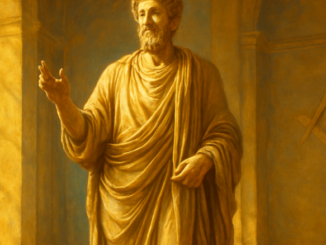
Marcus Aurelius – Meditations
Marcus Aurelius on Prayer: Stoic Roots of the Higher
In 175 AD, amid grueling military campaigns along the Danube frontier, Emperor Marcus Aurelius penned his private reflections on prayer and the human relationship with something greater. These passages from the ninth book of his Meditations are not a theological treatise but an inner dialogue rooted in centuries-old philosophical traditions. The question he posed to himself reverberates across the ages, reaching into the ritual spaces of modern lodges: what does it truly mean to direct yourself toward something larger than yourself? The Stoic View of the Divine To understand what Marcus Aurelius meant by prayer, we need to return to the foundations of Stoicism. This philosophical school, founded by Zeno of Citium around 300 BC, developed a distinctive vision of the divine. The Stoics did not believe in anthropomorphic gods who granted favors in response to supplication. Instead, they saw the universe as permeated by a rational principle — the logos — that ordered and connected all things. This principle was both immanent and transcendent: it operated within everything while simultaneously being the source of all order. For Marcus Aurelius, prayer was therefore never a request for personal gain. It was an exercise in attunement to this cosmic order. When […]