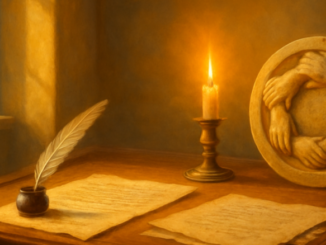
Symbolic depiction of brotherhood, philosophy, and art in Freemasonry
Culture & Media

The Eighth Child as Philosopher and Brother: Art as Connection

The history of philosophy reveals a fascinating pattern: thinkers who grew up as the eighth child in large families often developed a remarkable sensitivity to brotherhood and human connection. These philosopher-brothers sought not only truth but also the art of living together. How does this perspective compare to Freemasonry, which likewise places the figure of the brother at its very center? And what can this comparison teach us about the role of art as a binding force between people? The Eighth Child: A Philosopher Shaped by Brotherhood In eighteenth-century France, Denis Diderot was born as the eighth child in a large household in Langres. His position in the family pecking order profoundly shaped his view of human relationships. As one of the youngest in a crowded home, he learned to share, to wait, and above all, to listen — skills that would define both his character and his life’s work. Diderot, the philosopher who grew up as a brother among many brothers and sisters, developed an encyclopedic way of thinking that sought to connect every field of knowledge. His magnum opus, the Encyclopédie, was never a solitary enterprise. It was a fraternal project in which dozens of thinkers collaborated. He […]
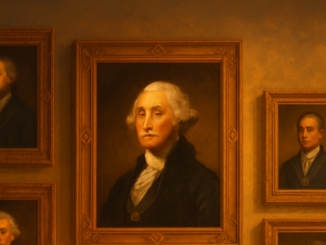
Historical portraits of famous Freemasons through the centuries
History

Famous Freemasons Throughout History: A Remarkable Legacy

For centuries, Freemasonry has attracted men who not only excelled in their fields but also felt a deep yearning for brotherhood, philosophical inquiry, and personal growth. Famous Freemasons can be found across virtually every domain of human endeavor — from politics and the arts to science, the military, and business. Their membership in a lodge speaks to a shared pursuit of wisdom, ethics, and community — values that Freemasonry has championed for more than three hundred years. This overview brings together a broad and diverse collection of historical and more recent brethren, placing their Masonic membership in the context of their lives and times. The Early Centuries: Freemasons in the 18th and 19th Century Organized Freemasonry as we know it today began in 1717 with the founding of the first Grand Lodge in London. From that moment, the movement spread rapidly across Europe and North America. It comes as no surprise, then, that many of the most influential thinkers, statesmen, and artists of the eighteenth and nineteenth centuries were drawn to the principles of the lodge. George Washington — Founding Father and Brother Perhaps the most iconic name among famous Freemasons is George Washington (1732–1799), the first President of the […]

Famous Freemasons and their hidden Masonic symbols throughout history
Symbolism & Rituals

Famous Freemasons and Their Hidden Symbols Explored

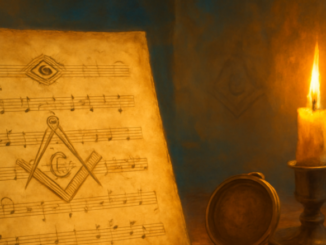
When people hear about famous Freemasons, the mind often drifts to conspiracy theories and shadowy meetings in smoke-filled back rooms. The reality is far richer and more fascinating. Countless historical figures who shaped the course of civilization were members of the Craft, and they wove Masonic symbolism into their art, music, and writings — not to conceal secrets, but to express universal truths that words alone cannot capture. In this article, we unravel that hidden language and explore why symbols meant so much to these illustrious Brethren. Why Famous Freemasons Chose the Language of Symbols The eighteenth and nineteenth centuries were a golden age for Freemasonry. Among its members were composers, writers, scientists, and statesmen. What united them was not merely a desire for brotherhood, but a shared symbolic language. That language allowed them to convey complex philosophical ideas without being pinned down by dogma or political allegiance. For these Brethren, symbols were not decorations or secret codes. They were thinking tools. Just as the compasses and the square serve the builder in achieving precision, symbols in Freemasonry serve to bring order to one’s inner life. A triangle points to the harmony of body, mind, and soul. A staircase represents […]