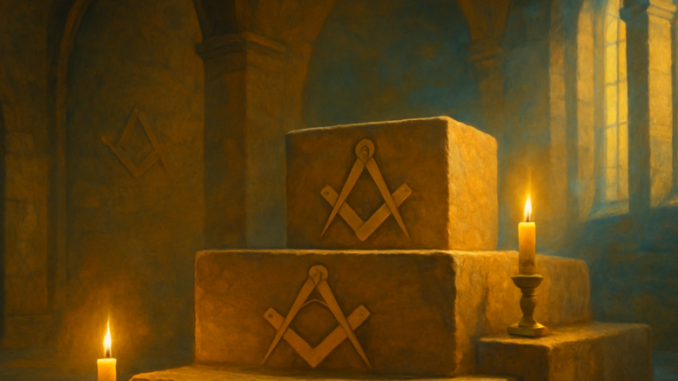
The degrees in Freemasonry form the backbone of the entire fraternity. They are far more than titles or ranks — they represent stages of personal growth, ethical deepening, and brotherly connection. Understanding the degree system is the key to unlocking the symbolism, rituals, and philosophy that define this centuries-old brotherhood. This article offers a comprehensive yet accessible overview of Masonic degrees, from the first step as an Apprentice to the highest levels found within the various rites.
The Historical Background of the Degree System
To truly understand the degrees in Freemasonry, it helps to look at the historical roots of the fraternity. Modern Freemasonry as we know it developed in early eighteenth-century Britain. On June 24, 1717, the first Grand Lodge was founded in London — a milestone that ushered in the era of modern, speculative Freemasonry. The four lodges that united on that occasion initially worked with a simple two-degree system: the Entered Apprentice and the Fellow Craft. It was only shortly afterward, around 1725, that the third degree — that of Master Mason — was added to the system.
The origins of this degree structure lie in the medieval stonemason guilds, often referred to as operative Freemasonry. The stonemasons and master builders who worked on the great cathedrals and castles of Europe followed a hierarchical structure in which apprentices gradually learned the craft from their masters. Knowledge was transmitted orally and protected by signs of recognition, secret words, and handshakes — elements that have been preserved in modern speculative Freemasonry, albeit in a symbolic sense.
Throughout the eighteenth and nineteenth centuries, enthusiastic Freemasons in various countries developed additional degrees that built upon the symbolism of the three foundational ones. Figures such as Antoine Court de Gébelin in France and later the Count de Grasse-Tilly contributed to the expansion and systematization of higher degree systems. This ultimately led to the creation of so-called “high degree” rites, the most well-known being the Ancient and Accepted Scottish Rite and the York Rite.
The Three Core Degrees: The Heart of Freemasonry
Virtually all Masonic lodges around the world work with the same three foundational degrees, regardless of which rite they follow. Together, these three degrees form what is known as the “Blue Lodge” or “Craft Masonry,” and they constitute the common foundation of the entire brotherhood.
First Degree: Entered Apprentice
The first degree is that of the Entered Apprentice — the starting point of every Freemason’s journey. The candidate is received into the lodge through a solemn ritual and is introduced for the first time to the symbolism, working tools, and philosophical principles of Freemasonry.
Central to the first degree is the theme of ignorance and the desire for light — both literally and figuratively. The candidate is symbolically kept in darkness and then led toward the light, representing the transition from ignorance to knowledge, from rough stone to polished stone. The rough ashlar is one of the most important symbols of this degree: it represents the human being in their original, unrefined state, who must be shaped and refined through self-study, reflection, and moral effort.
The working tools that play a central role in the first degree are the common gavel and the chisel — instruments used to work the rough stone. They symbolize willpower and intellect, the tools with which the Freemason works on his own character. In this degree, the Apprentice learns to listen, to observe, and to immerse himself in the fundamental values of the fraternity: brotherly love, relief, and truth.
Second Degree: Fellow Craft
The second degree is that of the Fellow Craft. In the medieval building guilds, the fellow craft had already acquired considerable skill and expertise; he traveled from one building site to another to further develop his abilities. In speculative Freemasonry, the Fellow Craft degree symbolizes the active pursuit of knowledge and the deepening of intellectual and moral capacities.
In the second degree, the focus shifts from the rough ashlar to the perfect ashlar — a stone that has been worked and is beginning to take its final form. The Fellow Craft is invited to pursue mastery of the seven liberal arts and sciences, a concept rooted in classical Greek and medieval educational tradition: grammar, rhetoric, and logic (the trivium), along with arithmetic, geometry, music, and astronomy (the quadrivium). Geometry holds a special place among these, as it is considered within Freemasonry to be the mother of all sciences.
The symbolic working tools of the Fellow Craft are the square and the plumb — representing uprightness and balance in both action and thought. The Fellow Craft works on his intellectual growth and learns to place his knowledge in service of his fellow human beings and society at large.
Third Degree: Master Mason
The third degree, that of Master Mason, is widely considered the most meaningful and profound of the three core degrees. The ritual of the Master Mason degree is richer, more complex, and emotionally deeper than those that precede it.
Central to the third degree is the legend of Hiram Abiff, the mythical master builder of King Solomon’s Temple. According to Masonic tradition, Hiram was the chief architect entrusted with the construction of the great temple in Jerusalem — a figure referenced in the Bible (1 Kings 7:13–14) but greatly expanded upon in Masonic lore. The dramatic retelling of Hiram’s story during the degree ritual conveys powerful lessons about fidelity, integrity, and the immortality of the soul.
The candidate symbolically experiences the fate of Hiram Abiff and, through this, confronts the most profound questions of human existence — mortality, the meaning of sacrifice, and the importance of remaining true to one’s obligations even in the face of the ultimate threat. The Master Mason degree marks a turning point: the brother is no longer merely learning or developing a skill but is now entrusted with the full knowledge and responsibilities of the Craft.
Upon completing the third degree, a Freemason is considered a full member of the fraternity. It is worth noting that the degree of Master Mason is, in principle, the highest degree in Craft Masonry. All subsequent or “higher” degrees found in bodies such as the Scottish Rite or the York Rite are supplementary — they expand upon the themes of the Blue Lodge but do not supersede the Master Mason degree in importance or authority.
Beyond the Blue Lodge: Higher Degree Systems
While the three core degrees form the universal foundation, many Freemasons choose to continue their Masonic education through additional degree systems. The two most prominent are the Ancient and Accepted Scottish Rite, which confers degrees numbered 4 through 33, and the York Rite, which includes the Royal Arch, the Cryptic Degrees, and the Knights Templar orders. These higher degrees are not “higher” in the sense of rank or authority over the Blue Lodge, but rather offer extended philosophical and symbolic exploration.
The Scottish Rite, for example, takes the themes introduced in the first three degrees and elaborates on them through a series of dramatic and allegorical degrees. Each degree presents a different moral or philosophical lesson, drawing on traditions ranging from the Old Testament to chivalric ideals and Enlightenment philosophy. The 33rd degree — Inspector General — is an honorary distinction conferred in recognition of exceptional service to Freemasonry or to society.
The York Rite follows a different path, with its degrees organized into three bodies. The Royal Arch degree is particularly significant, as many Masonic scholars consider it the completion of the Master Mason degree. The Cryptic Degrees explore hidden aspects of the Temple legend, while the Knights Templar orders introduce a distinctly Christian chivalric element to the Masonic journey.
What the Degrees Really Mean
It is important to understand that the degrees in Freemasonry are not a ladder of power or prestige. A 33rd-degree Scottish Rite Mason does not outrank a Master Mason in a Blue Lodge. The degree system is, at its core, an educational framework — a structured path of self-improvement through allegory and symbolism. Each degree invites the brother to look deeper within himself, to refine his character, and to live more consciously in service to others.
The beauty of the Masonic degree system lies in its universality and timelessness. Whether a Freemason sits in a lodge in London, New York, Sydney, or Amsterdam, the core symbols, legends, and moral lessons remain remarkably consistent. The rough ashlar, the square and compasses, the legend of Hiram Abiff — these are the threads that bind Freemasons across cultures, languages, and centuries into a single, enduring fraternity.
The degrees in Freemasonry offer a rich and layered journey of personal and moral development. From the moment a candidate first steps into the lodge as an Entered Apprentice, through the intellectual awakening of the Fellow Craft, to the profound experience of the Master Mason degree, each stage builds upon the last. And for those who wish to continue exploring, the higher degree systems of the Scottish Rite and York Rite extend that journey even further. Ultimately, the degrees are not about accumulating titles — they are about becoming a better person, one step at a time.
Copyright text & image: devrijmetselaar.nl
Texts are based on the ideas and content of the author of devrijmetselaar.nl, reviewed, corrected, and supplemented with the assistance of OpenAI. Images are created based on the ideas of the author of devrijmetselaar.nl using OpenAI/DALL-E.
Frequently Asked Questions
What are the three core degrees in Freemasonry?
The three core degrees are the Entered Apprentice (first degree), Fellow Craft (second degree), and Master Mason (third degree). Together, these foundational degrees form the basis of 'Blue Lodge' or 'Craft Masonry' and are practiced by virtually all Masonic lodges worldwide, regardless of which rite they follow.
When was modern Freemasonry established and how did the degree system develop?
Modern speculative Freemasonry was established on June 24, 1717, when the first Grand Lodge was founded in London. The initial system had two degrees (Entered Apprentice and Fellow Craft), with the Master Mason degree added around 1725. The degree structure evolved from the medieval stonemason guilds, preserving their hierarchical training methods and symbolic elements.
Are there degrees beyond the three core Masonic degrees?
Yes, many Freemasons pursue additional higher degrees beyond the three foundational degrees. Throughout the eighteenth and nineteenth centuries, higher degree systems were developed, most notably the Ancient and Accepted Scottish Rite and the York Rite, which build upon the symbolism and philosophy of the three core degrees.
What is the purpose of the Entered Apprentice degree?
The Entered Apprentice degree is the starting point of every Freemason's journey and introduces candidates to the fundamental symbolism, working tools, and philosophical principles of Freemasonry. The degree emphasizes the theme of seeking light—both literal and figurative—representing the candidate's transition from ignorance toward knowledge and enlightenment.
Are the three core degrees the same in all Masonic lodges?
Yes, virtually all Masonic lodges around the world work with the same three foundational degrees, regardless of their geographic location or which rite they follow. This consistency ensures a universal foundation of shared symbolism and ritual that unites the global Masonic brotherhood.

Be the first to comment