
Imagine leading a department for years where lives are saved daily, where pressure is almost unbearable, and where your team gives everything they have. Then a report lands on your desk concluding that the work culture under your leadership wasn’t safe enough — that the people around you didn’t always dare to speak up, and that your greatest strength turned out to be your biggest blind spot. The recent departure of a prominent ICU chief at a major Dutch teaching hospital touches on something far deeper than hospital politics. It strikes at the very heart of what brotherhood truly means.
When Leadership and Care Collide
When an experienced head of intensive care steps down after a critical report on workplace culture, the questions it raises extend far beyond the walls of any hospital. This isn’t a story about incompetence or bad intentions. It’s about something far more subtle: the way people interact within a hierarchy, the space that exists for vulnerability, and whether those who work the hardest are truly listening to the people around them.
In Freemasonry, we know this tension intimately. A lodge is neither a flat democracy nor a dictatorship. There is a Worshipful Master, there are officers, and there are brethren at different stages of their Masonic journey. But that structure doesn’t exist to consolidate power — it exists to create space. Space in which everyone, regardless of rank or experience, can speak freely and without fear. That is the difference between a hierarchy that serves and one that suffocates.
The Lodge as a Training Ground for Safe Culture
If you’ve ever wondered what Freemasons actually do during their meetings, one important element is what we call the “work piece” — a presentation by a brother, followed by an open exchange of ideas. What makes this remarkable is the shared agreement that everyone speaks from personal experience, without passing judgment on others. You don’t respond to win an argument; you respond to understand. You don’t speak to impress; you speak to genuinely make yourself known.
This sounds simple, but it’s a discipline most of us were never taught in our professional lives. In hospitals, businesses, schools — anywhere performance is measured — a culture easily develops where the loudest voice dominates. Not out of malice, but because the pressure is so intense that reflection feels like a luxury no one can afford. The report on the ICU’s work culture illustrates this mechanism perfectly: when the urgency of the work displaces every opportunity for vulnerability, an environment emerges where people choose silence over honesty.
What Aristotle Teaches Us About Friendship and Leadership
In his Nicomachean Ethics, Aristotle distinguished between three forms of friendship: friendship based on utility, on pleasure, and on virtue. Only the last, he wrote, is truly enduring. In a friendship of virtue, you want the best for the other person — not because it benefits you, but because you recognize them as an equal human being. Aristotle understood that this highest form of connection is only possible when both parties are willing to be honest, even when that honesty is painful.
Freemasonry builds directly on this Aristotelian ideal. Brotherhood is not a casual sense of camaraderie. It is a commitment to keep each other sharp, to hold up the mirror when it’s needed, and to accept that mirror when it’s turned toward you. This is precisely what breaks down when a work culture becomes unsafe: the mirror gets turned away. People stop offering honest feedback out of fear of consequences. And the person at the top doesn’t notice — precisely because no one dares to say it anymore.
True brotherhood is not the absence of hierarchy, but the presence of safety to speak the truth — even to those who stand above you.
The Courage to Step Back
There is something remarkable about someone who, after receiving such a report, decides to step down. In a culture driven by prestige and position, that is no easy gesture. You could also read it as an act of self-awareness, however painful. In Freemasonry, there is an ancient principle that speaks directly to this: the rough ashlar — the unfinished stone that must be shaped. Every Freemason sees himself as an imperfect work in progress, a stone with rough edges and uneven surfaces that are gradually smoothed throughout a lifetime. No one is ever finished. And the willingness to face your own imperfections is perhaps the most difficult, but also the most valuable, step on that path.
Marcus Aurelius, the Roman emperor and Stoic philosopher, wrote in his Meditations that every morning you should remind yourself you will encounter people who irritate you, who oppose you, who disappoint you. But then you must remember that they, just like you, are fallible beings trying to find their way. That attitude — a blend of resolve and compassion — is what brotherhood demands. Not only toward others, but toward yourself as well.
Why This Matters to You
You don’t have to be a Freemason to recognize yourself in this story. Think about your own workplace, your own team, your own family. Where is there genuine space to say what you really think? Where do you feel that invisible pressure to conform, to avoid rocking the boat, to preserve harmony at the expense of honesty? And if you hold a leadership position: when was the last time you sincerely asked someone how they were doing — without already expecting a particular answer?
What happened at this hospital is not an isolated incident. It is a pattern that repeats itself in every organization where passion and pressure converge. What Freemasonry offers is not a solution, but a practice. Every lodge meeting is a reminder that genuine connection requires effort — that brotherhood doesn’t emerge simply by being in the same room together, but by doing the difficult, ongoing work of truly seeing one another.
The lessons from this hospital crisis resonate far beyond medicine or Masonry. They remind us that the strongest leaders are not those who never falter, but those who create environments where others feel safe enough to tell them the truth. Whether in a lodge, a boardroom, or a family kitchen, the question remains the same: are you building a culture where honesty can survive? Because that — not titles, not rituals, not prestige — is what brotherhood is ultimately about.
Copyright text & image: devrijmetselaar.nl
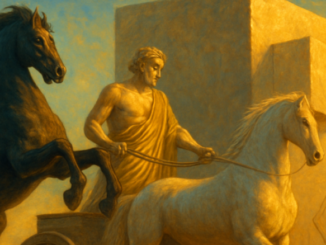
Texts are based on the ideas and content of the author of devrijmetselaar.nl, reviewed, corrected, and supplemented with the assistance of OpenAI. Images are created based on the ideas of the author of devrijmetselaar.nl using OpenAI/DALL-E.
Frequently Asked Questions
What is the main lesson from the hospital crisis mentioned in this article?
The article uses the departure of an ICU chief following a critical workplace culture report to illustrate how even well-intentioned leaders can inadvertently create an environment where people fear speaking up. The lesson centers on recognizing that leadership strength can become a blind spot, and that true brotherhood means creating space for everyone to voice concerns without fear, regardless of hierarchy.
How does Freemasonry address the tension between hierarchy and equality?
In Freemasonry, hierarchy exists not to consolidate power but to create space for open communication. While there is a Worshipful Master, officers, and brethren at different stages, the structure is designed to ensure that everyone—regardless of rank or experience—can speak freely and without fear. This distinguishes a hierarchy that serves from one that suffocates.
What is the 'work piece' and why is it significant to Masonic culture?
The 'work piece' is a presentation by a brother followed by open exchange of ideas, with the shared agreement that members speak from personal experience without judgment. Rather than responding to win arguments or impress others, participants respond to understand. This practice teaches discipline in reflection and genuine communication—skills often lacking in high-pressure professional environments like hospitals.



Be the first to comment