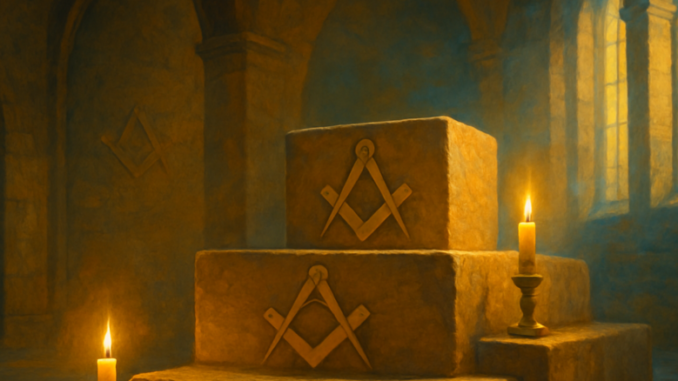
Freemasonry is one of the world’s oldest and most widely recognised fraternal organisations, built upon a rich system of moral instruction, symbolism, and ceremonial tradition. Central to the Masonic experience is a progressive series of initiations known as the degrees of Freemasonry — structured stages through which a member advances, each carrying its own teachings, symbols, and obligations. These degrees are not merely titles or ranks; they represent a journey of self-improvement, philosophical enquiry, and brotherhood. Whether you are a curious observer or someone considering membership, understanding these degrees offers a meaningful window into what Freemasonry is truly about.
Historical Background of the Masonic Degree System
The origins of the degree system within Freemasonry are closely linked to the emergence of speculative Masonry in the early eighteenth century. While operative stonemasonry — the craft of building cathedrals and castles — naturally distinguished between apprentices, journeymen, and master craftsmen, the founding of the Premier Grand Lodge of England in 1717 in London marked the moment when Freemasonry became a formal philosophical and fraternal institution rather than a trade guild.
In its earliest documented form, Freemasonry worked with just two degrees: the Entered Apprentice and the Fellow Craft. The Master Mason degree, which would become the cornerstone of the entire system, was developed and formalised during the 1720s. James Anderson, a Scottish minister, and Jean-Théophile Désaguliers, a French-born natural philosopher and Fellow of the Royal Society, were instrumental in codifying Masonic practice during this period. Anderson’s Constitutions of 1723 remains a foundational document of the fraternity.
As Freemasonry spread across Europe and into the Americas throughout the eighteenth century, additional degrees began to proliferate. Enthusiastic Masons in France, in particular, began elaborating upon the basic three-degree system, giving rise to what would eventually become the Scottish Rite and other appendant bodies. By the late 1700s, the degree landscape had grown considerably more complex, with various rites offering anywhere from a handful to several dozen additional degrees. The legendary chevalier Andrew Michael Ramsay, in his famous 1737 oration in Paris, helped inspire a wave of chivalric and philosophical degrees that significantly expanded the symbolic vocabulary of Freemasonry.
The Three Degrees of the Blue Lodge
The foundation of all Masonic experience rests in the Symbolic Lodge, sometimes called the Blue Lodge — a reference to the traditional colour of Masonic lodge décor, symbolising the celestial vault of heaven. Within this lodge, every Freemason progresses through three essential degrees of Freemasonry, each building upon the last in symbolism and moral teaching.
The First Degree: Entered Apprentice
The Entered Apprentice degree is the first and most fundamental of all the degrees of Freemasonry. It represents the beginning of a man’s Masonic journey — a symbolic birth into the fraternity. During the initiation ceremony, the candidate is introduced to the lodge in a state of symbolic darkness, representing ignorance, and is then brought progressively into light, representing knowledge and truth. The ritual draws upon the imagery of the operative stonemason’s apprentice, who enters the craft knowing nothing and must learn his trade from the ground up.
The lessons of the Entered Apprentice degree centre on the importance of moral foundation, the duty of a man to his God, his neighbour, and himself, and the value of silence and circumspection. The working tools associated with this degree are the twenty-four inch gauge and the common gavel — instruments that teach the initiate how to apportion his time wisely and to remove the roughness of vice from his character.
The Second Degree: Fellow Craft
Having demonstrated commitment and familiarity with the first degree, a Mason may be passed to the Fellow Craft degree. This middle degree focuses on the development of intellectual faculties and the pursuit of knowledge. The Fellow Craft is symbolically understood as a worker who has gained some skill in the craft and now turns his attention to the liberal arts and sciences — the classical curriculum of grammar, rhetoric, logic, arithmetic, geometry, music, and astronomy.
Geometry holds a place of particular importance in this degree, reflecting Freemasonry’s historical connection to the mathematical principles underlying all great architecture. The working tools of the Fellow Craft are the square, the level, and the plumb — instruments of precision that remind the Mason to live according to right principles, treat all people equally, and walk uprightly before God and man. The imagery of the winding staircase, ascending toward the Middle Chamber of Solomon’s Temple, is central to the ritual and serves as a powerful metaphor for intellectual and spiritual ascent.
The Third Degree: Master Mason
The Master Mason degree is the most solemn and celebrated of the three foundational degrees of Freemasonry. It is said that a man who has received the third degree has received all that Freemasonry essentially offers — every subsequent degree is considered an elaboration or complement to this central experience. The degree centres on the allegorical story of Hiram Abiff, the legendary architect of King Solomon’s Temple, who is said to have been slain by three ruffians seeking to extract the Master’s secrets by force. His faithfulness unto death and the subsequent search for what was lost provide the degree with its profound themes of mortality, resurrection, and the immortality of the soul.
The working tools of the Master Mason are the skirret, the pencil, and the compasses, each carrying moral lessons about the planning of one’s life, the importance of leaving a worthy record, and the containment of passion within proper bounds. The Master Mason degree initiates the candidate into the most central mysteries of the Craft and admits him as a full member of the Masonic brotherhood with all rights and privileges thereunto belonging.
Appendant Bodies and Higher Degrees
While the three degrees of the Blue Lodge form the universal foundation of Freemasonry, the global fraternity has developed a rich array of additional degrees through what are known as appendant bodies — organisations to which a Master Mason may apply for further advancement. These bodies offer what are variously called side degrees, additional degrees, or higher degrees, though it is important to note that none of these are considered superior to the Master Mason degree in essential Masonic standing. Rather, they expand and illuminate its teachings.
The York Rite
The York Rite is one of the two principal appendant bodies in Freemasonry, particularly prevalent in the United States, the United Kingdom, and many Commonwealth countries. It is itself a collection of three bodies, each conferring further degrees of Freemasonry upon eligible Master Masons.
The Chapter of Royal Arch Masons confers four degrees: Mark Master, Virtual Past Master, Most Excellent Master, and Royal Arch Mason. Of these, the Royal Arch degree holds especial significance. In England, it is considered so integral to the system that the United Grand Lodge of England officially defines pure ancient Masonry as consisting of the three degrees, including the Supreme Order of the Holy Royal Arch. The Royal Arch is said to complete the story left unfinished by the Master Mason degree, recovering what was lost and providing a profound resolution to the central Masonic narrative.
The Council of Royal and Select Masters, sometimes called the Cryptic Council, confers the Royal Master, Select Master, and Super Excellent Master degrees. These degrees explore the construction of a secret vault beneath Solomon’s Temple and the preservation of Masonic secrets against the possibility of catastrophe — themes rich in symbolism and drama.
The Commandery of Knights Templar is the chivalric branch of the York Rite, conferring the Order of the Red Cross, the Order of Malta, and the Order of the Temple. These degrees draw upon the imagery and history of the medieval Knights Templar and require candidates to profess a belief in the Christian faith, making the Commandery one of the few explicitly Christian bodies in Freemasonry.
The Scottish Rite
The Ancient and Accepted Scottish Rite — known in England and many other countries as the Ancient and Accepted Rite — is the other principal appendant body of Freemasonry and the one that offers the greatest number of additional degrees of Freemasonry. It confers degrees numbered from the fourth through the thirty-second, with the thirty-third degree awarded as an honorary distinction for outstanding service to the Rite and to Freemasonry generally.
Despite its name, the Scottish Rite did not originate in Scotland. It developed primarily in France during the eighteenth century and was formally organised in Charleston, South Carolina, in 1801. Albert Pike, a nineteenth-century American lawyer, poet, and Masonic scholar, is widely regarded as the man who gave the Scottish Rite its distinctive character and depth. His monumental work Morals and Dogma, published in 1871, remains one of the most comprehensive explorations of Masonic symbolism and philosophy ever written.
The degrees of the Scottish Rite are grouped into several series or bodies. In the Southern Jurisdiction of the United States, these include the Lodge of Perfection (4°–14°), the Chapter of Rose Croix (15°–18°), the Council of Kadosh (19°–30°), the Consistory (31°–32°), and the Supreme Council (33°). Each series focuses on different philosophical, ethical, and historical themes — ranging from the rebuilding of Solomon’s Temple to the traditions of medieval chivalry, from Hermetic philosophy to Enlightenment-era ideals of reason and virtue. The degrees of the Scottish Rite are theatrical and elaborate, often presented as full dramatic performances, and they are considered among the most intellectually rich experiences available within organised Freemasonry.
Other Rites and Masonic Bodies
Beyond the York and Scottish Rites, Freemasonry has given rise to numerous other systems and bodies, each with their own degrees of Freemasonry and areas of emphasis.
The Order of the Eastern Star, founded in the mid-nineteenth century largely through the work of lawyer and educator Rob Morris, extends Masonic-affiliated membership to women who are related to Master Masons, as well as to Master Masons themselves. Its five degrees are based on stories of heroic women from the Bible and carry moral lessons of fidelity, constancy, loyalty, faith, and love.
The Shrine (Ancient Arabic Order of the Nobles of the Mystic Shrine), famously associated with its charitable hospitals for children, is open to Master Masons of either the York or Scottish Rite and is known for its convivial spirit alongside its humanitarian work.
The Royal Order of Scotland, the Red Cross of Constantine, and the Societas Rosicruciana are among many other appendant bodies that offer further degrees of a philosophical, chivalric, or esoteric character, each enriching the broader tapestry of Masonic experience.
The Symbolic Meaning Behind the Degree Structure
To understand the degrees of Freemasonry is to understand that Masonry is fundamentally a system of ethics clothed in allegory and illustrated by symbols. The progressive nature of the degrees is itself deeply meaningful. Just as the operative mason began as a rough-hewn apprentice and worked his way toward the mastery of his craft, the speculative Mason moves through stages of moral and intellectual refinement.
The concept of light is paramount across all degrees of Freemasonry. Each degree represents an increased access to symbolic light — that is, to knowledge, wisdom, and truth. This metaphor connects Freemasonry to some of the deepest currents of Western philosophical and spiritual thought, from Plato’s allegory of the cave to the Enlightenment celebration of reason as the liberator of mankind from darkness and superstition.
Similarly, the architectural imagery that runs through every degree — the rough ashlar and the perfect ashlar, the foundation stone and the keystone, the pillars of Boaz and Jachin — serves as a constant reminder that the true work of Freemasonry is the construction of a moral and spiritual edifice within the individual Mason himself. As the operative craftsman shaped stone, the speculative Mason is called to shape his own character.
Freemasonry Degrees Around the World
While the three-degree Blue Lodge system is universal across regular Freemasonry worldwide, the appendant degree systems vary considerably by country and jurisdiction. In continental Europe, including the Netherlands — where vrijmetselarij (Freemasonry) has a distinguished history dating to the eighteenth century — the degree landscape may differ from the Anglo-American model. The Grand Orient de France, for instance, has historically taken a different philosophical approach and organisational structure from the United Grand Lodge of England.
In the Netherlands, the Order of Freemasons under the Grand East of the Netherlands (Orde van Vrijmetselaren onder het Grootoosten der Nederlanden), founded in 1756, has its own traditions and practices while maintaining fraternal relations with many Grand Lodges worldwide. Dutch Freemasonry has produced many notable figures, and the lodge system there reflects the broader European tradition of philosophical enquiry and civic virtue that has always been central to the craft.
Regardless of nationality or specific rite, what unites all Freemasons across the degrees is a shared commitment to the core values of brotherly love, relief, and truth — the three great tenets upon which the entire institution rests.
Frequently Asked Questions About the Degrees of Freemasonry
How many degrees of Freemasonry are there in total?
The number varies depending on which rites and appendant bodies one considers. Every regular Freemason receives three degrees in the Blue Lodge: Entered Apprentice, Fellow Craft, and Master Mason. Beyond these, the Scottish Rite offers degrees up to the 32nd (with the honorary 33rd), while the York Rite offers additional degrees through its Chapter, Council, and Commandery. Including all recognised rites and bodies worldwide, there are well over one hundred named degrees associated with the broader Masonic system, though the first three are the only universally required ones.
Do you need to complete all degrees to be a full Freemason?
No. A man who has received the three degrees of the Blue Lodge — Entered Apprentice, Fellow Craft, and Master Mason — is considered a full Freemason with all the rights and privileges of membership. The additional degrees offered by appendant bodies such as the Scottish Rite or York Rite are entirely optional, though many Masons find them deeply rewarding extensions of the core Masonic experience. Membership in appendant bodies typically requires that a candidate first be a Master Mason in good standing.
What is the significance of the 33rd degree in Freemasonry?
The 33rd degree is the highest degree within the Scottish Rite and is conferred exclusively as an honorary distinction upon 32nd-degree Masons who have made outstanding contributions to Freemasonry and to society at large. It is not attained through study or regular progression but is awarded by the Supreme Council. Recipients become “Inspector General Honorary” and are granted the title of “Sovereign Grand Inspector General.” Notable historical figures who received the 33rd degree include Albert Pike and many prominent statesmen, scholars, and philanthropists. It is widely regarded as one of the greatest honours in the Masonic world.
Are the higher degrees secret?
The ceremonies and specific ritual details of each degree are traditionally kept confidential among those who have received them, in keeping with the age-old Masonic tradition of guarding one’s obligations. However, the existence, structure, and general themes of all the degrees of Freemasonry are publicly known and have been extensively discussed in books, academic works, and official publications by Masonic organisations themselves. Albert Pike’s Morals and Dogma, for example, is a detailed public commentary on the Scottish Rite degrees. Freemasonry, in short, is not a secret society but a society with certain private traditions.
Can women receive Masonic degrees?
Traditional or “regular” Freemasonry, as recognised by the United Grand Lodge of England and most mainstream Grand Lodges, is restricted to men. However, there are co-Masonic organisations, such as Le Droit Humain (founded in France in 1893), that confer all degrees of Freemasonry equally upon men and women. There are also separate women’s Grand Lodges in several countries that work the full range of Masonic degrees exclusively for women. The Order of the Eastern Star and similar bodies offer Masonic-affiliated degrees to both men and women in a mixed setting. The question of gender and Masonic membership remains a topic of ongoing discussion within the broader Masonic community.
Read more about this topic
- All articles in this category: Freemasonry & Society
- The Crack in the Ice: What Fractures Teach Us About Resilience
- Defeat and Leadership: What Football Crises Teach Us
- The Power of Recognition: Freemasonry and the Royal Lunch
- Trial Delayed by Death: Masonic Lessons on Justice
- Revenge and Forgiveness: What Freemasons Learn from Anger
Frequently Asked Questions
What are the three main degrees of Freemasonry?
The three main degrees of Freemasonry are the Entered Apprentice, the Fellow Craft, and the Master Mason. These foundational degrees were formalized during the early 1700s and form the core of the Masonic system. Each degree carries its own teachings, symbols, and obligations that guide a member's progression through the fraternity.
When did the degree system in Freemasonry originate?
The degree system originated in the early eighteenth century with the emergence of speculative Masonry. The Premier Grand Lodge of England was founded in 1717 in London, transforming Freemasonry from an operative trade guild into a formal philosophical and fraternal institution. The Master Mason degree was developed and formalized during the 1720s under the influence of figures like James Anderson and Jean-Théophile Désaguliers.
Are there degrees beyond the three main Masonic degrees?
Yes, as Freemasonry spread across Europe and the Americas during the eighteenth century, additional degrees began to proliferate. Notably, Masons in France elaborated upon the basic three-degree system, giving rise to the Scottish Rite and other appendant bodies. By the late 1700s, various rites offered anywhere from a handful to several dozen additional degrees beyond the foundational three.

Be the first to comment