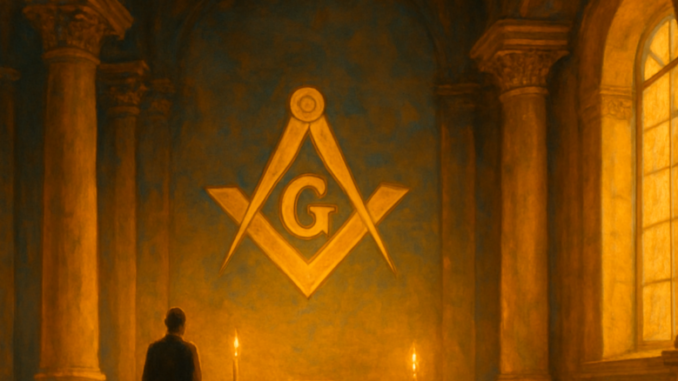
Freemasonry is one of the world’s oldest and most widespread fraternal organisations, uniting men of good character across cultures, faiths, and backgrounds under a shared commitment to moral development, brotherly love, and service to society. Understanding what is Freemasonry means exploring a tradition that stretches back centuries, encompassing a rich tapestry of symbolism, ritual, philosophy, and charitable action. Far from being a secret society, Freemasonry is better described as a society with secrets — an organisation that is open about its existence and values while preserving certain ceremonial traditions as part of its unique character. Today, millions of Freemasons meet in lodges around the world, continuing a tradition that has shaped culture, philosophy, and civic life in profound ways.
Historical Background and Origins
The history of Freemasonry is as fascinating as it is complex. While the organisation as we know it today was formally established in the early eighteenth century, its roots reach much deeper — both in documented history and in the symbolic traditions it has adopted.
The Stonemason Guilds
The most widely accepted historical account traces the origins of Freemasonry to the medieval stonemason guilds of Europe. Skilled craftsmen who built the great cathedrals, castles, and public buildings of the Middle Ages formed tight-knit professional brotherhoods to protect their trade secrets, regulate standards of craftsmanship, and provide mutual support to their members. These guilds used specific signs, words, and symbols to identify fellow craftsmen and distinguish different levels of skill — from the Entered Apprentice learning the basics of the trade, to the Fellow Craft developing his skills, to the Master Mason who had achieved full professional competence. This three-tier structure survives to this day in the three degrees of Craft Freemasonry.
The transition from “operative” masonry — the actual building trade — to “speculative” masonry — the philosophical and moral fraternity — is believed to have occurred gradually during the sixteenth and seventeenth centuries. As the demand for cathedral construction declined and the guilds became less exclusively focused on stonework, they began admitting “accepted” members who were not working stonemasons but were interested in the moral and philosophical teachings the craft had come to represent.
The Formation of the Grand Lodge
The pivotal moment in the formal history of Freemasonry came on 24 June 1717, when four London lodges came together at the Goose and Gridiron Ale-House in St Paul’s Churchyard to form the first Grand Lodge of England. This event marked the birth of modern, organised Freemasonry. The early leaders of this new institution, including the Reverend James Anderson and Dr John Theophilus Desaguliers, worked to codify the principles, rules, and rituals of the craft. Anderson’s Constitutions of the Free-Masons, published in 1723, remains a foundational document of the fraternity, articulating its ancient charges and landmark principles.
From London, Freemasonry spread rapidly. Grand Lodges were established in Ireland in 1725 and Scotland in 1736. By the mid-eighteenth century, lodges had appeared across continental Europe, the Americas, and beyond. The Age of Enlightenment proved to be fertile ground for Masonic ideals, as educated men across Europe were drawn to the fraternity’s emphasis on reason, tolerance, and the improvement of human society. Notable figures of the era including Voltaire, Benjamin Franklin, George Washington, Wolfgang Amadeus Mozart, and Johann Wolfgang von Goethe were among those who joined Masonic lodges, reflecting the intellectual prestige the organisation enjoyed during this period.
Freemasonry Through the Ages
Throughout the nineteenth and twentieth centuries, Freemasonry continued to grow and evolve. In many countries it became deeply intertwined with civic and philanthropic life. In the United States, numerous founding fathers were Freemasons, and Masonic values of liberty, equality, and fraternity resonated strongly with the ideals of the new republic. In Europe, Freemasonry often found itself at odds with authoritarian regimes — Napoleon initially used the fraternity for political purposes, while later dictatorships, including Nazi Germany and Soviet-era communist states, actively suppressed and persecuted Freemasons, viewing the brotherhood’s commitment to individual liberty and international fraternity as a threat.
Today, Freemasonry is practiced in virtually every country in the world. The United Grand Lodge of England, based at Freemasons’ Hall in London, remains one of the most influential Masonic bodies globally, alongside major Grand Lodges in the United States, continental Europe, and beyond. Membership has evolved with the times, with many lodges actively working to engage younger generations and demonstrate the continuing relevance of Masonic values in the modern world.
Core Concepts and Values
At the heart of what is Freemasonry lies a set of core values and philosophical principles that have guided the fraternity throughout its history. These principles are universal in their appeal and practical in their application to everyday life.
Brotherly Love, Relief, and Truth
The three great tenets of Freemasonry — Brotherly Love, Relief, and Truth — encapsulate the essential character of the organisation. Brotherly Love refers to the bond of friendship and mutual respect that Masons are encouraged to cultivate not only with fellow members but with all of humanity. Relief speaks to the tradition of charitable giving and practical assistance, both within the Masonic family and in the wider community. Truth represents the commitment to personal integrity, honesty, and the ongoing pursuit of wisdom and self-knowledge.
These are not merely abstract ideals. Masons are expected to bring these principles into their daily lives — in their relationships, their professional conduct, and their engagement with society. The lodge provides a space in which members can reflect on their adherence to these values and support one another in living up to them.
The Concept of Self-Improvement
One of the most distinctive and appealing aspects of Freemasonry is its emphasis on the continual improvement of the individual. Masons speak of “working on the rough ashlar” — a reference to the unfinished stone that a new mason shapes and smooths over time. Just as a stonemason transforms a rough block of stone into a polished building block, each Freemason is encouraged to identify his own flaws and imperfections and work diligently to overcome them. This is not a one-time process but a lifelong journey of moral and intellectual development.
This philosophy of self-improvement is embedded in the rituals and teachings of every degree. Each step a Mason takes within the fraternity is designed to introduce new ideas, challenge existing assumptions, and encourage deeper reflection on what it means to be a good person and a responsible member of society.
Tolerance and Respect for Diverse Beliefs
Freemasonry is notable for its broad acceptance of men from different religious, cultural, and philosophical backgrounds. From its earliest formal constitutions, the fraternity has required only that members believe in a Supreme Being — described in Masonic terms as the “Grand Architect of the Universe” — without prescribing any particular religious faith or denomination. This principle of tolerant theism has allowed Freemasonry to serve as a common meeting ground for Christians, Jews, Muslims, Buddhists, Hindus, and men of many other faiths.
Two topics — religion and politics — are traditionally excluded from discussion within the lodge. This rule is not a form of intellectual censorship but rather a practical wisdom: by setting aside the subjects most likely to cause division, the lodge creates a space where men of genuinely different backgrounds can focus on what they share rather than what separates them.
The Structure of Freemasonry
The Lodge and Its Officers
The basic unit of Freemasonry is the lodge. A lodge is a local group of Masons who meet regularly to conduct ritual, discuss matters of fraternal business, and socialise. Each lodge operates under a charter granted by a Grand Lodge — the governing body for Freemasonry within a particular country or region. Within the lodge, a range of officers carry out specific roles during ceremonies, from the Worshipful Master who presides over meetings, to the Wardens, Deacons, and Stewards who assist in conducting the work of the lodge.
Lodges vary enormously in size, character, and culture. Some lodges are large and formal, while others are smaller and more intimate. Many lodges develop their own particular character over generations, shaped by the personalities and interests of their members. What unites them all is a shared commitment to the same fundamental principles and a common ritual heritage.
The Three Degrees
Craft Freemasonry, which forms the foundation of the fraternity, consists of three degrees: Entered Apprentice, Fellow Craft, and Master Mason. Each degree is conferred through a ceremony — a ritual drama that uses allegory and symbolism to convey moral and philosophical teachings. The candidate plays an active role in these ceremonies, experiencing rather than merely observing the lessons being communicated.
The First Degree, Entered Apprentice, introduces the candidate to the principles and practices of Freemasonry and speaks of the importance of moral foundations. The Second Degree, Fellow Craft, focuses on learning, intellectual development, and the liberal arts and sciences. The Third Degree, the climax of Craft Masonry, tells the allegorical story of Hiram Abiff, the legendary architect of King Solomon’s Temple, and meditates on themes of loyalty, integrity, and the mystery of mortality. Upon completion of the Third Degree, a Mason is a full member of the fraternity and may participate fully in lodge life.
Higher Degrees and Additional Orders
Beyond the three degrees of Craft Masonry, there exists a wide range of appendant and affiliated bodies that offer further degrees and teachings to Master Masons who wish to explore additional aspects of Masonic philosophy. The Royal Arch, which in England is considered an integral part of Craft Masonry, deepens the symbolic teachings of the Third Degree. The Ancient and Accepted Scottish Rite offers a further series of degrees, as does the York Rite in the United States. Various other Masonic orders — including the Knights Templar, the Royal Order of Scotland, and the Societas Rosicruciana — offer still further avenues of Masonic exploration to those who seek them.
It is important to note that participation in these higher degrees and orders is entirely voluntary. Many Masons find complete fulfilment in the three degrees of Craft Masonry and never seek further advancement, while others embrace the opportunity to explore additional dimensions of the tradition.
Symbols and Ritual in Freemasonry
Symbolism is the language of Freemasonry. The fraternity uses tools, architectural elements, and geometric figures as vehicles for moral and philosophical instruction, making abstract ideas tangible and memorable. Understanding the symbols of Freemasonry is key to understanding what the organisation is about.
The Square and Compasses
Perhaps the most universally recognised symbol of Freemasonry is the square and compasses, often depicted with the letter “G” at their centre. The square is a tool for ensuring that surfaces and angles are true — symbolically representing moral rectitude and the importance of acting with integrity. The compasses are used to draw circles and measure distances, symbolising the need to keep one’s desires and ambitions within proper limits. The letter “G” stands variously for Geometry — the foundation of the stonemason’s craft — and for the concept of God or the Grand Architect of the Universe.
The Working Tools
Each of the three degrees employs a set of working tools drawn from the stonemason’s kit. The Entered Apprentice is presented with the gavel, chisel, and gauge — tools for shaping raw stone, here used to symbolise the disciplining and improvement of one’s character. The Fellow Craft’s tools include the square, level, and plumb rule, speaking to the importance of balanced and upright conduct. The Master Mason’s tools — the skirret, pencil, and compasses — remind the Mason of the divine plan within which human life is set.
The Ritual and Its Purpose
Masonic ritual can appear mysterious to outsiders, but its purpose is fundamentally educational and transformative. By participating in carefully scripted ceremonies that employ drama, allegory, and symbol, candidates engage with philosophical and moral ideas in a way that is experiential rather than merely intellectual. The use of ritual also creates a powerful sense of shared heritage, connecting each new Mason with the long line of brothers who have gone before him and experienced the same ceremonies in lodges around the world.
Freemasonry’s Contribution to Society
Throughout its history, Freemasonry has made significant contributions to the societies in which it has operated. Masonic lodges have traditionally served as important civic institutions, providing spaces for educated and public-spirited men to meet, exchange ideas, and work together for the common good. The values of the Enlightenment — reason, tolerance, liberty, and human dignity — were nurtured and promoted in Masonic lodges across Europe and America during the eighteenth century, and these values went on to shape democratic political systems, modern scientific institutions, and principles of religious freedom.
Freemasonry has also been a major force in philanthropy. Masonic charities operate in countries around the world, funding hospitals, schools, disaster relief, and support for vulnerable individuals and families. In the United Kingdom alone, Freemasonry donates tens of millions of pounds to charitable causes each year, making it one of the largest single sources of charitable giving in the country. These contributions are made both through formal Masonic charities and through the individual acts of generosity that the fraternity inspires among its members.
Common Misconceptions About Freemasonry
Freemasonry has, over the centuries, attracted a range of misconceptions and conspiracy theories. Some have imagined it as a shadowy organisation secretly controlling world events; others have mischaracterised its religious neutrality as hostility to religion. In reality, Freemasonry is a transparent and law-abiding organisation whose membership lists, charitable activities, and governing principles are publicly available. It does not seek political power, does not discriminate on grounds of religion or ethnicity, and actively encourages its members to be responsible citizens, faithful to the laws and institutions of their country.
The element of secrecy in Freemasonry is real but limited and has a clear purpose. The traditional signs, words, and tokens used to identify fellow Masons are kept private as part of the ritual character of the fraternity, but the existence, principles, and general practices of Freemasonry are openly discussed and publicly documented. Many Grand Lodges maintain active public communications programmes, welcome visitors to open events, and publish extensive information about the fraternity online and in print.
Frequently Asked Questions About Freemasonry
Who can become a Freemason?
In most jurisdictions, Freemasonry is open to adult men who believe in a Supreme Being, are of good moral character, and come to the fraternity of their own free will. There is no requirement to belong to a particular religion, political party, or social class. In a number of countries and jurisdictions, women’s Masonic orders and co-Masonic organisations also operate, offering the Masonic experience to women or to men and women together. The best way to find out about joining is to contact a local lodge or Grand Lodge directly.
What happens at a Masonic lodge meeting?
A typical lodge meeting has two main components: the formal and the informal. The formal part, conducted in the lodge room with members in regalia, includes the opening of the lodge according to ritual, the conduct of any degree ceremonies, the transaction of lodge business, and the closing of the lodge. This is followed by a convivial dinner or social gathering — often called the “festive board” — where members and their guests relax, share a meal, and enjoy each other’s company. The combination of serious ritual work and warm fellowship is characteristic of Masonic lodge life around the world.
Is Freemasonry a religion?
No. Freemasonry is not a religion and does not seek to replace or compete with religion. While it requires a belief in a Supreme Being and uses religious language and imagery in its rituals, it does not offer sacraments, does not claim to provide a path to salvation, and does not have a theology or clergy. Members are encouraged to be active in their own religious communities. Freemasonry is best understood as a system of moral philosophy and fraternal fellowship that complements — rather than conflicts with — religious belief.
Why is Freemasonry considered secret?
The perception of Freemasonry as secretive arises primarily from two sources: the traditional privacy surrounding certain ritual elements, and the historical practice of members not always publicly identifying themselves as Freemasons. Today, most Grand Lodges actively communicate about their organisation and many Masons are proud to identify their membership. The ritual privacy that remains serves to preserve the integrity and impact of the ceremonial experience for new candidates, and is comparable to the way in which many cultural and religious traditions maintain certain practices as sacred or reserved for initiates.
What is the relationship between Freemasonry and charitable work?
Charity is central to the Masonic identity. From its earliest days, the fraternity has maintained a strong tradition of caring for its own members in need, as well as contributing generously to the wider community. Modern Masonic charities fund a broad range of causes, including medical research, hospices, educational bursaries, emergency relief, and support for the elderly and disadvantaged. The motivation for this charitable work flows directly from the core Masonic value of Relief — the belief that those who are fortunate have a duty to help those who are not. For many Masons, charitable engagement is among the most rewarding aspects of their membership.
Frequently Asked Questions
Is Freemasonry a secret society?
No, Freemasonry is better described as a society with secrets rather than a secret society. The organisation is open about its existence, values, and charitable missions, with millions of Freemasons meeting openly in lodges worldwide. However, it does preserve certain ceremonial traditions and rituals as part of its unique character and spiritual practice.
What are the origins of Freemasonry?
Freemasonry traces its roots back to the medieval stonemason guilds of Europe, where skilled craftsmen built great cathedrals and public buildings while protecting their trade secrets and maintaining high standards of craftsmanship. The transition from practical 'operative' masonry to philosophical 'speculative' masonry occurred gradually during the sixteenth and seventeenth centuries, culminating in the formal establishment of modern Freemasonry with the creation of the first Grand Lodge of England in 1717.
What do Freemasons believe in?
Freemasons are united by a shared commitment to moral development, brotherly love, and service to society, welcoming men of good character across all cultures, faiths, and backgrounds. The organisation emphasises philosophical teachings, personal improvement, and charitable action, drawing on symbolic traditions and rituals that have shaped culture and civic life for centuries.
What are the degrees of Freemasonry?
Freemasonry has three degrees that survive from the medieval stonemason guilds: the Entered Apprentice (learning the basics), the Fellow Craft (developing skills), and the Master Mason (achieving full competence and mastery). This three-tier structure reflects the original progression of skilled craftsmen in the building trade and remains central to Freemasonry today.
How many Freemasons are there in the world?
Millions of Freemasons meet in lodges around the world today, continuing a tradition that has influenced culture, philosophy, and civic engagement globally. Freemasonry remains one of the world's oldest and most widespread fraternal organisations, with members spanning diverse nations, cultures, and backgrounds.

Be the first to comment