Freemasonry is one of the world’s oldest and most respected fraternal organizations, with millions of members across the globe united by shared values of brotherly love, relief, and truth. For many people, the idea of becoming a Freemason is both intriguing and slightly mysterious — surrounded by centuries of tradition, symbolism, and legend. Yet the process of joining is far more straightforward than most outsiders imagine. This page offers a thorough and honest exploration of what Freemasonry is, where it comes from, and — most practically — how to join Freemasonry if you feel called to do so.
A Brief History of Freemasonry
To understand what you are joining, it helps to know where Freemasonry comes from. The organization traces its symbolic and philosophical roots to the medieval stonemason guilds of Europe — skilled craftsmen who built the great cathedrals and castles of the Middle Ages. These guilds developed passwords, signs, and rituals to distinguish trained master craftsmen from unskilled workers, and to protect the secrets of their trade.
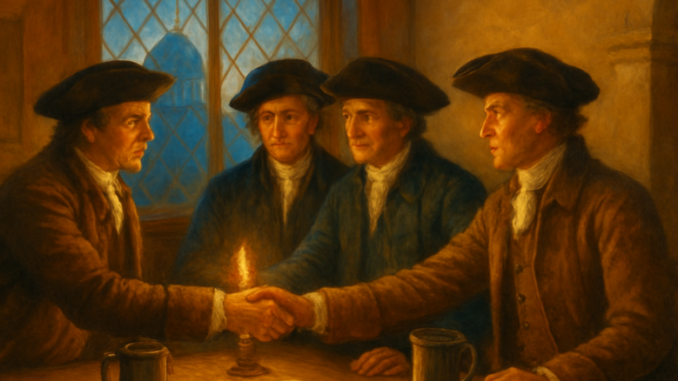
The transition from “operative” (working) masonry to “speculative” (philosophical) masonry took place gradually during the 17th century. The first Grand Lodge — the body that governs Freemasonry in a given jurisdiction — was established in London in 1717, when four London lodges came together at the Goose and Gridiron Ale-House on St. Paul’s Churchyard. This event is widely regarded as the formal birth of modern speculative Freemasonry.
From England, Freemasonry spread rapidly across Europe and into the Americas. By the mid-18th century, lodges had been established in France, Germany, the Netherlands, Sweden, and the American colonies. Notable early Freemasons include Benjamin Franklin, George Washington, Wolfgang Amadeus Mozart, and Voltaire — figures who were drawn to the organization’s emphasis on reason, tolerance, and the moral improvement of the individual. In the Netherlands, the first lodge was founded in The Hague in 1734, making Dutch Freemasonry one of the oldest continuous traditions on the European continent.
Over the following two centuries, Freemasonry became a global phenomenon. Today, the Grand Lodge of the Netherlands (Orde van Vrijmetselaren onder het Grootoosten der Nederlanden) oversees dozens of lodges across the country, maintaining the same core principles that have guided the fraternity since its founding.
Core Values and Philosophy
Before exploring the practical steps of how to join Freemasonry, it is important to understand what the organization stands for. Freemasonry is not a religion, nor is it a political party. It does not ask members to subscribe to a particular faith or ideology. Instead, it brings together men of good character from many different backgrounds and beliefs, united by a commitment to self-improvement and service to others.
The Three Grand Principles
Freemasonry is guided by three central principles that appear in virtually every jurisdiction around the world:
- Brotherly Love: Freemasons are expected to treat all people with respect, kindness, and understanding — regardless of their background, nationality, or beliefs. Within the lodge, this translates into a genuine sense of camaraderie and mutual support.
- Relief: Freemasons are committed to charitable work and helping those in need. This may take the form of financial donations, community service, or personal support for fellow members who are facing hardship.
- Truth: Members strive to pursue honesty, integrity, and moral clarity — both in their dealings with others and in their ongoing process of self-reflection and personal development.
Symbolism and the Builder’s Art
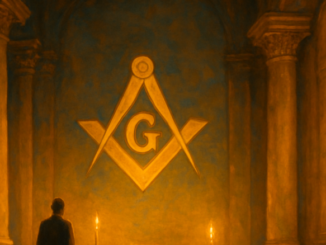
One of the most distinctive features of Freemasonry is its rich use of symbolism drawn from the tools and practices of the ancient stonemason. The square and compass — perhaps the most recognizable Masonic symbol — represent moral principles: the square reminds members to act honestly and fairly, while the compass reminds them to keep their passions and desires within proper boundaries. Other tools such as the plumb, the level, and the gavel each carry their own philosophical meanings, forming a symbolic vocabulary that members explore throughout their Masonic journey.
These symbols are not merely decorative. They serve as teaching tools — prompts for meditation, discussion, and moral reflection. In this sense, Freemasonry functions as a system of ethics dressed in allegory and illustrated by symbols, as one classic Masonic definition puts it.
Freemasonry and Religion
A common misconception is that Freemasonry is itself a religion or that it conflicts with religious belief. In fact, most Masonic jurisdictions require only that a candidate believe in a Supreme Being — the exact nature of that being is left entirely to the individual. Catholic, Protestant, Jewish, Muslim, and Hindu men have all been Freemasons throughout the organization’s history. The lodge is deliberately designed as a space where men of different faiths can meet on common ground, setting aside theological differences in favor of shared human values.
The Structure of a Masonic Lodge
Freemasonry is organized into local units called lodges, each of which operates under the authority of a Grand Lodge for its region or country. A lodge typically meets regularly — often once or twice a month — and has its own officers, traditions, and character. While all lodges share the same fundamental rituals and degrees, each lodge also develops its own community feel over time.
The Three Degrees
The core of Masonic experience is the degree system. In the dominant tradition known as the “Craft” or “Blue Lodge” Freemasonry, there are three foundational degrees:
- Entered Apprentice: This is the first degree, in which a candidate is formally initiated into the lodge. The degree draws on the symbolism of a young apprentice learning his craft, and it introduces the new member to the fundamental principles and symbols of Freemasonry.
- Fellow Craft: The second degree represents a deepening of the Masonic journey. The Fellow Craft is encouraged to pursue learning, wisdom, and the liberal arts and sciences as tools for personal development.
- Master Mason: The third and most significant degree confers the full rights and responsibilities of lodge membership. The ritual associated with this degree is among the most profound in all of Freemasonry, drawing on themes of mortality, integrity, and the triumph of virtue.
Beyond these three degrees, there are numerous additional bodies and rites — such as the Scottish Rite, the York Rite, and the Royal Arch — that offer further degrees and teachings to those who wish to deepen their involvement. However, the three Craft degrees are the essential foundation, and many Freemasons find a lifetime of meaning within them alone.
Who Can Join Freemasonry?
The requirements for membership vary somewhat by jurisdiction, but most regular Masonic lodges around the world share a common set of criteria. Understanding these requirements is an important first step for anyone asking how to join Freemasonry.
General Eligibility Requirements
- Gender: Most traditional, “regular” Masonic lodges accept only men. However, there are also mixed and women-only Masonic organizations, particularly in France and Belgium, that operate alongside the mainstream tradition. In the Netherlands, the mainstream Grand Lodge admits only men, but there are separate organizations for women and mixed membership.
- Age: Most lodges require candidates to be at least 18 years old, though some jurisdictions set the minimum age at 21. A young man who is the son of a Freemason — known in Masonic tradition as a “Lewis” — may sometimes be initiated at a slightly younger age.
- Belief in a Supreme Being: As noted above, most regular lodges require a candidate to profess a belief in a Supreme Being. Atheists are generally not eligible for membership in traditional Masonic bodies, although this policy varies by jurisdiction.
- Good character: Candidates are expected to be men of good moral standing in their community. A criminal record — particularly for serious offenses — may disqualify a candidate, though each case is considered individually.
- Free will: Freemasonry insists that membership be entirely voluntary. No one should feel pressured or compelled to join. The decision must come from a genuine personal desire to grow, serve, and belong.
How to Join Freemasonry: The Step-by-Step Process
The process of joining a Masonic lodge may seem daunting at first, but it is designed to be respectful, transparent, and unhurried. Here is a practical guide to what you can expect.
Step 1: Express Your Interest
The first and most important step is simply to make your interest known. Historically, Freemasons were expected not to solicit membership — the famous phrase is that “to be one, ask one.” In practice, this means that the initiative traditionally comes from the candidate himself. If you know a Freemason personally, the most natural route is to speak with him directly about your interest. He can serve as a guide through the process and eventually as a sponsor for your application.
If you do not personally know any Freemasons, you can reach out to your regional or national Grand Lodge directly — many now have websites and contact forms specifically designed for inquiries from prospective members. In the Netherlands, the website of the Grand Lodge (Grootoosten) provides information and contact details for lodges throughout the country.
Step 2: An Informal Meeting
Once you have made contact, you will typically be invited to meet informally with one or more members of a local lodge. This is not a formal interview — it is simply an opportunity for both sides to get to know one another. You can ask questions about what lodge life is like, what the ritual involves, and what is expected of members. The Freemasons you meet will be equally curious about you — your interests, your values, and what draws you to the fraternity.
This stage may involve attending one or more open events hosted by the lodge, such as a dinner or a public lecture. Many lodges regularly organize events that are open to non-members for exactly this purpose.
Step 3: The Formal Petition
If both you and the lodge feel that Freemasonry is a good fit, you will be invited to submit a formal petition (or application) for membership. This document typically requests basic personal information, your reasons for wishing to join, and confirmation that you meet the basic eligibility criteria. In most lodges, the petition must be sponsored by at least one — and sometimes two — existing members of the lodge who can vouch for your character.
Step 4: The Investigation Committee
After your petition is received, the lodge will appoint a small committee of members to conduct an investigation. This typically involves a home visit or a more in-depth personal conversation, the purpose of which is to verify that you are joining of your own free will, that you understand what Freemasonry involves, and that you are of good character. This is a collegial process, not an interrogation — the committee members are genuinely interested in you as a person.
Step 5: The Vote
The committee reports its findings to the full lodge, which then votes on whether to accept your petition. In most lodges, the ballot is secret, and the vote must be unanimous — or very nearly so — for a candidate to be accepted. This tradition reflects the lodge’s commitment to harmony: every member must feel genuinely comfortable with every new admission. A negative vote does not necessarily reflect poorly on the candidate; it may simply mean that the fit with a particular lodge is not right, and the candidate may be encouraged to approach another lodge.
Step 6: The Initiation
Once accepted, you will be invited to undergo the initiation ceremony for the First Degree — the Entered Apprentice. This ritual is conducted within the lodge room, with full ceremony and according to ancient tradition. Without spoiling the experience, it is worth saying that most new initiates find the ceremony meaningful, moving, and far less intimidating than they had feared. The ritual draws on the symbolism of the stonemason’s craft to convey timeless moral lessons, and it formally welcomes you into the brotherhood of Freemasons.
Step 7: Life as a Freemason
After initiation, your Masonic journey has truly begun. You will attend lodge meetings, participate in rituals, work through the second and third degrees, and gradually become a full and active member of the community. Many Freemasons describe the lodge as one of the most enriching social experiences of their lives — a place where deep and lasting friendships are formed across generational, professional, and cultural lines.
Membership also comes with responsibilities: regular attendance, payment of annual dues, participation in charitable activities, and a commitment to conducting yourself according to Masonic principles in your everyday life.
What to Expect from Lodge Life
A typical lodge meeting follows a structured format that balances ritual, business, and fellowship. The meeting usually opens with a formal ceremony, followed by administrative business (minutes, correspondence, financial matters), and any ritual work associated with a candidate progressing through the degrees. After the formal meeting, members typically gather for a meal or refreshments — often referred to in Masonic tradition as the “Festive Board” or, in French tradition, the “Agape” — where the conversation is relaxed, humorous, and warm.
Beyond regular meetings, lodges often organize cultural evenings, charitable fundraisers, visits to other lodges, and social events for members and their families. Freemasonry is, at its heart, a social organization, and the bonds formed within a lodge often extend far beyond the lodge room itself.
Freemasonry in the Netherlands
For those specifically interested in joining in the Netherlands, the Orde van Vrijmetselaren onder het Grootoosten der Nederlanden is the governing body for mainstream Freemasonry in the country. Founded in 1756, it is one of the oldest continuously operating Grand Lodges in the world. The Order has lodges in cities and towns across the country, from Amsterdam and Rotterdam to smaller regional communities.
Dutch Freemasonry has a proud history of intellectual openness and civic engagement. The lodge De Vrijheid (Freedom) in The Hague, for example, was one of the earliest lodges in the Netherlands and counted among its members some of the leading intellectual figures of the 18th century. Today, Dutch lodges continue to attract men from diverse professional and cultural backgrounds, united by curiosity, a love of tradition, and a commitment to making the world a slightly better place.
Frequently Asked Questions
Do I need to know a Freemason to join?
Traditionally, having a personal contact within Freemasonry makes the process easier, as a member can sponsor your petition and guide you through the early stages. However, it is not strictly necessary. Most Grand Lodges — including the Dutch Grand Lodge — have formal inquiry processes for those who do not yet know any Freemasons. Reaching out through an official website or attending an open event is a perfectly acceptable starting point.
Is Freemasonry a secret society?
Freemasonry is sometimes described as “a society with secrets” rather than a “secret society.” The existence of lodges, the names of members, and the general principles of the organization are all publicly known. What is kept private are certain elements of the ritual and ceremonial work — passwords, signs, and symbolic gestures that form part of the internal tradition. This privacy is maintained not out of secrecy for its own sake, but out of respect for tradition and to preserve the meaning of the initiation experience for future candidates.
How much does it cost to join?
The costs associated with joining Freemasonry vary by lodge and jurisdiction. There is typically a one-time initiation fee and annual membership dues. In the Netherlands, costs are modest and are intended to cover the running of the lodge, charitable contributions, and the cost of materials. Freemasonry is not an expensive hobby — lodges make every effort to ensure that financial considerations are not a barrier to participation for men of good character.
Can I join if I am not Christian?
Yes. Freemasonry is open to men of all faiths who believe in a Supreme Being. The organization deliberately refrains from specifying the nature of that being, leaving this entirely to the individual conscience. Freemasons of Jewish, Muslim, Hindu, Buddhist, and many other faith traditions have been active members throughout the history of the fraternity. The lodge is explicitly designed as a space of interfaith respect and cooperation.
How long does the joining process take?
The timeline from first inquiry to initiation varies considerably depending on the lodge and the jurisdiction. In general, candidates should expect the process to take several months — perhaps three to six months from first contact to the initiation ceremony. This is not a bureaucratic delay; it reflects the lodge’s commitment to ensuring that both the candidate and the membership are genuinely ready for the relationship. Freemasonry is a long-term commitment, and a thoughtful beginning sets the right tone for everything that follows.
Conclusion: Taking the First Step
Joining Freemasonry is a decision that many men describe as one of the most meaningful of their lives. It offers a rare combination of intellectual depth, genuine friendship, moral purpose, and historical continuity — a brotherhood that has endured for more than three centuries and continues to find new relevance in the modern world. Whether you are drawn by curiosity about the ritual, respect for the values, or simply a desire to belong to something larger than yourself, the path into Freemasonry begins with a single step: expressing your interest.
If you are considering how to join Freemasonry and would like to learn more, we encourage you to explore the rest of this website, reach out to your local lodge, or attend one of the many open events that Masonic lodges organize throughout the year. The door is open — all you need to do is knock.
Read more about this topic
- All articles in this category: Joining & The Path Within
- How to Become a Freemason: From First Interest to Initiation
- The Life Story for the Committee of Inquiry in Freemasonry
- The Master's Home Visit: A Key Step in Joining Freemasonry
- The Committee of Inquiry: What to Expect as a Candidate
- The Master's Interview: A Journey to the Heart of Freemasonry
Frequently Asked Questions
Is Freemasonry a religion?
No, Freemasonry is not a religion. It is a fraternal organization that welcomes men of all faiths and beliefs. While Freemasonry emphasizes moral values and self-improvement, it does not require members to subscribe to any particular religious doctrine or ideology.
How long has Freemasonry been around?
Freemasonry has roots dating back to medieval stonemason guilds in Europe, but modern speculative Freemasonry was formally established in 1717 when the first Grand Lodge was founded in London. Since then, it has spread globally and counts millions of members across the world, making it one of the oldest and most respected fraternal organizations in existence.
What are the main values of Freemasonry?
Freemasonry is guided by three central principles: brotherly love, relief, and truth. Members are united by a commitment to self-improvement, service to others, and the promotion of reason, tolerance, and moral development. These values have remained consistent since the organization's founding.
Who are some famous Freemasons?
Many notable historical figures have been Freemasons, including Benjamin Franklin, George Washington, Wolfgang Amadeus Mozart, and Voltaire. These influential individuals were drawn to Freemasonry's emphasis on reason, tolerance, and personal moral improvement.
Is the process of joining Freemasonry complicated?
No, the process of joining Freemasonry is far more straightforward than most people imagine. While the organization is surrounded by centuries of tradition and symbolism, becoming a member follows a clear and accessible path that welcomes men of good character from all backgrounds.

Be the first to comment