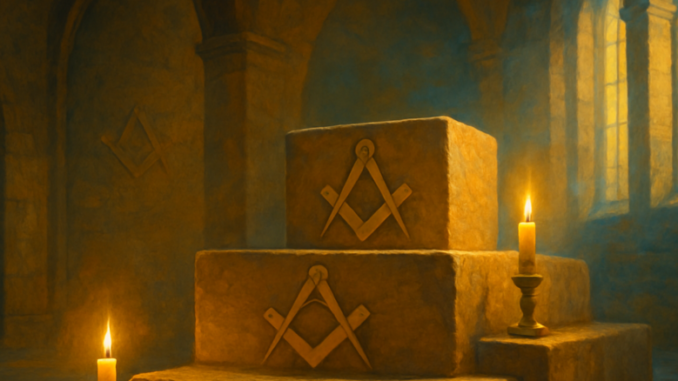
Freemasonry is one of the world’s oldest and most widely recognised fraternal organisations, and at the heart of its structure lies a system of progressive moral instruction known as degrees. The degrees of Freemasonry are ceremonial stages through which a member advances, each carrying its own ritual, symbolism, and philosophical lessons. Far from being mere titles or ranks, these degrees represent a journey of personal development — from the first steps of initiation to the deeper explorations of ethics, history, and brotherhood that characterise the higher degrees. Understanding this system is essential to understanding Freemasonry itself.
Historical Background of the Degree System
The origins of Freemasonry’s degree structure are closely tied to the craft guilds of medieval Europe, particularly those of operative stonemasons who built the great cathedrals and castles of the Middle Ages. These guilds used a system of initiation to distinguish between different levels of skill and trust: the Entered Apprentice, who was new to the trade; the Fellow of the Craft, who had demonstrated proficiency; and the Master Mason, who had achieved full standing and authority within the guild.
When speculative Freemasonry — the philosophical and fraternal form practised today — began to emerge in the early 18th century, it inherited and adapted this three-tier structure. The founding of the Premier Grand Lodge of England in 1717 is traditionally regarded as the beginning of organised modern Freemasonry. During this period, the three degrees were formalised and their rituals elaborated into the rich ceremonial tradition that persists to this day.
Over the following century, additional degrees were developed across Europe and the Americas. These supplementary degrees arose partly from a desire to explore deeper layers of Masonic philosophy and legend, and partly from the natural human tendency to build upon established traditions. By the early 19th century, complex systems such as the Scottish Rite and the York Rite had emerged, each offering a substantial number of additional degrees beyond the original three.
The Role of James Anderson and Early Grand Lodges
The Reverend James Anderson, a Scottish clergyman, played a pivotal role in codifying early Freemasonry when he compiled the Constitutions of the Free-Masons in 1723. This document, produced under the direction of the Grand Lodge of England, laid out the rules and history of the fraternity and helped standardise practices across lodges. While Anderson’s work did not explicitly define the degree system in its later elaborate form, it provided the foundational framework within which the degrees would develop.
Other influential figures such as John Theophilus Desaguliers, a Fellow of the Royal Society and a Deputy Grand Master, helped shape the intellectual character of early Freemasonry, ensuring that it attracted educated and philosophically minded men who would go on to enrich the degree rituals with deeper symbolic content.
The Three Craft Degrees
The foundation of all Masonic practice rests on what are commonly called the Blue Lodge degrees, or the Craft degrees. Every Freemason, regardless of which appendant bodies he may later join, begins his journey through these three essential degrees.
The First Degree: Entered Apprentice
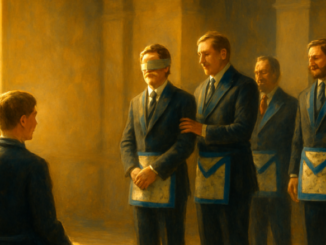
The degree of Entered Apprentice is the first step in a man’s Masonic journey. During the initiation ceremony, the candidate is symbolically brought from darkness into light — a metaphor for the beginning of moral and intellectual enlightenment. The ritual emphasises the importance of faith, the value of honest labour, and the significance of personal integrity.
The working tools associated with this degree are the 24-inch gauge and the common gavel. The gauge represents the division of time between work, rest, and service to God and a worthy brother in need; the gavel symbolises the force of conscience in removing the rough edges of one’s character. The lessons of the Entered Apprentice degree are intentionally simple yet profound, designed to lay the groundwork for everything that follows.
The Second Degree: Fellow Craft
The Fellow Craft degree deepens the Mason’s exploration of knowledge and the liberal arts and sciences. The candidate is encouraged to advance his understanding of geometry, music, rhetoric, logic, grammar, and arithmetic — the classical seven liberal arts — as tools for personal and societal improvement. This degree draws heavily on the symbolism of the winding staircase, representing the ongoing ascent toward wisdom and truth.
The working tools of the Fellow Craft are the square, the level, and the plumb. Each teaches a moral lesson: the square, to act with fairness and honesty; the level, to recognise the equality of all men before God; and the plumb, to walk uprightly and justly in all one’s dealings. The Fellow Craft degree marks a significant step forward in a Mason’s philosophical education.
The Third Degree: Master Mason
The third and most celebrated of the Craft degrees is that of Master Mason. This is the degree that qualifies a man as a full member of the fraternity and is often described as the most dramatic and meaningful of all Masonic ceremonies. At its centre is the legend of Hiram Abiff, the legendary architect of King Solomon’s Temple, whose death and symbolic resurrection form the narrative backbone of the ritual.
The story of Hiram Abiff — a figure also referenced in the Bible in connection with the building of Solomon’s Temple — teaches lessons about fidelity, the immortality of the soul, and the courage to remain true to one’s principles even in the face of mortal danger. The Master Mason degree is widely regarded as one of the most moving and philosophically rich ceremonies in all of fraternal tradition, and its themes continue to inspire reflection long after the initiation is complete.
Appendant Bodies and Higher Degrees
While the three Craft degrees are universally recognised across all regular jurisdictions of Freemasonry, many Masons choose to continue their journey through what are known as appendant or concordant bodies. These organisations offer additional degrees that explore Masonic history, philosophy, and legend in even greater depth. The two most prominent systems are the Scottish Rite and the York Rite.
The Scottish Rite
The Ancient and Accepted Scottish Rite is one of the most widespread appendant bodies in Freemasonry. Despite its name, the Scottish Rite did not originate in Scotland — it developed largely in France during the 18th century and was later codified in the United States. The Scottish Rite confers degrees numbered from the 4th through the 32nd, with the 33rd degree awarded as an honorary recognition of outstanding service to Freemasonry and to society.
Albert Pike, a 19th-century American lawyer, writer, and Freemason, is perhaps the most influential figure in the development of the Scottish Rite’s ritual. His monumental work Morals and Dogma, published in 1871, provided extensive philosophical commentary on each degree of the Scottish Rite, drawing on a vast range of religious, philosophical, and historical traditions. Pike’s work remains a touchstone for Scottish Rite Masons around the world.
The degrees of the Scottish Rite are grouped into several bodies:
- Lodge of Perfection — 4th through 14th degrees, exploring themes from the construction of Solomon’s Temple and the preservation of Masonic secrets.
- Chapter of Rose Croix — 15th and 16th degrees, focusing on themes of spiritual death and resurrection.
- Council of Kadosh — 17th through 30th degrees, examining philosophical, chivalric, and esoteric themes.
- Consistory — 31st and 32nd degrees, representing the pinnacle of the working degrees.
The York Rite
The York Rite is another major appendant body, particularly prominent in the United Kingdom and the United States. Unlike the Scottish Rite, which is administered through a single organisation, the York Rite is composed of three distinct but related bodies: the Royal Arch Chapter, the Cryptic Council, and the Knights Templar Commandery.
The Royal Arch degree is considered by many Masons in the English tradition to be the completion of the Master Mason degree, as it reveals what is described as the “genuine secrets” of the fraternity. The United Grand Lodge of England has historically regarded the Royal Arch as an integral part of pure ancient Masonry rather than simply an appendant degree. The Cryptic degrees — including the Royal Master, Select Master, and Super Excellent Master — explore further episodes of Solomonic legend. The Knights Templar degrees incorporate Christian chivalric themes and are open only to Masons who profess a belief in Christianity.
Other Degree Systems Around the World
Beyond the Scottish and York Rites, numerous other degree systems exist within the broader Masonic family. The Swedish Rite, practised in Scandinavia, includes a unique system of degrees up to the eleventh, with an explicitly Christian character. The Rectified Scottish Rite, prominent in France and Switzerland, draws on the chivalric traditions of the Strict Observance, a 18th-century German Masonic reform movement led by Baron Karl von Hund.
The Order of the Eastern Star, while not strictly a Masonic body, admits both men and women and is based on teachings drawn from the Bible. It is closely associated with Freemasonry and uses a degree structure of its own. Similarly, the Shriners (Ancient Arabic Order of the Nobles of the Mystic Shrine) is an appendant body for Scottish Rite or York Rite Masons in North America, known both for its colourful ceremonial style and its remarkable network of charitable hospitals for children.
Symbolism Across the Degrees
One of the defining features of the degrees of Freemasonry is their rich use of symbolism. Every object, gesture, and word within a Masonic ritual carries meaning, and candidates are encouraged to reflect on these symbols long after the ceremony has concluded. The use of architectural symbolism — the ashlar (a rough or polished stone), the trowel, the compass and square — serves as a consistent thread running through all degrees.
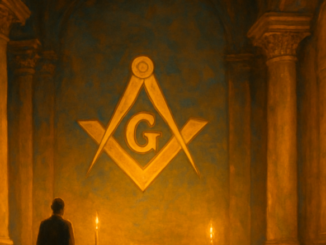
The compass and square, perhaps the most iconic symbols of Freemasonry, represent the balance between spiritual aspiration and earthly conduct. The letter G, often depicted at the centre of this emblem, is understood to represent both Geometry — the science upon which Masonic symbolism is built — and God, the Grand Architect of the Universe, as Freemasons sometimes refer to the Supreme Being.
Light is another powerful theme. Each degree ceremony involves elements that move the candidate from symbolic darkness toward light, representing the ongoing acquisition of knowledge and moral clarity. This use of light as a metaphor for enlightenment connects Freemasonry to a broader intellectual tradition that includes Enlightenment philosophy and classical mystery schools.
The Purpose and Value of the Degree System
It would be a mistake to view the degrees of Freemasonry merely as a progression of ceremonies. Each degree is designed to impart a specific set of moral and philosophical lessons in a manner that is memorable and emotionally engaging. The use of ritual, drama, and symbol is deliberate: human beings have always processed important truths more effectively through story and ceremony than through abstract instruction alone.
The progressive nature of the degree system also reflects a profound respect for the journey of personal development. No man is expected to absorb all of Masonry’s teachings at once. Instead, the degrees unfold gradually, inviting each Mason to reflect, to study, and to grow at his own pace. Many Freemasons describe the experience of revisiting earlier degrees — now as an observer rather than a candidate — as revealing layers of meaning that were not apparent the first time.
Beyond personal development, the degrees foster a sense of shared experience and brotherhood. Having passed through the same ceremonies, men from vastly different backgrounds and walks of life find common ground and mutual respect. This shared experience is one of the most enduring sources of Masonic fellowship.
Frequently Asked Questions About the Degrees of Freemasonry
How many degrees are there in Freemasonry?
The number of degrees depends on which bodies a Mason joins. All Freemasons receive the three Craft degrees (Entered Apprentice, Fellow Craft, and Master Mason). Those who join the Scottish Rite may receive up to 32 additional working degrees, plus the honorary 33rd. The York Rite offers its own series of degrees through the Royal Arch, Cryptic, and Chivalric bodies. Combined, a Mason who joins multiple bodies may experience well over 30 distinct degrees over the course of his Masonic life.
Are higher degrees more important than the three Craft degrees?
No — in fact, most Masonic authorities emphasise that the three Craft degrees are the foundation and the heart of Freemasonry. The higher degrees are considered supplementary and are described as “amplifications” of the lessons found in the Craft degrees rather than replacements or improvements upon them. The Master Mason degree is universally regarded as conferring full Masonic standing.
What is the significance of the 33rd degree?
The 33rd degree of the Scottish Rite is an honorary degree, not a working degree that is conferred through a ritual ceremony open to all. It is awarded by the Supreme Council of the Scottish Rite to members who have made exceptional contributions to Freemasonry and to their communities. It is a mark of distinction and service rather than a rank that can be earned through progression alone.
Can women participate in the degrees of Freemasonry?
Traditional or “regular” Freemasonry, as recognised by the United Grand Lodge of England and similar grand lodges, restricts membership to men. However, there are co-Masonic organisations — such as Le Droit Humain, founded in France in 1893 — that admit both men and women and confer the same degrees. There are also exclusively female Masonic organisations in several countries. The existence of these bodies reflects the diversity within the broader Masonic family.
Do the degrees of Freemasonry have religious requirements?
Freemasonry requires a belief in a Supreme Being — referred to as the Grand Architect of the Universe — but it does not prescribe any particular religion. Men of many faiths, including Christianity, Judaism, Islam, Hinduism, and others, have been Freemasons throughout history. The higher degrees of some bodies, such as the Knights Templar within the York Rite, do have specifically Christian requirements, but the Craft degrees and the Scottish Rite degrees are open to men of all monotheistic faiths.
Conclusion: A Living Tradition
The degrees of Freemasonry represent far more than a ceremonial structure — they are a living tradition of moral education, philosophical inquiry, and human fellowship that has endured for centuries and continues to attract thoughtful men from every corner of the globe. From the simplicity and power of the Entered Apprentice degree to the profound drama of the Master Mason ritual, and from the expansive philosophical landscape of the Scottish Rite to the chivalric traditions of the York Rite, the degree system offers a remarkable journey of personal growth and brotherhood. For those curious enough to explore it, Freemasonry’s degrees open doors not only into a fraternal organisation, but into one of humanity’s richest traditions of reflection on what it means to live a good and meaningful life.
Read more about this topic
- All articles in this category: Freemasonry & Society
- The Crack in the Ice: What Fractures Teach Us About Resilience
- Defeat and Leadership: What Football Crises Teach Us
- The Power of Recognition: Freemasonry and the Royal Lunch
- Trial Delayed by Death: Masonic Lessons on Justice
- Revenge and Forgiveness: What Freemasons Learn from Anger
Frequently Asked Questions
What are the degrees of Freemasonry and why are they important?
The degrees of Freemasonry are ceremonial stages through which members advance, each carrying its own ritual, symbolism, and philosophical lessons. They represent a journey of personal development from initiation through deeper explorations of ethics, history, and brotherhood. Understanding this degree system is essential to understanding Freemasonry itself, as the degrees form the core structure of the fraternal organisation.
Where did the degree system originate?
The degree system originated from the craft guilds of medieval Europe, particularly those of operative stonemasons who built cathedrals and castles. These guilds used a three-tier initiation system: Entered Apprentice, Fellow of the Craft, and Master Mason. When speculative Freemasonry emerged in the early 18th century, it inherited and adapted this three-tier structure, which was formalised following the founding of the Premier Grand Lodge of England in 1717.
How many degrees are there in Freemasonry?
The original structure consisted of three degrees: Entered Apprentice, Fellow of the Craft, and Master Mason. However, over the following century, additional supplementary degrees were developed across Europe and the Americas. By the early 19th century, complex systems such as the Scottish Rite and the York Rite had emerged, each offering a substantial number of additional degrees beyond the original three.

Be the first to comment