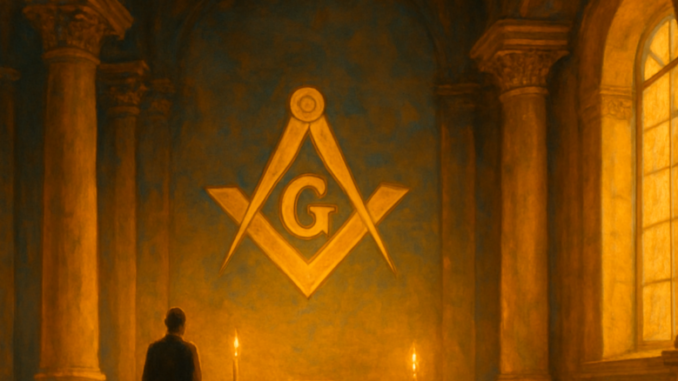
Freemasonry is one of the world’s oldest and most widely recognized fraternal organizations, uniting men across cultures, borders, and generations through a shared commitment to moral development, philosophical inquiry, and brotherly fellowship. Founded on the symbolic tools of the stonemason’s craft, Freemasonry uses allegory and ritual to encourage its members — known as Masons or Freemasons — to become better versions of themselves. With millions of members worldwide and lodges active on every inhabited continent, understanding what Freemasonry is means exploring a tradition that has quietly shaped much of Western civilization for centuries.
Historical Background: The Origins of Freemasonry
The history of Freemasonry is a rich tapestry woven from medieval craft guilds, Renaissance philosophy, and Enlightenment idealism. While the precise origins remain a subject of scholarly discussion, most historians trace the formal establishment of speculative Freemasonry to the founding of the Premier Grand Lodge of England in London on June 24, 1717 — the feast day of St. John the Baptist. Four London lodges came together at the Goose and Gridiron Alehouse in St. Paul’s Churchyard to form this central governing body, marking the beginning of organized, modern Freemasonry as we know it.
However, the roots of the fraternity stretch considerably deeper. Medieval operative stonemason guilds maintained strict codes of conduct, secret signs of recognition, and systems of apprenticeship that would later serve as the symbolic foundation for speculative Freemasonry. These working masons built the great cathedrals of Europe, and their craft — requiring precision, geometry, and discipline — became a powerful metaphor for the construction of character and virtue.
From Operative to Speculative Masonry
The transition from “operative” masonry (actual stoneworking) to “speculative” masonry (philosophical and moral development) is one of the most fascinating chapters in the fraternity’s history. During the 17th century, lodges in Scotland and England began admitting members who were not working stonemasons — a practice known as accepting “accepted Masons.” These new members were intellectuals, noblemen, and scholars drawn to the symbolic and philosophical dimensions of the craft.
Among the earliest recorded “accepted Masons” was Elias Ashmole, the English antiquary and astrologer, who documented his initiation into a lodge in Warrington, England, in 1646. This period saw the gradual transformation of practical craft guilds into philosophical fraternities, a shift that would culminate in the formal establishment of grand lodges across Britain and, eventually, the world.
Global Expansion in the 18th and 19th Centuries
Following the founding of the Grand Lodge of England, Freemasonry spread with remarkable speed across Europe and beyond. The Grand Lodge of Ireland was established in 1725, followed by the Grand Lodge of Scotland in 1736. French Freemasonry developed its own distinctive character, eventually giving rise to the Grand Orient de France in 1728. By the mid-18th century, lodges had been established in the American colonies, the Caribbean, India, and throughout continental Europe.
Many of the founding fathers of the United States were Freemasons, including George Washington, Benjamin Franklin, and Paul Revere. Their membership in the fraternity was not coincidental — the Enlightenment values that Freemasonry promoted, including reason, liberty, equality, and the dignity of the individual, aligned closely with the ideals that underpinned the American Revolution. Franklin served as Grand Master of Pennsylvania and was an active Mason during his time in France, where he helped spread the fraternity’s influence among the French intellectual elite.
In the Netherlands, Freemasonry arrived in the early 18th century, with the first lodge established in The Hague in 1734. Dutch Freemasonry has since developed a proud and continuous tradition, with the Order of Freemasons under the Grand East of the Netherlands (Orde van Vrijmetselaren onder het Grootoosten der Nederlanden) serving as the governing body for Dutch lodges to this day.
Core Concepts and Principles of Freemasonry
At its heart, Freemasonry is a system of moral philosophy expressed through symbol, allegory, and ritual. To understand what Freemasonry is, one must engage with the foundational principles that guide the organization and its members.
Brotherly Love, Relief, and Truth
The three great principles of Freemasonry — Brotherly Love, Relief, and Truth — form the moral cornerstone of the fraternity. Brotherly Love refers to the regard and affection that Masons are encouraged to extend not only to fellow lodge members but to all humanity. Relief speaks to the duty of charitable action, supporting those in need within the lodge and the wider community. Truth calls upon each Mason to pursue honesty, integrity, and self-knowledge in all aspects of life.
These principles are not merely abstract ideals. They are actively practiced through charitable work, mentorship, and the cultivation of genuine friendships that transcend social class, profession, and background. Freemasonry has always insisted that men of diverse walks of life can — and should — sit together as equals in the lodge room.
Symbolism and the Working Tools
One of the most distinctive features of Freemasonry is its rich symbolic language, drawn from the tools and practices of the medieval stonemason. The square and compasses — perhaps the most universally recognized symbol of Freemasonry — represent the moral boundaries within which a Mason is encouraged to live his life. The square reminds the Mason to act with fairness and virtue; the compasses remind him to keep his passions and desires within due bounds.
Other working tools carry similarly layered meanings. The plumb line encourages uprightness of conduct. The level teaches the equality of all human beings. The trowel — which in operative masonry spread the cement binding stones together — symbolizes the spreading of brotherly affection that unites the members of the lodge. Each tool, when understood as an allegory for human behavior, becomes a practical guide for ethical living.
The Three Degrees
Freemasonry in its most traditional form is organized around three foundational degrees of initiation: Entered Apprentice, Fellow Craft, and Master Mason. Each degree involves a ritual ceremony during which the candidate is presented with moral teachings, historical allegories, and symbolic instruction appropriate to that stage of his Masonic journey.
The Entered Apprentice degree introduces the new member to the basic principles and symbols of the fraternity, emphasizing the importance of education and the search for knowledge. The Fellow Craft degree expands on these themes, with particular emphasis on the liberal arts and sciences as tools for developing the intellect and understanding the world. The Master Mason degree — widely considered the most significant — draws on the allegory of the legendary builder Hiram Abiff, whose story of integrity, loyalty, and ultimate sacrifice serves as a profound teaching about moral steadfastness.
Beyond these three degrees, many jurisdictions offer additional “appendant bodies” with further degrees and philosophical teachings, such as the Scottish Rite and the York Rite. These are optional paths of deeper exploration for those Masons who wish to continue their Masonic education.
The Lodge: A Sacred Space for Brotherhood
The lodge is both the organizational unit of Freemasonry and the physical space in which Masons meet. Every lodge operates under a warrant or charter granted by a recognized grand lodge and follows its own traditions while adhering to the broader rules of its governing body. Lodge meetings typically include ritual work, administrative business, and the opportunity for fellowship among members.
The layout of the lodge room itself is deeply symbolic. Oriented from east to west — like the great temples of antiquity — the lodge room features designated positions for its officers, each with symbolic significance. The Worshipful Master sits in the East, symbolizing wisdom and the rising sun; the Senior Warden sits in the West, symbolizing strength; and the Junior Warden sits in the South, symbolizing beauty. Together, these three pillars — wisdom, strength, and beauty — are said to support every well-governed lodge.
Freemasonry’s Contribution to Society
Throughout its history, Freemasonry has made significant contributions to society through education, charity, and the promotion of civic values. Masonic lodges have funded hospitals, schools, and orphanages. They have supported the arts, sciences, and philosophical inquiry. And they have consistently championed the ideals of tolerance, freedom of conscience, and the peaceful coexistence of people from different backgrounds and beliefs.
Charitable Works
Charity is a central obligation of every Freemason, and lodges around the world engage in extensive charitable activity. In England alone, the Masonic Charitable Foundation distributes tens of millions of pounds each year to causes ranging from medical research to support for vulnerable communities. The Shriners — an appendant body of Freemasonry in North America — operate a network of hospitals providing specialized medical care to children, entirely free of charge, regardless of the family’s ability to pay. These are just two examples of the vast charitable infrastructure that Freemasonry has built over the centuries.
Influence on Democratic Values and the Enlightenment
The intellectual climate of the 18th-century Enlightenment and the emergence of Freemasonry were deeply intertwined. Lodges served as meeting places where men of different social stations could discuss ideas freely, away from the rigid hierarchies of church and state. The Masonic emphasis on reason, the dignity of the individual, and freedom of thought contributed meaningfully to the intellectual currents that produced the American Declaration of Independence, the French Declaration of the Rights of Man, and broader movements for democratic reform across Europe and the Americas.
Notable Masons such as Voltaire — initiated just weeks before his death in 1778 at the famous Loge des Neuf Sœurs in Paris — and Mozart, who joined the lodge Zur Wohltätigkeit in Vienna in 1784 and expressed Masonic ideals profoundly in his opera The Magic Flute, illustrate the fraternity’s deep connection to the cultural and intellectual life of the age.
Freemasonry and Religious Tolerance
One of the most important and enduring aspects of Freemasonry is its insistence on religious tolerance. Freemasonry does not promote any particular religion, nor does it engage in theological debate. Instead, it requires only that its members profess a belief in a Supreme Being — referred to in Masonic texts as the “Great Architect of the Universe” — leaving the specific nature of that belief entirely to the individual conscience. This has made Freemasonry a home for men of Christian, Jewish, Muslim, Hindu, Buddhist, and many other religious traditions, united by shared moral values rather than dogmatic theology.
Misconceptions and Clarifications
Despite — or perhaps because of — its long history and tradition of privacy, Freemasonry has been subject to numerous misconceptions over the centuries. It is important to address these clearly and fairly, since understanding what Freemasonry is requires distinguishing the reality of the fraternity from the myths that have sometimes surrounded it.
Freemasonry is not a secret society in any conspiratorial sense. The existence of lodges, the names of members, and the general principles of the fraternity are all publicly known and freely discussed. What is kept private are the specific ritual workings within the lodge — a practice common to many philosophical and initiatic traditions throughout history, and one intended to preserve the experiential impact of initiation rather than to hide anything sinister. Masons themselves have written extensively about the meaning and purpose of their fraternity, and a great deal of Masonic literature is freely available to any interested reader.
Freemasonry is also not a religion, nor does it seek to replace religious belief. It is a fraternal order with a moral philosophy, and it actively encourages its members to be faithful adherents of their own religious traditions.
Freemasonry in the Modern World
Today, Freemasonry continues to be a vibrant and active fraternity. While membership numbers in some Western countries have declined from the peaks of the mid-20th century, lodges remain active and are experiencing renewed interest from younger generations who are attracted to the fraternity’s emphasis on self-improvement, philosophical inquiry, and genuine human connection in an increasingly fragmented world.
In the Netherlands, the Orde van Vrijmetselaren remains an important institution, with lodges in cities and towns across the country. Dutch Freemasonry has a liberal character, placing particular emphasis on freedom of thought and the exploration of philosophical and spiritual questions. Lodges meet regularly, welcoming men who seek a serious and meaningful path of personal development within a supportive community of brothers.
Modern Freemasonry has also embraced greater openness, with many grand lodges actively encouraging transparency about the fraternity’s principles and activities. Public websites, open days, and informational events make it easier than ever for curious individuals to learn about the organization and take the first steps toward membership.
Frequently Asked Questions About Freemasonry
Who can become a Freemason?
In most traditional jurisdictions, Freemasonry is open to adult men who believe in a Supreme Being, are of good moral character, and come to the fraternity of their own free will. Candidates are typically proposed by an existing member of a lodge and go through a process of inquiry and balloting before being accepted. There are also separate organizations for women and for mixed-gender groups that follow Masonic principles, though these operate independently from mainstream Freemasonry.
What happens inside a Masonic lodge meeting?
A typical lodge meeting includes the ritual opening of the lodge, administrative business such as reading of minutes and financial reports, and often the performance of a degree ceremony for a candidate or a lecture on a Masonic topic. Meetings are conducted according to long-established ritual forms, with each officer of the lodge playing a designated role. After the formal meeting, members usually gather for a shared meal or refreshments — a tradition known in many lodges as the “festive board” — where the atmosphere is warm, convivial, and entirely informal.
Is Freemasonry compatible with religious belief?
Yes. Freemasonry requires belief in a Supreme Being but does not specify the nature of that belief, making it compatible with a wide range of religious traditions. Men of Christian, Jewish, Islamic, Hindu, Buddhist, and many other faiths have been — and continue to be — active Freemasons. The fraternity regards religion as a personal and private matter and does not seek to interfere with or replace the religious convictions of its members.
How is Freemasonry organized?
Freemasonry is organized around individual lodges, each of which operates under the authority of a grand lodge for its jurisdiction — typically a country or region. Grand lodges are sovereign within their own territories and may or may not maintain formal relations of recognition with one another. Within a lodge, leadership is provided by elected officers headed by the Worshipful Master, who serves for a term — usually one year — before passing the office to his successor.
What is the significance of the square and compasses symbol?
The square and compasses is the most universally recognized symbol of Freemasonry. The square — a tool used to test whether surfaces are truly at right angles — represents morality, honesty, and fair dealing. The compasses — used to draw circles and measure distances — represent self-discipline and the containment of desires within proper limits. Together, they serve as a constant reminder to the Mason to live according to principles of virtue and proportion. The letter “G” often depicted between the square and compasses represents both geometry — the foundation of the mason’s craft — and the Great Architect of the Universe, the Masonic term for the Supreme Being.
Read more about this topic
- All articles in this category: Freemasonry & Society
- What Is Freemasonry? Origins, Values, and Philosophy
- What is Freemasonry?
- What is Freemasonry?
- The Human Catapult: On Daredevils, Trust, and Brotherhood
- Falling Inflation, Rising Worries: A Philosophical Exploration
Frequently Asked Questions
What is Freemasonry and who can join?
Freemasonry is one of the world's oldest fraternal organizations that unites men across cultures and borders through a shared commitment to moral development, philosophical inquiry, and brotherly fellowship. The organization uses the symbolic tools of the stonemason's craft and ritual to encourage members to become better versions of themselves. With millions of members worldwide and lodges on every inhabited continent, Freemasonry welcomes men of good character who are interested in personal growth and community service.
When was Freemasonry founded?
Modern organized Freemasonry was formally established on June 24, 1717, when four London lodges came together to form the Premier Grand Lodge of England at the Goose and Gridiron Alehouse in St. Paul's Churchyard. However, the roots of Freemasonry stretch much deeper, tracing back to medieval operative stonemason guilds that maintained secret codes of conduct and apprenticeship systems dating back centuries.
What is the difference between operative and speculative Freemasonry?
Operative masonry refers to actual stoneworking guilds of the Middle Ages, while speculative masonry emerged in the 17th century when lodges began admitting non-stonemasons—intellectuals, noblemen, and scholars—who were drawn to the symbolic and philosophical dimensions of the craft. This transition transformed practical craft guilds into philosophical fraternities focused on moral development and character building, which is the form of Freemasonry that exists today.
How did Freemasonry spread around the world?
Following the founding of the Grand Lodge of England in 1717, Freemasonry spread rapidly across Europe and beyond. The Grand Lodge of Ireland was established in 1725, followed by the Grand Lodge of Scotland in 1736, and French Freemasonry soon developed as well. This expansion continued through the 18th and 19th centuries, establishing lodges on every inhabited continent and creating a global fraternity united by shared principles and practices.
What role do symbols and rituals play in Freemasonry?
Freemasonry uses allegory and ritual based on the symbolic tools of the stonemason's craft to teach its members lessons about moral development and self-improvement. These symbols and rituals serve as powerful metaphors for the construction of character and virtue, making the abstract concepts of brotherly love, relief, and truth tangible and meaningful. Through these practices, Masons engage in philosophical inquiry that has quietly shaped much of Western civilization for centuries.

Be the first to comment