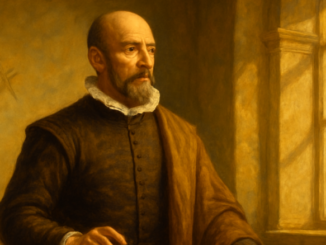
Open book with Montaigne essay beside Masonic square and compass symbol
Michel de Montaigne – Freemasonry & Connection

Montaigne on Custom, Prejudice, and the Power of Connection

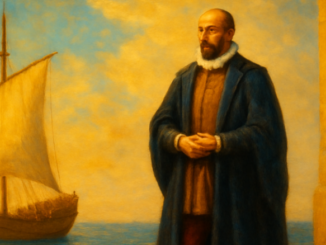
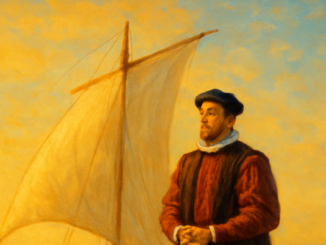
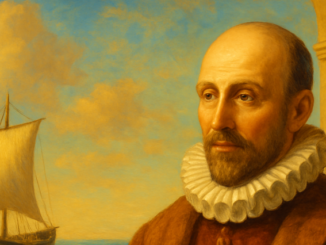
What if our deepest convictions are nothing more than habits, worn into us by time and culture? In his essay on custom and convention, Michel de Montaigne poses an uncomfortable question that strikes at the heart of human connection: how can we truly live together when each of us is trapped in the web of our own traditions? Written in the sixteenth century, this question proves remarkably relevant for anyone who reflects on a brotherhood that transcends borders. The Paradox of the Familiar Montaigne opens with an observation that is at once simple and deeply unsettling: we regard whatever is unfamiliar to us as barbarous. The Greek calls the Persian a barbarian; the Persian does the same to the Greek. Both are utterly convinced that their own customs represent the standard of civilization. Here lies a paradox that Montaigne explores with undisguised curiosity — the familiar feels self-evident, but only because we happened to grow up with it. This insight resonates deeply with Freemasonry, which from its very origins has brought together men of different religious and cultural backgrounds. In the lodge, men meet who might never have crossed paths outside its walls. The question Montaigne raises is the same […]
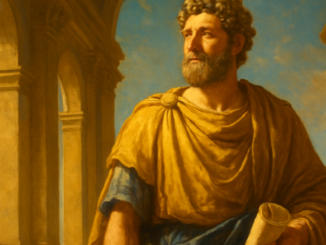
Marble bust of Marcus Aurelius with Masonic square and compass symbolism
Marcus Aurelius – Freemasonry & Connection

Marcus Aurelius on Virtue as the Only True Value

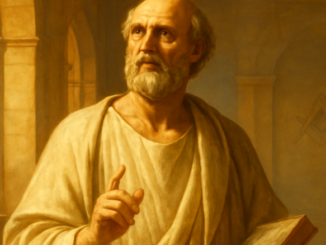
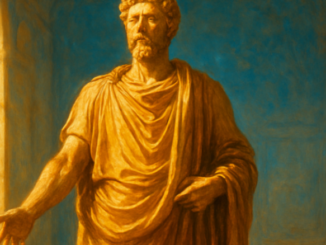
What if everything you own — your status, your reputation, even your body — were to vanish tomorrow? Would anything of real value remain? Marcus Aurelius, the Roman emperor-philosopher who ruled nearly nineteen centuries ago, posed this question to himself again and again. In the sixth book of his Meditations, he arrives at an answer that is both radical and consoling: only virtue holds genuine worth. This insight resonates profoundly with Freemasonry, where the pursuit of moral perfection and the cultivation of inner qualities stand at the very center of practice. Both traditions converge on a fundamental conviction: who you are matters far more than what you have. The Paradox of the Powerful Philosopher Here we enter curious territory. Marcus Aurelius wielded virtually unlimited power. As emperor, he could amass wealth, destroy enemies, and have his name chiseled in marble for all eternity. Yet night after night, he wrote in his private journal that none of these things moved him. More than that — he regarded them as distractions from what truly matters. Throughout Book VI, he repeats like a mantra that external circumstances are neither good nor bad. They are indifferent, neutral, merely the raw material with which the […]

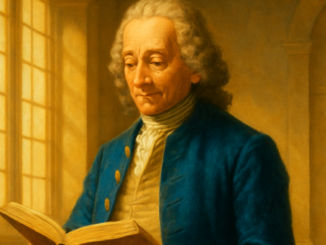
Portrait of Voltaire symbolizing tolerance and Enlightenment ideals in Freemasonry
Symbolism & Rituals

Voltaire on Tolerance: The Calas Affair and Freemasonry

What happens when a society projects its deepest fears onto an innocent family? Voltaire’s treatise on tolerance opens with one of the most harrowing cases of religious intolerance in eighteenth-century Europe: the Calas affair. This was not merely a judicial error — it was a mirror held up to humanity, revealing how swiftly prejudice can escalate into murder. For Freemasons, who regard brotherhood and tolerance as pillars of their work, Voltaire’s writing resonates as powerfully today as it did over two and a half centuries ago. The Tragic Heart of the Calas Affair In 1761, the Protestant merchant Jean Calas of Toulouse discovered his son Marc-Antoine dead in the family home. The young man had hanged himself. What followed was not a search for truth but a hysterical wave of accusations. The local population, saturated with religious tension between Catholics and Protestants, quickly concluded that the father had murdered his son to prevent him from converting to Catholicism. Without credible evidence, Jean Calas was tortured and publicly executed on the breaking wheel in March 1762. Voltaire first heard about the case through friends and was initially uncertain about Calas’s guilt. But as he gathered more testimonies and studied the facts, […]

Ancient Stoic scroll with Masonic square and compasses symbolizing simplicity
Lucius Annaeus Seneca – Content & Summary

Seneca’s Letter XX: Simplicity and Loyalty to Philosophy

What does it truly mean to live by your convictions? And why is simplicity not a deficiency but a profound source of strength? In his twentieth letter to Lucilius, the Stoic philosopher Seneca examines these questions with the sharpness and warmth that have made his philosophical letters timeless. This ancient text invites a conversation about authenticity, inner freedom, and the courage to live simply in a world overflowing with distraction — themes that resonate deeply with the principles and symbols of Freemasonry. What Does Seneca Ask of Us in Letter XX? Seneca opens Letter XX with an urgent question: are we truly living according to the principles we profess? He insists that philosophy must never remain a merely theoretical pursuit. It must become visible in our everyday choices. The heart of his message is that words and deeds must align. Anyone who claims to love wisdom yet loses himself in luxury and outward display is deceiving both himself and others. The Stoic thinker emphasizes that genuine progress in philosophy can be measured by the degree to which a person embraces simplicity — not as a form of deprivation, but as a conscious choice. Simplicity frees the mind from unnecessary worries […]

Ancient Greek temple columns symbolizing Plato's philosophy and Masonic ideals
Plato – Freemasonry & Connection

Plato’s Phaedrus: Beauty as a Gateway to the Soul

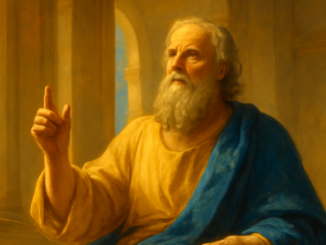
What actually happens when we perceive something truly beautiful? Does beauty merely please the eye, or does its influence reach far deeper — into the very core of who we are? In his dialogue Phaedrus, Plato has Socrates offer a striking answer: beauty is not a superficial phenomenon but a memory of a higher reality the soul once knew. For Freemasons, who are well-versed in using symbolism as a bridge between the visible and the invisible, this classical work opens a fascinating perspective on their own tradition. What Did Plato Actually Mean by ‘Beauty’? In the Phaedrus, Plato does not describe beauty as something subjective or as mere aesthetic pleasure. For him, beauty is a reflection of an eternal Idea — a Form that the soul recognizes from an existence before it entered a physical body. When we encounter something beautiful — a face, a landscape, a work of art — we experience, according to Plato, a glimpse of that original perfection. It is as though the soul awakens from a deep slumber. This immediately raises a question: is beauty, then, a teacher? Plato would answer with an emphatic yes. In the famous passage about the winged soul, Socrates explains […]

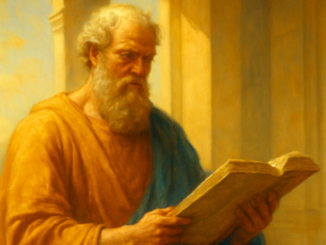
Portrait of Michel de Montaigne with philosophical and Masonic symbols
Michel de Montaigne – Philosophical Background

Montaigne on Customs: Philosophical Roots and Freemasonry

In 1580, Michel de Montaigne published a remarkable essay on the diversity of human customs. His observations on how different peoples perform the same acts in entirely different ways touched upon fundamental questions that had occupied thinkers for centuries. What philosophical traditions shaped his view of human diversity? And what can we — nearly five centuries later — still learn from his intellectual legacy, particularly as Freemasons? The Skeptical Tradition as Foundation Montaigne’s approach to human customs is deeply rooted in Pyrrhonian Skepticism, a philosophical school tracing back to the Greek thinker Pyrrho of Elis. This tradition held that absolute certainty about the world is unattainable and that we must suspend judgment. Montaigne immersed himself in the works of Sextus Empiricus, whose writings were being rediscovered and recirculated during his lifetime, and was profoundly influenced by his arguments against dogmatic thinking. In his essay on customs, Montaigne applies this skeptical stance consistently. He observes how what one culture considers civilized, another may regard as barbaric. Who, then, gets to determine what is truly right? By placing customs side by side without passing judgment, he invites the reader toward intellectual humility. This is not relativism — it is a call to […]

Bust of Marcus Aurelius symbolizing Stoic virtue and philosophical wisdom
Marcus Aurelius – Meditations

Marcus Aurelius and the Stoic Roots of Virtue as Supreme Good

When Marcus Aurelius writes in the sixth book of his Meditations that only virtue possesses real value, he is not speaking as a solitary thinker philosophizing in his tent. He is articulating a tradition that began more than four centuries before him in the colonnades of Athens, was shaped by exiles and slaves, and ultimately reached the throne of the Roman Empire. The claim that virtue is the sole good forms the beating heart of Stoicism — but what does it actually mean? And which thinkers forged this conviction before an emperor committed it to his private journal? The Paradox of the Stoic Good Here lies a philosophical paradox that deserves careful examination. Stoicism asserts that virtue — and only virtue — is good. Wealth is not good. Health is not good. Even life itself is not good. How can such an extreme position be reasonable? The answer lies in the Stoic definition of the good: something is truly valuable only if it always, under all circumstances, leads to well-being. Wealth can breed greed, health can foster arrogance, and a long life can descend into idleness. But a virtuous character, the Stoics argued, can never be misused. You can have […]

Symbolic contrast of darkness and light representing Voltaire and Pascal
Symbolism & Rituals

Voltaire vs Pascal: Optimism as a Bridge to Brotherhood

There are moments when the weight of the world feels unbearable — moments when you wonder whether humanity is simply destined for misery. Blaise Pascal, the brilliant seventeenth-century thinker, wrote from exactly that conviction. But what happens when another mind reads those same texts and arrives at radically different conclusions? Voltaire took up the challenge, and in his Philosophical Letters he delivered a response that not only ignited one of the great intellectual debates in Western thought but also articulated a philosophy of life that runs remarkably close to the heart of Freemasonry. Two Thinkers, Two Visions of the Human Condition Pascal saw humanity as a species torn between greatness and insignificance, trapped in a universe that appears deaf and blind to our existence. His famous Pensées breathe an atmosphere of existential unease: without God, man is lost, and even with faith, existence remains a precarious balancing act. When Voltaire read these fragments, he felt resistance rising within him — not because he underestimated Pascal’s intelligence, but because he held a fundamentally different view of what it means to be human. Where Pascal emphasized human weakness, Voltaire saw possibility. Where Pascal warned against the vanity of worldly pursuits, Voltaire celebrated […]

Bronze key on a stone table symbolizing Seneca's philosophy and Masonic freedom
Lucius Annaeus Seneca – Freemasonry & Connection

Seneca on True Freedom: Breaking the Invisible Chains

There is a key lying on the table. Cast in bronze, worn smooth by countless hands. You could pick it up, walk outside, and open any door you encounter. Yet you remain seated — not because the door is locked, but because you are not sure you truly want to be free. Lucius Annaeus Seneca wrote about precisely this paradox in his eighteenth letter to Lucilius: the human being who remains captive even though the cage stands wide open. The Key Nobody Picks Up In Letter XVIII, Seneca addresses his friend Lucilius with a question that has remained equally urgent across the centuries: what truly makes a person free? The answer Seneca offers is as simple as it is unsettling. Freedom does not begin with breaking external chains — it begins with recognizing the shackles we have placed upon ourselves. The slave who fears his master is less enslaved than the free citizen who refuses to face his own fears. Seneca describes how we bind ourselves to possessions, to the approval of others, to habits that once offered comfort but have since become prisons. The philosopher invites us to periodically live as though we own nothing, thereby loosening the grip […]

Norse god Balder surrounded by light symbolizing Masonic themes of rebirth
Symbolism & Rituals

Balder and Freemasonry: Light, Death, and Rebirth

Imagine a god so radiant that every living thing loves him, yet whose fate ends in darkness. The Norse myth of Balder has captivated imaginations for centuries, but it also contains themes that will feel strikingly familiar to anyone acquainted with Masonic ritual. Both traditions grapple with the same fundamental questions about light and darkness, death and rebirth. In this article, we place these two worlds side by side and discover what they share. The Norse Myth: Who Was Balder? Balder was the son of the All-Father Odin and the goddess Frigg in Norse mythology. The ancient Edda texts, recorded by Icelandic poets in the thirteenth century, describe him as the god of light, purity, and beauty. His name likely means “the shining one” or “the bold one.” Everything in nature loved him — plants, animals, and humans alike. Even the gods themselves regarded him as the purest being among them. The myth tells how Frigg made every creature and element swear never to harm Balder. She overlooked, however, one humble plant: the mistletoe. The cunning trickster god Loki discovered this weakness and persuaded the blind god Höðr to shoot an arrow of mistletoe wood at Balder. The radiant god […]

Vrijmetselarij - Plato's Symposium en vrijmetselarij: liefde als verbindende kracht
Plato – Freemasonry & Connection

Plato’s Symposium and Freemasonry: Love as a Unifying Force

A drinking cup passed from hand to hand. A circle of men speaking about what truly moves them. In Plato’s Symposium, written around 385 BCE, guests gather to explore the nature of love. What initially appears to be a philosophical conversation about romance unfolds into a profound exploration of human connection, the longing for beauty, and the transformative power of community. For anyone familiar with both classical philosophy and Freemasonry, the parallels are striking — and deeply instructive. The Drinking Cup as a Symbol of Shared Wisdom The Symposium opens with an everyday ritual: the sharing of wine. The host, Agathon, receives his friends following his victory at a dramatic competition. The guests agree to drink moderately and instead deliver speeches in honor of Eros, the god of love. This seemingly simple scene carries deeper significance. The cup passed around the table symbolizes not mere conviviality, but the sharing of insight. Each speaker fills the evening with his own perspective, and from this multiplicity of voices a richer understanding slowly emerges. In Freemasonry, we recognize similar moments where sharing stands at the center of the experience. The lodge is a space where brethren exchange their thoughts, where every viewpoint contributes […]

Ancient Greek philosophical scene representing Plato's winged soul and Masonic symbolism
Plato – Philosophical Background

Plato’s Phaedrus: Philosophical Roots of Beauty and the Soul

What if beauty is not merely something we perceive, but a memory of something we once knew? Plato’s dialogue Phaedrus poses this question with a force that has echoed through Western philosophy for over two millennia. But where did Plato’s vision actually come from? What thinkers and traditions formed the intellectual soil from which his ideas about the soul, beauty, and divine madness grew? In this article, we explore the philosophical roots of the Phaedrus and discover why this ancient work still resonates profoundly with anyone searching for deeper truth — including those who walk the path of Freemasonry. Why Did Plato Write About the Soul and Beauty? To understand Plato’s Phaedrus, we first need to understand the world in which he thought and wrote. Fourth-century Athens was a vibrant center of intellectual debate. Sophists like Gorgias and Protagoras had called absolute truths into question. They taught that the power to persuade mattered more than truth itself. Plato saw a danger in this: if everything is relative, what remains worth striving for? His teacher Socrates had shown him that something does exist beyond mere human opinion. There are Forms — Ideas — that are eternal and unchanging. The Phaedrus became […]

Open book with mirror and rough ashlar stone symbolising Masonic self-reflection
Michel de Montaigne – Content & Summary

Montaigne on Custom: What Our Habits Reveal About Us

A spoon. A simple piece of cutlery we raise to our mouths without a second thought. But what if you grew up in a culture where eating with your hands was the only respectable way to dine? In his twenty-third essay, Michel de Montaigne invites us to pause and reflect on such everyday habits — and to discover what they reveal about the human condition. In ‘Of Custom,’ he unfolds a rich collection of examples that compels us to question everything we consider normal. The Core Idea of the Essay In this essay, Montaigne examines the vast diversity of human customs and habits — from eating practices to funeral rites, from dress codes to forms of greeting. His central thesis is as simple as it is unsettling: what we experience as natural and self-evident is almost always the product of habit and upbringing. The power of custom is so great that we are barely able to look at it critically. Montaigne draws from classical sources such as Herodotus, Pliny, and Seneca, but also from travel accounts of his own time about newly discovered peoples in the Americas and Africa. He places the customs of these distant cultures alongside those of […]

Ancient Roman bust of Marcus Aurelius symbolizing Stoic virtue and Freemasonry
Marcus Aurelius – Content & Summary

Marcus Aurelius Book VI: Virtue as Compass in a Faltering Empire

Somewhere around 173 AD, amid military campaigns along the Danube, a Roman emperor sat down by candlelight to write his thoughts. Not for publication, not for fame, but as an exercise in inner discipline. Marcus Aurelius knew that external circumstances could be stripped from him at any moment — his throne, his health, even his life. But one thing no one could take away: his character. In the sixth book of his Meditations, he distills this insight into a philosophical core that still resonates today, not least within Freemasonry. The Historical Context of Book VI To truly understand Book VI, we must transport ourselves to the Roman Empire in the second century. Marcus Aurelius ruled from 161 to 180 AD, a period marked by plague, frontier wars, and internal instability. Unlike the philosophers of his day, who could contemplate in relative tranquility, this Stoic emperor wrote his reflections quite literally on the battlefield. The Meditations are not a systematic treatise but a collection of personal notes, originally titled Ta eis heauton — “To Himself.” Book VI was most likely composed during the Marcomannic Wars, when the emperor confronted mortality on a massive scale. It is precisely within this chaos that […]

Symbolic contrast of light and darkness representing Voltaire and Pascal
Symbolism & Rituals

Voltaire vs Pascal: Two Visions of Human Nature

In his fifth Philosophical Letter, Voltaire took aim at one of the seventeenth century’s most influential thinkers: Blaise Pascal. Where Pascal saw humanity as a wretched creature lost between infinity and nothingness, Voltaire offered a radically different portrait. This was no dry academic dispute — it was a collision between two worlds: Jansenist pessimism and the rising confidence in human reason and progress. For the Freemason, who seeks light in the darkness and the elevation of the human spirit, this confrontation offers surprisingly relevant insights. The Intellectual World of Voltaire To understand Voltaire’s critique of Pascal, we must first understand the intellectual sources that shaped him. Voltaire was a child of the early Enlightenment, deeply influenced by the English empiricists John Locke and Isaac Newton. During his exile in England, he discovered an intellectual climate that was radically different from the dogmatic atmosphere of France. Locke’s idea that the human mind begins as a blank slate stood in direct opposition to Pascal’s notion of humanity stained by original sin. Newton demonstrated that the universe obeyed comprehensible laws rather than impenetrable mysteries. Voltaire also drew from the skeptical tradition of Michel de Montaigne, whose essays he studied closely. Montaigne’s gentle doubt […]

Ancient Roman scroll symbolizing Seneca's philosophy and Masonic inner freedom
Lucius Annaeus Seneca – Letters to Lucilius

Seneca on True Freedom: Philosophical Roots of Letter XVIII

What does it truly mean to be free? Not free from laws or obligations, but free on the inside — free from fear, from greed, from the tyranny of your own desires. Nearly two thousand years ago, Lucius Annaeus Seneca explored exactly this question in a letter to his friend Lucilius. His words still resonate today. In Letter XVIII, Seneca examines what true freedom really entails, drawing on a rich philosophical heritage that proves surprisingly familiar to modern Freemasons. Stoicism as the Foundation Seneca was one of the towering figures of Roman Stoicism, a philosophical tradition that originated around 300 BCE in Athens. Its founder, Zeno of Citium, taught in the Stoa Poikile — the painted colonnade from which the movement took its name. At the heart of Stoic thought lies a deceptively simple distinction: the difference between what is within our power and what is not. External circumstances — wealth, health, the opinions of others — fall outside our control. Our inner disposition, our judgments, and our responses, however, belong entirely to us. This core principle forms the backbone of Letter XVIII. Seneca argues that true freedom does not depend on social status or material possessions. A slave can […]

Open book of Montaigne's essays beside Masonic square and compasses symbol
Michel de Montaigne – Freemasonry & Connection

Montaigne on Custom: Freemasonry and the Power of Connection

Custom is a second nature, wrote Michel de Montaigne in the sixteenth century, and it is no less powerful than the first. But what happens when we follow this thought into the realm of brotherhood, shared ritual, and traditions that span generations? Freemasonry, with its centuries-old practices and symbolic language, offers a remarkable framework for exploring Montaigne’s insights about custom and law — not as dogma, but as an invitation to reflect on what binds us, what shapes us, and what we are willing to change. The Paradox of Custom Montaigne confronts us with an unsettling truth: we believe ourselves free in our judgments, yet our customs have shaped us long before we ever began to think critically. In his essay “Of Custom, and Not Easily Changing an Accepted Law,” he examines how deeply cultural practices take root within us. He gathers examples from distant lands and bygone eras to demonstrate that what seems self-evident to one person can be utterly unthinkable to another. Marriage customs, eating habits, attitudes toward death — all of it is sculpted by habit. This is where Montaigne touches on something essential to Freemasonry. The lodge is, after all, a space where men from vastly […]

Winged chariot symbolizing Plato's Phaedrus allegory of the soul
Plato – Content & Summary

Plato’s Phaedrus: Beauty, the Soul, and Inner Growth

Imagine walking through a park when an ancient oak catches your eye. Something about that tree moves you, though you can’t quite explain what. These moments of beauty — fleeting yet profound — are exactly the starting point of one of Plato’s most poetic dialogues: the Phaedrus. In this remarkable work, the Greek philosopher explores how beauty stirs the soul and propels us toward inner growth. For anyone engaged in self-knowledge and personal development — and for Freemasons in particular — this ancient text offers surprisingly practical wisdom. The Setting: Philosophy in Nature The Phaedrus takes place outside the city walls of Athens, along the banks of the river Ilissos. Socrates and his young companion Phaedrus seek shade beneath a plane tree. This rural setting is no accident. Plato deliberately places the conversation in nature to show how beauty surrounds us everywhere and has the power to open the mind. Phaedrus has just heard a speech about love and wants to share it with Socrates. What follows is a profound investigation into the nature of the soul, the workings of love, and the power of true eloquence. The Soul as a Winged Chariot The most famous image from the Phaedrus […]

Rough ashlar stone with gavel symbolizing Stoic obstacles in Freemasonry
Marcus Aurelius – Freemasonry & Connection

Marcus Aurelius on Obstacles: Stoic Wisdom for Freemasons

In 172 AD, Emperor Marcus Aurelius sat along the Danube frontier, surrounded by war and personal loss, and wrote some of the most penetrating observations ever recorded about the human capacity to transform adversity. His fifth book of the Meditations contains a core insight that still resonates in Masonic lodges around the world nearly two thousand years later: the obstacle becomes the way. This philosophical legacy connects the ancient Stoic tradition with the ongoing pursuit of moral perfection that lies at the heart of Freemasonry. The Historical Context of Book V Marcus Aurelius never intended his Meditations for publication. They were private notes — a journal of self-examination written during one of the most turbulent periods of his reign. Book V emerged during the Marcomannic Wars, a grueling campaign against Germanic tribes that kept the emperor far from Rome, surrounded by death and hardship. And yet, amid all of it, he turned his gaze inward. He asked himself a deceptively simple question: how do I remain a good man when the world around me descends into chaos? This was no rhetorical exercise. Marcus Aurelius buried children, lost trusted advisors, and watched soldiers fall around him. His own health was failing. […]

Reeds bending in wind symbolising Voltaire and Pascal philosophical dialogue
Symbolism & Rituals

Voltaire on Pascal: The Fifth Philosophical Letter Explored

A thinking reed. With this single image, Blaise Pascal captured the human condition — insignificant amid the vastness of the universe, yet elevated by the capacity for thought. Voltaire read these words and felt compelled to respond. In his fifth philosophical letter, he enters into dialogue with a thinker who both fascinated and unsettled him. The result is a text that still invites profound reflection: is humanity truly as wretched as Pascal claimed? The Heart of Pascal’s Thought Blaise Pascal wrote his famous Pensées as groundwork for a defence of the Christian faith. At its centre lies his conviction that humanity without God is lost. He describes human nature as broken, torn between greatness and insignificance. We seek distractions so we need not feel the void within. We entertain ourselves to forget death. Pascal’s analysis is saturated with a deep pessimism about humanity’s capacity for happiness outside divine grace. Voltaire acknowledges Pascal’s brilliance as both mathematician and prose stylist. At the same time, he resists Pascal’s bleak vision of human nature. In the fifth letter, he methodically dissects Pascal’s propositions and sets his own perspective against them. This is not destructive criticism — it is a dialogue between two fundamentally […]