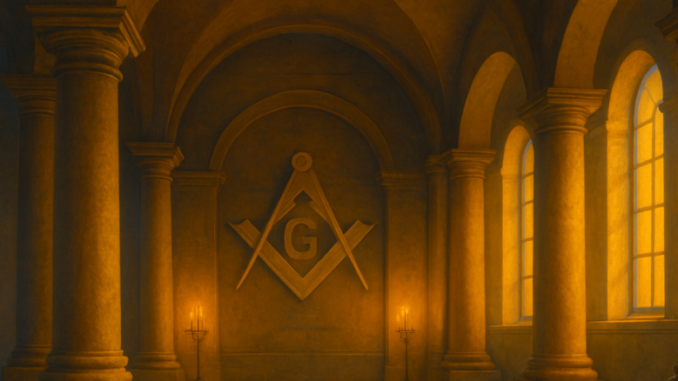
In his thriller Inferno, Dan Brown paints a world where scientists attempt to rewrite human biology. Genetic manipulation, population control, humanity as an engineerable project — the novel raises urgent questions. Is this real science or pure science fiction? And what would a Freemason make of it all? These are questions worth exploring, especially when we consider where the boundaries of progress truly lie.
What Does Inferno Actually Claim About Engineering Humanity?
The plot of Dan Brown’s Inferno revolves around a scientist who believes humanity must alter itself biologically in order to survive. He develops a pathogen capable of modifying human DNA on a global scale. The idea connects to what is broadly known as transhumanism — the notion that technology and biology can merge to optimize, enhance, or even render human beings immortal.
But how much of this is grounded in reality? The techniques Brown describes are partly based on actual developments in genetics, such as CRISPR gene editing. However, the novel pushes these possibilities to a dramatic extreme. Inferno doesn’t ask a neutral question — it forces readers to take a moral stance. And that is precisely where the story becomes fascinating from a Masonic perspective.
How Does Freemasonry View Science and Progress?
Freemasonry has a long and rich history of appreciating science and Enlightenment thinking. Figures like Isaac Newton and Voltaire, who helped lay the foundations of modern scientific thought in the seventeenth and eighteenth centuries, moved in circles where Masonic ideals flourished. The lodge was often a place where new ideas could be freely discussed — where reason and reflection came together in a spirit of open inquiry.
But does this mean Freemasons embrace every scientific development without question? Absolutely not. The Masonic tradition emphasizes that knowledge must be accompanied by wisdom, and that progress can never be separated from ethical reflection. It is not merely about what we can do, but above all about what we ought to do. This is a tension that Inferno touches upon but never truly explores in depth.
The Core Question: Just Because We Can, Should We?
This is perhaps the essential question a Freemason would ask while reading Inferno. Science is advancing at breathtaking speed. Genetic techniques that seemed unthinkable twenty years ago are now a reality. But technical feasibility is a very different thing from moral desirability.
Freemasonry teaches that the true progress of a human being lies not in the body, but in character and conscience. In the lodge, Masons work on what is symbolically called the “rough ashlar” — the inner self that must be shaped and polished through reflection, brotherhood, and ritual. This is a fundamentally different approach from biological optimization. Where transhumanism pursues an external ideal of human perfection, Freemasonry focuses on inner growth — something that cannot be imposed, injected, or engineered.
Does Dan Brown Reinforce Misconceptions About Secret Societies?
Dan Brown is a master at blending fact and fiction. His novels, including Inferno, frequently suggest that secret societies possess hidden knowledge or pull strings behind the scenes of world events. It makes for gripping storytelling, but it departs significantly from reality.
Freemasonry is not a secret society with hidden agendas. It is a fraternity that exists openly, with lodges meeting all around the world. The rituals are private, yes, but the values are public: brotherhood, tolerance, personal development, and civic engagement. There is no conspiracy, no secret science, and certainly no plan to genetically redesign humanity.
What Inferno does is tap into a widespread fascination with the hidden and mysterious. That is perfectly legitimate as a literary device, but it can also reinforce misunderstandings. Readers who treat the novel as a window onto reality may walk away with a distorted picture of what Freemasonry actually stands for.
What Can We Learn From This Conversation Between Fiction and Reality?
Perhaps the greatest value of books like Inferno is that they compel us to think. The questions Dan Brown raises about the limits of science are legitimate, even if his answers are fictional. And Freemasonry offers a framework for approaching such questions — not through dogma, but through dialogue.
Consider these Masonic principles in light of Brown’s narrative:
Science without ethics is blind. Progress without reflection is dangerous. The human being is more than biology alone. True improvement begins from within.
In the eighteenth century, the philosopher Immanuel Kant wrote about the courage to use one’s own reason — Sapere aude. That call still resonates powerfully within Freemasonry today. The point is not to follow a scientist with a grand plan, as in Inferno, but to think for yourself about what it truly means to be human.
Dan Brown’s Inferno fires the imagination with scenarios of genetic manipulation and human enhancement. But Freemasonry reminds us that the deepest transformation does not take place in a laboratory. It happens in the heart and conscience of the individual. Fiction may fascinate, but the real work on the self requires no technology. It requires reflection, brotherhood, and the willingness to ask the question that matters most — not what can I do, but who do I want to be?
Copyright text & image: devrijmetselaar.nl
Texts are based on the ideas and content of the author of devrijmetselaar.nl, reviewed, corrected, and supplemented with the assistance of OpenAI. Images are created based on the ideas of the author of devrijmetselaar.nl using OpenAI/DALL-E.

Be the first to comment