Dan Brown Inferno novel with DNA helix and Masonic rough ashlar symbol
Inferno

Inferno and Transhumanism: Fact or Fiction in Dan Brown’s Novel

If you’ve read Dan Brown’s thriller Inferno, you’ve probably wondered: could any of this actually happen? The novel plays with ideas about genetic manipulation, overpopulation, and humanity’s relentless drive toward self-improvement. It’s a gripping story, but how much of it is grounded in real science? In this fact-check, we examine which transhumanist and biotechnological claims in Inferno are verifiably true, which are exaggerated for dramatic effect, and which belong entirely to the realm of fiction. What Does Inferno Claim About Transhumanism? At the heart of Inferno is a central conflict driven by a scientist who believes humanity must fundamentally redefine itself to survive. The novel suggests that large-scale genetic manipulation is not only possible but inevitable. Dan Brown has his characters speak of viruses capable of rewriting human DNA and of the transhumanist vision that technology can push us beyond our biological limitations. This raises a critical question: is this science fiction, or a preview of tomorrow’s science? The Science Behind Genetic Manipulation The core question is whether we can actually edit DNA the way Inferno suggests. The answer is nuanced. The technology known as CRISPR has made it possible since 2012 to precisely cut and modify genetic material. Scientists […]
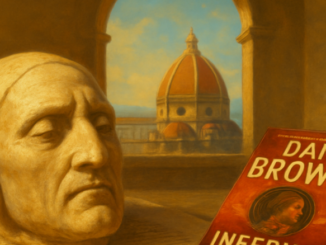
Vrijmetselarij - Inferno van Dan Brown: feit of fictie over Dante's symboliek?
Inferno

Dan Brown’s Inferno: Fact or Fiction About Dante’s Symbolism?

A man wakes up in a Florentine hospital, his memory erased, his pockets filled with riddles that trace back to a seven-hundred-year-old masterpiece. In Dan Brown’s thriller Inferno, Dante Alighieri’s Divine Comedy serves as the compass guiding the protagonist through a deadly maze. But how much of the Dante symbolism Brown employs is genuinely rooted in historical fact? And where does fiction take over from reality? The Historical Dante: Poet and Exile Let’s start at the source. Dante Alighieri lived from 1265 to 1321 and wrote his Divine Comedy during his exile from Florence. This is thoroughly documented history. The poet was banished in 1302 for political reasons and never returned to his birthplace. In Brown’s Inferno, Florence plays a central role, and the tension between Dante’s love for the city and his exile is accurately portrayed as historical background. Brown also correctly presents the three-part structure of Dante’s work: Hell, Purgatory, and Paradise. This division corresponds to medieval cosmology and theological views on the afterlife. The nine circles of Hell, which serve as puzzle pieces in the thriller, are authentic elements drawn directly from the original poem. The Death Mask: Between Legend and Reality A crucial object in Inferno […]