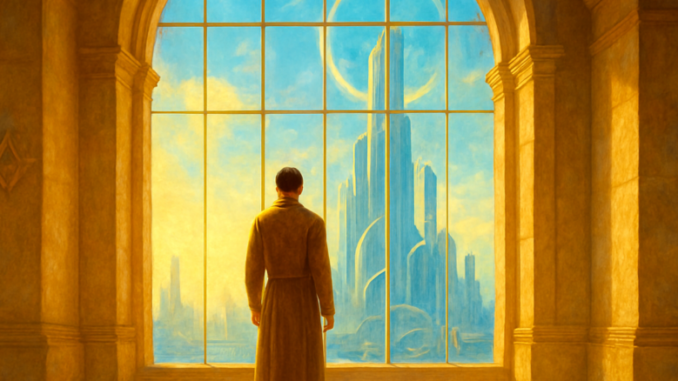
If you’ve read Dan Brown’s thriller Inferno, you’ve probably wondered: could any of this actually happen? The novel plays with ideas about genetic manipulation, overpopulation, and humanity’s relentless drive toward self-improvement. It’s a gripping story, but how much of it is grounded in real science? In this fact-check, we examine which transhumanist and biotechnological claims in Inferno are verifiably true, which are exaggerated for dramatic effect, and which belong entirely to the realm of fiction.
What Does Inferno Claim About Transhumanism?
At the heart of Inferno is a central conflict driven by a scientist who believes humanity must fundamentally redefine itself to survive. The novel suggests that large-scale genetic manipulation is not only possible but inevitable. Dan Brown has his characters speak of viruses capable of rewriting human DNA and of the transhumanist vision that technology can push us beyond our biological limitations. This raises a critical question: is this science fiction, or a preview of tomorrow’s science?
The Science Behind Genetic Manipulation
The core question is whether we can actually edit DNA the way Inferno suggests. The answer is nuanced. The technology known as CRISPR has made it possible since 2012 to precisely cut and modify genetic material. Scientists have used it to treat hereditary diseases in laboratory settings and have even genetically modified human embryos. This is not fiction — these are published research results from respected institutions including MIT, Stanford University, and Peking University.
However, the scale and speed at which Inferno presents genetic change are dramatically overstated. In the novel, a virus spreads like a pandemic and rewrites the genetic material of all humanity. In reality, gene therapy is an extremely precise and controlled process that must be applied on an individual basis. The idea of a virus that predictably rewrites DNA on a global scale is not achievable with current science and firmly belongs in the domain of speculative fiction.
Transhumanism: Philosophy or Promise?
Transhumanism as a movement is very real. This philosophical current emerged in the twentieth century and builds upon Enlightenment thinking — the idea that humanity can and should improve itself through reason and technology. Thinkers such as Francis Bacon and later Goethe wrote about the human drive to master nature and perfect oneself. Today’s transhumanists, organized in institutes and think tanks, seriously discuss topics like life extension, cognitive enhancement, and the merging of human and machine.
What Dan Brown does in Inferno is dramatize this existing philosophy into a thriller plot. The novel takes real debates and inflates them to apocalyptic proportions. This is not an unusual literary technique, but it’s important to recognize that the ethical debates surrounding transhumanism in academic circles are far more nuanced than the all-or-nothing scenario presented in the thriller.
Genetic manipulation is scientific reality; the scale and method depicted in Inferno remain, for now, science fiction.
The Symbolic Dimension: Perfection as an Eternal Quest
You might wonder what any of this has to do with Freemasonry. The connection lies in the symbolism of perfection and self-improvement. In Freemasonry, the rough ashlar symbolizes the unrefined self, which through labor and reflection is shaped into a perfect ashlar — a smooth, cubic stone fit for the building of the temple. This is not literal construction but inner architecture: the work of shaping one’s own character and consciousness.
The transhumanism presented in Inferno is, in a sense, a technological variant of the same human drive: the desire to become better, to transcend limitations, to draw closer to an ideal. The difference is that the Freemason pursues this through ethical reflection and fraternal dialogue, while transhumanism places its trust in external technology. Yet both currents share a core conviction: that the human being is not a finished product, but a work in progress.
What Is Exaggerated and What Is Pure Fiction?
Let’s systematically evaluate the key claims from Inferno:
Genetic manipulation is possible: TRUE — but only on an individual scale and under tightly controlled conditions.
Viruses can permanently rewrite DNA: PARTIALLY TRUE — but not in the way the novel suggests. Viral vectors are used in gene therapy, but they don’t spread from person to person rewriting genomes along the way.
A globally spreading virus could genetically transform humanity: FICTION — this is not achievable with current knowledge or technology.
Transhumanism is a serious philosophical movement: TRUE — with deep roots in the Enlightenment.
Overpopulation will inevitably lead to catastrophe: EXAGGERATED — demographers point to population stabilization and even decline in many regions around the world.
The Value of Critical Reading
Dan Brown is a masterful storyteller who weaves scientific and historical elements into page-turners. Inferno is not a scientific treatise — it’s a thriller designed to make you think. Its value lies not in factual accuracy but in the questions it raises. What does it mean to be human? Should we intervene in our own evolution? And who gets to decide?
These are questions that are also explored within the Lodge, albeit in different language and through ritual. Freemasonry encourages its members to think critically, to weigh sources, and not to accept at face value what is presented to them — whether in a novel or a news article. In that sense, this very fact-check is itself a Masonic exercise: the separation of light from darkness, of truth from invention.
Dan Brown’s Inferno offers a thrilling but heavily dramatized look at transhumanism and genetic manipulation. The science behind gene editing is real and evolving rapidly, but the apocalyptic scenarios in the novel are primarily literary devices. What remains genuinely valuable — and what connects this story to the Masonic tradition — is the underlying question it poses: how far should humanity go in its quest for self-improvement? Whether you seek answers through science, philosophy, or the symbolic work of the Lodge, the question itself is timeless and worth pursuing.
Copyright text & image: devrijmetselaar.nl
Texts are based on the ideas and content of the author of devrijmetselaar.nl, reviewed, corrected, and supplemented with the assistance of OpenAI. Images are created based on the ideas of the author of devrijmetselaar.nl using OpenAI/DALL-E.

Be the first to comment