Dan Brown Inferno book with Masonic symbols representing rebirth and transformation
Inferno

Inferno and the Dream of Human Enhancement: Dan Brown

A scientist stands before a surging crowd, eyes blazing with conviction. He speaks not of profit or fame, but of saving humanity itself. In Dan Brown’s novel Inferno, we enter a world where the line between medicine and playing God dissolves — where the question is no longer whether we can improve human beings, but whether we should. The Central Premise of Inferno In Inferno, Dan Brown constructs a thought experiment that strikes at the very foundations of human ethics. The story revolves around a brilliant geneticist who believes humanity teeters on the brink of extinction due to overpopulation. His solution is radical: a genetically engineered virus designed to alter human reproduction on a global scale. Brown is not crafting traditional science fiction here — he is exploring what is already scientifically within reach. Brown based his narrative on publicly known developments in genetics and biotechnology. In various interviews and reviews surrounding the book’s publication, he described months of research at genetic laboratories and conversations with scientists about the real possibilities of gene editing. Inferno does not claim such technology is available tomorrow, but it insists that the ethical questions it raises need to be confronted today. Transhumanism as a […]
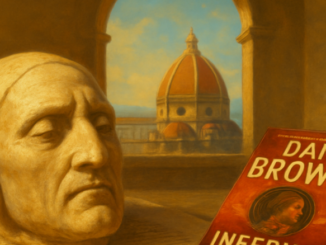
Ancient Masonic symbols alongside Dante's Inferno book representing fiction and reality
Inferno

Dan Brown’s Inferno: Freemasonry in Fiction vs Reality

If you’ve read Dan Brown’s Inferno, chances are you walked away with questions. What’s real? What’s invented? And what about all those references to secret societies and ancient symbols? As a Freemason, these questions come up regularly — especially when popular thrillers paint vivid pictures of mysterious brotherhoods operating in the shadows. It’s worth taking a clear-eyed look at what Inferno suggests about symbolism and hidden knowledge, and how that compares to the reality of Freemasonry. Dante Alighieri as Inspiration Dan Brown didn’t choose the title Inferno at random. It’s a direct reference to Dante Alighieri’s Divine Comedy, the fourteenth-century masterpiece in which the poet descends into Hell, journeys through Purgatory, and ultimately reaches Paradise. This threefold path from darkness to light resonates deeply with Freemasons because it mirrors their own ritual journey — from ignorance to enlightenment, from rough stone to polished stone. Dante himself was not a Freemason — he couldn’t have been, since Freemasonry as we know it didn’t emerge until the eighteenth century. Yet his works are frequently referenced in lodge meetings and philosophical discussions. The symbolism of the journey, the confrontation with personal shortcomings, and the search for truth are themes that Freemasons readily recognize […]

Vrijmetselarij - Inferno van Dan Brown: feit of fictie over Dante's symboliek?
Inferno

Dan Brown’s Inferno: Fact or Fiction About Dante’s Symbolism?

A man wakes up in a Florentine hospital, his memory erased, his pockets filled with riddles that trace back to a seven-hundred-year-old masterpiece. In Dan Brown’s thriller Inferno, Dante Alighieri’s Divine Comedy serves as the compass guiding the protagonist through a deadly maze. But how much of the Dante symbolism Brown employs is genuinely rooted in historical fact? And where does fiction take over from reality? The Historical Dante: Poet and Exile Let’s start at the source. Dante Alighieri lived from 1265 to 1321 and wrote his Divine Comedy during his exile from Florence. This is thoroughly documented history. The poet was banished in 1302 for political reasons and never returned to his birthplace. In Brown’s Inferno, Florence plays a central role, and the tension between Dante’s love for the city and his exile is accurately portrayed as historical background. Brown also correctly presents the three-part structure of Dante’s work: Hell, Purgatory, and Paradise. This division corresponds to medieval cosmology and theological views on the afterlife. The nine circles of Hell, which serve as puzzle pieces in the thriller, are authentic elements drawn directly from the original poem. The Death Mask: Between Legend and Reality A crucial object in Inferno […]

Dan Brown Inferno book with Masonic and Dante Alighieri symbolism
Inferno

Dan Brown’s Inferno: Symbolism Through Two Different Eyes

When Dan Brown brings the rich symbolic world of Dante Alighieri to life in his thriller Inferno, a fascinating question emerges: how differently do people read these layers of meaning? The casual reader sees an exciting story peppered with historical references. The Freemason may recognize a much deeper structure. Both perspectives deserve attention — and together, they reveal why symbolism has captivated humanity for centuries. The Outsider’s Perspective: Thrills and Historical Decoration For most readers of Inferno, the symbolism functions primarily as atmosphere. Dan Brown guides his protagonist Robert Langdon through the streets of Florence, Venice, and Istanbul, where he solves riddles rooted in Dante’s Divine Comedy. The casual reader experiences these symbols as decorative elements that enrich the narrative. The concentric circles of Hell, the mysterious death masks, and the hidden messages in artworks all serve to drive the plot forward. This type of reader enjoys the intellectual treasure hunt without necessarily seeking deeper layers of meaning. The symbols are puzzle pieces, not windows into inner transformation — and that is a perfectly valid way to read the book. Dan Brown himself has said in interviews that he deliberately uses symbols as narrative tools to make complex themes accessible […]