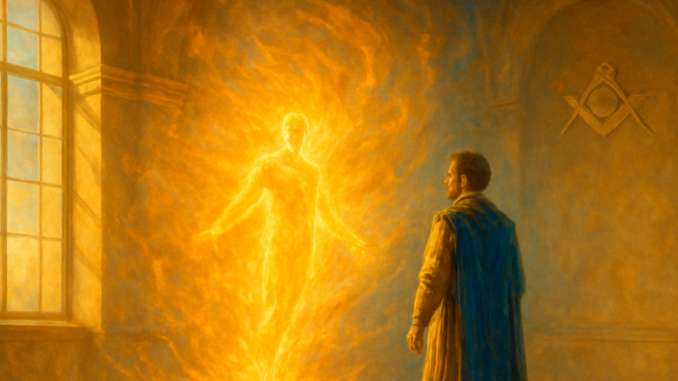
A scientist stands before a surging crowd, eyes blazing with conviction. He speaks not of profit or fame, but of saving humanity itself. In Dan Brown’s novel Inferno, we enter a world where the line between medicine and playing God dissolves — where the question is no longer whether we can improve human beings, but whether we should.
The Central Premise of Inferno
In Inferno, Dan Brown constructs a thought experiment that strikes at the very foundations of human ethics. The story revolves around a brilliant geneticist who believes humanity teeters on the brink of extinction due to overpopulation. His solution is radical: a genetically engineered virus designed to alter human reproduction on a global scale. Brown is not crafting traditional science fiction here — he is exploring what is already scientifically within reach.
Brown based his narrative on publicly known developments in genetics and biotechnology. In various interviews and reviews surrounding the book’s publication, he described months of research at genetic laboratories and conversations with scientists about the real possibilities of gene editing. Inferno does not claim such technology is available tomorrow, but it insists that the ethical questions it raises need to be confronted today.
Transhumanism as a Philosophical Question
Through the antagonist in Inferno, Brown gives voice to a form of transhumanism — the conviction that humanity must improve itself through technology in order to survive. This is far from a new idea. Philosophers like Francis Bacon wrote as early as the seventeenth century about using science to transform the human condition. What Inferno does is place that centuries-old dream within a modern context of gene therapy and genetic manipulation.
The book suggests that bio-engineering has moved beyond the realm of speculation. The geneticist at its center acts out of the belief that conventional solutions — politics, education, diplomacy — are simply too slow to save humanity. In doing so, Brown frames a profound moral dilemma: does a higher purpose justify extreme measures?
The Symbolism of Hell and Rebirth
The title Inferno directly references the first part of Dante Alighieri’s Divine Comedy, the masterwork that describes a journey through Hell as a path toward purification. Brown uses this symbolism to frame the geneticist’s actions: destruction as a necessary step toward rebirth. This echoes ancient mystical traditions in which transformation through suffering is a recurring and powerful theme.
The question Inferno poses is not whether we can change humanity, but whether we have the right to make that choice on behalf of others.
Within Masonic lodges, the symbolism of death and rebirth plays an equally central role. Masonic rituals portray the spiritual transformation of the candidate, who symbolically dies in order to be reborn as a better person. While the methods differ radically from the scenario in Brown’s novel, the underlying theme is remarkably similar: what does it truly mean to become fully human?
Science or Science Fiction?
Following the publication of Inferno, critics and scientists debated the plausibility of the technology described in the book. Some pointed out that gene editing techniques such as CRISPR are advancing far more rapidly than most readers realize. Others emphasized that the specific application in the novel — a virus spreading worldwide to alter human DNA — remains firmly in the realm of fiction, at least for now.
Dan Brown himself has stated in interviews that Inferno was designed to provoke discussion, not to provide a blueprint. The book functions as a mirror: it confronts readers with the consequences of technological power exercised without moral guidance. The boundary between reality and imagination is left deliberately open.
The Ethical Core: Who Decides the Future?
The deepest layer of Inferno touches on a question that also occupies Freemasons: what is the proper balance between individual freedom and collective responsibility? The geneticist in the novel makes a decision that affects billions of people — without their consent. He justifies it by appealing to a higher good, but Brown leaves the reader to wrestle with whether such justification can ever be legitimate.
Inferno makes several key assertions worth reflecting on. It claims that genetic technology has the power to fundamentally change humanity. It suggests that ethical frameworks are lagging behind scientific capability. It uses the symbolism of Dante’s Hell as a metaphor for necessary transformation. And at its heart, the central question is not technical but moral: who has the right to decide the future of the species?
In the Masonic tradition, free will is paramount. Every Brother walks his own path of insight and growth, free from external coercion. Inferno confronts us with the opposite scenario: a world in which a single individual presumes to determine the fate of all. It is precisely this tension — between individual agency and imposed design — that gives the book its power.
Dan Brown’s Inferno is not a manual for genetic manipulation. It is a literary warning. The book compels us to think about the limits of human intervention, the symbolism of destruction and rebirth, and the question of who has the right to shape humanity’s future. For Freemasons, this theme resonates deeply with the core question embedded in every ritual: how do we become better human beings — and what price are we willing to pay for that transformation?
Copyright text & image: devrijmetselaar.nl
Texts are based on the ideas and content of the author of devrijmetselaar.nl, reviewed, corrected, and supplemented with the assistance of OpenAI. Images are created based on the ideas of the author of devrijmetselaar.nl using OpenAI/DALL-E.

Be the first to comment