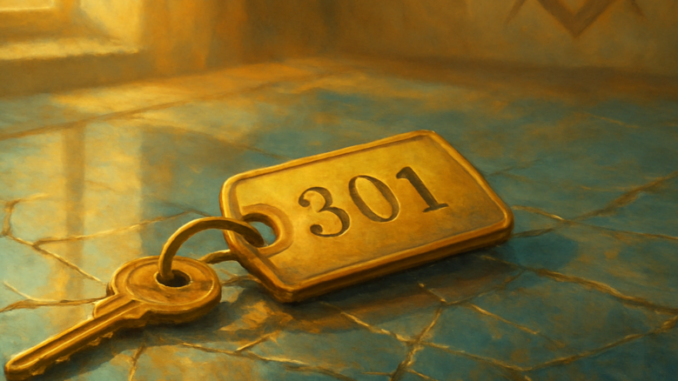
A hotel room in Germany becomes a crime scene. A Dutch citizen is found strangled; a suspect from the town of Almelo is extradited. The headlines demand our attention, but behind the news lies a deeper mystery: what does such an act reveal about human personality? And what can we learn about ourselves when we dare to look into the mirror of such violence?
The Hotel Room as a Symbol of the Hidden Self
A hotel room is by its very nature a temporary space — anonymous, sealed off from the outside world. You enter it as a stranger and leave without a trace. In the philosophical tradition, such a space serves as a powerful symbol for the hidden chambers of the human mind. Plato once compared the soul to a chariot drawn by multiple horses, some of them wild and untameable. Seen in this light, the hotel room becomes a place where the hidden self can manifest, freed from the social masks we wear every day.
When violence takes place behind closed doors, we are confronted with a fundamental question: what is the true nature of human personality? Is the perpetrator the person he appears to be in everyday life, or does the act reveal a deeper, perhaps darker, layer?
Personality in the Masonic Tradition
In Freemasonry, the individual is seen as a rough ashlar — an unfinished stone that must be shaped through self-knowledge and moral labour into a perfect cube. This work of refinement is the lifelong task of building one’s own personality. The Old Charges, rooted in James Anderson’s original Constitutions of 1723, emphasise that a Freemason is expected to obey the moral law and to be neither a “stupid atheist” nor an “irreligious libertine.”
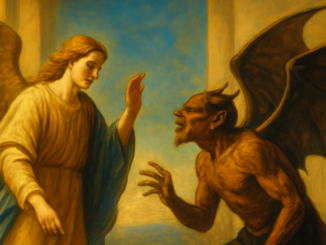
Yet the tradition also acknowledges the shadow side of human nature. The initiation ritual begins in darkness for good reason. The candidate must first recognise his own ignorance and shortcomings before the light can reach him. This symbolic journey through darkness reflects the philosophical insight that personality is not static but a perpetual battleground between higher aspirations and baser instincts.
The Stoic Perspective on Human Actions
Marcus Aurelius, the Roman emperor and Stoic philosopher, wrote in his Meditations that whenever we witness another person’s actions, we should ask ourselves: what conviction drove him to this behaviour? This approach is not meant as an excuse, but as an exercise in understanding. The Stoics believed that vice arises from ignorance of the true good.
The work of shaping one’s own personality is the hardest labour a person can undertake, for it demands the honest confrontation with one’s own shadow.
When someone resorts to violence, the Stoics reasoned, his inner compass is broken. This does not absolve the perpetrator of responsibility, but it places the act within a broader framework of human fallibility. The extradition of the suspect to Germany is, in this light, not merely a legal procedure but also a symbolic transfer: society declaring that certain acts cross the boundaries of the acceptable.
Conscience as the Inner Judge
Immanuel Kant described conscience as an inner courtroom where a person serves simultaneously as prosecutor and defender. This image resonates powerfully with Masonic symbolism. In the lodge, the level represents equality and honesty — not only towards others, but above all towards oneself. The shaping of the rough ashlar demands a mercilessly honest self-examination.
The question that lurks behind every crime is not only legal but existential: who am I when no one is watching? In the anonymity of a hotel room, far from home, the mechanisms of social control fall away. What remains is the bare personality, formed by years of choices, habits, and inner work — or the lack thereof.
The Mirror as an Invitation to Reflect
It would be easy, when confronted with news like this, to distance ourselves: we are nothing like him. But the Masonic tradition invites us toward a more uncomfortable perspective. Michel de Montaigne wrote that every human being carries within himself the entire human condition. The perpetrator is not a monster from another world but a fellow human whose path took a radically different turn.
This recognition is not a relativisation of guilt. It is, rather, a call to vigilance over our own personality. The Freemason works on his rough ashlar every day — not because he considers himself better than others, but because he knows how easily a person can stray when he stops building.
What Extradition Teaches Us
The extradition of a suspect across national borders symbolises the universal claim of justice. But that same universality applies to the moral call for self-examination. Borders cannot protect us from our own shadow sides. That labour must come from within — stone by stone, day by day.
Consider these enduring truths: personality is not a given but a structure under constant construction. Self-knowledge requires acknowledging our own darkness. Moral labour never ceases, not even in anonymous spaces. And the mirror of another person’s actions always reflects our own possibilities as well.
A strangled body in a German hotel room, an extradition from a small Dutch town — the news passes like a cold gust of wind. But for those willing to look, it reveals a timeless truth. Human personality is not fixed; it is an ongoing project. The Freemason recognises in every fall of a fellow human being the call to his own vigilance — not out of pride, but from the understanding that the rough ashlar is never fully shaped. The work continues, in silence, stone by stone.
Copyright text & image: devrijmetselaar.nl
Texts are based on the ideas and content of the author of devrijmetselaar.nl, reviewed, corrected, and supplemented with the assistance of OpenAI. Images are created based on the ideas of the author of devrijmetselaar.nl using OpenAI/DALL-E.

Be the first to comment