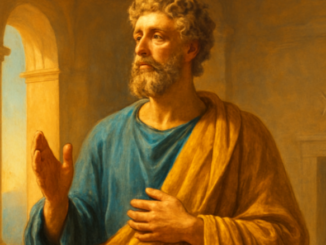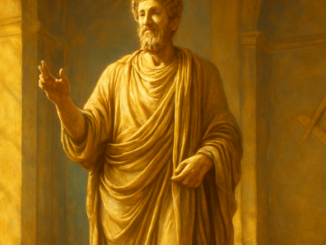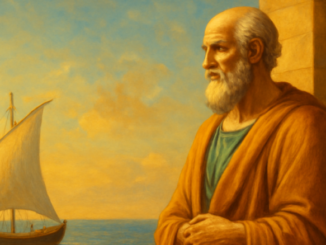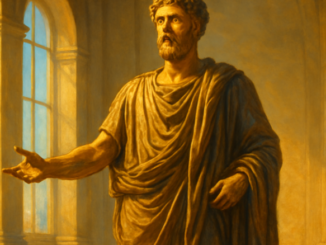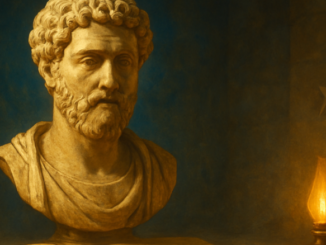
Marcus Aurelius statue symbolizing Stoic philosophy and Freemasonry wisdom
Marcus Aurelius – Content & Summary

Marcus Aurelius Book XII: God According to the Stoics

Imagine standing before a mirror each morning and asking yourself what could make this day truly meaningful. Marcus Aurelius, the Roman emperor and philosopher, posed exactly this question to himself. In the twelfth and final book of his Meditations, he unfolds his deepest reflections on the divine, the order of the universe, and our place within it. For Freemasons, his conclusions resonate with remarkable force — particularly with the concept of the Great Architect of the Universe. This article offers an accessible summary of his ideas and explores how this ancient wisdom remains profoundly applicable today. The Heart of Book XII: An Ordered Universe Marcus Aurelius never intended his Meditations as a philosophical treatise for public consumption. They were private notes — a conversation with himself. Book XII serves as the closing chapter of this inner dialogue, and its central theme is unmistakable: the universe is not a place of chaotic randomness but a purposeful whole. The Stoics called this ordering force the logos — a rational principle that permeates and connects all things. For Marcus Aurelius, God is not a personal deity who intervenes from above. Rather, the divine manifests itself in the lawfulness of nature, the interconnection of […]

Ancient Stoic philosophy meeting Freemasonry symbolism of light and wisdom
Marcus Aurelius – Freemasonry & Connection

Marcus Aurelius and the Freemason: Two Paths to Completion

When Marcus Aurelius penned the twelfth and final book of his Meditations, he wrote as a man who knew his days were numbered. Across the centuries, in Masonic lodges around the world, brethren gather to contemplate the very same question that consumed the Roman emperor: how do we achieve inner completion before the light fades? Two worlds separated by eighteen centuries, yet bound together by one of humanity’s most fundamental concerns — the pursuit of a life fully lived. The Stoic at the End of His Journey Marcus Aurelius most likely wrote Book XII during his final military campaigns along the Danube, while plague ravaged his Roman legions and his own body grew weaker by the day. For him, completion had nothing to do with external success or leaving behind an imposing legacy. Here was an emperor who ruled over millions, yet he sought fulfillment in something no legion could conquer: harmony between his inner world and the cosmic order of which he was a part. In these final meditations, Marcus Aurelius returns again and again to the awareness that all things are impermanent. The glory of Alexander the Great, the wisdom of Socrates, the power of every emperor before […]

Ancient half-open gate with Masonic pillars symbolizing passage and connection
Lucius Annaeus Seneca – Freemasonry & Connection

Seneca Letter LXX: The Gate as a Symbol of Connection

A gate is never merely an opening in a wall. Anyone who has ever crossed a threshold knowing there was no turning back understands the shiver that accompanies such a moment. In his seventieth letter to Lucilius, Lucius Annaeus Seneca invites us to contemplate the ultimate gate — the gate of death. But where others look away, Seneca sees an invitation to connection: with ourselves, with the time we have left, and with the brotherhood of all who share this journey. The Threshold as a Meeting Place Picture an ancient gate, weathered by centuries, standing half open in the early morning light. On either side rise pillars adorned with symbols that speak of wisdom and impermanence. This image is no accidental metaphor. In Freemasonry, the act of crossing a threshold carries profound symbolic meaning. Every degree advancement begins with a passage — a deliberately chosen moment when the candidate leaves the familiar behind and steps into the unknown. In Letter LXX, Seneca does not write about death as a dead end but as a doorway. He argues that while we may not fully control the timing of this passage, we can choose the attitude with which we approach it. Herein […]

Open book with classical letters symbolizing Montaigne's philosophical essay
Michel de Montaigne – Philosophical Background

Montaigne on Cicero: The Philosophical Roots of the Essay

A letter is more than ink on paper. For Michel de Montaigne, a letter was a mirror of the soul — a window into the inner life of its writer. In his essay ‘A Consideration upon Cicero,’ he examines what letters reveal about character and authenticity. Behind this seemingly simple reflection lies a rich philosophical tradition stretching from the Roman Stoa to Renaissance humanism. Understanding the sources of Montaigne’s thought unlocks a timeless wisdom about sincerity and self-knowledge — one that speaks directly to the Masonic pursuit of inner truth. The Legacy of Classical Rhetoric Montaigne grew up speaking Latin as his first language — a deliberate choice by his father, who immersed him in the classical world from birth. For Renaissance thinkers, Marcus Tullius Cicero was the supreme model of eloquence and wisdom. His letters to Atticus were celebrated as masterworks of personal correspondence. Yet Montaigne questions their sincerity. Was Cicero truly as candid as he appeared, or was he performing for posterity? This question of authenticity connects Montaigne to the Skeptical tradition. The Pyrrhonists, followers of Pyrrho of Elis, taught that certainty about the true nature of things lies beyond our reach. Sextus Empiricus, whose work Montaigne knew […]

Ancient Roman bust of Seneca with Masonic square and compasses symbolism
Lucius Annaeus Seneca – Letters to Lucilius

Seneca on Grief: The Philosophical Roots of Letter LXIII

Perhaps you know that moment — standing at an open grave, wondering: how long am I allowed to grieve? Is there a limit to sorrow, or is the question itself somehow inappropriate? Lucius Annaeus Seneca wrestled with exactly these questions two thousand years ago. In his sixty-third letter to his student Lucilius, he unfolds a nuanced vision of grief that still resonates today, rooted in ancient philosophical traditions that have also profoundly influenced Freemasonry. The Stoic School as Foundation Seneca wrote from within the Stoic tradition, a philosophical school founded around 300 BCE by Zeno of Citium in Athens. At its core, Stoicism revolves around the distinction between what lies within our power and what falls beyond it. Emotions such as grief belong to the first category: we cannot control the loss itself, but we can govern our response to it. This insight forms the backbone of Letter LXIII. Yet Seneca was no emotionless rationalist. He departed from early Stoics like Chrysippus, who regarded every emotion as a weakness to be conquered. Seneca acknowledged that grief is a natural response — even a tribute to the one we have lost. His position was more subtle: not the elimination of sorrow, […]

Ancient scroll and candle symbolizing Seneca's wisdom on grief and loss
Lucius Annaeus Seneca – Content & Summary

Seneca on Grief and Loss: Lessons from Letter LXIII

There are moments when life confronts us with an emptiness that no words can fill. An empty chair at the table, a voice that no longer speaks, a hand we can no longer hold. In his sixty-third letter to his student Lucilius, the Roman philosopher Lucius Annaeus Seneca addresses precisely this subject: how to face grief and loss. Written nearly two thousand years ago, the letter still speaks to us because the sorrow of losing someone we love is timeless. The Stoic philosopher offers no easy comfort — instead, he invites us into a deeper reflection on the nature of human connection and the proper measure of mourning. The Heart of Letter LXIII Seneca writes this letter in response to the death of Flaccus, a mutual friend he shared with Lucilius. He acknowledges that Lucilius is grieving, but gently asks whether the intensity of his sorrow is proportionate to what is fitting. This is not a cold question — it is an invitation to self-reflection. The philosopher fully recognizes the value of tears and the right to mourn. At the same time, he warns against the danger of excessive or contrived grief, which he argues neither honors the dead nor […]

Ancient Roman bust of Marcus Aurelius symbolizing Stoic wisdom and Freemasonry
Marcus Aurelius – Freemasonry & Connection

Marcus Aurelius on Humor and Self-Knowledge: Wisdom for Masons

In the year 175 AD, a Roman emperor surrounded by war and political intrigue sat down to write private notes on the art of living. Marcus Aurelius never intended his Meditations for an audience. Yet nearly two millennia later, his words still speak to anyone seeking inner peace and self-knowledge. In Book XI of this timeless work, he touches on something surprising: the role of humor and lightness in the process of self-discovery. For Freemasons — who likewise strive toward moral refinement and fraternal connection — this book offers a remarkable mirror. The Historical Context of Book XI Marcus Aurelius ruled the Roman Empire from 161 to 180 AD, a period marked by wars along the frontiers, devastating plagues, and internal power struggles. Amid this chaos, he found solace in Stoic philosophy — a school of thought that places personal responsibility and emotional discipline at its core. Book XI of his Meditations was likely written during his military campaigns along the Danube, composed by candlelight in army tents. Here, the most powerful man in the world reflected not on his triumphs, but on his shortcomings. What sets Book XI apart from other passages in the Meditations is its subtle undercurrent […]

Rough ashlar stone with a chisel symbolising Masonic patience and restraint
Michel de Montaigne – Philosophical Background

Montaigne on Restraint: Philosophical Roots of Patience

What does it truly mean to temper your own will? In a world that glorifies speed, decisiveness, and bold action, restraint can seem almost like a weakness. Yet Michel de Montaigne argued in his thirty-second essay that the refusal to push one’s will too quickly is, in fact, a sign of genuine wisdom. This seemingly simple proposition carries centuries of philosophical heritage with it — from the Greek Stoa to the learned chambers of sixteenth-century France — and its relevance has only deepened with time. The Paradox of the Strong Will Montaigne understood a paradox that still challenges us today: does true strength lie in asserting the will, or in the ability to hold it back? The humanistic tradition he inhabited inherited this question directly from classical antiquity. Aristotle had already spoken of the golden mean — the avoidance of extremes in behaviour and emotion. But Montaigne went further than merely preaching moderation. He probed why we are so attached to the immediate fulfilment of our desires in the first place. His essay appeared at a time when religious wars were tearing France apart. People acted on conviction, often violently and without reflection. Montaigne witnessed first-hand how the unbridled will […]

Rough ashlar stone and mirror symbolising Masonic self-reflection
Personal Development & Leadership

The Mirror of Extradition: Personality and Moral Choices

A hotel room in Germany becomes a crime scene. A Dutch citizen is found strangled; a suspect from the town of Almelo is extradited. The headlines demand our attention, but behind the news lies a deeper mystery: what does such an act reveal about human personality? And what can we learn about ourselves when we dare to look into the mirror of such violence? The Hotel Room as a Symbol of the Hidden Self A hotel room is by its very nature a temporary space — anonymous, sealed off from the outside world. You enter it as a stranger and leave without a trace. In the philosophical tradition, such a space serves as a powerful symbol for the hidden chambers of the human mind. Plato once compared the soul to a chariot drawn by multiple horses, some of them wild and untameable. Seen in this light, the hotel room becomes a place where the hidden self can manifest, freed from the social masks we wear every day. When violence takes place behind closed doors, we are confronted with a fundamental question: what is the true nature of human personality? Is the perpetrator the person he appears to be in everyday […]

Ornate historical coach symbolizing vanity and philosophical reflection
Michel de Montaigne – Philosophical Background

Montaigne on Coaches: Philosophical Roots of Movement

When Michel de Montaigne wrote about coaches, he was really writing about the human condition. In his essay On Coaches, he wove seemingly trivial observations about travel and movement into profound philosophical questions. Which thinkers whispered in his ear? Which traditions shaped his views on outward display, human frailty, and the relative value of civilizations? This article explores the intellectual soil from which this surprising essay grew — and why its themes still resonate deeply with Freemasons today. The Skeptical Legacy: Doubt as Method Montaigne wrote from within a tradition that questioned certainty itself. Pyrrhonian skepticism — named after the Greek philosopher Pyrrho of Elis — taught that definitive knowledge lies beyond human reach. This posture saturates the essay on coaches. Where others pronounce firm judgments on civilizations and customs, Montaigne suspends his. He describes how European conquerors invaded the New World cloaked in a delusion of superiority, then quietly asks: who actually gets to decide what is civilized? The skeptical method allowed Montaigne to see the coach not merely as a vehicle, but as a symbol of human vanity. He doubted the value people attached to outward show. This doubt was not cynicism — it was an invitation to […]

Open antique book with candlelight symbolizing Voltaire's Zadig and Masonic wisdom
Symbolism & Rituals

Voltaire’s Zadig: Philosophical Roots of Wisdom and Fate

A candle flickers in the silence of a reading room. A young Brother leans over a yellowed copy of Voltaire’s Zadig, written in 1747. The words seem to dance between irony and profundity, between satire and wisdom. As he reads about the fortunes and misfortunes of the Babylonian sage, he recognizes something familiar — the same quest for truth, the same confrontation with the inexplicable that he experiences on his own Masonic journey. What drove Voltaire to write this philosophical tale, and which intellectual traditions fed his pen? The Enlightenment as Intellectual Soil Voltaire wrote Zadig during a period when Europe was buzzing with intellectual renewal. The eighteenth-century Enlightenment formed the backdrop against which this philosophical tale came into being. In the salons of Paris and the libraries of country estates, new ideas about reason, human autonomy, and the critical questioning of tradition were taking shape. Voltaire, himself a central figure in this movement, used the story as a vehicle for philosophical ideas he could not openly proclaim without provoking the wrath of both Church and State. The story of Zadig is steeped in the spirit of its age: the belief that human reason could dispel the darkness of superstition. […]

Candle burning on an ancient desk symbolizing Masonic inner light and reflection
Marcus Aurelius – Freemasonry & Connection

Marcus Aurelius on Prayer and the Higher Self in Masonry

In the ninth book of the Meditations, Marcus Aurelius pauses to reflect on the true meaning of prayer. Not as a plea for divine favors, but as a deliberate attunement to something greater than the self. This passage touches on a theme that lies at the very heart of Freemasonry: the search for connection with the higher — not through passive waiting, but through active inner work. The Roman emperor writing his thoughts by candlelight and the brother turning inward in the silence of the lodge share a strikingly kindred experience. The Candle as a Symbol of Inner Light Picture a candle burning on a writing desk in ancient Rome. The flame flickers softly as a weary ruler organizes his thoughts after yet another day of state decisions and military campaigns. That candle illuminates more than parchment — it symbolizes the inner light that Marcus Aurelius strove to cultivate throughout his life. In Freemasonry, light is one of the most fundamental symbols. It represents knowledge, truth, and the enlightenment of the mind. When a candidate is initiated, he symbolically receives light. This parallel is neither coincidental nor superficial. Both traditions recognize that genuine growth begins with kindling an inner flame. […]

Marcus Aurelius meditating, symbolizing Stoic prayer and Freemasonry reflection
Marcus Aurelius – Meditations

Marcus Aurelius on Prayer: Stoic Roots of the Higher

In 175 AD, amid grueling military campaigns along the Danube frontier, Emperor Marcus Aurelius penned his private reflections on prayer and the human relationship with something greater. These passages from the ninth book of his Meditations are not a theological treatise but an inner dialogue rooted in centuries-old philosophical traditions. The question he posed to himself reverberates across the ages, reaching into the ritual spaces of modern lodges: what does it truly mean to direct yourself toward something larger than yourself? The Stoic View of the Divine To understand what Marcus Aurelius meant by prayer, we need to return to the foundations of Stoicism. This philosophical school, founded by Zeno of Citium around 300 BC, developed a distinctive vision of the divine. The Stoics did not believe in anthropomorphic gods who granted favors in response to supplication. Instead, they saw the universe as permeated by a rational principle — the logos — that ordered and connected all things. This principle was both immanent and transcendent: it operated within everything while simultaneously being the source of all order. For Marcus Aurelius, prayer was therefore never a request for personal gain. It was an exercise in attunement to this cosmic order. When […]

Ancient Roman letter scroll symbolizing Seneca's philosophy and Masonic ideals
Lucius Annaeus Seneca – Letters to Lucilius

Seneca’s Letter 47: Philosophical Roots of Human Dignity

Imagine living in the Roman Empire, surrounded by wealth and power, while all around you human beings are treated as property. Now imagine picking up a pen and arguing that a slave can be your friend. That is exactly what Lucius Annaeus Seneca did nearly two thousand years ago. His forty-seventh letter to Lucilius is no ordinary ethical treatise — it is the culmination of centuries-old philosophical traditions that placed the human being at the center of moral concern, regardless of social status. For anyone drawn to Freemasonry, with its emphasis on brotherhood and equality, this ancient letter holds up a surprisingly clear mirror. The Stoic Revolution from Within When Seneca took up his pen to write about the treatment of slaves, he drew on a rich Stoic tradition that had been building for three centuries before him. Zeno of Citium, the founder of Stoicism, introduced a radical idea: all human beings share in the same divine logos, the universal reason that permeates the cosmos. This meant that the social hierarchies of the Greek and Roman world were ultimately artificial. What makes someone truly human is not birth or possessions, but the capacity for rational thought and moral choice. Seneca’s […]

Rough ashlar stone and Stoic philosophy symbol representing Masonic self-improvement
Marcus Aurelius – Freemasonry & Connection

Marcus Aurelius on Judgment: Lessons for Freemasons

You are about to judge someone. Perhaps a colleague who is always late, a neighbor who neglects their yard, or a brother in the lodge who holds views different from your own. In that moment of judgment, it is not the other person who determines your state of mind — it is you. Marcus Aurelius understood this nearly two thousand years ago. In Book VIII of his Meditations, the Roman emperor reveals how our prejudices hold us captive and how we can set ourselves free. These insights find a remarkably direct application in Freemasonry, where the work of smoothing the rough ashlar begins with recognizing our own imperfections. The Core of Book VIII: You Are Your Judgment Marcus Aurelius writes in Book VIII that it is not events themselves that wound us, but the judgments we pass upon them. It sounds simple, but the implications are profound. When someone insults you, it is not the insult that causes pain — it is your own reaction to it. You choose to feel hurt. This core Stoic principle demands radical self-reflection: are you willing to put your own thinking under scrutiny? In practical terms, this means something very concrete. When you notice […]

Vrijmetselarij - Marcus Aurelius Boek VIII: De ware aard van de mens onthuld
Marcus Aurelius – Content & Summary

Marcus Aurelius Book VIII: The True Nature of Man Revealed

What makes a person who they truly are? Is it our position in the world, our deeds, or something deeper that lies beneath the surface? In Book VIII of his Meditations, the Roman Emperor Marcus Aurelius wrestles with precisely this question. He wrote these personal reflections not for publication, but as an inner dialogue with himself — a mirror in which he sought to know his own soul. Let us walk through this book together and explore what these Stoic insights still have to say to us today. What Is the Central Theme of Book VIII? At the heart of Book VIII lies a fundamental question: what is the true nature of man, and how can we live in harmony with that nature? Marcus Aurelius examines the relationship between individual consciousness and the greater whole of the cosmos. He does not see human beings as isolated creatures, but as inseparable threads in a universal fabric. The emperor emphasizes again and again that our true essence does not reside in our bodies or our possessions, but in what the Stoics called the hegemonikon — the ruling part of the soul that has the power to choose how it responds to the […]

Flickering candle casting shadows symbolizing Seneca's Stoic wisdom and Freemasonry
Lucius Annaeus Seneca – Freemasonry & Connection

Seneca Letter XXVI: Death and Life in a Masonic Perspective

A candle sits on the table. Its flame flickers, casting shadows on the wall, and at some point it will go out. For Lucius Annaeus Seneca, this was no cause for sorrow — it was an invitation to clarity. In his twenty-sixth letter to Lucilius, he writes about approaching old age and death as companions of the conscious life. For Freemasons, who are accustomed to working in symbolic darkness in search of light, this letter opens a window onto a shared understanding: that the finite nature of existence is not a threat, but a compass. The Candle That Knows It Will Be Extinguished Seneca opens Letter XXVI with a frank description of his aging body. His strength is fading, his skin wrinkling, his energy diminishing. Yet instead of lamenting, he approaches the process with a remarkable serenity. The Stoic philosopher regards approaching death not as an enemy, but as the ultimate test of a life well lived. Everything he has learned about virtue, every piece of wisdom he has gathered, is now about to be examined. This image of life as preparation for a final examination resonates deeply with Masonic tradition. In the lodge, every brother is continually invited to […]

Open copy of Marcus Aurelius Meditations with Masonic square and compasses
Marcus Aurelius – Freemasonry & Connection

Marcus Aurelius on Evil: Book VII Wisdom for Freemasons

A candle flickers as a Freemason sits in silence after the evening’s labor. In his hands rests a worn copy of the Meditations. He reads a passage from Book VII — about people who do harm without realizing it — and recognizes something familiar, something discussed in lodge: how do you respond to injustice without losing your own inner balance? Marcus Aurelius, the Roman emperor-philosopher who lived nearly nineteen centuries ago, turns out to be remarkably relevant for anyone seeking moral clarity. The Heart of Book VII: Justice in the Face of Evil In the seventh book of his Meditations, Marcus Aurelius wrestles with a question that occupies every thoughtful person: how should you respond to those who do wrong? The emperor, who dealt daily with intrigue, betrayal, and human weakness, chose an unexpected path. Rather than anger or retaliation, he advocated understanding. Not because wrongdoing should be condoned, but because anger damages one’s own soul. Marcus Aurelius writes that those who do evil act out of ignorance about what is truly good. This idea, which traces back to Socrates and Plato, forms the backbone of his approach. Evil is not a deliberate choice of wrong over right, but a […]

Marcus Aurelius statue symbolizing Stoic justice and Masonic inner temple
Marcus Aurelius – Content & Summary

Marcus Aurelius Book VII: On Evil and Justice

There may have been a moment in your life when someone wronged you and you felt anger rising like a tide. Or perhaps you recognize those times when your own thoughts tormented you more than the situation itself. Marcus Aurelius, the Roman emperor-philosopher, wrestled with exactly these questions. In Book VII of his Meditations, he examines what evil truly is, how justice guides our actions, and why inner peace never depends on the behavior of others. The Heart of Book VII: What Is True Evil? Marcus Aurelius opens Book VII with a radical proposition: the evil others inflict upon you does not damage your soul. What truly harms you is your own reaction to it. This is a foundational Stoic insight that he returns to again and again. When someone insults you, lies to you, or deceives you, the real danger lies not in the act itself but in how you choose to respond. If you allow yourself to be swept away by anger and resentment, you surrender your power. If you remain aligned with your inner compass, you preserve your freedom. The emperor wrote these reflections as private notes, never intended for publication. That is precisely what makes them […]

Ancient philosophical text illuminated by candlelight symbolizing Masonic wisdom
Lucius Annaeus Seneca – Letters to Lucilius

Seneca on True Joy: The Philosophical Roots of Letter XXIII

A candle flickers in the early morning light as a Freemason opens the yellowed pages of an ancient book. He reads the words of a Roman philosopher, written nearly two thousand years ago, and feels an unexpected sense of recognition. Seneca writes about joy — not the fleeting excitement of the moment, but something deeper, something enduring. In that stillness before the rush of the day, a question takes shape: what makes joy truly real? The Stoic Tradition as Foundation To fully appreciate Letter XXIII, we need to return to the roots of Stoicism. This philosophical school was founded around 300 BC in Athens by Zeno of Citium. The Stoics believed that true happiness does not depend on external circumstances but on the inner condition of the individual. Lucius Annaeus Seneca, writing in the first century AD, built upon this foundation while adapting it to the realities of Roman life. Stoic ethics revolves around the concept of virtue as the highest good. External things such as wealth, fame, and even health are regarded as “indifferent things.” This does not mean they are worthless, but rather that they cannot serve as the source of lasting happiness. Seneca applies this principle in […]