Ancient scroll symbolizing Seneca's letters on the value of time
Lucius Annaeus Seneca – Content & Summary

Seneca’s First Letter: On the Use of Time – A Summary

What does it truly mean to possess time? Lucius Annaeus Seneca opens his famous correspondence with Lucilius with a paradox that still strikes an uncomfortable chord today: we are exceedingly careful with our money and possessions, yet we squander our time as though it were infinite. This first letter, written in the first century AD, confronts the reader with a sobering truth about how we live — and how we might choose to live instead. Time as Our Only True Possession In this opening letter, Seneca poses a simple but deeply unsettling question: if time is the only thing we truly possess, why do we treat it as though it were the least valuable? The philosopher observes how people carefully guard their money, protect their property, and defend their reputations — yet freely give away their hours and days to distraction, procrastination, and meaningless activity. The central theme revolves around what Seneca calls “reclaiming” ourselves. He urges Lucilius to treat each day as a complete life in itself. Not in the sense of rushing to accomplish everything, but with the awareness that every moment that passes unused is gone forever. This is not a call to obsess over productivity — […]

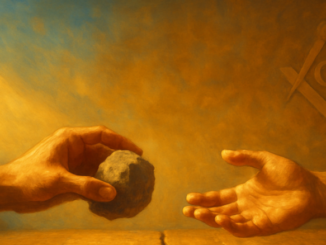
Rough ashlar stone on stable ground symbolizing Masonic self-improvement
Personal Development & Leadership

Tremors and Character: What Earthquakes Teach About Inner Strength

On July 27, 2026, seismologists recorded a minor earthquake — just 1.6 on the Richter scale — beneath the village of Sappemeer in the northern Netherlands. Most residents barely felt it. Yet the event raised a question that resonates far beyond geology: how solid is the ground we stand on? Not just the physical earth beneath our feet, but the inner foundation we’ve built for ourselves. In Freemasonry, this question sits at the very heart of the Craft. How do you build a character that can withstand the inevitable tremors of life? The Ground Beneath Your Feet Picture this: you’re sitting at the kitchen table on an ordinary morning, coffee in hand, when the floor trembles. Just for a second. You might blame a passing truck, but then you check the news and discover the earth itself shifted beneath you. For many people living in earthquake-prone regions, this isn’t an abstract concept — it’s the reality of life on unstable ground. But this isn’t really about geology. It’s about what that experience reveals about us. The ground we walk on feels permanent and reliable — and so does our sense of self. We assume we know who we are, what […]

Masonic rough ashlar and perfect cube symbolizing personal growth amid division
Personal Development & Leadership

Division and Character: Masonic Lessons for Divisive Times

You know the moment. A family dinner, a meeting at work, a conversation with friends. Someone brings up a loaded topic, and suddenly the tension is palpable. How do you respond? Do you get swept up in the emotion, withdraw entirely, or look for a third way? The deep divisions currently visible in political movements around the world show just how sharply disagreements can cut. But it’s precisely in moments like these that we have the opportunity to reveal our true character. Freemasonry offers concrete, practical tools for staying grounded when division swirls around you. When Convictions Collide Picture this: you’re sitting with a group of people you respect. Maybe colleagues, maybe brethren in your lodge, maybe old friends. A discussion erupts over a sensitive subject. You notice your heart rate climbing. You feel the urge to raise your voice — or to say nothing at all. This is the moment when your personality is truly tested. It’s not your opinion that defines who you are, but how you express it and how you treat those who see things differently. Current tensions within political movements worldwide illustrate just how difficult this is. People who worked side by side for years […]

Open book of Montaigne's Essays with philosophical symbols and candlelight
Michel de Montaigne – The Essays

Montaigne on Idleness: Philosophical Roots of an Essay

In the eighth essay of the first book of his Essays, Michel de Montaigne takes on the subject of idleness. But where a modern reader might expect a case for relaxation, what emerges instead is a profound reflection on the dangers of an unoccupied mind. This short but powerful piece reveals how deeply Montaigne was rooted in the classical philosophical traditions of his era — and how his thinking built a bridge between ancient wisdom and Renaissance humanism, with insights that still resonate within traditions devoted to inner work and self-knowledge. The Stoic Legacy: Idleness as Moral Danger For the Stoics, whose writings Montaigne studied thoroughly, idleness was no innocent pastime. Seneca, one of the authors Montaigne returned to most often, repeatedly warned against the dangers of a mind without direction. In his Letters to Lucilius, he stressed that an empty mind becomes susceptible to anxiety, restlessness, and destructive thoughts. Montaigne takes this warning to heart when he writes that an unoccupied mind, much like fallow land, produces all manner of weeds. The Stoic tradition drew a sharp distinction between two kinds of rest. On one hand, there was valuable contemplation, directed toward self-knowledge and moral progress. On the other, […]

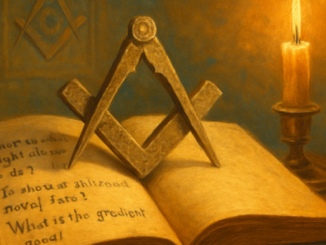
Open book of Montaigne's essays with Masonic square and compass symbol
Michel de Montaigne – The Essays

Montaigne on Intention: How Purpose Judges the Work

In 1580, a remarkable book appeared in Bordeaux. Michel de Montaigne — a nobleman who had withdrawn from public life — published his first collection of essays. Among them was a short but profoundly rich piece: “That Our Actions Should Be Judged by Our Intentions.” With that single title, Montaigne touched on a question that had occupied philosophers for centuries. It is not what we do, but why we do it, that determines the true value of our actions. Rooted in Stoic and Aristotelian traditions, this idea would become a cornerstone of Western ethical thought — and it carries a special resonance for anyone engaged in the inner work of Freemasonry. The Legacy of Seneca and Stoicism Montaigne was a voracious reader of the Roman Stoics, and no thinker influenced him more deeply than Seneca. In his famous letters to Lucilius, Seneca had already argued that the intention behind an action matters more than its outcome. A deed may appear good on the surface, yet remain morally hollow if driven by self-interest or vanity. Montaigne eagerly adopted this view and applied it to even the smallest aspects of human conduct. The Stoics drew a crucial distinction between what lies within […]

Open book with Masonic symbols representing philosophy and Freemasonry
Michel de Montaigne – The Essays

Montaigne on Dangerous Negotiation: Two Philosophical Worlds

In his sixth essay from the first book, Michel de Montaigne examines what appears to be a practical theme: the dangers of negotiation in times of conflict. Yet beneath the surface lies a profound philosophical question about trust, vulnerability, and human integrity. When we read this essay through two distinct lenses — classical philosophy and Masonic symbolism — a surprising conversation emerges between two worlds that both seek truth in moments of uncertainty. The World of the Renaissance Humanist Montaigne wrote his essays during the second half of the sixteenth century, a period when France was torn apart by religious civil wars. The humanistic tradition of the Renaissance formed his intellectual foundation. This movement, inspired by rediscovered classical texts, placed human experience at the center of the search for wisdom. For Montaigne, this meant a return to the sources: the Greek and Roman thinkers who had grappled with the very same human dilemmas centuries before. His essay on the perilous hours of negotiation reveals just how deeply rooted Montaigne was in this tradition. He draws on historical examples, references generals and statesmen from antiquity, and uses their experiences as a mirror for his own troubled times. This method was a […]

Masonic square and compasses with rough ashlar symbolizing ethical growth
Philosophy & Ethics

Ethics Without Dogma: The Philosophical Quest of Freemasons

In an age where ethical debates are increasingly reduced to rigid positions and online discussions devolve into moral tribunals, a pressing question emerges: is there still room for nuanced thinking about right and wrong? Freemasonry offers a surprising answer — not by prescribing ready-made rules, but by practicing an ancient philosophical method in which doubt is not a weakness, but the first step toward wisdom. The Return of the Great Ethical Conversation The societal debate about ethics has reached a new intensity. From artificial intelligence to climate justice, from genetic modification to the boundaries of free speech — moral convictions clash at every turn. What stands out is not so much the diversity of opinions, but the absolute certainty with which they are proclaimed. Nuance has become a rare commodity. Yet there is a place where the ethical conversation unfolds differently. Within the privacy of the Masonic lodge, the goal is never to have the final word, but to reach the next insight. Here, philosophy is not practiced as an academic discipline but as a living art. The question is not who is right, but what does justice to human dignity. Philosophy as a Tool, Not a Doctrine Freemasonry has […]

Open book with classical philosophy text symbolizing Montaigne and Freemasonry
Michel de Montaigne – The Essays

Montaigne on Passions and False Objects: Philosophical Roots

In the fourth essay of his first book, Michel de Montaigne investigates a curious phenomenon: how the human soul directs its emotions toward objects that are not the true cause of those feelings. This insight did not arise in a vacuum. Montaigne drew deeply from a long philosophical tradition reaching back to Greek and Roman thinkers. The question of how we handle our passions — and why we sometimes aim them at the wrong targets — had occupied philosophers for centuries before Montaigne ever picked up his pen in his tower library in Bordeaux. The Stoic Legacy: Mastery Over Emotion The influence of Stoicism on Montaigne‘s thinking is especially tangible in this essay. The Stoics — notably Seneca and Epictetus — argued that human suffering does not arise from external events, but from the judgments we form about them. When we feel anger toward an object that has hurt us, or when we direct grief at a symbol rather than the real cause, we are demonstrating precisely what the Stoics meant: our passions are often misplaced. Seneca wrote at length about how anger can seduce us into irrational behavior. In his treatise On Anger, he gave countless examples of people […]