An open empty wallet reflecting light as a symbol of Masonic self-reflection
Personal Development & Leadership

The Empty Wallet as Mirror: Wealth Beyond Numbers

A wallet. Leather, stitching, a slot for coins. We open it dozens of times a week, check its contents, calculate what’s possible. Reports keep telling us that a growing number of people struggle to make ends meet — even as wages rise. The numbers don’t match the feeling. And perhaps that disconnect is precisely the invitation to look deeper, beyond the figures, toward what wealth truly means for who we are. The Mystery of the Growing Gap Imagine a bucket. You fill it with more water than last year. Yet the bottom stays dry. Somewhere there’s a hole that grows along with the filling. This is the paradox many households experience: wages go up, but the sense of abundance never arrives. Economists point to inflation, rising fixed costs, and shifting consumption patterns. These explanations make perfect sense on paper. But there’s something no spreadsheet can capture. The wallet is more than an object. It’s a mirror. What we put into it — and how quickly it disappears — reveals something about our relationship with needs, desires, and the question of who we want to be. Financial pressure doesn’t just affect the bank account. It touches our personality, the way we […]
Open Bible showing the Book of Obadiah with Masonic square and compasses
Christianity

Obadiah: The Shortest Book With the Greatest Lessons on Pride

At just twenty-one verses, Obadiah is the shortest book in the Old Testament. Yet within that brevity lies a powerful message that has resonated across centuries. Where the casual reader might see an ancient text about a forgotten conflict, the searching mind discovers timeless wisdom about pride, downfall, and the path toward inner improvement. In this article, we place two perspectives side by side: the historical context of Obadiah and the symbolic meaning that Freemasons can recognize within it. The Historical World of Obadiah Obadiah directed his prophecy against Edom, a brother nation of Israel descended from Esau, the twin brother of Jacob. The text condemns Edom for its arrogance and for standing idly by while Jerusalem was plundered. The Edomites dwelled in rocky heights and believed themselves untouchable because of their geographic position. Their arrogance sprang from a false sense of security. For its original audience, this was a text of comfort and justice. They saw a brother nation that had abandoned them when it mattered most. The prophecy promised that pride would ultimately lead to a fall — a theme that runs throughout all of biblical literature. The message was clear: whoever exalts himself above others will eventually […]

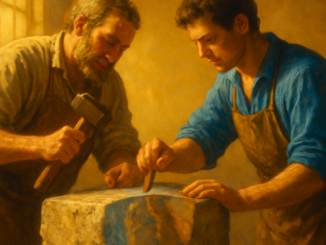
Rough ashlar stone symbolizing personal growth and resilience in Freemasonry
Personal Development & Leadership

Chance and Vulnerability: Two Perspectives on Fate

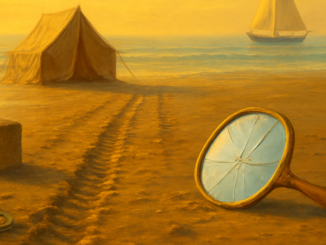
A man falls asleep in his tent on a beach in the Netherlands. Morning approaches, the sea murmurs, and life seems peaceful. Then the unthinkable happens: a maintenance tractor drives over his tent. The news is shocking — not just for its tragedy, but for what it reveals about the fragility of human existence. How do we process such random events? And does it matter whether we have spent time consciously examining our own character? Two worldviews, two perspectives on the same brutal reality. The Outsider: Chance as Chaos For many people, an accident like this simply confirms the randomness of life. The world is unpredictable, even dangerous, and we are at the mercy of forces beyond our control. This response is deeply human and entirely understandable. We look for someone to blame, for explanations, for ways to reassure ourselves that something like this could never happen to us. The outsider — here meaning someone unaccustomed to systematic self-reflection — tends to experience fate as something purely external. It is something that happens to you, something you react to, but over which you have little influence. Personality is seen as more or less fixed: you are who you are, and […]

A solitary chair on a windswept barrier island beach at golden hour
Spiritual Traditions

The Coast as Temple: Spiritual Lessons from a Barrier Island

A chair slowly sinks into the sand as the eyes wander across the water. In the distance, boats approach — tiny specks growing larger on the horizon. Other vessels sail away, shrinking until they vanish entirely. Behind the dunes, the land shields against the wind, while barefoot walkers stroll along the shore and the occasional brave soul takes a quick plunge into the cold sea. This simple scene on a barrier island holds more spiritual wisdom than many a thick volume of philosophy. The Beach as a Contemplative Space There is something extraordinary about sitting on a beach, gazing at the endless horizon. The boundary between water and sky blurs, time seems to slow, and the mind comes to rest. This is no accident. For centuries, people have sought out places where the elements converge — where land gives way to water and the heavens touch the earth. In many traditions, such places are regarded as threshold spaces, liminal areas where ordinary life pauses and room opens up for deeper reflection. Freemasonry understands this principle well. The lodge itself is precisely such a set-apart space, deliberately separated from the outside world to make reflection possible. But beyond the ritual environment, […]

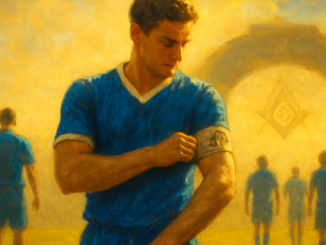
Football captain wearing armband leading team symbolizing Masonic leadership
History

The Captain as Master Builder: Leadership on the Field

A green pitch, twenty-two players, and somewhere among them a figure who sets the direction. When a nation achieves a historic victory, all eyes turn to the captain — the armband, the gesture toward teammates, the calm gaze amid the chaos. In those moments, an ancient pattern unfolds, one that Freemasons recognize instinctively: the captain as Master Builder, someone who does not merely play but builds something far greater than any individual could alone. The Armband: A Symbol of Responsibility Anyone who has watched a football match knows the image of the captain’s armband. A simple strip of fabric, usually in the colors of the nation or the club, worn around the upper arm. At first glance, it seems unremarkable. But look deeper. That band distinguishes one player from the other ten. It is not a decoration — it is a commission. The one who wears it takes responsibility for the whole. In Freemasonry, we have comparable symbols of responsibility. The apron, worn by every Brother, serves as a reminder of labor and dedication. But the officers of a Lodge wear additional insignia: jewels, collars, specific regalia. These are not status symbols in the worldly sense. They are reminders of […]

Temple of Solomon pillars representing Masonic symbolism and inner growth
Christianity

First Kings: The Temple as a Blueprint for Your Inner Life

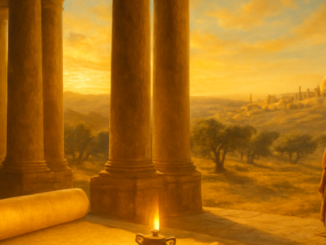
Imagine you’re finally starting that great project you’ve been dreaming about for years. The building blocks are ready, the plans have been drawn, but now the real work begins. That must have been exactly how King Solomon felt when he received the charge to build the Temple. In the Book of First Kings, we find far more than a story about stone and cedar — we encounter a deeper truth about how to build something lasting, something greater than yourself. A Kingdom in Transition First Kings opens with the close of an era. King David — the shepherd who rose to become a ruler — passes his mantle to his son Solomon. This moment of succession is more than a political handover. It is a deeply human turning point: the moment you receive the torch from those who came before you and realize that the responsibility is now yours alone. You may recognize this feeling from your own life. A mentor stepping aside, a parent letting go, a role that suddenly falls on your shoulders. In every transition like this, there is both fear and possibility. When Solomon is given a choice, he does not ask for wealth or power. […]

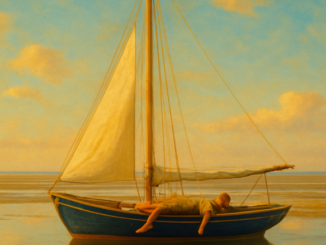
Sailboat at rest in a quiet Wadden Island harbor under a summer sky
Personal Development & Leadership

The Island as Mirror: Finding Silence on the Mudflats

The engine has been droning for two straight days when the sailboat finally enters the harbor. It is eleven in the morning, and the island lies quiet under a gentle summer sun. Yet the noise continues — not in the engine room, but somewhere deeper, inside the sailor’s mind. It isn’t until hours later, during an unexpected nap, that something suddenly switches off. An inner engine falls silent. What is that moment of sudden stillness? And why do certain places feel like a homecoming for the soul? The Crossing as a Rite of Passage A journey over water is never merely a physical displacement. Anyone who takes the ferry or sails their own vessel to one of the Wadden Islands undergoes an unnoticed transformation. The mainland slips behind the horizon, the familiar patterns of daily life dissolve into the salt haze. What remains is water, sky, and the promise of something new. In the symbolic tradition of Freemasonry, this transition is recognized as a passage — leaving the known to step toward the unknown. The sailing trip from Medemblik to Den Helder, and from there to the island, took longer than planned. A dead calm forced the crew to motor, […]

Masonic mosaic pavement symbolizing unity of opposites and friendship
Symbolism & Rituals

Without Judgment: The Symbolism of the Extraordinary Friend

Imagine that the most valuable friendship in your life is one you never sought out — one that fits no category, defies every label, and forces you to reconsider all your definitions of human connection. Wouldn’t that be precisely the kind of bond that reveals the most about who you truly are? The Paradox of the Unnameable Some relationships resist classification. Not because they lack significance, but because they are so essential that every label falls short. Acquaintance? Too shallow. Friend? Too loaded with the expectations and conditions we unconsciously attach to the word. And yet, there is that person — someone with whom every conversation immediately plunges into depth, someone in whose presence the mask slips away and the real face emerges. Someone you met through chance, through loss, through a chain of circumstances no one could have planned. It is precisely this unplanned quality that makes the connection so pure. In Freemasonry, this experience finds expression in an ancient and powerful symbol: the rough ashlar that must be shaped. Not in isolation, but through interaction. The other person acts as chisel and mallet at once — not to wound, but to help us give form to who we […]

Stone foundation being built symbolizing Masonic inner kingdom building
Christianity

Second Samuel: Building an Inner Kingdom Stone by Stone

Imagine that after years of preparation, you finally receive the responsibility you’ve been working toward. A new leadership role, your own business, or perhaps parenthood. The question that arises isn’t just how you’ll fill that role — it’s who you want to be within it. Second Samuel, the tenth book of the Old Testament, tells exactly this kind of story. It chronicles the establishment of a kingdom, but its symbolism reaches far beyond political power. Read through the lens of Freemasonry, and it unfolds as a guide for building an inner kingdom — stone by stone. The Heart of Second Samuel: From Warrior to Builder Second Samuel covers the reign of King David, from his anointing to the later years of his rule. Where the first book centered on the struggle for recognition, this sequel explores what happens after that recognition has been won. David conquers the city that would become his capital. He brings the Ark of the Covenant to its resting place and receives a promise that will endure across generations. But the book also reveals his deeply human weaknesses: moral failings, family conflicts, and the anguish of loss. For the Freemason, this narrative follows a familiar pattern. […]

Fallen tree on a road symbolizing unexpected tragedy and community response
Freemasonry & Society

When Fate Strikes: Brotherhood in Times of Crisis

Picture an ordinary weekday. You’re driving along a familiar road. The sun is shining, the trees are swaying gently in the breeze. Then, in a fraction of a second, everything changes. A tree falls, and the life you knew ceases to exist. Tragedy struck recently when a woman lost her life after a tree crashed onto her car. Emergency services were overwhelmed with calls, alerts flooded in from every direction. In moments of chaos and grief like these, an ancient question rises to the surface: what truly binds us together as a community when fate strikes without mercy? The Fragility of Existence Perhaps you’ve felt it yourself — that sudden, jarring moment when you realize just how fragile life really is. You walk down the street, you breathe, you make plans for tomorrow, and somewhere deep down you know that none of it is guaranteed. Freemasonry has always acknowledged this vulnerability. Not as something to fear, but as something to embrace. Throughout the symbolism of the lodge, you find constant reminders of human mortality: the skull, the hourglass, the extinguished candle. These symbols aren’t meant to darken your mood. They’re meant to wake you up. To remind you that every […]

Ancient horn of anointing oil symbolizing inner calling and Masonic transformation
Christianity

First Samuel: Anointing Oil as a Symbol of Inner Calling

A small flask of oil. Ordinary, unremarkable. And yet, when the prophet Samuel pours that oil over the head of a simple shepherd, everything changes. The First Book of Samuel is far more than a chronicle of kings and battles. It reveals a deeper truth about calling, transformation, and the invisible forces that can reshape a person from within. For those who read with symbolic eyes, this ancient text opens a world that resonates profoundly within Freemasonry: the journey from darkness to light, from ignorance to insight. The Horn of Oil: More Than a Ritual Object Picture the horn — a tangible, physical vessel filled with oil pressed from olives. In the daily life of ancient Israel, oil was indispensable: fuel for lamps, nourishment for the body, a balm for healing. But when that same oil is poured over the head of a chosen one, it takes on an entirely different character. The anointing oil becomes a carrier of something that transcends the senses. It marks a transition, a transformation that cannot be seen but is deeply felt. In Freemasonry, we recognize similar moments. When a candidate is initiated, certain actions and objects may appear deceptively simple at first glance […]

Open lodge door symbolizing Masonic hospitality and welcoming the stranger
Freemasonry & Society

Hospitality as a Life Skill: What the Lodge Teaches About Welcome

You probably know the feeling: you see a situation that calls for action, but you wait for someone else to step up. Or you quietly convince yourself that your contribution wouldn’t matter in the grand scheme of things. When communities fall short in providing shelter and welcome to those in need, it touches on something far deeper than policy or politics. It raises a fundamental question: how do we relate to the stranger at our door? Freemasonry, perhaps surprisingly, offers deeply practical guidance on this — rooted in centuries-old rituals of hospitality. The Threshold as a Sacred Boundary In Freemasonry, the threshold carries powerful symbolic weight. Anyone who enters a lodge building consciously crosses a boundary between the outside world and a space of reflection. But that threshold works in two directions: it protects what lies within, and it determines who is welcome. The question of whom we let in is therefore not a bureaucratic matter — it is an ethical exercise. Historically, operative lodges maintained strict customs around hospitality. Traveling craftsmen could count on shelter from fellow brothers in distant cities. This wasn’t charity born from pity — it was a practical system of mutual support. You helped the […]

Symbolic river crossing representing Masonic thresholds and spiritual growth
Christianity

The Book of Joshua: Crossing Thresholds as a Symbol of Growth

There are moments in life when you stand before a boundary you have never crossed. It might be a river, a doorway, or simply a decision that will change everything. The Book of Joshua in the Old Testament describes exactly such a moment: the people of Israel stand on the banks of the Jordan, ready to enter the Promised Land. But beneath this narrative of conquest and settlement lies a deeper layer of symbolism that still resonates more than three thousand years later. For Freemasons, this sixth book of the Hebrew Bible contains strikingly familiar themes about thresholds, courage, and the ongoing journey toward inner growth. The River as a Symbol of Transition The Jordan is no ordinary river in the story of Joshua. It serves as the dividing line between wilderness and fertile land, between wandering and arrival. Crossing it marks an irreversible change — there is no going back. The image of a river as a threshold appears across countless spiritual traditions. Water represents purification, but also the unknown — something fluid that has not yet taken solid form. In Freemasonry, the threshold plays an equally significant role. Entering the lodge is not merely stepping through a doorway. […]

Open Volume of the Sacred Law on a Masonic altar with symbolic light
Christianity

Deuteronomy and Masonic Symbolism: Two Paths, One Light

In a small lodge room somewhere in a quiet provincial town, silence falls as the Worshipful Master speaks the opening words. The brethren listen to ancient texts that speak of light, law, and the journey of the soul. Thousands of years earlier, a people stood at the edge of a promised future while their leader recited the law one final time. Two worlds, two eras — and yet the same search for wisdom and direction. Deuteronomy: The Repetition of the Law Deuteronomy, the fifth book of the Old Testament, literally means “second law” or “repetition of the law.” It forms the capstone of the Five Books of Moses and contains his final addresses to the people before they entered the Promised Land. No new laws are given here. Instead, the commandments already received are restated — this time with an urgent call to preserve them and pass them on to future generations. The central theme of Deuteronomy revolves around remembrance and transmission. The people had wandered through the desert for forty years, and a new generation stood ready to continue the work of their forebears. The law is not presented merely as regulation but as a living heritage meant to […]

A journalist bearing witness in a conflict zone, symbolizing Masonic truth-seeking
Freemasonry & Society

Bearing Witness: The Courage to Look When Others Turn Away

On a dusty street, somewhere far away, a journalist raises his camera amid the chaos surrounding him. He knows danger is close, that every second could be his last. Yet he stays. He keeps filming. He keeps bearing witness. In that moment, he embodies something far deeper than his profession — an ancient duty to record the truth, even when that truth is painful beyond measure. The footage of a reporter struck by a drone while doing his work shocked the world. But behind the shock lies a question that concerns us all: what does it truly mean to bear witness? And why do some people choose to keep looking, keep documenting, when every fiber of their being screams at them to flee? The Journalist as a Modern Sentinel In Freemasonry, we know the symbol of the sentinel — the one who stands at the gate, who observes, who reports what he sees without personal bias or self-interest. A journalist in a conflict zone fulfills a strikingly similar role. He stands on the boundary between the known and the unknown, between safety and danger, between truth and propaganda. This position demands a particular kind of courage. Not the courage of […]

Scales of justice alongside Masonic square and compasses symbolizing balance
Freemasonry & Society

Justice Beyond Borders: Two Perspectives on Right and Law

When news breaks that suspects linked to a political assassination in a neighboring country have been arrested, it touches on fundamental questions about law, borders, and human dignity. A recent case involving the arrest of two individuals connected to the death of a critical voice in Poland invites deeper reflection — not about guilt or innocence, which belongs to the courts, but about the deeper layers of justice itself. How do the codified laws of nations relate to the unwritten laws of conscience? And what can we learn when we place two perspectives side by side: that of the secular legal order and that of the initiatory tradition? The Perspective of the Secular Order For the modern legal system, justice is a matter of procedures, burden of proof, and jurisdiction. When a crime is committed on the territory of one nation by individuals from another, a complex web of treaties, extradition agreements, and diplomatic negotiations comes into play. The rule of law operates according to written rules that are meant to apply equally to everyone. The suspect has rights, the victim has rights, and society has the right to protection. This system, imperfect as it may be, represents centuries of […]

Open Bible showing the Book of Joel with Masonic symbols of light and darkness
Christianity

The Book of Joel: Destruction and Renewal as an Inner Journey

Most of us have lived through seasons when everything we carefully built seemed to crumble. A time when certainties wavered and we wondered whether the light would ever return. This is precisely the experience at the heart of the Book of Joel — one of the shortest yet most penetrating prophetic texts in the Old Testament. For Freemasons, this small but mighty book contains surprising layers of meaning that speak directly to the heart of the initiatory journey. A Plague That Strips Everything Bare The Book of Joel opens with a harrowing image: a locust plague that devours the land completely. Wave after wave of locusts descend, sparing nothing. The vines wither, the grain harvest fails, even the trees die. It is a picture of total devastation — one you may recognize from your own life, when setback followed setback in relentless succession. What stands out is that the prophet does not look away from the suffering. He invites the people to truly face the destruction, to mourn and to grieve. In Freemasonry, we know a similar moment: the confrontation with our own imperfection before we can begin to build. You can only rebuild once you have honestly looked at […]

Coast guard officer leaping onto a drifting boat on a stormy ocean
Spiritual Traditions

Leaping Into the Unknown: Freemasonry, Courage, and Rescue

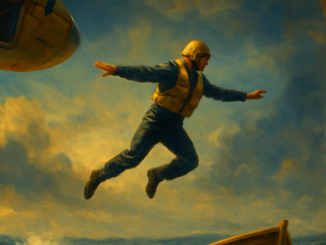
You may have seen the footage — a coast guard officer leaping without hesitation onto a rudderless boat in the middle of a churning ocean. It’s the kind of image that stirs something deep within us, something that goes beyond mere admiration for physical bravery. Watching that leap, I found myself thinking about the deepest questions of human existence, and about the journey we all share — a journey that lies at the very heart of Freemasonry. When the Helm Slips From Your Hands Imagine yourself on the open sea. The water stretches endlessly around you, and suddenly nothing works the way it should. The rudder won’t respond, the engine sputters, and the waves take over. This is hardly a rare metaphor in human life. We all know those moments when we lose control, when our carefully plotted course slips away and we find ourselves drifting at the mercy of circumstances. In Freemasonry, the stormy sea has long served as a symbol for the unrest of an unenlightened mind. The candidate who first enters the lodge is often described as a seeker — a ship that has not yet found a safe harbor. This is not weakness. It is the […]

Cape Verde football team embodying courage and unity on the world stage
Spiritual Traditions

The Unexpected Underdog: What Cape Verde Teaches Us About Courage

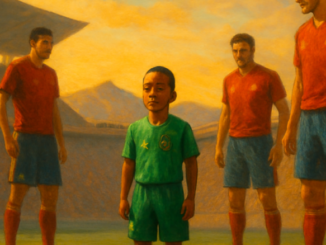
In a crowded living room, a Freemason watches the screen intently. Cape Verde — an island nation of barely half a million people — is holding its own against the mighty Spain. Somewhere in that tension, in that improbable resistance, he recognizes something he has also felt in the lodge: the power that emerges when humility and determination meet the seemingly impossible head-on. When the Small Challenges the Great There are moments in sport that transcend goals and statistics. Today’s World Cup clash, in which Cape Verde nearly pulled off a stunning upset against Spain, is one of those moments. A team whose players trace their roots to both the Cape Verdean islands and the Netherlands showed that conviction can sometimes outweigh reputation. For anyone willing to look beyond the scoreboard, a profound spiritual lesson unfolds. In Freemasonry, we hold the principle that true growth does not come from displays of strength, but from acknowledging our own limitations. The candidate who enters the lodge for the first time does not arrive as a conqueror — he arrives as a seeker. He comes not to impress, but to learn. Much like Cape Verde stepped onto the pitch without any expectation of […]

Red traffic light glowing at night as a symbol of spiritual pause
Spiritual Traditions

The Red Traffic Light as a Spiritual Teacher

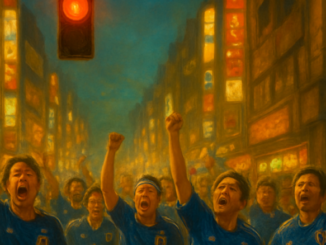
You may have seen the footage. Thousands of Japanese football fans celebrating wildly in the streets — singing, dancing, erupting with joy — until the traffic light turns red. Then everything stops. Silence. Stillness. Only when the light turns green does the celebration resume. This scene struck me deeply. Not because of the football, but because of what it reveals about the human soul and its capacity for inner freedom. A Moment of Recognition Imagine yourself surrounded by thousands of people cheering, singing, and dancing. The emotion is overwhelming, the energy contagious. And then, at the peak of collective ecstasy, a red light appears. A simple signal. No police officer, no authority intervening. Just you and that light. What do you do? The Japanese supporters chose stillness. Not out of fear of punishment, but from something deeper — a rooted awareness that true joy does not vanish through a moment of restraint. On the contrary, they demonstrated that discipline and celebration can strengthen one another rather than cancel each other out. This is a spiritual lesson that resonates powerfully with me as a Freemason. The Art of the Voluntary Halt In Freemasonry, we often speak about subduing our passions. This […]