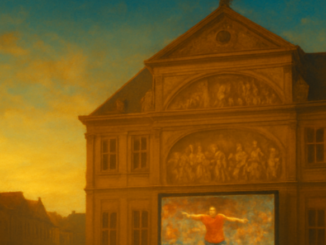
Football supporters united in shared emotion, paralleling Masonic lodge rituals
Freemasonry & Society

From Stadium Atmosphere to Lodge: What Football Teaches Us

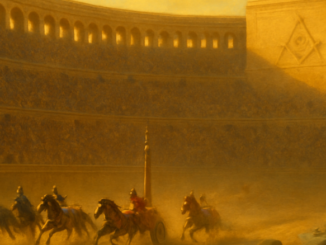
Thousands of supporters gather in squares and pubs to watch their national team play. With every goal, a wave of collective joy surges through the crowd. When the opposition scores a late equalizer, shared disappointment settles like a blanket over the masses. This pattern of celebrating together and suffering together is as old as humanity itself. The question Freemasons ask is this: what makes shared emotion so powerful, and what can it teach us about the enduring value of ritual? The Roman Origins of Collective Experience In ancient Rome, hundreds of thousands of citizens gathered in the Colosseum and at the circuses to witness spectacles together. This was no casual entertainment. The Roman poet Juvenal, writing around 100 AD, described how the people longed for panem et circenses — bread and circuses. But beneath this seemingly superficial observation lies a deeper truth: human beings have an innate need for shared experiences that lift them beyond the individual self. Roman arenas were carefully designed spaces where the collective became more important than the individual. The architecture, the ritual announcements, the shared tension — everything was orchestrated to bring thousands of people into a single emotional rhythm. Historians refer to this as […]
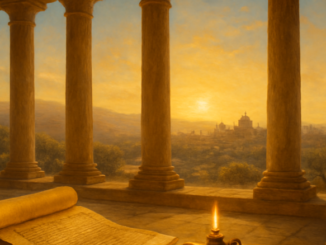
Symbolic light illuminating Masonic and Gnostic spiritual traditions
Spiritual Traditions

What Connects Freemasonry and Gnosis? Exploring Inner Knowledge

When we explore the connection between Freemasonry and Gnostic traditions, we step into territory where ancient questions come alive once more. What does it truly mean to know? And how does knowing differ from believing? These are questions that searching minds have been asking since the early centuries of the Common Era — and they still echo through the lodges of today. The relationship between these two traditions runs deeper than most people realize, and it has something genuinely valuable to offer us in the present moment. Why Do People Compare Freemasonry with Gnostic Thought? It’s a fair question to start with, and the comparison doesn’t arise by accident. Both traditions emphasize that outward forms are merely carriers of deeper meaning. A Gnostic from antiquity would say that the material world is a veil behind which a higher reality is hidden. A Freemason speaks of symbols that only reveal their secrets when the gaze turns inward. In both cases, the personal inner journey stands at the center — not the blind acceptance of dogma. Yet the resemblance is subtler than it first appears. Gnosis, the Greek word for “knowledge,” refers to a direct, experiential form of knowing. It isn’t about […]

Symbolic representation of Freemasonry and Gnostic knowledge seeking
Personal Development & Leadership

Are Freemasons Gnostics? A Personal Reflection on Knowledge

It’s a question that surfaces regularly whenever people delve into the mysterious world of Freemasonry: are Freemasons actually Gnostics? Rather than offering a dry academic essay, this article is a personal exploration of the theme — written by someone who has wrestled with the same question and is still searching for answers. Because perhaps the truth lies not in a definitive answer, but in the way we search together. Why This Question Strikes a Nerve When I first encountered the idea that some people regard Freemasons as Gnostics, I felt a curious mixture of recognition and resistance. Recognition, because there is indeed something in Freemasonry that speaks of inner knowledge — a wisdom that comes not from books but from lived experience. Resistance, because I know how easily labels oversimplify reality. You may recognize the feeling. You come across an article claiming that Freemasons follow a secret Gnostic doctrine, or you hear someone insist categorically that there is no connection whatsoever. The truth, as so often, is more nuanced. And it’s that nuance I want to share — like a brother sitting across the table from you, thinking aloud. What Do We Actually Mean by Gnosis? Before we can answer […]

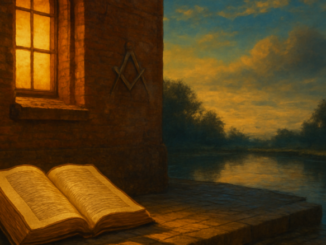
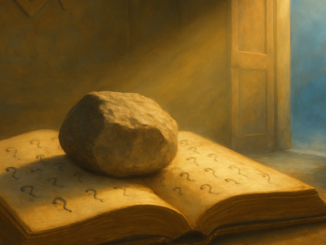
Open book with Masonic symbols representing philosophy and Freemasonry
Michel de Montaigne – The Essays

Montaigne on Dangerous Negotiation: Two Philosophical Worlds

In his sixth essay from the first book, Michel de Montaigne examines what appears to be a practical theme: the dangers of negotiation in times of conflict. Yet beneath the surface lies a profound philosophical question about trust, vulnerability, and human integrity. When we read this essay through two distinct lenses — classical philosophy and Masonic symbolism — a surprising conversation emerges between two worlds that both seek truth in moments of uncertainty. The World of the Renaissance Humanist Montaigne wrote his essays during the second half of the sixteenth century, a period when France was torn apart by religious civil wars. The humanistic tradition of the Renaissance formed his intellectual foundation. This movement, inspired by rediscovered classical texts, placed human experience at the center of the search for wisdom. For Montaigne, this meant a return to the sources: the Greek and Roman thinkers who had grappled with the very same human dilemmas centuries before. His essay on the perilous hours of negotiation reveals just how deeply rooted Montaigne was in this tradition. He draws on historical examples, references generals and statesmen from antiquity, and uses their experiences as a mirror for his own troubled times. This method was a […]

Open Bible showing the Book of Hosea beside Masonic square and compasses
Christianity

Hosea and the Freemason: Two Perspectives on Faithfulness

The Book of Hosea occupies a remarkable place in the Hebrew Bible. Written by an eighth-century BCE prophet, it speaks of broken promises, unfaithfulness, and the possibility of restoration. But what happens when a biblical scholar and a Freemason each pick up the same text? Both approaches open windows onto deep symbolism — though from very different rooms. The Biblical Scholar Reads: A Covenant History For the biblical scholar, Hosea is first and foremost a historical document. The book emerged during a time of political instability, when the Northern Kingdom of Israel was caught between rival empires. The prophet received an extraordinary commission: he was to marry a woman who would be unfaithful to him. This marriage became a living metaphor for the relationship between the Divine and His people. The scholar analyzes linguistic structures, compares manuscripts, and situates the text within its original context. Unfaithfulness is understood here as idolatry — the straying toward foreign gods and political alliances. The academic approach seeks to uncover what the text meant for its original audience. Which cults were being criticized? Which historical events are reflected in the prophecy? The book closes with a promise of renewal, and the scholar examines how […]

Two spiritual paths converging — Gnostic knowledge and Masonic symbolism
Spiritual Traditions

Inner Knowledge in the Netherlands: Two Paths to the Light

Anyone who explores the pursuit of gnosis in the Netherlands quickly discovers that the search for inner knowledge takes many forms. Some find their way through Gnostic communities, others through Freemasonry. Both traditions share a deep longing: to uncover the truth behind the veil. Yet their methods and philosophies differ considerably. In this article, we place two spiritual worlds side by side — not to judge, but to understand what they have in common and what we can learn from both. The Gnostic Tradition in the Netherlands: Knowledge as Liberation The word gnosis comes from Greek and literally means knowledge. But this is not ordinary knowledge gleaned from textbooks. It refers to a direct, inner experience of the divine. Since the early twentieth century, the Netherlands has harboured a vibrant interest in this spiritual current. Various communities and study groups devote themselves to ancient Gnostic texts, seeking to make their wisdom applicable to everyday life. At the heart of Gnostic thought lies the idea that the material world is a reflection of a higher reality. Every human being carries a divine spark within, yet has forgotten it. By acquiring inner knowledge — by awakening — one can return to one’s […]

Ancient Roman chariot race arena symbolizing Masonic lessons on status and equality
Freemasonry & Society

Chariot Races as a Mirror: What Circuses Teach About Status

On a sweltering afternoon in Barcelona, drivers battled for the best starting position while thousands of spectators held their breath. The scene was strikingly reminiscent of one that played out two thousand years ago in Rome’s Circus Maximus: charioteers risking their lives under a blazing sun in pursuit of glory and honor. The parallels between ancient chariot racing and modern motorsport are remarkable — but what can these contests truly tell us about our views on status, community, and the society we live in? The Circus Maximus: Arena of Heroes and Symbols In ancient Rome, the Circus Maximus was the beating heart of public life. Up to 250,000 people would gather here to witness chariot races. The four racing stables, known as factiones, were identified by color: blue, green, red, and white. These colors represented far more than sporting rivalry — they symbolized the seasons, the elements, and the cosmic order. The race itself was a ritual, a symbolic battle between the forces of nature fought again and again in the dust of the arena. The charioteers, called aurigae, were often slaves or freedmen who could rise to the status of folk heroes through sheer courage and skill. Their position […]

Masonic level and gavel symbolizing patience and justice in Freemasonry
Freemasonry & Society

Patience as Foundation: What Slow Justice Teaches Freemasons

In an age where everything must happen faster, the slow grinding of the wheels of justice confronts us with an uncomfortable truth: some processes demand a kind of patience that runs directly counter to our expectations. As major court cases drag on for years, we are forced to ask what this means for our trust in societal institutions. Freemasonry, with its centuries-old emphasis on building slowly and deliberately, offers a surprisingly relevant perspective on this tension between haste and thoroughness. The Measure of Time When a court case is delayed for years, frustration is inevitable. Victims wait for acknowledgment, society demands a verdict, and our collective sense of justice feels eroded by endless postponement. Yet within this waiting lies something else entirely — the recognition that truth and justice cannot be forced by the clock. In Freemasonry, we speak of the rough ashlar that must be shaped into a perfect cube. This is not the work of days or weeks, but of years. The apprentice who chips away in haste destroys more than he creates. Seen through this lens, the slow pace of complex legal proceedings may not simply be a failure of efficiency — it may also reflect a […]

Daniel standing calmly in the lions' den symbolizing Masonic steadfastness
Christianity

Daniel and the Lions’ Den: Steadfastness in Practice

You’re about to make a difficult decision. Colleagues expect you to go along with the crowd, friends don’t understand your hesitation, and somewhere deep inside, you know what the right thing to do is — but it may cost you dearly. The Book of Daniel speaks directly to moments like these. This ancient Old Testament text doesn’t offer abstract theology; it presents concrete examples of people who followed their inner compass under immense pressure. For Freemasons, these stories resonate with one of the Craft’s central questions: how do you build a character that remains standing when the world around you is shaking? The Heart of the Book of Daniel The Book of Daniel tells the story of a young man from Judah who is taken as an exile to Babylon. There he is educated at the royal court, given a new name, and immersed in a culture that is entirely different from his own traditions. Despite tremendous pressure to conform completely, Daniel holds fast to his inner principles. The book consists of two parts: stories of steadfastness under trial, and apocalyptic visions of the future. The most well-known stories are that of the fiery furnace — in which three of […]

Masonic symbols including square and compasses in soft contemplative light
Symbolism & Rituals

Allusive Meaning: Symbols That Whisper in the Silence

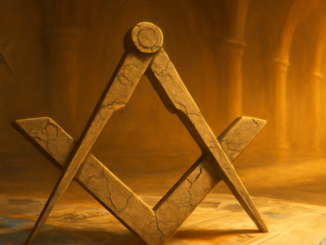
The allusive meaning of a symbol does not unfold through explanation — it unfolds through experience. In a world that demands directness and clarity, the allusion offers a refined alternative: it invites reflection without imposing conclusions. For the Freemason, this is not a rhetorical device but a way of life. Today, we explore how the allusive dimension of symbolism bridges the visible and the hidden — the space between what can be spoken and what can only be felt. What Is the Allusive Meaning of a Symbol? When we speak of allusive meaning, we enter the realm of indirect reference. An allusion is never a straightforward statement. It is a nod, a wink toward something greater than the words or images being used. In literature, we recognize this as a reference to a well-known story or figure without naming it explicitly. In symbolism, the concept goes further: the entire medium of communication becomes a whisper. The square and compasses, the rough ashlar, the trowel, the plumb line — all of these objects from the stonemason’s craft carry meanings that extend far beyond their physical form. They point toward something else, something the initiated recognize without it ever needing to be […]

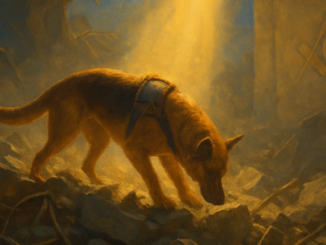
Search dog working through building rubble symbolizing Masonic brotherhood
Personal Development & Leadership

The Search Dog as Teacher: Finding Brotherhood in the Rubble

A search dog picks its way through the rubble of an exploded building in Amsterdam. The footage circulated across the Netherlands this past week, drawing millions of eyes. But for those willing to look beyond the headlines, the images reveal something far more profound than breaking news: a creature moving without hesitation toward what has been lost. In that unconditional devotion lies a lesson Freemasons have been trying to understand for centuries — what does it truly mean to show up for another person? Searching Without Knowing What You Will Find The search dog knows no doubt. It follows its nose, trusts its training, and surrenders completely to the task at hand. Whether the search will lead to a living person, a body, or nothing but emptiness — the animal does not know. And yet it searches. This posture of unconditional action without any guarantee of results strikes at one of the core paradoxes of human connection. We humans hesitate because we cannot see the outcome. The dog reminds us that true devotion needs no certainty. In Freemasonry, we speak of the search for light — a symbolic journey toward insight and truth. But just like the search dog, the […]

Freemason contemplating philosophical questions in a symbolic lodge setting
Philosophy & Ethics

Agnosticism as a Way of Life: The Questioning Freemason

Agnosticism is often mistaken for indifference or an inability to make up one’s mind, but nothing could be further from the truth. It is a deliberate philosophical stance — one that acknowledges certain questions may never be definitively answered. For the Freemason, who is constantly rearranging the building blocks of his inner life, this attitude offers remarkably fertile ground. The answer is not what matters most; what matters is the courage to keep asking the question. The Origins of Agnosticism The term “agnostic” was coined in the nineteenth century by British scientist Thomas Henry Huxley, who sought to express the idea that certain metaphysical truths lie beyond the reach of human knowledge. The Greek prefix “a” means “without,” and “gnosis” means “knowledge” — literally, without knowledge. But this bare translation fails to capture the richness of the concept. Agnosticism is not intellectual laziness; it is a sincere recognition of the limits of human understanding. Throughout the centuries, countless thinkers have wrestled with the question of what we can truly know about the transcendent, about the origins of existence, about what lies behind the veil of observable reality. The agnostic position refuses to answer these questions with certainties that cannot be […]

Compasses and square on a stone surface symbolizing Masonic trust and balance
Freemasonry & Society

Interest Rates as a Measure of Trust: A Masonic Perspective

When a central bank announces an interest rate hike, financial markets react, economists debate, and homeowners recalculate their budgets. But behind the numbers lies a deeper question that has fascinated Freemasons for centuries: what is the true nature of trust in a society, and how do we build foundations strong enough to endure when the winds change direction? The Invisible Architect of Value Money is, in essence, crystallized trust. A banknote has no intrinsic value — it is a promise, a symbol of collective belief in a system. When central banks adjust interest rates, they are turning dials designed to regulate that trust. Too much money in circulation undermines value; too little stifles growth. It is a delicate dance between abstract concepts that carries very real consequences for millions of people. For Freemasons, this terrain is not unfamiliar. The Craft has a rich symbolic language built around construction, measurement, and balance. The compasses and the square are not merely tools of the stonemason — they are metaphors for finding equilibrium and measuring proportions. In a broader societal context, they invite us to reflect: what invisible structures support our civilization, and who safeguards their integrity? Trust as the Foundation A rate […]

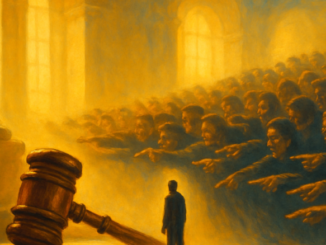
Masonic level and gavel symbolizing equality and fair judgment
Freemasonry & Society

Social Condemnation: Judgment Without a Gavel

When news breaks that a public figure has been accused of a serious crime, society often delivers its verdict long before any judge has spoken. We have seen this pattern play out time and again: allegations become public, and within hours a collective judgment has already formed. This phenomenon touches on fundamental questions about justice, human dignity, and how we as a society deal with guilt and innocence. And it is precisely on these matters that Freemasonry — with its centuries-old tradition of moral reflection — has a surprising amount to offer. The Court of Public Opinion In our age of instant news and social media, the court of public opinion is permanently in session. The moment an accusation becomes public, millions of people begin forming their judgment. This happens without access to the evidence, without hearing both sides, and without the nuance that a proper trial demands. Social condemnation moves at lightning speed and is often irreversible — even when an acquittal follows later. This raises an uncomfortable question: what does this rush to judgment say about us? Freemasonry teaches its members that forming a judgment about a fellow human being is one of the gravest responsibilities a person […]

Masonic square and compasses symbolizing allusive meaning in Freemasonry
Symbolism & Rituals

Allusive Meaning: The Art of Veiled Speech in Freemasonry

When we speak of the allusive meaning of words and images, we enter a fascinating realm where nothing is said directly, yet everything is suggested. Allusion is the art of the hint — a reference to something greater without ever naming it outright. In Freemasonry, this way of communicating forms the beating heart of symbolic language. Where others seek direct answers, the Freemason embraces the power of what remains unspoken. What Does “Allusive” Actually Mean? The word “allusive” derives from the Latin alludere, which literally means to play toward something or to refer to it indirectly. An allusive expression never states its meaning outright — instead, it plays with references that the listener or reader must decipher. This demands active engagement, a willingness to look beneath the surface. In everyday language, we use allusions far more often than we realize. When someone speaks of an “Achilles’ heel” or a “stumbling block,” they are referencing stories that resonate far deeper than the words themselves. Allusive meaning distinguishes itself from literal meaning by drawing on shared knowledge, experience, or culture. It creates a bond between speaker and listener — an invisible thread of understanding that exists only for those who recognize the […]

Masonic symbols representing the agnostic search for truth and meaning
Philosophy & Ethics

Agnosticism and Freemasonry: The Art of Not Knowing

What if the answer to life’s greatest questions isn’t a definitive yes or no, but an honest “I don’t know”? Agnosticism makes room for exactly that kind of intellectual humility. Far from being a position of weakness, it takes genuine courage to acknowledge that some truths may lie beyond our reach. In Freemasonry, we find a remarkable kinship with this philosophical stance — not as doctrine, but as a living practice of seeking without the pretense of final answers. What Does Agnosticism Actually Mean? The word “agnostic” has its roots in Greek: “a” means without, and “gnosis” means knowledge. An agnostic is, quite literally, someone who acknowledges that certain knowledge — particularly about the existence of a higher power or the ultimate purpose of the universe — may be fundamentally unattainable. This is not intellectual laziness. It is a deeply considered epistemological position. The agnostic doesn’t claim that truth doesn’t exist, but rather that we as human beings may lack the tools to fully grasp it. The term was first coined in the nineteenth century by the British biologist Thomas Henry Huxley, who grappled with the question of how we can truly know what we think we know. Since then, […]

Famous Freemasons and their hidden Masonic symbols throughout history
Symbolism & Rituals

Famous Freemasons and Their Hidden Symbols Explored

When people hear about famous Freemasons, the mind often drifts to conspiracy theories and shadowy meetings in smoke-filled back rooms. The reality is far richer and more fascinating. Countless historical figures who shaped the course of civilization were members of the Craft, and they wove Masonic symbolism into their art, music, and writings — not to conceal secrets, but to express universal truths that words alone cannot capture. In this article, we unravel that hidden language and explore why symbols meant so much to these illustrious Brethren. Why Famous Freemasons Chose the Language of Symbols The eighteenth and nineteenth centuries were a golden age for Freemasonry. Among its members were composers, writers, scientists, and statesmen. What united them was not merely a desire for brotherhood, but a shared symbolic language. That language allowed them to convey complex philosophical ideas without being pinned down by dogma or political allegiance. For these Brethren, symbols were not decorations or secret codes. They were thinking tools. Just as the compasses and the square serve the builder in achieving precision, symbols in Freemasonry serve to bring order to one’s inner life. A triangle points to the harmony of body, mind, and soul. A staircase represents […]

February symbolism and purification represented through Freemasonry traditions
Freemasonry & Society

February Symbolism: Purification and Its Role in Society

February carries a depth of meaning that stretches back thousands of years, rooted in ancient traditions of purification, reflection, and societal renewal. The very name comes from the Latin word februare, meaning to cleanse. For the Romans, this was the month of purification — a time to settle old debts and prepare the community for a fresh start. This timeless symbolism resonates powerfully with Freemasonry, where the work of building a better society always begins with inner purification. The Origins of February: Symbolism of Cleansing The Roman festival of Februalia was devoted entirely to ritual purification. During this period, homes were scrubbed clean, offerings were made to the gods, and the city of Rome was swept clean — both literally and figuratively. This was no casual tradition. The Romans firmly believed that a society could only flourish when its members freed themselves of what no longer served them. In Freemasonry, we recognize this same principle in the concept of the rough ashlar. Every Freemason begins as an unworked stone and spends a lifetime chipping away at imperfections. This is not a selfish pursuit of perfection — it is a deeply social commitment. After all, how can we contribute to a […]

Rough and smooth ashlar stones symbolizing Masonic sustainability philosophy
Philosophy & Ethics

Sustainability as a Philosophical Foundation in Freemasonry

Picture this: two Freemasons sit together after a lodge meeting. One is an engineer specializing in circular economy. The other is a classicist, steeped in ancient philosophy. The conversation turns to sustainability. What follows is not a debate but a shared exploration — a dialogue that touches on what it truly means to bear responsibility for what comes after us. This conversation, reconstructed in essence, forms the foundation of this article. The Question That Opens Everything “What is sustainability, really?” the classicist asks, stirring his coffee with a pensive look. “We use the word as if everyone knows what it means. But is it a goal? A method? A moral duty?” The engineer smiles. “In my field, we talk about systems that can sustain themselves without exhausting their resources. But you’re right — that’s merely the technical definition. The philosophical question runs deeper: why should we care about what happens a hundred years from now?” This is precisely the question Freemasons have grappled with for centuries, albeit in different terms. The construction of the symbolic temple is not a project for a single lifetime. It is a work that transcends generations. The Stone You Leave Behind “Are you familiar with […]

Vrijmetselarij - Vrijmetselaarsliteratuur en inspiratie: boeken en bronnen die je laten groeien
Philosophy & Ethics

Masonic Literature & Inspiration: Books and Sources for Growth

Freemasonry is not a one-time experience — it is a lifelong journey of self-awareness, personal development, and meaningful connection. Beyond what happens inside the lodge, Masonic books, essays, and online resources form an invaluable treasury of knowledge and inspiration. Masonic literature opens doors to deeper understanding and offers practical tools to better grasp the symbolism, rituals, and philosophy of the Craft — and to apply them in your everyday life. Whether you are a curious seeker, a newly initiated Entered Apprentice, or a seasoned Master Mason, Masonic literature enriches your thinking, sharpens your intuition, and encourages meaningful reflection. Why Masonic Literature Is So Powerful Freemasonry is not about dogmas or fixed truths. It is about asking questions, seeking meaning, and shaping your own path. Books and written works support that process. They provide not only historical context but also philosophical frameworks, interpretations of symbolism, and personal testimonies from fellow travelers on the same road. Think of Masonic literature not as a textbook, but as a toolbox: you choose the tool that fits your journey at any given moment. Recommended Books to Get Started If you are new to Freemasonry or looking to build a solid foundation, several accessible books serve […]