Vrijmetselarij - Montaignes eerbetoon: de sonnetten van La Boétie samengevat
Michel de Montaigne – Content & Summary

Montaigne’s Tribute: La Boétie’s Sonnets and Brotherly Bond

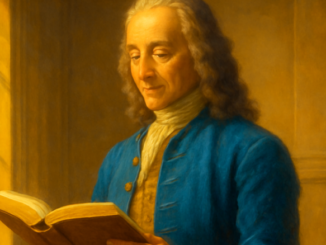
What moves a thinker to place another person’s work at the heart of his own writings? Michel de Montaigne did exactly that when he included twenty-nine sonnets by his deceased friend Estienne de La Boétie in his celebrated Essays. This brief but deeply meaningful essay stands as a monument to a friendship that transcended death — and it invites us to consider a profound question: how do we honour those who have shaped us most? Why Did Montaigne Publish Another Man’s Work? The answer lies in the extraordinary bond between two sixteenth-century intellectuals. Estienne de La Boétie — jurist, philosopher, and poet — died in 1563 at the age of just thirty-two. Montaigne was profoundly affected by this loss and would spend the rest of his life writing about a friendship he considered the most perfect union that could exist between two people. The twenty-nine sonnets he presented in this essay are love poems La Boétie composed, presumably for an unknown beloved. Montaigne did not include these poems as a mere literary curiosity. He saw them as a window into his friend’s soul — a way of preserving La Boétie’s inner life for future generations. In his introduction, Montaigne makes […]
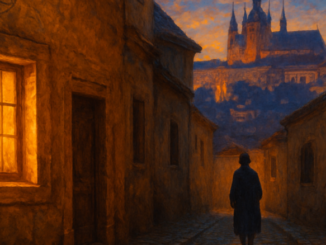
Vrijmetselarij - Praag als mystieke stad: feit of fictie in The Secret of Secrets
Symbolism & Rituals

Prague as a Mystical City: Fact or Fiction in Secret of Secrets

In his thriller The Secret of Secrets, Dan Brown takes readers to Prague — a city he portrays as the beating heart of European esotericism. But how much of this mystical reputation is rooted in historical fact, and where does the novelist begin weaving his own narrative? This deep dive places the book’s claims alongside the real history of the Czech capital, exploring what holds up to scrutiny and what belongs firmly in the realm of fiction. The Novelist’s Perspective Dan Brown has built a career on a distinctive method: he interweaves historical facts with speculation and outright invention to create irresistible page-turners. In The Secret of Secrets, Prague takes center stage as a gathering place for alchemists, Hermeticists, and secret societies. The city appears as a kind of permanent treasure vault of hidden knowledge, where initiates guarded their mysteries for centuries. It’s a compelling image — but one that deserves careful examination against what historians can actually substantiate. From the perspective of a thriller writer, this kind of embellishment makes perfect sense. A novelist seeks drama and mystery, not academic nuance. Brown cherry-picks the most colorful episodes from the city’s history and connects them into a cohesive narrative of […]

Vrijmetselarij - Plato's grotallegorie: de reis van schaduw naar licht
Plato – Content & Summary

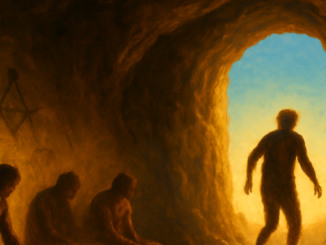
Plato’s Cave Allegory: The Journey from Shadow to Light

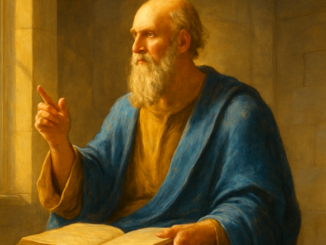
In Book VII of The Republic, Plato presents one of the most enduring images in Western philosophy: the Allegory of the Cave. Far more than an abstract thought experiment, it is a powerful metaphor for the human condition — our confinement within limited perception, the painful pursuit of truth, and the arduous path toward enlightenment. For those who walk the Masonic path, the allegory resonates with particular force: it mirrors the symbolic journey from darkness to light that lies at the very heart of the Craft. The Setting of the Cave Plato has his teacher Socrates describe the scene to Glaucon, one of the dialogue’s participants. Imagine, Socrates says, an underground cavern where people have been chained since birth. Their heads are fixed so they can only see the back wall of the cave. Behind them burns a fire, and between the fire and the prisoners runs a raised walkway where figures carry objects back and forth. The shadows of these objects are cast upon the wall before the prisoners’ eyes. For these prisoners, the shadows are the only reality they have ever known. They name the shadows, they compete over who can best predict their movements and interpret their […]

Vrijmetselarij - Voltaire over God: kerngedachten uit het Filosofisch Woordenboek
Symbolism & Rituals

Voltaire on God: Key Ideas from the Philosophical Dictionary

When the eighteenth-century thinker François-Marie Arouet — better known as Voltaire — picked up his pen to write about God, he did so with the precision of a surgeon and the wonder of a child. His entry “On God” in the 1764 Philosophical Dictionary remains one of the most influential texts ever written on the relationship between reason and faith. For Freemasons, who place the Great Architect of the Universe at the center of their philosophy without prescribing any specific religion, Voltaire’s approach offers remarkably familiar ground. The Core Idea: God as Watchmaker Voltaire opens his reflection with a question that has echoed through the centuries: can we know anything about God with certainty? His answer is characteristically nuanced. He rejects the personal, punishing God of orthodox religion, yet at the same time embraces the idea of a creative intelligence behind the universe. Nature itself, he argues, bears witness to an ordering principle. A watch implies a watchmaker, and the universe — with its laws and harmony — equally implies a designer. This position, known as deism, was a radical alternative in Voltaire’s time. Where the Church proclaimed a God who actively intervened in the world, Voltaire envisioned an architect […]

Candle flame symbolizing Voltaire's philosophical view of God and Freemasonry
Symbolism & Rituals

Voltaire on God: Philosophical Roots of an Enlightened Thinker

A candle in the darkness. So simple, so ordinary, and yet so laden with meaning. For Voltaire, the idea of God was exactly like that — a light that human reason needed in order to perceive, but which itself remained elusive. In his celebrated Philosophical Dictionary of 1764, he penned one of his most thoughtful essays on the concept of God. The philosophical roots of that essay, however, reach far deeper than the eighteenth century alone. The Legacy of English Empiricism Voltaire’s thinking about God is unimaginable without the influence of John Locke. During his exile in England from 1726 to 1728, Voltaire encountered Locke’s Essay Concerning Human Understanding. Locke argued that all knowledge arises from sensory experience and reflection. This had far-reaching consequences for any theology: if we cannot perceive God directly, how can we claim to know anything about Him? Voltaire took this question seriously, yet he also departed from Locke in important ways. While Locke still allowed room for a rational proof of God’s existence, Voltaire grew more skeptical about the reach of human reason. Yet unlike the radical atheists of his day, he held firm to the existence of an ordering force in the universe. A […]

Ancient forest symbolizing Seneca's Letter 41 and the divine spark within
Lucius Annaeus Seneca – Content & Summary

Seneca’s Letter 41: The Divine Spark Within Us All

In his forty-first letter to Lucilius, the Roman Stoic philosopher Seneca explores a theme that still resonates nearly two thousand years later: the divine spark that resides within every human being. This letter stands as a cornerstone of Stoic philosophy, and it touches on questions that lie at the very heart of Freemasonry. What makes a person truly great? Where should we look to find the sacred? Seneca’s answer is as simple as it is radical — not in temples or outward rituals, but within the human soul itself. The Central Idea of Letter 41 Seneca opens this letter with a seemingly simple observation. He praises Lucilius for making progress on the path toward wisdom, but quickly reminds him that true greatness does not come from the outside. The central theme of the letter is that within every person dwells a divine spirit — what the Stoics called the animus — a fragment of the universal rational principle they referred to as the Logos. This inner god, Seneca argues, deserves far more attention than any form of outward worship. Importantly, the letter does not reject religion or tradition. Instead, it puts the value of external display into perspective. Seneca describes […]

Ancient documents and magnifying glass symbolizing the Priory of Sion fact-check
Symbolism & Rituals

The Priory of Sion: Fact or Fiction? A Fact-Check

When Dan Brown published The Da Vinci Code in 2003, it became an international phenomenon almost overnight. Central to its plot was a centuries-old secret society called the Priory of Sion, allegedly founded in 1099 and led by grand masters including Leonardo da Vinci and Isaac Newton. The novel even opened with a page titled “Facts,” lending an air of historical authority to these claims. Millions of readers took them at face value. But what do historians and archivists actually have to say? It is time for a thorough fact-check. The Origin: Not Medieval, but Twentieth Century The real history of the Priory of Sion does not begin in 1099. It begins in 1956. That year, a Frenchman named Pierre Plantard registered an organization called the Prieuré de Sion with the French registry of associations. According to the official filing, its purpose was remarkably modest: a local civic group focused on housing improvement in the Annemasse region. There was no mention of crusaders, Knights Templar, or guardians of a sacred bloodline. Plantard himself turned out to be a figure with a deeply troubled past. French researchers have established that during the 1940s he was involved with antisemitic organizations under the […]

Illustration of Plato's tripartite soul with Masonic square and compasses
Plato – Content & Summary

Plato’s Tripartite Soul: Lessons for Freemasonry

In the fourth book of The Republic, Plato presents a vision of the human soul that has inspired thinkers for more than two thousand years. Written around 375 BCE in an Athens torn by political upheaval and the haunting memory of Socrates’ execution, this dialogue sought to answer a deceptively simple question: what is justice? Plato’s answer — that the soul is composed of three distinct parts, each with its own function and virtue — became a cornerstone of Western philosophy. But its resonance extends far beyond academic circles. Traditions devoted to inner growth and self-knowledge, including Freemasonry, continue to draw deeply from this well of ancient wisdom. The Historical Context of Book IV Plato wrote The Republic during a period of profound political crisis. Athens had suffered a devastating defeat in the Peloponnesian War, its democracy had been temporarily overthrown by oligarchs, and the city had condemned Socrates — Plato’s beloved teacher — to death. Against this backdrop of chaos and disillusionment, Plato searched for a foundation upon which a truly just society could be built. In Book IV, the dialogue takes a decisive turn. Socrates, the central figure of the conversation, argues that justice in the state can […]

Two intertwined hands symbolizing deep friendship and Masonic brotherhood
Michel de Montaigne – Freemasonry & Connection

Montaigne on Friendship: When Two Souls Become One

Can friendship truly exist without two souls dissolving into one another? Michel de Montaigne argued in his celebrated essay On Friendship that genuine connection reaches far beyond companionship, utility, or even love. It is a merging in which the boundaries between “I” and “you” cease to exist. This idea raises an uncomfortable question for anyone who reflects on the meaning of brotherhood: is true friendship even possible with more than one person at a time? The Paradox of a Singular Bond Montaigne describes his friendship with Étienne de La Boétie as something that transcended every other relationship in his life. When asked why this bond was so extraordinary, he offered his famous reply: “Because it was he, because it was I.” No explanation, no reason, no utility could justify this friendship. It simply was. The formulation suggests that authentic friendship cannot be reproduced or multiplied. By its very nature, it is singular and unrepeatable. This is where a tension emerges with the Masonic ideal of brotherhood. The Lodge presents itself as a community of brethren who meet as equals, regardless of social standing. But how does this collective ideal relate to Montaigne’s conviction that the deepest friendship is inherently exclusive? […]

Ancient Roman bust of Marcus Aurelius with Masonic square and compass symbols
Marcus Aurelius – Freemasonry & Connection

Marcus Aurelius Book VII: Fate and Masonic Wisdom

What if everything that happens to us — the good fortune and the misfortune alike — ultimately leads to the same point? In the seventh book of his Meditations, Marcus Aurelius examines the unpredictability of fate with a clear-eyed sobriety that still resonates nearly twenty centuries later. For Freemasons, his philosophy raises a familiar question: how do we relate to the inevitable changes of life, and what does our response reveal about the state of our inner selves? The Paradox of Fate in Marcus Aurelius Marcus Aurelius, the Roman emperor-philosopher who reigned from 161 to 180 AD, wrote his Meditations as private reflections — never intended for publication. In Book VII, he turns his attention to a fundamental paradox: fate appears random, yet the wise person can still adopt a meaningful stance toward it. The unpredictability of life is not an enemy to be conquered, but a teacher that compels self-examination. He writes that the same events which destroy one person make another stronger. It is not the event that determines the outcome, but the way we receive it. This is not passive resignation — it is an active choice for inner sovereignty. The Stoic tradition in which Marcus Aurelius […]

Ambigram design inspired by Dan Brown's Angels and Demons novel
Angels & Demons

Angels & Demons Ambigrams: Fact-Checking Dan Brown’s Symbols

The premise seems airtight at first glance: the ambigrams in Dan Brown’s thriller Angels & Demons prove the existence of an ancient secret society that concealed its messages through ingenious symbols. But what if this premise works in exactly the opposite direction? What if the symbols don’t confirm the fiction — but the fiction invented the symbols? This article examines the boundary between literary imagination and historical symbolism, and asks a question that is seldom posed aloud: what do we actually know about ambigrams, and what have we simply believed because a novel suggested it? The Claim: Ancient Secret Symbols In Angels & Demons, Dan Brown presents ambigrams as mysterious marks used by the Illuminati to signal their presence. The story suggests that these symmetrical word-images have existed for centuries and were recognized by initiates as signs of a hidden brotherhood. The protagonist discovers brands bearing words that are legible both right-side up and upside down. The implication is unmistakable: these are authentic historical artifacts of a secret society. And here is where the trouble begins. Historical reality tells an entirely different story. The ambigrams in the book were not unearthed from archives or excavated from old lodges. They were […]

Voltaire and the concept of freedom explored through Masonic philosophy
Symbolism & Rituals

Voltaire on Freedom: Insights from the Philosophical Dictionary

What does it truly mean to be free? This seemingly simple question unfolds in Voltaire’s hands into a philosophical labyrinth where every exit leads to new questions. In his celebrated Philosophical Dictionary, the great Enlightenment thinker devotes a penetrating entry to the concept of liberty — and what he writes there continues to resonate in lodge rooms where brothers gather to reflect on human nature and its possibilities. The Paradox of Free Will Voltaire opens his inquiry into freedom with a deceptively straightforward question: can a person truly do what they want? The answer he offers is unsettlingly nuanced. Yes, a person can act according to their desires — but those desires themselves are not freely chosen. They arise from temperament, upbringing, circumstances, and countless other factors over which the individual has no control. Freedom thus becomes a relative concept, dependent on perspective and definition. This line of thought places Voltaire in a tradition stretching back to the Stoics and later developed by Spinoza. We experience ourselves as free, but that experience may well be an illusion. Yet Voltaire is no strict determinist who dismisses all human responsibility. On the contrary: precisely because the boundaries of our freedom remain unclear, […]

Ancient stone temple interior symbolizing Seneca's philosophy and Masonic inner work
Lucius Annaeus Seneca – Content & Summary

Seneca Letter 28: Why Travel Cannot Cure a Restless Mind

Can we escape our inner turmoil simply by changing our surroundings? In his twenty-eighth letter to Lucilius, the Stoic philosopher Seneca presents a paradox that still challenges us today: whoever travels to flee from themselves inevitably carries along the very thing they are trying to leave behind. This is not an argument against travel — it is a philosophical exploration of where true peace of mind can actually be found. For Freemasons, who regard the inner temple as their most essential workshop, Seneca’s analysis offers a remarkably familiar perspective. The Core Idea: You Cannot Leave Yourself Behind Seneca opens his letter with a blunt observation: Lucilius has been traveling from one place to another, yet his restlessness has not diminished in the slightest. This comes as no surprise to Seneca. He articulates what becomes the central thesis of the entire letter: it is not the location that needs to change, but the mind. Those who are restless on the inside carry that restlessness to every new destination. The journey becomes a flight without a final stop. This insight is not new within the Stoic tradition. Socrates is said to have observed that travel holds little value for those who have […]

Ancient Greek columns symbolizing Plato's philosophy and Masonic education
Plato – Freemasonry & Connection

Plato on Education: Lessons for Freemasonry

What truly makes a person good? And who decides what ‘good’ even means? Plato posed these questions more than two thousand years ago in his celebrated dialogue The Republic, and they still echo through the lodge today. When we study the third book of this masterwork, we discover striking parallels with Freemasonry — not in dogmas or prescriptions, but in a shared conviction that human beings can be shaped through intentional education, through community, and through the pursuit of inner light. Why Did Plato Place Such Value on Education? For Plato, education was never a secondary concern — it was the key to a just society. In the third book of The Republic, he describes how young people should be formed through music, gymnastics, and stories that cultivate virtue. His interest was not in the transmission of facts, but in the shaping of character. The soul, he argued, must be trained just as the body is: through discipline, beauty, and truth. Plato believed that stories and art have the power to mold the soul. For this reason, he advocated telling only those myths that inspire courage, temperance, and justice. Bad examples, he reasoned, corrupt the young mind. This may sound […]

Open classical book symbolizing Montaigne's philosophical roots on friendship
Michel de Montaigne – Philosophical Background

Montaigne on Friendship: Philosophical Roots and Sources

Why did Michel de Montaigne write so passionately about friendship? And which philosophical traditions whispered to him about the true meaning of human connection? His celebrated essay on friendship is not an isolated meditation — it is a tapestry woven from ancient wisdom, personal loss, and Renaissance humanism. The thinkers and traditions that shaped this text still resonate powerfully within brotherhoods such as Freemasonry, offering insights that are as relevant today as they were in the sixteenth century. Which Classical Philosophers Influenced Montaigne the Most? Montaigne was a voracious reader of classical texts. His library, housed in the tower of his château, contained works by Greek and Roman thinkers that he read and reread throughout his life. For his reflections on friendship, he drew most heavily on Aristotle, who distinguished three kinds of friendship in the Nicomachean Ethics: friendships based on utility, on pleasure, and on virtue. Only the last — the friendship between good people who admire each other’s character — did Aristotle consider complete and enduring. But did Montaigne fully agree? Not quite. He went further than Aristotle by arguing that the highest friendship transcends even the friendship of virtue. The bond he described with his friend Étienne […]

Ancient Roman bust of Marcus Aurelius symbolizing Stoic philosophy and fate
Marcus Aurelius – Meditations

Marcus Aurelius Book VII: Philosophical Roots of Fate

When a Roman emperor sat down by candlelight in the second century AD to record his private thoughts, he produced one of the most influential philosophical texts in Western history. Book VII of Marcus Aurelius’ Meditations tackles a theme that touches every human life: the unpredictability of existence. This essay explores the philosophical traditions that nourished these reflections and reveals a striking parallel with how Freemasonry approaches change, impermanence, and the shaping of character. The Stoic Legacy: From Zeno to the Imperial Age Stoicism was born around 300 BC in Athens, where Zeno of Citium taught his students in the Stoa Poikile — the painted colonnade that would give the school its name. The central idea was deceptively simple: while we cannot control external events, we can master our own responses to them. This philosophy was refined by thinkers such as Cleanthes and Chrysippus before reaching its Roman zenith in the works of Seneca, Epictetus, and ultimately Marcus Aurelius himself. In Book VII of the Meditations, we see Marcus Aurelius wrestling with the very questions that preoccupied his predecessors. The fickleness of fortune — what the Greeks called tyche — is not treated as an enemy but as a teacher. […]

Symbolic Masonic temple with light representing Voltaire's vision of tolerance
Symbolism & Rituals

Voltaire’s Prayer for Tolerance and Its Masonic Resonance

In a world that often seems fractured by misunderstanding and prejudice, it is remarkable that a text written in the eighteenth century can still move us so deeply. Voltaire’s prayer for tolerance, found in his Treatise on Tolerance, expresses a universal longing for mutual understanding that transcends centuries. For Freemasons, this prayer is far more than a historical curiosity — it touches the very heart of what the Craft has pursued for generations: a world where people of every background can meet one another as brothers. A Philosopher’s Prayer for All Humanity Voltaire did not address his prayer to the god of any single religion. Instead, he directed it to the Supreme Being who might unite all people. “You did not give us hearts to hate one another,” he wrote, “nor hands to murder one another.” These words grew from his deep revulsion toward religious fanaticism. The Calas affair — in which an innocent Protestant father was wrongfully sentenced to death — had shaken him to the core. His prayer was no theological treatise; it was a cry from the heart for human dignity. For Voltaire, tolerance was never passive acceptance. It was an active, deliberate choice. He acknowledged that […]

Flickering candle casting shadows symbolizing Seneca's Stoic wisdom and Freemasonry
Lucius Annaeus Seneca – Freemasonry & Connection

Seneca Letter XXVI: Death and Life in a Masonic Perspective

A candle sits on the table. Its flame flickers, casting shadows on the wall, and at some point it will go out. For Lucius Annaeus Seneca, this was no cause for sorrow — it was an invitation to clarity. In his twenty-sixth letter to Lucilius, he writes about approaching old age and death as companions of the conscious life. For Freemasons, who are accustomed to working in symbolic darkness in search of light, this letter opens a window onto a shared understanding: that the finite nature of existence is not a threat, but a compass. The Candle That Knows It Will Be Extinguished Seneca opens Letter XXVI with a frank description of his aging body. His strength is fading, his skin wrinkling, his energy diminishing. Yet instead of lamenting, he approaches the process with a remarkable serenity. The Stoic philosopher regards approaching death not as an enemy, but as the ultimate test of a life well lived. Everything he has learned about virtue, every piece of wisdom he has gathered, is now about to be examined. This image of life as preparation for a final examination resonates deeply with Masonic tradition. In the lodge, every brother is continually invited to […]

Ancient Greek temple columns symbolizing Plato's philosophy and Masonic education
Plato – Philosophical Background

Plato’s Republic III: The Philosophical Roots of Education

When Plato unfolds his vision of education in the third book of The Republic, he touches on questions that had already been asked for centuries before him — and that continue to resonate today in traditions devoted to the shaping of character. How do we cultivate virtue in a human being? What stories do we tell, what music do we play, and why? For the Freemason, these are far from abstract questions. The lodge itself is a space of formation, where ritual and symbol serve the very pedagogical function Plato envisioned. This article explores the philosophical sources Plato drew upon and places his educational ideal alongside the formative practice of Freemasonry. The Legacy of the Early Greek Thinkers Plato’s educational philosophy in Republic III did not emerge in a vacuum. He built upon a rich tradition of Greek paideia — the ideal of comprehensive human formation that had already taken root in the works of Homer and Hesiod. For Homer, the hero Achilles was the embodiment of aretē: virtue understood as a fusion of courage, honor, and physical excellence. Hesiod, in his Works and Days, added industriousness and justice to the equation. Plato knew these texts intimately, but he took […]

Open book showing Montaigne's essay on friendship with Masonic symbolism
Michel de Montaigne – Content & Summary

Montaigne on Friendship: What Essay 28 Teaches Freemasons

In 1580, Michel de Montaigne published his Essays, a collection of personal reflections that would permanently reshape Western literature. Among them, one essay stands apart for its emotional depth: the twenty-eighth chapter of Book One, devoted entirely to friendship. Far from being an abstract philosophical treatise, this essay is a passionate tribute to Étienne de La Boétie — the friend with whom Montaigne shared a bond he would never again equal. For Freemasons, who regard brotherhood and sincere human connection as cornerstones of their craft, this centuries-old text offers surprisingly relevant wisdom. The Historical Context of the Essay Montaigne likely composed this essay around 1572, several years after the death of Étienne de La Boétie in 1563. The two men had met in 1558 at the Parliament of Bordeaux, where both served as councillors. Their friendship lasted only five years, yet its intensity would mark Montaigne for the rest of his life. The essay emerged during one of the most turbulent chapters of French history: the Wars of Religion raged across the country, the St. Bartholomew’s Day Massacre had claimed thousands of lives, and trust between people had been deeply shattered. It was precisely in this context of division and […]