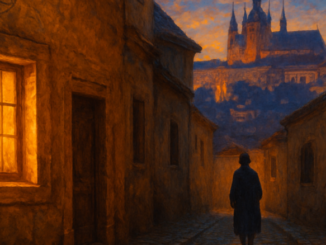
Prague Castle and Golden Lane evoking the alchemical era of Emperor Rudolf II
Symbolism & Rituals

Alchemy and Emperor Rudolf II in Prague: Fact and Myth

Picture this: it is the year 1600, and deep in the cellars beneath Prague Castle, the fire of a smelting furnace casts a flickering glow. A man in a worn cloak hunches over a flask of mercury, while somewhere above him an emperor awaits the impossible — the Philosopher’s Stone. This image of Prague as an alchemical epicenter has captivated imaginations for centuries, and it received renewed attention thanks to Dan Brown’s novel The Secret of Secrets. But how much of this story is actually true? And where does historical reality become entangled with literary imagination? Emperor Rudolf II: The Historical Figure Behind the Myth Rudolf II (1552–1612) was Holy Roman Emperor, and he chose to rule from Prague rather than the traditional imperial seat of Vienna. This is a well-established historical fact. He relocated his court to Prague Castle in 1583, where he assembled one of the most remarkable collections of art, curiosities, and scientific instruments of his era. Historians such as Robert John Weston Evans have extensively documented how Rudolf acted as a magnet for scholars, artists, and yes — alchemists from across Europe. The portrait Dan Brown paints in The Secret of Secrets of Prague as a […]
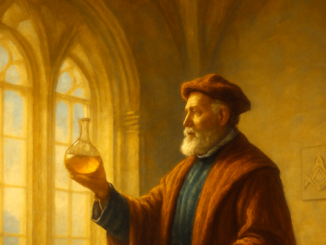
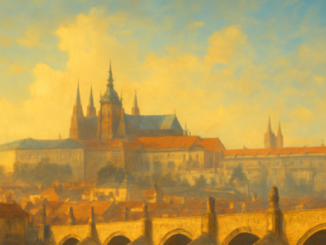
Emperor Rudolf II and alchemists in the mystical court of Prague Castle
Symbolism & Rituals

Alchemy and Emperor Rudolf II: What Does Dan Brown Claim?

What if a sixteenth-century emperor had already discovered the secret of eternal transmutation — and what if that secret still lies hidden somewhere in Prague? That is the provocative question Dan Brown raises in his thriller The Secret of Secrets. But how do the claims in this novel hold up against what we actually know about Emperor Rudolf II and his alchemical court? And what does any of this have to do with the foundations of Freemasonry? These are questions worth exploring, one by one. What Exactly Does Dan Brown Claim About Rudolf II? In The Secret of Secrets, Dan Brown portrays late sixteenth-century Prague under Emperor Rudolf II as an epicenter of hidden knowledge. The novel presents the imperial court as a place where alchemists, astrologers, and Hermetic philosophers converged — not merely to turn base metals into gold, but to unlock a deeper, spiritual secret. Brown suggests that Rudolf II was far more than an eccentric collector: he allegedly built a deliberate network of sages around himself that would later serve as the cradle for secret societies. The book presents the Prague court as a laboratory where science and mysticism had not yet parted ways. Rudolf II is […]

Historic Prague cityscape with Gothic and Baroque architecture at twilight
Symbolism & Rituals

Prague as a Mystic City: Freemasonry and the Facts Behind Fiction

When Dan Brown leads readers through the winding streets of Prague in The Secret of Secrets, he conjures images of alchemists, secret societies, and hidden knowledge. The Czech capital does indeed possess a rich mystical past stretching back to the sixteenth century. But how does Brown’s fiction compare to the actual history of Freemasonry in this city? And which misconceptions deserve to be corrected? A journey through time reveals some surprising insights. The Prague of Rudolf II: A Historical Epicenter To understand Prague’s mystical reputation, we need to travel back to the late sixteenth century. Emperor Rudolf II, who reigned from 1576 to 1612, transformed Prague into the intellectual heart of the Holy Roman Empire. He invited astronomers, alchemists, and scholars from across Europe to his court. Tycho Brahe and Johannes Kepler both conducted their groundbreaking astronomical research in Prague. The famous English occultist John Dee visited the city alongside Edward Kelley, seeking alchemical knowledge. This historical reality laid the groundwork for later mystification. The Golden Lane on Prague Castle’s grounds — where, according to legend, alchemists once labored — still draws visitors today. However, it is essential to recognize that these early esoteric activities predate organized Freemasonry as we […]

Vrijmetselarij - Praag als mystieke stad: feit of fictie in The Secret of Secrets
Symbolism & Rituals

Prague as a Mystical City: Fact or Fiction in Secret of Secrets

In his thriller The Secret of Secrets, Dan Brown takes readers to Prague — a city he portrays as the beating heart of European esotericism. But how much of this mystical reputation is rooted in historical fact, and where does the novelist begin weaving his own narrative? This deep dive places the book’s claims alongside the real history of the Czech capital, exploring what holds up to scrutiny and what belongs firmly in the realm of fiction. The Novelist’s Perspective Dan Brown has built a career on a distinctive method: he interweaves historical facts with speculation and outright invention to create irresistible page-turners. In The Secret of Secrets, Prague takes center stage as a gathering place for alchemists, Hermeticists, and secret societies. The city appears as a kind of permanent treasure vault of hidden knowledge, where initiates guarded their mysteries for centuries. It’s a compelling image — but one that deserves careful examination against what historians can actually substantiate. From the perspective of a thriller writer, this kind of embellishment makes perfect sense. A novelist seeks drama and mystery, not academic nuance. Brown cherry-picks the most colorful episodes from the city’s history and connects them into a cohesive narrative of […]