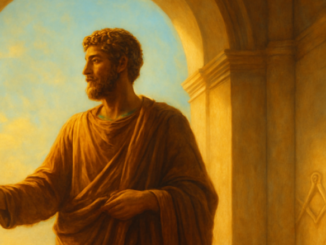
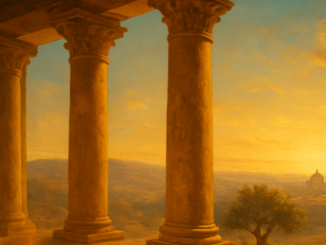
A quiet space for reflection symbolizing Seneca's lessons on inner freedom
Lucius Annaeus Seneca – Content & Summary

Seneca on the Crowd: Lessons for Inner Freedom

You return from a busy day in the city. Voices, opinions, and advertisements have been competing for your attention at every turn. You feel exhausted — not from walking, but from being constantly influenced. Nearly two thousand years ago, the Roman philosopher Lucius Annaeus Seneca described this exact phenomenon in his seventh letter to his friend Lucilius. His insights into how the crowd affects our inner peace are more relevant today than ever before. The Core Idea: Guard Your Character Seneca opens his letter with a blunt warning: nothing is as harmful to good character as spending time in a crowd. No matter how innocent you believe yourself to be when you join the masses, you always return carrying something you didn’t have before — a new greed, a subtle cruelty, a weakened moral compass. This is not misanthropy or a disdain for people. Seneca is pointing specifically at the dynamic that emerges when large groups come together without a higher purpose. The crowd acts as an amplifier of our worst tendencies. Where solitude allows you to reflect on your choices, the group pulls you into a current of impulsiveness and superficiality. The Gladiator Games: A Case Study in Crowd […]

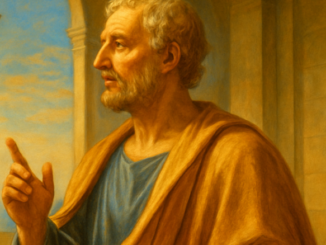
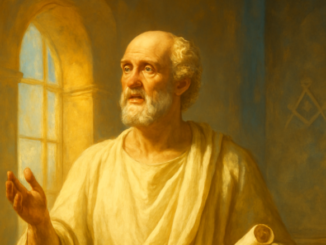
Ancient letter symbolizing Paul's Epistle to the Philippians and Masonic wisdom
Christianity

Philippians: Joy in Captivity and the Masonic Path

Somewhere around the year 62 AD, a man sat in a Roman prison cell, chained to a soldier, uncertain of his fate. Yet from that confinement he produced one of the most joyful texts in Western history. Paul of Tarsus wrote to the faith community in Philippi — a Roman colony in northern Greece — and the letter he composed would be read for centuries as a masterwork on inner freedom amid outer constraint. For Freemasons, devoted to building the inner temple, this ancient text contains remarkably timely insights. A Letter From a Roman Dungeon The city of Philippi owed its name to Philip II of Macedon, father of Alexander the Great. By the first century, it had become a thriving Roman veterans’ colony on the Via Egnatia — the great trade route connecting East and West. It was here, around 50 AD during his second missionary journey, that Paul established a small community. The Philippians remained loyal supporters, even after he was imprisoned in Rome. They sent him gifts and dispatched a trusted companion named Epaphroditus to care for him. The letter Paul wrote in return is remarkably personal in tone. Unlike his other epistles, Philippians contains almost no […]

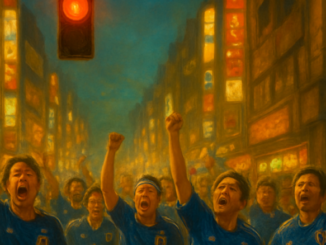
Red traffic light glowing at night as a symbol of spiritual pause
Spiritual Traditions

The Red Traffic Light as a Spiritual Teacher

You may have seen the footage. Thousands of Japanese football fans celebrating wildly in the streets — singing, dancing, erupting with joy — until the traffic light turns red. Then everything stops. Silence. Stillness. Only when the light turns green does the celebration resume. This scene struck me deeply. Not because of the football, but because of what it reveals about the human soul and its capacity for inner freedom. A Moment of Recognition Imagine yourself surrounded by thousands of people cheering, singing, and dancing. The emotion is overwhelming, the energy contagious. And then, at the peak of collective ecstasy, a red light appears. A simple signal. No police officer, no authority intervening. Just you and that light. What do you do? The Japanese supporters chose stillness. Not out of fear of punishment, but from something deeper — a rooted awareness that true joy does not vanish through a moment of restraint. On the contrary, they demonstrated that discipline and celebration can strengthen one another rather than cancel each other out. This is a spiritual lesson that resonates powerfully with me as a Freemason. The Art of the Voluntary Halt In Freemasonry, we often speak about subduing our passions. This […]