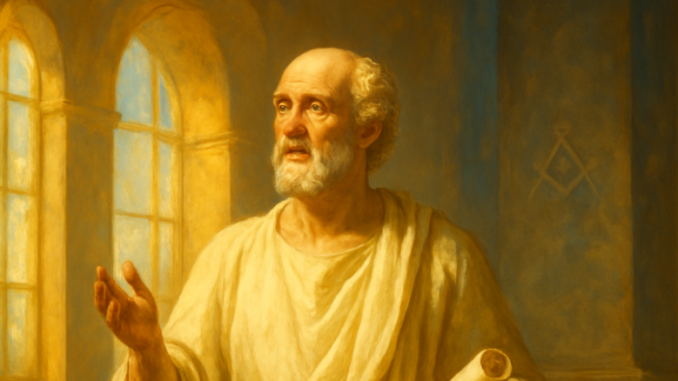
You return from a busy day in the city. Voices, opinions, and advertisements have been competing for your attention at every turn. You feel exhausted — not from walking, but from being constantly influenced. Nearly two thousand years ago, the Roman philosopher Lucius Annaeus Seneca described this exact phenomenon in his seventh letter to his friend Lucilius. His insights into how the crowd affects our inner peace are more relevant today than ever before.
The Core Idea: Guard Your Character
Seneca opens his letter with a blunt warning: nothing is as harmful to good character as spending time in a crowd. No matter how innocent you believe yourself to be when you join the masses, you always return carrying something you didn’t have before — a new greed, a subtle cruelty, a weakened moral compass.
This is not misanthropy or a disdain for people. Seneca is pointing specifically at the dynamic that emerges when large groups come together without a higher purpose. The crowd acts as an amplifier of our worst tendencies. Where solitude allows you to reflect on your choices, the group pulls you into a current of impulsiveness and superficiality.
The Gladiator Games: A Case Study in Crowd Behavior
Seneca describes how he accidentally ended up at the midday games in the amphitheater. The morning bouts, he says, still maintained some semblance of order. But during the midday intermission — when the audience needed to be entertained — things turned truly savage. Men were sent into the arena without weapons or protection to slaughter each other. No helmets, no shields. Pure killing as entertainment.
What disturbed Seneca most was not the cruelty itself, but the audience’s reaction. They screamed for more blood. They reveled in death. These were not inherently cruel people. It was the crowd that transformed them, drawing out the worst in each individual. The anonymity of the group granted permission for behavior that none of them would have exhibited alone.
Practical Steps for Inner Protection
Seneca does not offer abstract philosophizing. He provides practical guidelines you can apply today. His first recommendation: limit your exposure to situations where the crowd rules. This does not mean becoming a hermit. It means making deliberate choices about where you invest your time and attention.
Choose your company carefully. Seek out people who elevate you, not those who diminish you. Avoid places where sensationalism dominates. After periods of social intensity, take time to return to yourself. Ask the question: do I feel stronger or weaker after this encounter?
Translated to our age, Seneca would likely cast a critical eye on endless scrolling through social media, on consuming sensationalist news, on participating in waves of online outrage. Not because contact with others is inherently bad, but because unfiltered exposure to the crowd clouds your judgment.
The Space of Reflection as a Counterweight
What Seneca proposes is the cultivation of an inner space where you can find yourself again. A place — physical or mental — where the voices of the crowd fall silent and your own voice becomes audible once more. This is not an escape from the world, but a deliberate pause to recalibrate your moral compass.
Withdrawal from the crowd is not weakness. It is the precondition for moral clarity and authentic strength.
In Freemasonry, this idea is reflected in the ritual act of entering the lodge. The transition from the outside world into the temple space is a conscious separation. You leave behind the noise, the opinions, and the distractions of daily life. What remains is a space for reflection, for meeting on a deeper level, for working on yourself without the crowd’s interference. The lodge is, in a very real sense, the kind of deliberate sanctuary that Seneca advocated.
The Power of Deliberately Chosen Company
Seneca closes his letter on a hopeful note. While the crowd can weaken us, carefully chosen company can strengthen us. A single conversation with someone you admire can mean more than a thousand superficial encounters. The quality of your relationships shapes the quality of your character.
This is not an elitist position. It has nothing to do with social status and everything to do with moral quality. Seek out people who are honest, who think before they judge, who know their own weaknesses and actively work on them. Such people are rare, but they exist. And in their presence, you grow.
Applying Seneca’s Wisdom Today
The practical wisdom of this letter translates into concrete actions. Start today with a small change. After a busy day, take five minutes of silence before you open the next screen. Ask yourself which voices you have let in today and whether they made you stronger or weaker. Tomorrow, be more intentional about who you spend your time with.
Seneca wrote this letter to one person, not to an audience. That intimacy was no accident. Real change does not happen in the crowd. It happens in the quiet of your own reflection, in conversation with a trusted friend, in the choices you make when no one is watching. That is where your freedom lies.
Seneca’s seventh letter to Lucilius is a timeless invitation to self-examination. The crowd is not your enemy, but it is a force you must learn to manage. By consciously choosing where you direct your attention, whom you surround yourself with, and when you withdraw into reflection, you build a character that endures. Not by shutting yourself off from the world, but by becoming strong enough from within to chart your own course. That inner freedom — the ability to remain yourself amid the noise — is the true subject of Seneca’s letter, and it is a pursuit that every Freemason will recognize as fundamental to the Craft.
Copyright text & image: devrijmetselaar.nl
Texts are based on the ideas and content of the author of devrijmetselaar.nl, reviewed, corrected, and supplemented with the assistance of OpenAI. Images are created based on the ideas of the author of devrijmetselaar.nl using OpenAI/DALL-E.
Frequently Asked Questions
What is Seneca's main warning about spending time in crowds?
Seneca warns that nothing is as harmful to good character as spending time in a crowd. He argues that no matter how innocent you believe yourself to be when joining the masses, you always return carrying something you didn't have before — such as new greed, subtle cruelty, or a weakened moral compass. The crowd acts as an amplifier of our worst tendencies.
What does Seneca use as an example of how crowds influence behavior?
Seneca describes his experience at the gladiator games in the amphitheater, particularly the midday intermission when men were sent into the arena without weapons to slaughter each other. He was disturbed not by the cruelty itself, but by how the audience screamed for more blood and reveled in death. These were ordinary people who would never have behaved this way alone — the crowd's anonymity gave them permission for brutal behavior.
What practical steps does Seneca recommend for protecting your inner peace?
Seneca recommends deliberately limiting your exposure to situations where the crowd rules, though not by becoming a hermit. He advises choosing your company carefully by seeking people who elevate you rather than diminish you, avoiding places where sensationalism dominates, and taking time to retreat after periods of social intensity to reflect and restore your character.


Be the first to comment