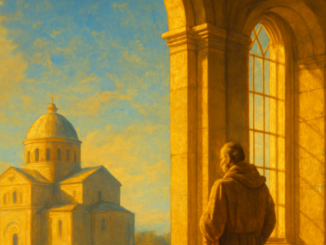
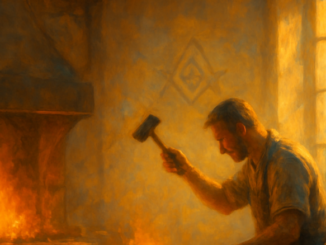
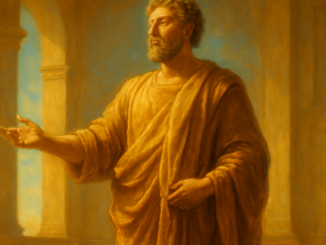
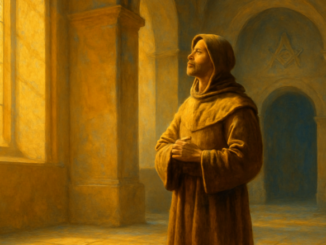
Cathedral foundation stones symbolizing Masonic stewardship and sustainability
Philosophy & Ethics

Sustainability as Philosophy: The Freemason as Steward

Imagine this: a cathedral whose first stone was laid by someone who knew they would never live to see it finished. Medieval master builders didn’t work for themselves — they worked for generations yet to come. In an age where sustainability is largely defined by carbon targets and climate goals, Freemasonry invites us to ask a deeper question: what does it truly mean to build for eternity? The Operative Roots of Sustainable Thinking Freemasonry traces its origins to the guilds of stonemasons and master builders. These craftsmen didn’t build disposable architecture. Every stone was carefully selected, every joint crafted to endure for centuries. This wasn’t romantic idealism — it was necessity. A cathedral that collapsed meant the end of a reputation, and often the end of a life. When Freemasonry evolved from operative to speculative in the eighteenth century, it carried this mentality with it. The physical building blocks became symbols, but the philosophy remained intact: what you create must stand the test of time. Not because someone forces you, but because you understand that your work is part of something far greater than yourself. Stewardship: A Forgotten Philosophical Concept In modern sustainability discussions, you rarely hear the word stewardship. […]

Masonic square and compasses with rough ashlar symbolizing ethical growth
Philosophy & Ethics

Ethics Without Dogma: The Philosophical Quest of Freemasons

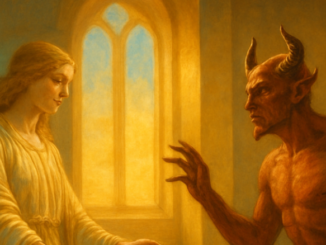
In an age where ethical debates are increasingly reduced to rigid positions and online discussions devolve into moral tribunals, a pressing question emerges: is there still room for nuanced thinking about right and wrong? Freemasonry offers a surprising answer — not by prescribing ready-made rules, but by practicing an ancient philosophical method in which doubt is not a weakness, but the first step toward wisdom. The Return of the Great Ethical Conversation The societal debate about ethics has reached a new intensity. From artificial intelligence to climate justice, from genetic modification to the boundaries of free speech — moral convictions clash at every turn. What stands out is not so much the diversity of opinions, but the absolute certainty with which they are proclaimed. Nuance has become a rare commodity. Yet there is a place where the ethical conversation unfolds differently. Within the privacy of the Masonic lodge, the goal is never to have the final word, but to reach the next insight. Here, philosophy is not practiced as an academic discipline but as a living art. The question is not who is right, but what does justice to human dignity. Philosophy as a Tool, Not a Doctrine Freemasonry has […]

Masonic square and compasses symbolizing self-knowledge and leadership
Personal Development & Leadership

Leadership Begins with Self-Knowledge: Lessons from Freemasonry

In an age that cries out for authentic leadership, the centuries-old tradition of Freemasonry offers surprisingly relevant insights. The Masonic lodge is not merely a place of brotherhood — it is, above all, a laboratory for personal development and self-knowledge. And as it turns out, that inner work may be exactly what modern leadership is missing. The Call for a New Kind of Leadership Everywhere you look — in politics, business, and civil society — there is a growing hunger for leaders who can provide direction in uncertain times. The conversations dominating public discourse make one thing clear: people are dissatisfied with the leadership they see. They long for something different, something genuine. But what truly makes someone a real leader? Is it charisma? Decisiveness? Or is there something deeper behind effective leadership? Freemasonry, a tradition that has guided individuals on their personal journeys for centuries, offers a remarkably timely perspective on this question. Know Thyself: The Foundation of Leadership Above the entrance to the ancient Temple of Delphi stood the words Gnothi seauton — Know thyself. This principle lies at the very heart of Freemasonry. Before a Freemason can lead or guide others, he must first undertake a journey […]

Vrijmetselarij - Binnenkijken bij de Vrijmetselarij Hilversum
Personal Development & Leadership

Inside a Masonic Lodge: Open Evening in Hilversum 2026

What really goes on behind the closed doors of a Masonic lodge? What motivates the men who belong to this centuries-old fraternity? On Monday, March 23, 2026, you can find out for yourself during a special open evening hosted by Loge Opgang in Hilversum, the Netherlands. A Rare Glimpse Inside a Historic Lodge Building During this open evening, the members of Loge Opgang welcome visitors into their monumental lodge building at Oude Enghweg 19 in Hilversum. Guests will receive a guided tour of the premises, an introduction to the history and symbolism of Freemasonry, and personal stories from lodge members. What has Freemasonry brought them? Why did they choose to join? And what does membership actually involve? Ask Questions and Meet the Members The evening offers plenty of opportunity to ask questions. The Freemasons are happy to engage in open conversation about their motivations, ideals, and practices. As one of the members put it: “Everyone with an open and curious mindset is welcome. We hope to give visitors a clear picture of who we are and what we do.” Who Is This Evening For? This event is primarily aimed at men from the Hilversum and ‘t Gooi region who are […]

Vrijmetselarij - Klaar voor de vrijmetselarij? Zet vandaag nog jouw eerste stap
Personal Development & Leadership

Ready for Freemasonry? Take Your First Step Today

You’ve explored the symbolism, studied the history, and read about how Freemasonry shapes personal growth and community. But this may be the most important moment of all — the moment where everything comes together. The moment you ask yourself one simple but powerful question: Am I ready for Freemasonry? This question isn’t about knowledge. It’s not about how much you know — it’s about how deep you’re willing to go. It’s about openness. About the willingness to move beyond reading and thinking, and to actually take that first step. Freemasonry Is Not a Destination — It’s a Path Becoming a Freemason is not an endpoint. It’s not a status you achieve or a club you walk into to look around. It’s a conscious choice for growth, reflection, and connection. Above all, it’s a path you don’t walk alone. You’ll be surrounded by brothers who — just like you — strive for depth and ethical living in their everyday lives. In the lodge, you won’t find judgment, competition, or pretense. What you will find is stillness, attention, symbolism, and meaning. And you’ll find yourself — again and again. What to Expect When You Take the Step If you decide you’re ready, […]

Vrijmetselarij - Vrijmetselarij en Zelfontwikkeling – Groeien naar de Beste Versie van Jezelf
Personal Development & Leadership

Freemasonry and Self-Development: Becoming Your Best Self

Freemasonry carries an air of mystery for many people. Some imagine secret rituals behind closed doors; others picture an exclusive, impenetrable society. But anyone who looks beneath the surface discovers something quite different: a practical, time-tested path for personal growth. Freemasonry and self-development are, in fact, inseparable — not as theory or dogma, but as a living practice of self-knowledge, reflection, and purposeful action. So what makes Freemasonry such a unique wellspring of self-development? In this in-depth guide, you’ll discover how this centuries-old tradition helps you bring out the best in yourself — and why that may matter more today than ever before. Self-Development: The Backbone of Freemasonry Self-development isn’t a luxury — it’s a necessity. In a world saturated with distraction, superficiality, and relentless pace, Freemasonry offers a powerful alternative. It’s a space where you’re encouraged to pause, reflect on your life, examine your behavior honestly, and take deliberate steps toward inner growth. In Freemasonry, everything revolves around who you truly are — not what you own or what title you hold. Whether you’re a CEO or a carpenter, an academic or an artist, only one question really matters: are you willing to work on yourself? Working the Rough […]

Vrijmetselarij - Why Do People Become Freemasons?
Personal Development & Leadership

Why Do People Become Freemasons?

Why do people become Freemasons? There is no single answer to this question, and it is certainly not a decision anyone takes lightly. Freemasonry is not a hobby or a networking club. It is a deliberate choice — a path that often emerges from an inner longing for something more. More depth, more authenticity, more meaning. Personal Growth Begins With a Turning Point For many people, Freemasonry enters their lives during a period of deep reflection. On the outside, everything may look just fine — a busy life, a successful career, a full calendar. But inside, something gnaws at them. Questions arise that refuse to go away: Is this really it? What am I truly contributing? Freemasonry is not an answer to a problem. It is an invitation to inner growth. It is not about status or achievement, but about awareness, self-knowledge, and moral development. Freemasons choose to keep learning — not by consuming, but by reflecting. Brotherhood Without Masks In a world full of superficial connections, people crave genuine human encounter. Within the walls of a lodge, it does not matter who you are on the outside. Your profession, your status, your background — none of it matters. What […]

Vrijmetselarij - What Is Freemasonry? Core Principles, Symbolism and Purpose
Personal Development & Leadership

What Is Freemasonry? Core Principles, Symbolism and Purpose

Freemasonry is one of the oldest fraternal organizations in the world, yet it remains widely misunderstood. It is not a religion, not a political movement, and certainly not a secret society — but rather a society with secrets. At its heart, Freemasonry brings people together around a shared purpose: personal and moral development. Through symbols, rituals, and allegory, members are given the tools to better understand themselves and find deeper meaning in life. Why Do People Join Freemasonry? In a world saturated with distractions, superficiality, and relentless pressure to perform, more and more people are searching for something deeper — genuine connection and purposeful reflection. Freemasonry offers a space where you can pause, reflect, and learn alongside others who walk the same path. It is not about receiving ready-made answers. Instead, it is about learning to ask better questions — about yourself, your values, and your place in the world. The Three Pillars of Freemasonry Freemasonry rests on three fundamental pillars that guide every member’s journey. These principles shape the experience within the lodge and extend far beyond its walls into everyday life. Brotherly Love Within a lodge, members form a close-knit community built on mutual support, encouragement, and inspiration. […]

Vrijmetselarij - New Year's Day: The Masonic Symbolism of a Fresh Beginning
Symbolism & Rituals

New Year’s Day: The Masonic Symbolism of a Fresh Beginning

New Year’s Day represents a clean slate — a chance to start over with renewed purpose and hope. It is a day steeped in reflection, aspiration, and deep symbolism. For Freemasons, this annual turning point carries special significance, offering a meaningful opportunity to reflect on the ongoing construction of one’s personal temple: the lifelong pursuit of self-improvement and harmony with the world around us. The Symbolism of Renewal Renewal lies at the very heart of Freemasonry. New Year’s Day symbolizes the great cycle of life — the ever-present opportunity to begin again with fresh eyes and a clear mind. The turning of the calendar invites deep introspection: How have we built upon ourselves over the past year? Which rough edges have we smoothed, and which building blocks do we wish to add in the year ahead? Just as the sun rises after every night, New Year’s Day reminds us that light follows even the darkest challenges. It is a day of hope and a powerful reminder of the eternal cycle of growth and improvement — a cycle that every Mason recognizes in the work of the lodge and in the journey of the soul. Traditions and the Bond of Brotherhood […]

New Year fireworks symbolizing Masonic reflection and renewal at midnight
Spiritual Traditions

Old & New Year: A Time for Reflection and Renewal

The turning of the year is one of those rare moments that invites us to pause — to look back at the road we’ve traveled and to gaze ahead at the path yet to unfold. New Year’s Eve is more than just the final page of a calendar. It is a deeply personal threshold, a symbolic crossing from what was into what could be. It is a time for honest reflection, for releasing what no longer serves us, and for setting intentions that align with who we truly wish to become. The Deeper Meaning Behind Our Traditions Fireworks lighting up the midnight sky, champagne glasses raised in celebration, the joyful company of loved ones — these familiar rituals give the night its festive character. But beneath the surface of these traditions lies a deeper message. Fireworks remind us that even in the darkest of times, light and energy can break through. Gathering with those we love symbolizes our deep need for connection and our shared wish for happiness. And the countdown itself serves as a powerful reminder that every single second holds within it the potential for a new beginning. Reflection: Shining a Light on the Past Year The end […]

Historic library interior symbolizing Freemasonry's contribution to public education
Freemasonry & Society

Libraries and Cultural Centers Built by Freemasonry

Freemasonry has always maintained a profound connection with knowledge, education, and culture. In the Netherlands, this commitment led to the establishment of libraries and cultural centers that offered far more than books — they provided spaces for dialogue, intellectual growth, and community building. Often supported by Masonic lodges, these institutions played a crucial role in making literature, science, and the arts accessible to a broad public. The Importance of Libraries in the 19th Century In the 19th century, libraries were rare and often exclusively accessible to the wealthy and privileged. Freemasons viewed this inequality as a significant barrier to social progress and decided to take action. They founded libraries that were open to everyone, regardless of background or social standing. These libraries were far more than simple repositories for books. They functioned as centers of enlightenment where people could meet, share knowledge, and explore new ideas together. In an era when access to information was a luxury, these Masonic-supported institutions represented a radical commitment to intellectual freedom. The Role of Freemasonry in Promoting Knowledge and Culture Freemasonry played a key role in the founding of libraries and cultural centers, guided by several core principles. First and foremost was the belief […]

Historic building associated with Koninklijke Visio and Freemasonry in the Netherlands
Freemasonry & Society

Visio and Freemasonry – A Remarkable Historical Connection

Freemasonry, a fraternity built on the ideals of equality, brotherhood, and enlightenment, has supported countless social initiatives throughout the centuries. One of the most remarkable examples in the Netherlands is the involvement of Freemasons in the founding and ongoing support of Koninklijke Visio — an organization dedicated to helping people with visual impairments. Its success owes much to the philanthropic efforts of members of the Craft. The Origins of Koninklijke Visio Visio, officially known as Koninklijke Visio (Royal Visio), started as a modest institution for the education of the blind and gradually grew into a nationwide organization supporting people with visual disabilities. Its roots stretch back to the nineteenth century, an era in which philanthropy was essential for addressing societal needs that governments often overlooked. Freemasons, with their emphasis on individual development and the betterment of society, played a significant role in establishing institutions like these. Members of the fraternity saw it as their duty to provide blind and visually impaired individuals with access to education and the skills they needed to participate meaningfully in society. This mission aligned perfectly with core Masonic values: personal growth and collective responsibility. The Philosophy Behind the Support Freemasons have long been involved in […]

Symbols of Freemasonry and New Age spirituality representing universal connection
Religion

New Spirituality and Freemasonry: A Path to Universal Connection

Individual spirituality is gaining momentum across the modern world. New spiritual movements — often grouped under the umbrella of New Age — offer flexible and deeply personal approaches to finding meaning and purpose. But how do these contemporary spiritual currents relate to Freemasonry, a tradition that similarly emphasizes freedom, growth, and self-discovery? New Spiritual Movements: The Quest for Personal Meaning New spiritual movements are inherently eclectic. They blend elements from Eastern philosophies, Western psychology, and traditional religions into personalized frameworks for understanding the self and the world. Meditation, yoga, crystal healing, astrology, and energy work are just a few of the practices that have gained widespread popularity within these movements. A defining characteristic of these spiritual currents is their emphasis on personal development. Rather than following prescribed dogmas, practitioners forge their own path toward enlightenment and self-knowledge. This freedom of choice resonates with a growing number of seekers who feel confined by more rigid religious structures. Freemasonry: A Traditional Yet Flexible Approach Freemasonry shares with new spiritual movements a deep commitment to personal growth and introspection. While the Craft works with centuries-old rituals and rich symbolism, it also allows ample room for individual interpretation. Much like New Age practices, the […]

Symbolic representation of Freemasonry evolving in the 21st century
History

The History of Freemasonry in the 21st Century

The 21st century ushered in an era of globalization, digital transformation, and rapid social change. For Freemasonry — an institution with roots stretching back centuries — this has presented a unique challenge: how to remain relevant in a world that looks vastly different from the one in which it was founded. In this post, we explore how the Craft is blending its time-honored traditions and values with modern technology, greater diversity, and a renewed sense of purpose. Digital Transformation One of the most significant shifts of the 21st century has been the rise of digital communication, and Freemasonry has not been immune to its influence. Lodges around the world now use websites, social media platforms, and email newsletters to share information, promote events, and connect members across geographic boundaries. What once required physical correspondence and word of mouth can now reach thousands with the click of a button. The COVID-19 pandemic accelerated this digital adoption dramatically. When lodges were forced to close their doors, platforms like Zoom and Microsoft Teams became lifelines for fraternal connection. Virtual meetings, educational lectures, and even degree discussions moved online, allowing brothers to stay engaged during an unprecedented period of isolation. Many of these digital […]

Thunderstorm over a harbor at night with lightning illuminating moored boats
Personal Development & Leadership

Storm and Character: What Thunder Reveals About Who You Are

The evening sky above the harbor turns purple, and the first flash of lightning illuminates the masts of moored boats. A man walks calmly to his vessel and unplugs the shore power cable. Behind him, other boat owners laugh: “That storm is nothing to worry about!” But when the morning sun breaks through the clouds, every single one of them has quietly done the same thing. Sometimes a single action says more about character than a thousand words. The Silence Before the Storm There is a peculiar moment just before a thunderstorm breaks. The wind drops, birds fall silent, and the air itself seems to hold its breath. In that instant of tension, something essential about human behavior reveals itself. Some people ignore the signs and carry on as if nothing is happening. Others take quiet precautions — not out of fear, but out of prudence. It is precisely this distinction that Freemasonry has explored for centuries: the difference between outward display and inner authenticity. The man who unplugs his shore power is not acting out of panic. He is following an inner compass that tells him: take responsibility for what you can influence, and accept what you cannot control. […]

George Washington in Masonic regalia during the Capitol cornerstone ceremony
Personal Development & Leadership

George Washington: Freemason and Father of America

George Washington, the first President of the United States, is widely recognized as one of the most influential figures in American history. What is less commonly known — yet equally significant — is his deep involvement in Freemasonry. Washington’s membership in the Craft was not merely a social affiliation; it reflected the personal values and ideals that guided him as he helped build a new nation from the ground up. Initiation into Freemasonry On November 4, 1752, at the age of just twenty, George Washington was initiated as a Freemason at Fredericksburg Lodge No. 4 in Virginia. This moment marked the beginning of a lifelong association with the fraternity — one devoted to personal development, moral integrity, and service to the community. Washington would go on to advance through the degrees, eventually becoming a Master Mason and, later in life, the Worshipful Master of Alexandria Lodge No. 22. Freemasonry in His Life and Leadership As a Freemason, Washington embraced the core values of the Brotherhood: liberty, equality, and fraternity. These principles profoundly influenced his leadership during the American Revolutionary War and throughout his presidency. He viewed Freemasonry as a space where men from diverse backgrounds could come together to work […]

Historical image representing Freemasonry during the Second World War
History

Freemasonry During the Second World War

The Second World War marked one of the darkest chapters in the long history of Freemasonry. Across Nazi Germany and the occupied territories, Freemasons were systematically targeted, persecuted, and silenced. Yet even in the face of totalitarian oppression, the Craft’s core ideals of liberty, equality, and brotherhood endured — sometimes at extraordinary personal cost. Why the Nazis Targeted Freemasonry Nazi ideology was built on antisemitism, extreme nationalism, and elaborate conspiracy theories. Freemasonry, with its emphasis on universal brotherhood and its tradition of private meetings, became an easy target. The regime falsely portrayed the fraternity as a shadowy network conspiring against the state, lumping it together with Jewish communities and other perceived enemies. In reality, Freemasonry stood for exactly the kind of values — tolerance, free thought, and human dignity — that totalitarian regimes cannot tolerate. The Ban on Freemasonry in Germany and Occupied Territories When Adolf Hitler rose to power in 1933, Freemasonry was swiftly banned throughout Germany. Lodges were forced to close their doors, their assets seized, and their records confiscated. Well-known Masonic symbols such as the Square and Compasses were deliberately distorted in propaganda materials to fuel conspiracy theories and public distrust. As German forces swept across Europe, […]

Masonic square and compasses symbolizing Freemasonry and brotherhood
Philosophy & Ethics

What Is Freemasonry? A Journey of Self-Discovery and Brotherhood

This article on Freemasonry has been recently updated to give you the clearest and most current picture of what this ancient brotherhood is all about. Whether you’re encountering Freemasonry for the first time or have been curious for a while, read on to discover what it truly means to be a Freemason — and why a growing number of people are choosing this path of self-discovery. Freemasonry has a way of sparking curiosity. Perhaps you’ve heard references to rituals, symbols, or lodges. Maybe you’ve been drawn in by the rich history and the air of mystique that surrounds it. But what is Freemasonry really, and why do people choose to join this centuries-old brotherhood? What Is Freemasonry? At its core, Freemasonry is a philosophy of life that places personal development and ethical living at the center of everything it does. It is not a religion, but it welcomes people of all faiths — provided they acknowledge the existence of a higher power, however they choose to define it. Freemasons work on becoming better versions of themselves through symbolism, ritual, and the bonds of brotherhood. The goal? To become a better person. Not better than someone else, but better than the […]

Worshipful Master conducting a home visit with a Freemasonry candidate
Joining & The Path Within

The Master’s Home Visit: A Key Step in Joining Freemasonry

When a candidate expresses interest in Freemasonry and considers joining a lodge, one of the most meaningful moments in the admission process is the home visit by the Worshipful Master. Far more than a formality, this personal meeting is a cornerstone of mutual understanding and trust — and it sets the tone for the entire journey that lies ahead. The Significance of the Home Visit The home visit is a tradition that reflects the deeply personal nature of Freemasonry. This is not an anonymous organization — it is built on brotherhood and trust. By meeting the candidate in the comfort of their own home, the Worshipful Master gets to know the person behind the application in a relaxed and familiar setting. For the candidate, the visit offers a valuable opportunity to ask questions, gain deeper insight into the workings of the lodge, and feel at ease with the process. It is a moment of open dialogue where expectations on both sides are discussed honestly and without pressure. What Is Discussed During the Visit? The conversation during a home visit typically centers on personal motivations and values. The Worshipful Master may ask questions such as: What drew you to consider Freemasonry? […]

Freemasons meeting with a candidate during a Committee of Inquiry session
Joining & The Path Within

The Committee of Inquiry: What to Expect as a Candidate

If you’ve expressed interest in joining Freemasonry, one of the most important steps you’ll encounter is the meeting with the Committee of Inquiry. This recently updated article gives aspiring Freemasons a clear and current overview of what this mutual conversation involves and how you can prepare for it — whether you’ve just reached out or are already in contact with a lodge. What Is the Committee of Inquiry? The Committee of Inquiry is a small group of experienced Freemasons appointed by the lodge where you’ve submitted your interest. Their role is twofold: to get a thorough understanding of your background, intentions, and expectations, and to give you genuine insight into what membership actually involves. This process is carried out thoughtfully and with care. Freemasonry is not a casual club you join on a whim — it’s a brotherhood built on specific values and traditions. The committee needs to feel confident that you understand these principles and are willing to commit to them. The Conversation: A Two-Way Exchange One of the most important things to understand is that the meeting with the Committee of Inquiry is not an exam. It’s an open, respectful dialogue — a genuine two-way exchange. As a […]