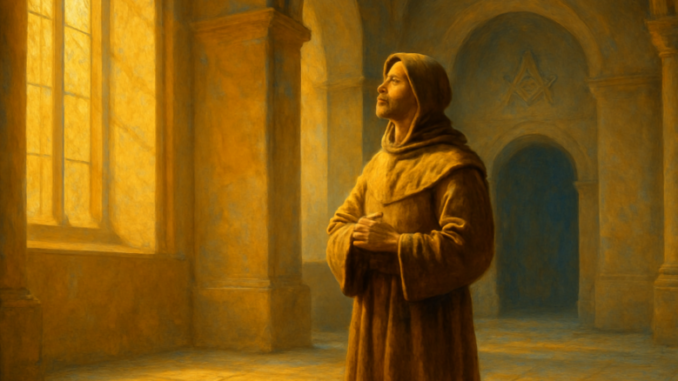
You may have read the book or watched the movie: Dan Brown’s The Da Vinci Code spins a breathtaking tale about a secret organization that has supposedly guarded an explosive secret for centuries. The Priory of Sion sits at the very heart of the story. But what exactly does the book claim? And more importantly, how can you, as a critical reader, evaluate such claims for yourself? In this article, we unravel the central assertions of this bestselling novel and give you practical tools to separate fact from fiction.
What Does The Da Vinci Code Claim About the Priory of Sion?
In The Da Vinci Code, Dan Brown portrays the Priory of Sion as an ancient secret brotherhood dating back to the era of the Crusades. According to the story, this organization was founded to protect an explosive secret: the alleged bloodline of Jesus Christ and Mary Magdalene. The book suggests that famous historical figures such as Leonardo da Vinci, Isaac Newton, and Sandro Botticelli served as Grand Masters of the Priory.
Brown presents a fascinating theory within his novel: through secret documents and symbols, the Priory supposedly passed this secret down through the centuries. Artworks, architecture, and hidden codes all allegedly contain references to this concealed truth. The book even opens with a page declaring that the Priory of Sion is a real organization — a detail that led many readers to believe the story was grounded in historical fact.
The Enduring Appeal of Secret Societies
Why does a story like this captivate us so deeply? The idea that powerful societies have been operating behind the scenes of history, quietly shaping the course of humanity, is endlessly fascinating. We are drawn to hidden patterns and to meaning that runs deeper than what appears on the surface. This tendency is deeply human and entirely understandable. Traditions like Freemasonry recognize this impulse better than most: ritual, symbolism, and fraternal bonds provide a framework for exploring deeper truths about ourselves and the world.
A compelling story about secret knowledge speaks to our desire for meaning beyond the visible — but that alone does not make it historically true.
The crucial difference between a novel and reality lies in verifiability. A work of fiction is free to speculate and suggest connections that are dramatically powerful. But as a reader who wants to form an independent judgment, you need concrete steps to verify the claims being made.
Practical Steps to Evaluate Bold Claims
How do you engage with a book like The Da Vinci Code without being swept away by unfounded assertions? Here are concrete actions you can take right away:
Check the sources. Look for academic publications about the Priory of Sion. Historians have conducted extensive research into the origins of this organization, and their findings are readily accessible.
Distinguish fiction from fact. Pay attention to the fine print. Just because a book states that something is true does not make it so. Always look for independent verification from credible sources.
Examine the origin story. The Priory of Sion was founded in 1956 by a Frenchman named Pierre Plantard. This is documented in French government archives — not medieval manuscripts.
Read critical analyses. In the wake of The Da Vinci Code’s enormous success, numerous books and articles were published that carefully dismantled the novel’s historical claims. Seeking out these analyses gives you a far more complete picture.
The True Origin of the Priory of Sion
Historical research has conclusively shown that the Priory of Sion does not have medieval origins. The organization was created in the mid-twentieth century, and the documents that were supposed to prove its ancient existence — the so-called Dossiers Secrets — turned out to be forgeries. These fabricated documents were deposited in the Bibliothèque nationale de France during the 1960s and were later exposed as fraudulent.
This does not mean that Dan Brown’s book is without value. As a thriller, The Da Vinci Code is a masterclass in weaving together art history, religion, and suspense. But as a historical source, it falls short. Learning to distinguish between a gripping story and reliable history is a skill that anyone can develop — and one that becomes more valuable with practice.
What Can We Learn From All This?
The lesson The Da Vinci Code inadvertently teaches us is the importance of critical thinking. In an age where information is abundantly available, the ability to evaluate sources becomes ever more precious. This is precisely what traditions like Freemasonry have championed for centuries: cultivating a clear mind that does not simply accept everything at face value but investigates and judges for itself.
Symbols and stories carry genuine power. They can inspire us, provoke thought, and create bonds between people. But that power works best when we resist confusing symbols with literal truths. Leonardo da Vinci was a brilliant artist and scientist whose work is filled with fascinating details. Whether he was the Grand Master of a secret organization is an entirely different question — and one you can now answer for yourself by consulting the right sources.
Dan Brown’s The Da Vinci Code has prompted millions of readers to think about secret societies, hidden truths, and the power of symbols. However, the Priory of Sion as the book presents it is a literary construction built upon twentieth-century forgeries. Knowing this need not diminish your enjoyment of the novel. On the contrary — understanding the real history allows you to appreciate even more the ingenuity with which Brown weaves fact and fiction together. The next time you encounter a bold and captivating claim, put the practical steps from this article to use. Search, verify, and judge for yourself. That, in the end, is the true art of reading.
Copyright text & image: devrijmetselaar.nl
Texts are based on the ideas and content of the author of devrijmetselaar.nl, reviewed, corrected, and supplemented with the assistance of OpenAI. Images are created based on the ideas of the author of devrijmetselaar.nl using OpenAI/DALL-E.
Frequently Asked Questions
Is the Priory of Sion a real historical organization?
While The Da Vinci Code presents the Priory of Sion as an ancient secret brotherhood dating back to the Crusades, the historical evidence for its existence is highly disputed among scholars. Dan Brown's novel opens with a statement claiming it is real, which led many readers to believe the story was grounded in historical fact. However, as a critical reader, it is important to distinguish between fiction and verified historical documentation. The book itself is a work of creative fiction, and many of its central claims about the Priory lack credible historical support.
Did famous figures like Leonardo da Vinci really serve as Grand Masters of the Priory of Sion?
The Da Vinci Code claims that Leonardo da Vinci, Isaac Newton, and Sandro Botticelli served as Grand Masters of the Priory of Sion. However, this is presented as part of Brown's fictional narrative. There is no verified historical documentation supporting that these renowned figures were members or leaders of such an organization. When evaluating claims like these, it is crucial to seek concrete historical evidence and primary sources rather than relying on assertions made within a novel.
How can I determine what is fact and what is fiction in The Da Vinci Code?
The key to evaluating bold claims is verifiability. A novel is free to speculate and suggest dramatic connections, but as a critical reader seeking to form an independent judgment, you should look for concrete historical evidence, primary sources, and scholarly consensus. Ask yourself: What documentation exists? Are these claims supported by historians and academic institutions? The article emphasizes that while secret societies and hidden symbolism captivate us—and traditions like Freemasonry do explore ritual and deeper meaning—compelling storytelling alone does not make something historically true.



Be the first to comment