Weather forecasts are predicting a heatwave, with temperatures pushing toward 90°F. For most people, that simply means discomfort. But for the reflective mind, it presents an opportunity. How do we respond to sudden change? What can artists and the Masonic tradition teach us about harnessing intense conditions? In this article, we explore how heat — both literal and figurative — has served for centuries as a catalyst for creative breakthroughs and personal growth.
The Forge as a Metaphor for Transformation
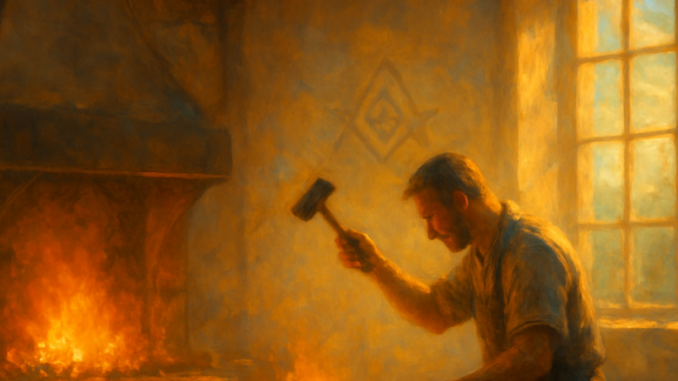
In Masonic tradition, the figure of the smith holds deep symbolic significance — and not by accident. The forge is the place where raw material is transformed through intense heat into something useful and beautiful. This image forms one of the core metaphors of Lodge work. The rough ashlar that must be shaped into a perfect cube likewise demands effort, pressure, and yes, discomfort. Heat is not the enemy here — it is an indispensable ally.
When temperatures rise outside, we are invited to experience this metaphor firsthand. Just as metal only becomes malleable at high temperatures, our ingrained patterns and rigid beliefs often only become visible when circumstances push us out of our comfort zones. The real skill lies in recognizing those moments as opportunities rather than obstacles.
What Artists Knew About Heat and Inspiration
Throughout art history, we find countless examples of artists who embraced extreme conditions as a source of inspiration. Vincent van Gogh painted his most iconic masterpieces in the scorching heat of Provence. Johann Wolfgang von Goethe described in his Italian Journey how the warmth of the south awakened his creative spirit. Wolfgang Amadeus Mozart composed some of his finest works during sweltering Viennese summers, when the heat forced him to work in the cool early morning hours.
These artists understood something essential: creativity does not always flourish under ideal conditions. Sometimes it is precisely the friction, the discomfort, the intensity that drives us toward new solutions. Freemasonry calls this working on the rough ashlar — labor that demands sweat and perseverance.
True art does not emerge despite difficult circumstances. More often, it emerges because of the transformative power that pressure and heat exert on the human spirit.
Practical Lessons for the Hot Days Ahead
How can we apply these insights in a concrete way when temperatures soar? The Masonic tradition offers several practical principles that are surprisingly relevant:
Begin the day with conscious reflection. Use the cooler morning hours for contemplation or creative work, just as many great artists have done throughout the centuries. The early hours of the day are a gift — use them wisely.
Embrace the slowdown. Heat naturally forces us into a slower pace. Rather than seeing this as lost productivity, treat it as an invitation to mindfulness. There is wisdom in slowing down.
Seek the shade — literally and figuratively. The Lodge is traditionally a space set apart from the outside world. Create your own sheltered space for inner work. Step away from the noise and turn inward.
Work with the elements, not against them. Just as the smith harnesses the heat of the forge, you can use the warmth to break free from rigid schedules and make room for spontaneity and creative flow.
The Royal Art of Adaptation
Freemasonry has long been called the Royal Art. This refers not only to the craft of building, but to the art of shaping one’s own character. A crucial aspect of that inner craft is the capacity for adaptation — not as passive surrender to every changing wind, but as a deliberate choice to maintain your equilibrium amid shifting circumstances.
Leonardo da Vinci, that universal genius who was both artist and scientist, noted in his journals how he adapted his working rhythm to the seasons and temperatures. He understood that a human being is not a machine capable of performing identically under all conditions. True mastery lies in knowing your own limits and possibilities.
Heatwaves as Mirrors for Change
A heatwave is, by definition, temporary. It passes. Temperatures normalize. And yet it leaves something behind — a memory of how we responded, what we learned, how we adapted. In Masonic tradition, such transitional moments are deliberately marked and honored. They become teaching moments.
In the coming days, as the thermometer climbs, you have a choice. You can complain about the discomfort, or you can use the moment as an exercise in the Royal Art. Observe your own reactions. Notice where you feel resistance. Ask yourself what the heat might teach you about your capacity for adaptation and transformation.
From Discomfort to Insight
The greatest works of art and the deepest moments of personal growth rarely emerge from perfect comfort. They ask something of us — effort, surrender, and the willingness to walk through fire, sometimes quite literally through the heat. The smith who sets down his hammer because it’s too hot near the forge will never master his craft.
This doesn’t mean we should be reckless. Wisdom lies in finding the balance between challenge and self-care. But the next time you wipe the sweat from your brow, consider this: that moment of discomfort is also an invitation. An invitation to become, like the rough stone under the mason’s chisel, a little smoother and a little wiser.
The approaching heatwave is more than a weather event. It is an invitation to put the lessons of artists and the Masonic tradition into practice. Heat transforms — whether it’s metal in the forge or our own entrenched habits. Use the days ahead to consciously practice embracing change, to find creativity in discomfort, and to discover that real growth seldom takes place in the shade of perfect circumstances. The art of living lies in working with what is, not in waiting for what should be.
Copyright text & image: devrijmetselaar.nl
Texts are based on the ideas and content of the author of devrijmetselaar.nl, reviewed, corrected, and supplemented with the assistance of OpenAI. Images are created based on the ideas of the author of devrijmetselaar.nl using OpenAI/DALL-E.



Be the first to comment