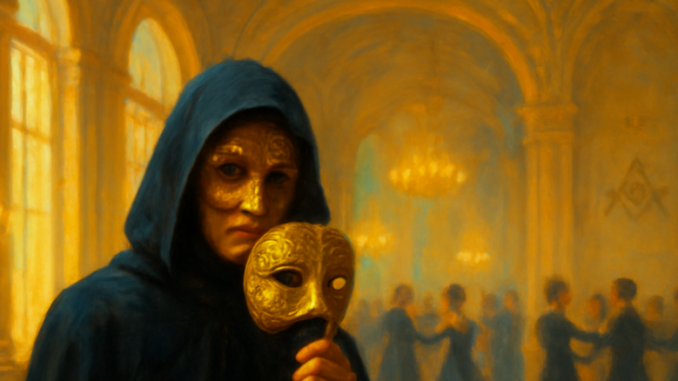
Eyes Wide Shut (1999) stands as Stanley Kubrick’s final masterpiece — a haunting exploration of human desire, secret rituals, and the fragile complexity of intimate relationships. Starring Tom Cruise and Nicole Kidman, this psychological drama pulls viewers into hidden worlds and forces them to confront uncomfortable truths about the human psyche.
Story and Themes
Dr. William Harford (Tom Cruise) appears to live a perfect life. He resides in New York City with his wife Alice (Nicole Kidman) and their young daughter. Everything seems stable — until Alice confesses that she once fantasized about having an affair with a stranger. That single admission shatters William’s sense of security and sets the entire story in motion.
Driven by jealousy and confusion, William embarks on a nocturnal odyssey through the streets of New York. He stumbles into a dangerous world of seduction, secrecy, and dark rituals. Along the way, he discovers unknown aspects of himself and of the society that surrounds him — a society with far more layers than he ever imagined.
At its core, the film explores themes of jealousy, vulnerability, and identity. Kubrick masterfully weaves these themes together with mysticism and rich symbolism, creating a multilayered narrative that rewards repeated viewings and deeper analysis.
Freemasonry and Symbolism in Eyes Wide Shut
While the film never directly mentions Freemasonry by name, it contains unmistakable references that have fascinated students of the Craft and secret societies alike. The most iconic sequence is the secret masked ball — a ritualistic gathering held in a grand mansion, where participants wear elaborate masks and engage in ceremonial acts that are strongly reminiscent of initiation rites associated with secret societies.
Kubrick uses this symbolism deliberately to illustrate the duality of human existence. The masks serve as powerful symbols for the façades people wear in everyday life — the public personas that conceal private truths. The rituals point to the hidden desires, fears, and realities that lie beneath those carefully constructed surfaces.
For those familiar with Masonic symbolism, the film offers additional layers of meaning. The themes of secrecy, hierarchy, and the tension between the profane and the sacred echo concepts that are central to Freemasonry. Whether Kubrick intended a direct commentary on the Craft or simply drew from its rich symbolic tradition remains one of the film’s enduring mysteries.
Why You Should Watch Eyes Wide Shut
Eyes Wide Shut is not a conventional film. It is a journey through the deepest corridors of the human psyche. It challenges viewers to think critically about their own relationships, the secrets they keep, and the masks they wear — both for the outside world and for themselves.
For anyone with an interest in mystery, secret societies, and the symbolic traditions that surround them, this film is essential viewing. The ritualistic sequences and their layered symbolism add an extraordinary dimension to what is already a compelling psychological drama.
Beyond its thematic richness, the film is a visual masterpiece. Kubrick’s meticulous attention to lighting, set design, and color creates an atmosphere of perpetual unease and mystery. Tom Cruise and Nicole Kidman deliver powerful performances, bringing their characters’ inner conflicts to life with raw authenticity — made all the more compelling by the fact that they were a real-life couple at the time of filming.
The Legacy of Kubrick’s Final Film
Stanley Kubrick passed away just days after delivering his final cut of Eyes Wide Shut, adding an almost mythical quality to the film’s legacy. Over the decades since its release, it has become a cultural touchstone for discussions about hidden power structures, the nature of secrecy, and the symbolic language of ritual. Whether approached as a psychological thriller, a meditation on marriage, or an exploration of secret societies, the film continues to provoke and fascinate new generations of viewers.
Eyes Wide Shut remains a film that lingers long after the credits roll. It reveals how complex and layered human existence truly is — how much lies hidden behind the masks we all wear. Whether you watch it for its stunning symbolism, its Masonic undertones, or its gripping psychological narrative, Kubrick’s final work offers a truly unique and unforgettable cinematic experience.
Copyright text & image: devrijmetselaar.nl
Texts are based on the ideas and content of the author of devrijmetselaar.nl, reviewed, corrected, and supplemented with the assistance of OpenAI. Images are created based on the ideas of the author of devrijmetselaar.nl using OpenAI/DALL-E.
Frequently Asked Questions
Does Eyes Wide Shut directly reference Freemasonry?
While the film never explicitly names Freemasonry, it contains unmistakable symbolic references that have fascinated scholars of the Craft. The secret masked ball sequence, with its elaborate masks and ceremonial rituals, echoes the initiation rites and symbolic traditions central to Masonic practice. Whether Kubrick intended a direct commentary on Freemasonry or drew from its rich symbolic heritage remains one of the film's enduring mysteries.
What Masonic symbols appear in Eyes Wide Shut?
The film's most prominent Masonic-adjacent symbolism includes the masked ball ritual itself, which mirrors the hierarchical and ceremonial nature of Masonic initiations. The masks symbolize the duality of human existence and the façades people wear—concepts deeply embedded in Masonic philosophy about the journey from darkness to light. Kubrick also incorporates themes of secrecy, sacred spaces, and the tension between the profane and sacred worlds that are fundamental to Masonic teachings.
Why would Freemasons be interested in watching Eyes Wide Shut?
Freemasons and students of the Craft find the film valuable for its sophisticated exploration of secret societies, ritualistic symbolism, and the hidden layers of human consciousness that the Craft itself seeks to illuminate. The film's examination of masks, hierarchies, and the journey toward self-knowledge resonates with core Masonic principles of personal transformation and enlightenment. It offers a thought-provoking artistic interpretation of how secret traditions function within society.
What do the masks in Eyes Wide Shut symbolize in relation to Masonic philosophy?
In Masonic tradition, masks and veils represent the concealment of sacred knowledge and the journey toward truth—themes Kubrick explores masterfully in the film. The masks worn at the secret ball symbolize both the personas people hide behind in daily life and the initiatory process of removing illusions to discover one's true self. This aligns with Freemasonry's core mission of guiding individuals from ignorance toward enlightenment and self-understanding.
Is Eyes Wide Shut a criticism of secret societies like Freemasonry?
The film is not a criticism of Freemasonry specifically, but rather an exploration of human psychology, desire, and the ways societies operate at multiple levels. Kubrick uses Masonic and secret society symbolism to examine universal themes about identity, secrecy, and the hidden aspects of human nature that exist in all social structures. The film's nuanced approach respects the symbolic tradition while using it as a lens to explore deeper truths about human experience.


Be the first to comment