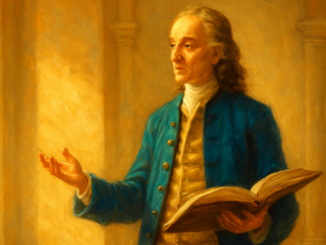
Symbolic representation of Voltaire's philosophy of equality and Freemasonry
Symbolism & Rituals

Voltaire on Equality: What Truly Connects Us as Human Beings?

What did Voltaire actually mean when he wrote about equality? And why does his vision, more than two centuries later, still resonate so deeply with anyone who reflects on human dignity and what truly connects us? In his Philosophical Dictionary, the great French Enlightenment philosopher devoted a sharp and sometimes provocative essay to this very concept. His ideas carry a remarkable relevance for those who appreciate both the philosophical tradition and the principles of Freemasonry. What Does Voltaire Actually Say About Equality? Voltaire opens his essay with a characteristically sober observation: all human beings are born equal in their fundamental needs and vulnerabilities. Everyone requires food, everyone falls ill, everyone dies. But the moment people begin to live together in society, differences in talent, circumstance, and power inevitably emerge. Voltaire argues that complete social equality is an illusion — an unattainable ideal that can even become dangerous when enforced. Yet he does not reject equality altogether. He draws a crucial distinction between two kinds: the natural equality of human dignity, and the artificial inequality that arises from social structures. The first is inalienable — it belongs to every person simply by virtue of being human. The second is the result […]
Ancient Roman scroll symbolizing Seneca's Letter XLVII on human dignity
Lucius Annaeus Seneca – Content & Summary

Seneca on Slavery: The Timeless Wisdom of Letter XLVII

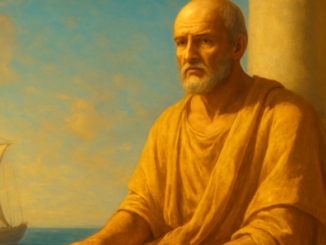
Evening falls over a Roman estate. A wealthy master reclines at his table, surrounded by servants who wait in silence. One of them coughs softly and immediately freezes in terror. It was within this kind of everyday scene, nearly two thousand years ago, that Lucius Annaeus Seneca wrote a letter that would strike at the very foundations of human dignity. Letter XLVII, addressed to his friend Lucilius, is a remarkably modern argument for the equality of all people — regardless of their social standing. The Core Message of Letter XLVII Seneca opens his letter with a remark that was nothing short of revolutionary in his time: he has heard that Lucilius treats his slaves with kindness, and he commends him for it. The central thesis of the letter is as simple as it is powerful — slaves are human beings, just like their masters. They share the same human nature, the same vulnerability to fortune, and therefore deserve respect and compassion. Seneca pushes back against the prevailing Roman view that slaves were mere property, no different from cattle or household furniture. The philosopher argues that the circumstances of birth and fortune are entirely arbitrary. The man who is a master […]