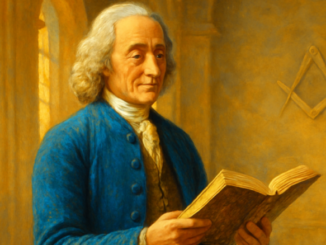
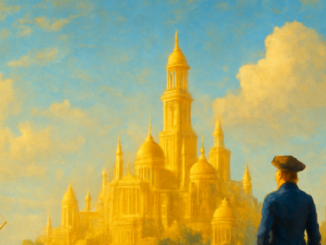
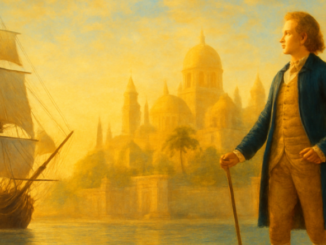
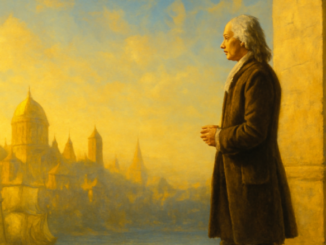
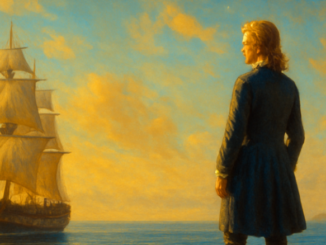
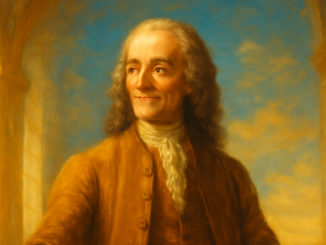
Voltaire reflecting on the Anglican Church and religious tolerance in England
Symbolism & Rituals

Voltaire on the Anglicans: Tolerance as a Religious Virtue

In his second philosophical letter, Voltaire turns his sharp gaze toward the Anglican Church. Having already shared his observations on the Quakers, he now examines an established state church that, despite its official status, displays a remarkable degree of religious tolerance. By placing two worlds side by side — the rigid French Catholicism of his era and the pragmatic English approach to faith and state power — Voltaire reveals not only differences in ecclesiastical organization, but touches on deeper questions about freedom, hierarchy, and the symbolic meaning of religious institutions. The Heart of Voltaire’s Argument Voltaire describes the Anglican Church as a curious blend of Protestant theology and Catholic aesthetics. The bishops still wear their mitres, the cathedrals retain their grandeur, and the liturgy carries a solemnity reminiscent of Rome. Yet the doctrine is fundamentally different. The monarch stands at the head of the church, not the Pope. This institutional break with Rome, Voltaire argues, has not led to chaos but rather to a workable order in which religious disagreements are far less likely to result in bloodshed. The central theme of this letter is the relationship between state power and religious authority. Voltaire observes that the English have found […]
Voltaire meeting a Quaker symbolizing brotherhood and equality in Freemasonry
Symbolism & Rituals

Voltaire and the Quakers: Brotherhood Without Dogma

In 1726, François-Marie Arouet — better known as Voltaire — fled to England. What he found there would permanently reshape his thinking. It wasn’t the Anglican cathedrals or the royal courts that left the deepest impression, but a small community of plainly dressed believers who addressed everyone as equals and refused to remove their hats for anyone. The Quakers, or the Society of Friends, showed Voltaire a radically different way of coming together. His observations, recorded in the first of his Letters on the English, contain strikingly relevant insights into what genuine human connection truly means — insights that resonate deeply with the principles of Freemasonry. An Encounter That Changed Everything In his letters, Voltaire describes visiting a Quaker in London and being astonished by the man’s behavior. The Quaker remained seated when Voltaire entered, kept his hat on, and spoke without any trace of subservience. Where the French philosopher expected politeness shaped by hierarchy, he found equality instead. The Quaker explained that their community had no priests, performed no rituals, and accepted no authoritative interpretation of sacred texts. Every person, they believed, carried an inner light that provided direct access to truth. This experience struck Voltaire profoundly — not […]

Voltaire meeting a Quaker in 18th-century England, symbolizing tolerance
Symbolism & Rituals

Voltaire on the Quakers: Philosophical Roots of Tolerance

Imagine stepping ashore in England in 1726 as a French writer, fresh from exile and the shadow of the Bastille, only to have your very first encounter be with a Quaker who refuses to remove his hat in your presence. No bow, no title — just a plain “thou.” For Voltaire, this moment was far more than a cultural oddity. It marked the beginning of a philosophical quest into the foundations of tolerance, one he would later weave into his celebrated Letters on the English. But what intellectual traditions shaped the lens through which he viewed this remarkable religious community? The Legacy of Skepticism When Voltaire composed his first letter on the Quakers, he was drawing from a deep well of philosophical skepticism. Two centuries earlier, Michel de Montaigne had already posed the essential question: who are we to pass judgment on the customs of others? In his famous essay on cannibals, Montaigne demonstrated how seemingly strange practices reveal their own internal logic upon closer inspection. Voltaire applied precisely this method to the Quakers. Rather than dismissing their refusal to swear oaths, their rejection of ecclesiastical hierarchy, or their austere dress as foolishness, he presented these as elements of a […]

Voltaire meeting a Quaker in a simple English home, symbolizing Enlightenment ideals
Symbolism & Rituals

Voltaire on the Quakers: Philosophy, Simplicity & Tolerance

When Voltaire set foot in England in 1726, he encountered a community that fascinated him profoundly: the Quakers. His first Philosophical Letter is far more than a traveler’s curiosity piece about an unusual religious group. It is a carefully constructed mirror held up to French society — and, by extension, to any society that confuses outward ceremony with genuine virtue. For anyone interested in the deeper currents of Freemasonry, Enlightenment thought, and the quest for authentic inner truth, Voltaire’s encounter with the Quakers remains remarkably relevant. The Encounter: A Philosopher Among the Quakers Voltaire opens his letter with a vivid scene. He visits an elderly Quaker at his home, perhaps expecting an exotic encounter with an eccentric. Instead, he finds a man of modest prosperity — calm, receptive, and entirely free of the customary social formalities. The Quaker does not remove his hat. He addresses Voltaire with the familiar “thou” rather than the formal “you.” There is no trace of deference or subservience. For Voltaire, accustomed to the rigid hierarchical etiquette of the French court, the experience is both refreshing and unsettling. These seemingly trivial details form the heart of Voltaire’s argument. The hat that stays on is not a […]

A sunlit garden symbolizing Voltaire's Candide and Masonic ideals of shared labor
Symbolism & Rituals

Voltaire’s Candide: The Garden as a Masonic Ideal

What did Voltaire really mean by that famous closing line? “Il faut cultiver notre jardin” — we must cultivate our garden. Is it a call to withdraw from the world, a retreat into comfortable isolation? Or does it point to something deeper, something that touches the very heart of what Freemasons strive for: connection through shared labor? Let’s sit with this question as if gathered around a table with a good glass of wine and an open mind. Why Does Candide End in a Garden? Candide has crossed the entire world. He has witnessed wars, survived earthquakes, listened to philosophers, and won and lost fortunes. And where does he ultimately end up? On a small farm on the outskirts of Constantinople, tilling the earth alongside his companions. Voltaire — who was deeply connected to Enlightenment thinkers and moved in circles where Freemasons were well represented — chose this ending deliberately. No triumph, no palace, no philosophical certainty. Just a garden. This raises an essential question: is the garden a retreat, or is it actually a starting point? For Voltaire, the answer seems carefully nuanced. The garden is not an escape from the world but a redefinition of what meaningful action […]

Open book showing Voltaire's Candide with garden and Masonic symbolism
Symbolism & Rituals

Voltaire and Candide: The Philosophical Roots of the Garden

You have probably heard the famous closing line of Voltaire’s Candide: “We must cultivate our garden.” It is a sentence that has made people think for nearly three centuries. But where did this deceptively simple idea come from? Which philosophers and intellectual currents shaped Voltaire’s razor-sharp pen when he wrote this satirical masterpiece? Beneath the surface of what appears to be a lighthearted adventure story lies a rich web of philosophical thought — one that resonates deeply with anyone who has ever worked at shaping the rough stone of their own character. Leibniz and the Optimism Voltaire Fought Against At the philosophical heart of Candide lies a direct attack on the optimism of Gottfried Wilhelm Leibniz. This German philosopher championed the idea that we live in “the best of all possible worlds.” God, as a perfect being, could not have created anything less. Voltaire considered this position not merely naive but outright dangerous. The character of Pangloss in Candide is a biting caricature of Leibniz — a man who, no matter how many catastrophes befall him, insists that everything is for the best. Voltaire wrote Candide shortly after the devastating Lisbon earthquake of 1755, which killed tens of thousands of […]

A sunlit garden symbolizing Voltaire's Candide and the Masonic path of self-cultivation
Symbolism & Rituals

Voltaire’s Candide: The Garden as a Key to the Art of Living

After an odyssey of disasters, wars, and bitter disillusionment, Candide finally arrives at a small garden. There he speaks the famous words: “We must cultivate our garden.” This deceptively simple conclusion to Voltaire’s satirical masterpiece contains a philosophy of life that is both profoundly practical and deeply meaningful. What does it truly mean to tend your own garden? And how can this insight be applied concretely in your life today? Candide’s Journey: A Whirlwind Overview Voltaire wrote Candide in 1759 as a razor-sharp attack on the philosophical optimism of his era — specifically the doctrine that we live in “the best of all possible worlds.” The protagonist, Candide, grows up under the tutelage of the philosopher Pangloss, who instills this optimism in him with unwavering conviction. Voltaire then proceeds to plunge his hero into a relentless cascade of misfortunes: war, earthquake, the Inquisition, slavery, and betrayal. Every time Candide believes things cannot possibly get worse, reality proves him wrong. The story takes the reader from Lisbon to South America, from Paris to Constantinople. Along the way, Candide encounters a gallery of characters who each embody the absurdity of human existence in their own way. Cunégonde, his beloved, loses both her […]

Candle illuminating a garden symbolizing Voltaire's Masonic lessons on hope
Symbolism & Rituals

Voltaire on Suffering and Hope: Lessons for Freemasons

A candle flickers in the lodge as a brother takes the floor. He speaks of setbacks — of moments when life felt unbearable. The others listen in silence. Outside, the world rushes on, but here, in this space of reflection, suffering is not dismissed. It is acknowledged, weighed, and ultimately transformed into something that gives direction. This is precisely the movement that Voltaire captures so brilliantly in his masterwork Candide: the journey from naïve optimism, through the deepest misery, toward a hopeful yet realistic outlook on life. The Illusion of a Carefree Existence Candide begins his life in a castle where everything appears perfect. His tutor Pangloss teaches him that this is the best of all possible worlds — a philosophy that explains away every misfortune as part of a greater, benevolent plan. Voltaire is not merely mocking the philosophical optimism of Leibniz here; he is skewering the deeply human tendency to deny or trivialize suffering. For the Freemason, this is the first point of recognition. The search for truth begins with shedding illusions. Anyone who enters the lodge as a seeker must be willing to let go of comfortable certainties. The rough ashlar that must be worked upon is […]

Open copy of Voltaire's Candide with Masonic symbols and garden imagery
Symbolism & Rituals

Voltaire’s Candide: Philosophical Roots of Suffering and Hope

When Voltaire published his satirical masterpiece Candide in 1759, he set off a philosophical earthquake. The work confronts the reader relentlessly with human suffering, yet refuses to abandon hope entirely. How can a thinker who depicts misery with such razor-sharp clarity still leave a path open toward meaning? The answers lie in a rich intellectual heritage stretching from the Stoic philosophers to the Enlightenment salons of Paris — and they connect in surprising ways to the ideals cherished by Freemasonry. Two Perspectives on Evil To understand Voltaire’s treatment of suffering, we need to set two fundamentally different worldviews side by side. On one hand stands the optimism of Gottfried Wilhelm Leibniz, the German philosopher who claimed that we live in the best of all possible worlds. According to Leibniz, God — as a perfect being — necessarily created the most harmonious universe. Every evil serves a higher purpose; every instance of suffering fits neatly into a grand cosmic plan. On the other hand stands Voltaire himself, who dissected this optimism with biting irony. After the devastating Lisbon earthquake of 1755, which killed tens of thousands of people, he could no longer accept the notion that all suffering has divine justification. […]

Symbolic journey from darkness to light inspired by Voltaire's Candide
Symbolism & Rituals

Voltaire’s Candide IV: Suffering and Hope in the Best of Worlds

In 1759, a slim satirical novel burst onto the scene and upended the European intellectual world. Voltaire wrote Candide during an era scarred by earthquakes, wars, and religious persecution. The fourth chapter plunges its young hero into the depths of misery — yet also offers the first glimmer of hope. More than two and a half centuries later, this passage still speaks powerfully to anyone wrestling with an enduring question: how do we find meaning in the midst of incomprehensible suffering? The Historical Context of Candide Voltaire penned his masterpiece in the shadow of the devastating Lisbon earthquake of 1755, a catastrophe that killed tens of thousands. The disaster shattered the optimistic worldview championed by philosophers like Gottfried Wilhelm Leibniz, who argued that we live in “the best of all possible worlds” because an omniscient God would never create anything inferior. Voltaire, deeply shaken by the senseless suffering he witnessed all around him, resolved to unmask this optimism mercilessly through the power of his pen. Chapter Four of Candide marks a turning point in the story. After being expelled from the paradisiacal castle of Baron Thunder-ten-Tronckh, brutalized by soldiers, and left to wander aimlessly, our hero reaches his absolute nadir. […]

Golden city of El Dorado symbolizing Masonic ideals and Voltaire's philosophy
Symbolism & Rituals

Voltaire’s El Dorado: Utopia as a Mirror for Freemasonry

What would a perfect society look like? A place where greed holds no power, where people treat each other with genuine respect, and where wisdom matters more than wealth. Voltaire imagined exactly such a world in his masterpiece Candide, in the legendary kingdom of El Dorado. But was this golden land meant as a blueprint for humanity — or as a sharp mirror reflecting our deepest flaws? And what does an eighteenth-century literary utopia have to do with the ideals that Freemasons continue to cherish today? A Golden City That Doesn’t Exist In Candide, the naïve protagonist stumbles into El Dorado after a long string of misfortunes. It is a hidden kingdom where gold and gemstones litter the streets as though they were ordinary pebbles. The inhabitants laugh at Candide’s astonishment. What value does gold have when everyone already has enough? Voltaire doesn’t present this paradise as a serious proposal for how society should be organized. Instead, he uses it as a stark contrast to the world he saw around him — the cruelty, the wars, the religious intolerance of his era are inverted in El Dorado into their exact opposite. And yet, Candide leaves this paradise voluntarily. He wants […]

Symbolic golden city of El Dorado representing Voltaire's philosophical utopia
Symbolism & Rituals

Voltaire and El Dorado: Philosophical Roots of the Utopia

In 1759, Voltaire published his satirical masterpiece Candide, in which the naïve protagonist stumbles upon a seemingly perfect land: El Dorado. This golden realm, hidden deep in the mountains of South America, serves as a philosophical mirror held up to European society. But which thinkers and intellectual currents shaped Voltaire’s vision of this utopia? The roots stretch from Plato’s ideal state to the Renaissance humanists, touching upon questions that Freemasons have grappled with for centuries: how do we build a better world? The Utopian Tradition Before Voltaire The concept of an ideal society has a long history in Western thought. Plato, in his Republic, envisioned a community governed by philosopher-kings, where justice reigned as the supreme virtue. This vision remained influential for centuries, inspiring generations of thinkers to formulate their own societal ideals. In 1516, Thomas More published Utopia, describing a fictional island where private property did not exist and religious tolerance prevailed. The very title became synonymous with any imagined perfect land. Voltaire knew these works intimately. As a voracious reader and tireless correspondent with intellectuals across Europe, he had access to the entire utopian canon. Tommaso Campanella’s The City of the Sun and Francis Bacon’s New Atlantis were […]

Golden valley symbolizing Voltaire's El Dorado as a Masonic mirror of the self
Symbolism & Rituals

Voltaire’s El Dorado: The Utopia as a Mirror of Ourselves

Somewhere in the heart of Voltaire’s satirical masterpiece Candide lies a hidden valley where gold rolls across the roads like gravel and children play with gemstones as though they were marbles. This is El Dorado — a place that appears on no map yet dwells deep within human consciousness. Voltaire was not merely painting a fairy-tale kingdom. He was holding up a mirror, asking a question that resonates across centuries: what does our longing for a perfect world reveal about who we really are? Discovering the Undiscoverable Land Candide and his companion Cacambo reach El Dorado only after a long and perilous journey through hostile terrain. They drift along a river that carries them into a valley surrounded by unscalable cliffs. Voltaire chose this route with deliberate care: the hidden paradise cannot be reached through the usual paths of ambition or conquest. The river carries them there passively, as if in an act of surrender to the unknown. This symbolism speaks to a deeper truth about spiritual discovery — the highest things are not seized but received. In El Dorado, the travelers encounter a society that defies everything they have ever known. There is no poverty, no injustice, no religious […]

Open book with garden and rough ashlar symbolizing Voltaire and Freemasonry
Symbolism & Rituals

Voltaire’s Candide: Why the Pursuit of Good Remains a Struggle

What does it truly mean to pursue the good in a world full of setbacks? Voltaire posed this question more than 250 years ago in his famous satirical novel. Today, we revisit that question — not as literary historians, but as seekers looking for the connection between philosophical insight and the values that Freemasonry holds dear. This is a reflection on optimism, virtue, and the inevitable struggle that accompanies the good life. Why Did Voltaire Take Aim at Naïve Optimism? Voltaire lived during a period of sweeping intellectual transformation. The Enlightenment ushered in a new faith in reason, but also in the notion that we inhabit “the best of all possible worlds.” This brand of optimism, popularized by the philosopher Gottfried Wilhelm Leibniz, was demolished by Voltaire with biting irony. His protagonist Candide travels through a world ravaged by war, natural disasters, and human cruelty, while his tutor Pangloss insists that everything is for the best. But was Voltaire a pessimist? That would be too simple. Voltaire did believe in progress — but progress that must be fought for. The good does not arise on its own. It demands effort, reflection, and the deliberate cultivation of virtue. And it is […]

Voltaire writing Candide surrounded by Enlightenment philosophical symbols
Symbolism & Rituals

Voltaire and Candide: Philosophical Roots of the Struggle for Good

It is 1759. In a Parisian salon, a grey-haired man hunches over a manuscript. His pen scratches furiously across the paper while carriages rattle past outside. François-Marie Arouet — better known as Voltaire — is writing sentences that will force an entire continent to reconsider the nature of good and evil. What drove this thinker to produce such biting satire, and which philosophical traditions fuelled his lifelong struggle? The Shadow of Leibniz To understand Voltaire’s Candide, we must first reckon with the philosopher he set out to demolish: Gottfried Wilhelm Leibniz. In his Theodicy of 1710, the German polymath argued that we inhabit “the best of all possible worlds.” God, as a perfect being, could have created nothing less than the most perfect reality. Every instance of evil we perceive, Leibniz reasoned, is a necessary component of some greater good that lies beyond our comprehension. Voltaire initially felt some sympathy for this optimistic worldview. But the Lisbon earthquake of 1755 — which killed tens of thousands of men, women, and children in a single morning — shattered that sympathy beyond repair. How could a loving God allow innocent children to be buried alive under rubble? The abstract reasoning of Leibniz […]

Open copy of Voltaire's Candide with Masonic square and compasses symbol
Symbolism & Rituals

Voltaire’s Candide: The Struggle for Good in Masonic Light

A candle flickers in the study as a young Freemason opens a yellowed copy of Candide. Voltaire’s razor-sharp wit, first published in 1759, still sparks after nearly three centuries. What drove this towering Enlightenment thinker to tear so relentlessly into the optimism of his era? And what can we — as modern seekers of wisdom — learn from this satirical journey through human suffering and the stubborn struggle for good? The Central Idea: Optimism Under Fire Voltaire wrote Candide as a devastating attack on the philosophical optimism of Gottfried Wilhelm Leibniz. The German philosopher argued that we live in “the best of all possible worlds” — a thesis that absolves God of evil by insisting that every instance of suffering is necessary for some greater good. Voltaire found this reasoning intolerable, particularly after the catastrophic Lisbon earthquake of 1755, which killed tens of thousands of people in a matter of minutes. The title character, Candide, grows up in the castle of Baron Thunder-ten-Tronckh in Westphalia, where his tutor Pangloss instructs him in “metaphysico-theologo-cosmo-nigology.” This absurd academic discipline teaches only one lesson: everything is for the best. When Candide is thrown out of the castle for kissing the baron’s daughter, Cunégonde, […]

Open book with garden imagery symbolizing Voltaire's Candide and Freemasonry
Symbolism & Rituals

Voltaire’s Candide and Freemasonry: Finding Connection in Chaos

You probably know the feeling. Someone tells you that everything happens for a reason, that life has meaning, that we live in the best of all possible worlds. And something doesn’t sit right. Because you’ve also seen the suffering, the randomness, the misfortune that strikes people without cause. This exact tension lies at the heart of Voltaire’s masterpiece Candide. And hidden within that tension is a surprising connection to the values of Freemasonry. The Illusion of the Best Possible World Voltaire wrote Candide in 1759 as a satirical attack on the philosophical optimism of Gottfried Wilhelm Leibniz. The story’s hero, Candide, grows up under the tutelage of Professor Pangloss, who insists that we live in the best of all possible worlds. Every misfortune, every disaster serves a purpose. Everything is ultimately good. But Voltaire then drags Candide through an unrelenting chain of catastrophes — earthquakes, war, slavery, betrayal. The naïve hero gradually loses faith in Pangloss’s doctrine. Not through philosophical arguments, but through raw, concrete experience. By witnessing what human beings are capable of doing to one another. What Seekers of Truth Can Learn from Candide The first lesson from Candide is confrontingly simple: do not blindly trust systems. This […]

Open book showing Voltaire's Candide with Masonic square and compasses
Symbolism & Rituals

Voltaire’s Candide and Freemasonry: Building a Better World

When Voltaire published his famous satirical novel Candide in 1759, he took aim at one of the most influential philosophical propositions of his era: Gottfried Wilhelm Leibniz’s optimism — the claim that we live in “the best of all possible worlds.” Voltaire dismantled this idea with relentless wit. But what drove him to this attack? And how does his critical thinking relate to the symbolism and values cherished by Freemasonry? This article places Candide in its intellectual context and compares two fundamentally different ways of looking at the world. Leibniz’s Optimism: A World of Divine Perfection To understand Voltaire’s satire, we first need to know its target. Gottfried Wilhelm Leibniz (1646–1716), the German philosopher and mathematician, developed a theodicy designed to explain the existence of evil in a world created by God. His answer was elegant but controversial: God, being omniscient and wholly good, had necessarily created the best of all possible worlds. Every evil we perceive, Leibniz argued, serves a higher purpose within the cosmic whole. This philosophy resonated widely in eighteenth-century Europe. It offered comfort to those struggling with suffering and injustice. In Candide, the tutor Pangloss embodies this optimism in its most caricatured form. He insists that […]

Open book showing Voltaire's Candide with garden and Enlightenment imagery
Symbolism & Rituals

Voltaire’s Candide: The Best of All Worlds as a Mirror

Can a world filled with earthquakes, wars, and relentless human suffering truly be the best that God could have created? Voltaire posed this question with biting wit in his masterwork Candide, a satirical novella that has confronted readers since 1759 with the dangerous limits of naive optimism. This analysis explores the core ideas behind the story and why this eighteenth-century work continues to resonate with anyone searching for genuine meaning without self-deception. The Paradox of Optimism Voltaire wrote Candide as a direct attack on the philosophical optimism of Gottfried Wilhelm Leibniz, who argued that our world — despite all its misery — is the best of all possible worlds. On the surface, this sounds comforting. But Voltaire saw something dangerous lurking beneath: a complacency that kills initiative. If everything is already perfectly arranged by divine providence, why would anyone bother striving for improvement? The paradox Voltaire exposes is deeply unsettling: a philosophy designed to offer hope can easily become an excuse for passivity and moral blindness. In the story, the character Pangloss embodies this optimism in its most absurd form. As tutor to the naive young hero Candide, Pangloss insists that every misfortune ultimately serves the greater good — even […]