
Have you ever wondered why some people swear by horoscopes while others dismiss them without a second thought? That tension between belief in predictions and healthy skepticism is nothing new. In the sixteenth century, the French thinker Michel de Montaigne grappled with exactly the same questions — and he did so by drawing on a rich tradition of classical philosophy, from the Roman Stoics to the Greek skeptics. In this article, we explore the philosophical sources that fed Montaigne’s thinking when he wrote his famous essay on divination and prophecy.
The Renaissance Humanist in His Tower Library
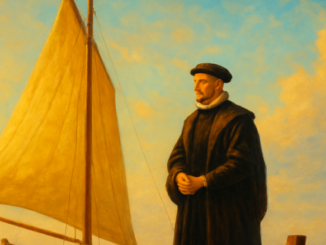
Picture Montaigne in his celebrated tower study, surrounded by thousands of books lining the walls from floor to ceiling. Each volume bore his handwritten inscriptions and annotations. This was no mere decoration — it was a living dialogue with the past. As a true Renaissance humanist, Montaigne believed that the wisdom of the ancients remained profoundly relevant to his own age. He was no passive reader: he questioned, compared, and drew conclusions that often feel strikingly modern.
The humanism of the Renaissance was characterized by a return to classical sources. Where medieval scholars had often worked through commentaries and summaries, the humanists read original texts in Latin and Greek. For Montaigne, this meant direct access to Cicero, Seneca, Plutarch, and many others. Their voices echo through virtually every essay he ever wrote, creating a tapestry of ancient thought woven into Renaissance reflection.
Cicero as the Master of Rational Inquiry
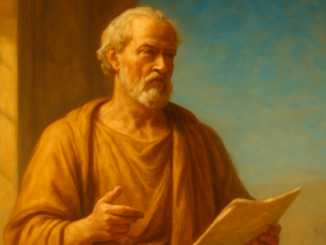
When Montaigne wrote about divination, one classical source stood at the center of his thinking: Cicero’s De Divinatione (On Divination). Written in the first century BCE, this work sees the Roman statesman and philosopher systematically examine every form of prediction practiced in his culture. From the flight of birds to the entrails of sacrificial animals, from dreams to oracles — nothing escaped Cicero’s analytical gaze.
Cicero presented his arguments in dialogue form: his brother Quintus speaks for the defenders of divination, while Cicero himself takes the skeptical position. This method greatly appealed to Montaigne. It demonstrated that one could present multiple viewpoints honestly before arriving at a judgment. Cicero’s conclusion — that divination might hold cultural and religious significance but lacked any rational foundation — clearly echoes in Montaigne’s own approach.
As Cicero himself put it: “I would rather the gods told us nothing than that they should deceive us.” This sentiment, balancing reverence with reason, became a guiding thread in Montaigne’s thought.
The Stoics and the Question of Fate
Montaigne was also deeply influenced by Stoic philosophy, though in a complex and selective way. The Stoics believed in a predetermined universe in which everything unfolded according to divine reason. In principle, this worldview could support belief in divination: if everything is already determined, a wise mind might be able to read the future from the signs of the present.
Yet this was not the aspect of Stoicism that most attracted Montaigne. He was drawn instead to the Stoic emphasis on inner freedom and the acceptance of what lies beyond our control. Seneca, his favorite Stoic writer, repeatedly stressed that we should not exhaust ourselves worrying about the future. Whether or not that future can be known, the wise person focuses on the present moment and on what lies within their own power.
This Stoic counsel of present-minded awareness resonated deeply with Montaigne’s own temperament. It offered a practical alternative to the anxious desire to peer into the unknown — a desire that drives so much belief in prediction and prophecy.
Pyrrhonian Skepticism: Suspending Judgment
Perhaps the deepest philosophical influence on Montaigne’s thinking about divination came from Pyrrhonian skepticism. This school of thought, named after the Greek philosopher Pyrrho, taught that we cannot achieve definitive knowledge about most things. The proper response, therefore, is epoché — the suspension of judgment.
Montaigne encountered this tradition primarily through the writings of Sextus Empiricus, whose works became newly available to European scholars in the sixteenth century. The impact was transformative. Montaigne even had his famous motto — Que sais-je? (What do I know?) — engraved as an expression of radical intellectual humility.
Applied to divination, this skeptical stance carried a subtle but powerful message: we cannot say with certainty that predictions are impossible, but neither can we affirm that they work. The wisest course is to remain humble about the limits of our knowledge. For those who seek truth with sincerity, this is not a defeat but a liberation — an honest acknowledgment of the boundaries of human understanding.
Plutarch and the Moral Dimension
Another crucial source for Montaigne was Plutarch, the Greek biographer and moralist. Plutarch combined philosophical analysis with practical life wisdom in a way that deeply appealed to Montaigne’s own sensibility. In works such as On Superstition, Plutarch explored how irrational belief could cause genuine harm to individuals and communities. At the same time, he was no cold rationalist: he understood the deeply human need for ritual, meaning, and a sense of connection to something greater.
From Plutarch, Montaigne learned that one could be critical of superstition without condemning the universal human impulse toward meaning-making. This subtle distinction is essential for understanding Montaigne’s position: he rejected the pretensions of fortune-tellers and prophets, but not the human search for stability and reassurance in an uncertain world.
A Legacy for All Who Seek Truth
What Montaigne ultimately drew from all these sources was not a fixed doctrine but a method. He learned to ask questions, to weigh multiple perspectives, and above all, to remain humble about the boundaries of human knowledge. This approach resonates powerfully today with anyone engaged in the sincere pursuit of truth and self-knowledge.
In traditions that value self-reflection and intellectual growth, we recognize something of Montaigne’s method. The willingness to examine your own convictions, to study ancient wisdom without clinging to it dogmatically, to accept uncertainty as an inherent part of the human condition — these are timeless values. Montaigne did not read the classical philosophers in search of final answers. He read them to learn how to ask better questions.
For those walking a path of moral and philosophical development, this is perhaps the greatest lesson Montaigne’s sources have to offer. The art of questioning, the discipline of suspended judgment, and the courage to face the unknown with equanimity — these are skills that remain as vital now as they were in Montaigne’s tower library four centuries ago.
Montaigne’s essay on divination was never simply about whether prophecies are real. It was about how we relate to uncertainty itself — and the classical philosophers who shaped his thinking gave him the tools to approach that question with both rigor and grace. From Cicero’s rationalism to Pyrrhonian humility, from Stoic acceptance to Plutarch’s moral nuance, these sources converge in a philosophy of honest inquiry that speaks to seekers of truth in every age. In learning to sit with uncertainty rather than grasping for false certainty, we follow in Montaigne’s footsteps on one of the most rewarding intellectual journeys there is.
Copyright text & image: devrijmetselaar.nl
Texts are based on the ideas and content of the author of devrijmetselaar.nl, reviewed, corrected, and supplemented with the assistance of OpenAI. Images are created based on the ideas of the author of devrijmetselaar.nl using OpenAI/DALL-E.
Frequently Asked Questions
What is the connection between Freemasonry and Montaigne's philosophy?
While Montaigne himself predated modern Freemasonry, his emphasis on rational inquiry, skepticism, and the pursuit of truth through dialogue aligns with Masonic principles of enlightenment and self-improvement. Freemasonry similarly encourages members to question, reflect, and draw wisdom from classical and philosophical sources, much as Montaigne did in his tower library.
How does Renaissance humanism relate to Masonic teachings?
Both Renaissance humanism and Freemasonry share a deep commitment to returning to original sources of wisdom and fostering intellectual growth. Like the humanists who read classical texts directly, Freemasons are encouraged to study foundational philosophical works and engage in rigorous self-examination to advance their understanding and moral development.
What Masonic values appear in Montaigne's approach to divination?
Montaigne's balanced approach—respecting tradition while maintaining rational skepticism—mirrors core Masonic values of seeking truth through reason and contemplation. His method of presenting multiple viewpoints before judgment reflects the Masonic commitment to open dialogue and the pursuit of knowledge without dogmatism.
Why would Freemasons be interested in studying classical philosophy like Cicero's work?
Freemasonry has long valued the study of classical philosophy as a pathway to personal enlightenment and moral refinement. Works like Cicero's On Divination exemplify the kind of rigorous intellectual inquiry that Masons encourage, promoting the development of wisdom, virtue, and critical thinking that benefit both the individual and society.


Be the first to comment