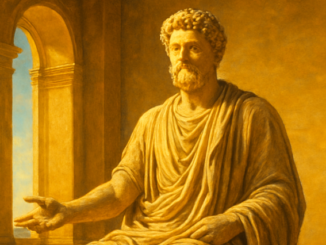
Rough ashlar stone with hammer and chisel symbolizing Masonic character building
Marcus Aurelius – Freemasonry & Connection

Marcus Aurelius on Duty: The Stone as a Symbol of Character

Every morning, before the first light slips through the window, every human being faces the same inner struggle. The warmth of the bed pulls at us while the day and its obligations wait. In Book V of his Meditations, Marcus Aurelius describes exactly this moment — the instant when character is forged. For Freemasons, this struggle resonates with a deeply rooted symbol: the working of the rough stone. Both traditions understand that the fulfillment of duty is not a burden but the very hammer with which we shape ourselves into something enduring. Waking Up as a Moral Turning Point Marcus Aurelius opens Book V with a scene every reader recognizes. He addresses himself at the break of day: rise, for you were made for the work that befits a human being. The emperor does not philosophize from an ivory tower but from the mud of military campaigns and the weight of administrative burdens. His words carry the gravity of lived experience. In his writing, this daily act of waking becomes a metaphor for a greater awakening. Not only must the body rise, but the mind must orient itself toward its true calling. In Freemasonry, we find a kindred idea: the […]
Ancient Greek columns symbolizing duty and Masonic brotherhood
Plato – Freemasonry & Connection

Plato’s Crito: What Duty Teaches Us About Brotherhood

Imagine this: an old friend offers you a chance to escape your death sentence. The guards have been bribed, the plan is flawless, and everyone who loves you is begging you to flee. What do you do? This is precisely the situation Socrates faces in Plato’s dialogue Crito. His answer strikes at the very heart of what it means to be a person of integrity — and resonates deeply with values that Freemasons have cherished for centuries. Why Does Socrates Refuse to Flee? The dialogue opens in the early hours of morning, when Crito slips into Socrates’ prison cell with an urgent plea. The execution is drawing near, but there is still time to escape. Crito has arranged everything. He appeals to friendship, to Socrates’ responsibility toward his sons, to his own reputation. Yet Socrates refuses. His reasoning is as simple as it is immovable: it does not matter what others think of you — only whether your actions are just. Socrates has lived his entire life in Athens and accepted the city’s laws. To flee now would violate those laws and, in doing so, undermine his own life’s work. The question is not whether the laws are perfect, but […]

Ancient Greek prison scene representing Plato's Crito dialogue and Freemasonry
Plato – Content & Summary

Plato’s Crito: A Dialogue on Duty and Obedience

It is early morning. Through the narrow slit of a prison window, the first light falls on the sleeping figure of Socrates. His old friend Crito has been sitting beside him for hours, waiting for the right moment to wake him with an urgent proposal: escape, while you still can. What follows is one of the most powerful conversations in Western philosophy — a dialogue that continues to stir Freemasons and seekers of truth in their deepest convictions about duty, honor, and right action. A Friend With an Escape Plan The dialogue of the Crito takes place in the prison of Athens, where Socrates awaits his death sentence. Crito, a wealthy and devoted friend, has arranged everything for an escape. He has bribed the guards, prepared escape routes, and organized safe haven abroad. His arguments are deeply human and sympathetic: Socrates still has a family, his death would be a loss for philosophy, and besides, the verdict is unjust. Why would a wise man submit to a judgment based on false accusations? Socrates listens patiently. He acknowledges his friend’s good intentions but refuses to make decisions driven by emotion or public opinion. Instead, he proposes they examine the matter the […]