
Venetian masks and candlelight evoking Masonic ritual and brotherhood
Personal Development & Leadership

Eyes Wide Shut: Brotherhood Behind the Mask

Few films have sparked as much speculation about secret societies as Stanley Kubrick’s final masterpiece from 1999. Eyes Wide Shut presents a nocturnal ritual filled with masked figures, mysterious passwords, and an impenetrable hierarchy. Since its release, the film has been linked to Freemasonry, occult lodges, and hidden power structures. But how accurate is that portrayal? And what does the real history of brotherhood and ritual tell us about the fascination lurking behind these powerful images? The Venetian Mask: From Carnival Tradition to Film Icon The scene that burns most vividly into memory takes place at a country estate where participants wear Venetian masks. This was no arbitrary artistic choice. The Venetian mask has a history stretching back to the thirteenth century, when it was worn during the Carnival of Venice to temporarily dissolve social rank. Behind the mask, the nobleman was equal to the merchant, the physician equal to the servant. It was a ritual of equality — however fleeting. That tradition resonates with one of the oldest principles of Freemasonry: within the lodge, all brethren are equal, regardless of social standing, profession, or background. In the film, however, the masks are not used to create equality but to […]
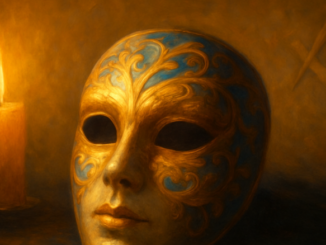
Venetian mask symbolizing the duality of concealment and revelation in ritual
Spiritual Traditions

Eyes Wide Shut: Ritual, Spirituality, and Seeing

Few films have sparked as much speculation about secret societies as Stanley Kubrick’s final masterpiece. When Eyes Wide Shut premiered in 1999, it was immediately linked to Freemasonry, occult rituals, and hidden power structures. But how accurate is that association? And what does it reveal about the gulf between how outsiders perceive ritual spirituality and how a Freemason experiences it from within? In this article, we set these two perspectives side by side: the cinematic portrayal of the secret ritual and the genuine spiritual experience inside the lodge. The Outsider’s Perspective: Eyes Wide Shut as a Vision of Fear Kubrick based his film on Traumnovelle (Dream Story), a novella by the Viennese writer Arthur Schnitzler, who explored the blurred boundaries between dream, desire, and reality around the turn of the twentieth century. In the film adaptation, the protagonist is drawn into a nocturnal ritual behind locked doors: masked figures, strict hierarchy, erotic undercurrents, and an atmosphere of looming danger. The viewer is deliberately kept in the dark. What is real? What is imagined? And who is pulling the strings? This perspective is familiar to anyone who looks at closed societies from the outside. The unknown breeds unease. Where secrecy exists, […]