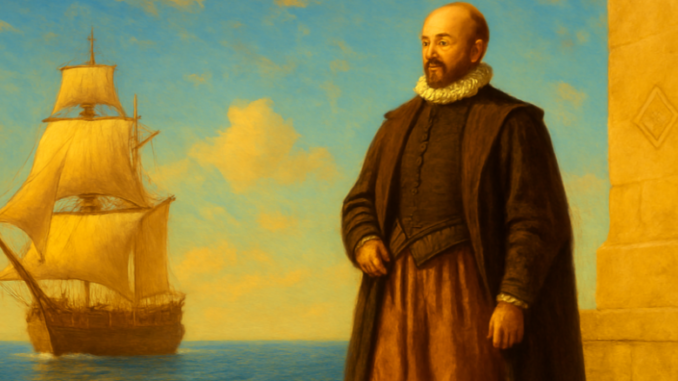
Can a person ever truly be the owner of their own death? It is a question that makes us uncomfortable, yet it is precisely the question Michel de Montaigne places at the heart of his essay on a custom of the Isle of Cea. What makes this essay so remarkable is not merely its subject matter, but the intellectual tapestry behind it — a dense weave of Stoic, Skeptic, and Humanist threads that Montaigne brings together into something that is neither dogma nor license, but an exercise in radical thinking. This essay invites us to uncover its philosophical roots and to understand why a work written in the sixteenth century still challenges our moral imagination today.
The Stoic Legacy: Seneca and the Art of Dying
No thinker resonates more loudly through this essay than Lucius Annaeus Seneca. Montaigne cites him repeatedly, and with unmistakable admiration. For Seneca, death was not an adversary but a companion — a reminder of finitude that lends life its urgency. In his Letters to Lucilius, Seneca argued that the free person does not merely live, but also possesses the liberty to choose when enough is enough. That idea forms a supporting pillar beneath Montaigne’s essay.
The Stoic tradition, from Zeno of Citium to Epictetus and Marcus Aurelius, regarded self-mastery as the highest virtue. For some Stoics, that self-mastery extended all the way to the end of life itself. Montaigne, however, does not adopt this position uncritically. He weighs it, turns it over, examines it from multiple angles. This is precisely what distinguishes him from a mere disciple: he is a conversation partner.
Plutarch as Mirror and Source
The essay’s title refers to a custom that Montaigne draws from Plutarch, the Greek biographer and moralist whose Lives and Moralia were among Montaigne’s most beloved reading. Plutarch describes how on the Isle of Cea there existed a practice whereby elderly citizens, when they considered their lives complete, would end their existence in the presence of their fellow citizens. This was no act of despair but one of communal consent — almost a ritual.
Montaigne does not use this example to defend or condemn it, but to set thought in motion. Plutarch functions here as a mirror: an ancient voice that confronts us with the relativity of our own moral assumptions. This method — holding up antiquity as a mirror to interrogate the present — is characteristic of the Renaissance Humanism in which Montaigne was deeply rooted.
Skepticism as Method
Montaigne’s thinking is often, and rightly, associated with Pyrrhonian Skepticism. His famous motto “Que sçais-je?” (“What do I know?”) sets the fundamental tone of virtually all his essays. In the essay on the Isle of Cea, this skeptical stance is particularly visible. Montaigne presents arguments in favor of the reasonableness of a voluntary end of life, drawn from Seneca, Pliny the Elder, and various Greek and Roman examples. But he consistently places counterarguments alongside them, drawn from the Christian tradition and from his own doubts.
The result is not a conclusion but a suspension of judgment. It is precisely this suspension that makes the essay a philosophical exercise rather than a moral treatise. Montaigne teaches us that it is more honest to doubt than to feign certainty about matters that surpass our understanding.
Montaigne demonstrates in his essay on the Isle of Cea that the most honest philosophy does not answer, but dares to ask the right questions without fleeing into false certainty.
Renaissance Humanism: The Human Being as Measure
The essay is inseparable from the intellectual world of sixteenth-century Humanism. Thinkers such as Erasmus and Marsilio Ficino had breathed new life into the study of the classics, and Montaigne stood squarely in that tradition. What characterized Humanism was the conviction that through study, reflection, and dialogue with antiquity, human beings could arrive at greater wisdom.
Montaigne, however, went further than many of his contemporaries. Where others cited Greek and Roman authors as authorities, Montaigne used them as sparring partners. He took their insights seriously but subjected them to the test of his own experience. This personal, almost autobiographical approach makes his essays unique within the Humanist corpus. In the essay on the Isle of Cea, we see this method in full bloom: Montaigne moves between ancient wisdom and personal reflection, never placing one above the other.
The Christian Tension
A layer that is often overlooked is the tension with the Christian thought of Montaigne’s own era. The Roman Catholic Church condemned the voluntary ending of life unequivocally, and Montaigne, who considered himself a faithful Catholic, could not simply set that position aside. The essay therefore treads a narrow path between admiration for Stoic courage and acknowledgment of the Christian doctrine that regards life as a divine gift.
This duality is not a weakness but a strength: Montaigne shows that genuine philosophy cannot be reduced to a single perspective. He respects the religious tradition without surrendering his intellectual freedom — an attitude that is recognizable within Freemasonry as well, where Brethren of diverse convictions come together in mutual respect.
What Freemasonry Recognizes in Montaigne’s Method
Freemasonry is not a philosophical school, but it shares with Montaigne a fundamental conviction: that through honest self-inquiry, a person grows. The ritual work in the Lodge is, much like Montaigne’s essay, an exercise in enduring uncertainty. The Entered Apprentice is not asked to accept ready-made answers but to learn to ask questions. The rough stone that must be shaped is, ultimately, the self.
Montaigne’s method — suspending judgment, weighing multiple perspectives, respecting tradition while insisting on intellectual honesty — mirrors the Masonic commitment to tolerance, self-improvement, and the search for Light. In both Montaigne’s study and the Lodge, the goal is not to arrive at a final doctrine but to cultivate the capacity for deeper reflection. The essay on the Isle of Cea, with its refusal to offer easy answers, embodies the kind of moral and philosophical seriousness that every Freemason can recognize and aspire to.
Where dogmatism closes doors, Montaigne — like the Craft — opens them. He reminds us that the most courageous intellectual act is not to proclaim certainty, but to sit honestly with our questions and allow them to transform us from within.
Montaigne’s essay on the Isle of Cea remains a masterclass in philosophical honesty. By weaving together Stoic resolve, Skeptical restraint, Humanist curiosity, and Christian humility, he created a text that refuses to simplify the most profound questions of human existence. For Freemasons, his method is especially resonant: it is a reminder that the work on the rough stone is never finished, that wisdom lies not in certainty but in the willingness to keep asking, and that true moral courage means holding space for complexity rather than retreating into comfortable answers. Montaigne does not tell us what to think — he shows us how to think. And in that, he remains one of the most valuable companions on the journey toward Light.
Copyright text & image: devrijmetselaar.nl
Texts are based on the ideas and content of the author of devrijmetselaar.nl, reviewed, corrected, and supplemented with the assistance of OpenAI. Images are created based on the ideas of the author of devrijmetselaar.nl using OpenAI/DALL-E.
Frequently Asked Questions
What is the main philosophical question Montaigne explores in his essay on the Isle of Cea?
Montaigne places at the heart of his essay the uncomfortable question: Can a person ever truly be the owner of their own death? He uses this question to weave together Stoic, Skeptic, and Humanist philosophical traditions to challenge moral assumptions and encourage radical thinking about autonomy and the end of life.
How does Montaigne use Seneca's Stoic philosophy in this essay?
Montaigne cites Seneca repeatedly and with admiration, drawing on the Stoic idea that death is not an adversary but a companion that lends life urgency. He incorporates Seneca's concept that a free person possesses the liberty to choose when enough is enough, using it as a supporting pillar for his argument. However, Montaigne does not adopt Stoicism uncritically but instead examines it from multiple angles as a conversation partner rather than a mere disciple.
What role does Plutarch play in Montaigne's essay on the Isle of Cea?
Plutarch serves as the source for the essay's subject matter and functions as a mirror to confront readers with the relativity of their own moral assumptions. Montaigne draws from Plutarch's description of a custom on the Isle of Cea where elderly citizens could choose to end their lives with communal consent. This use of ancient sources to interrogate present-day values is characteristic of Renaissance Humanism, which deeply influenced Montaigne's philosophical method.

Be the first to comment