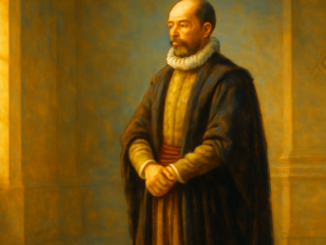
Montaigne on Laughter and Tears: The Capriciousness of Emotion
A man stands at the grave of his beloved. His eyes are dry, his face expressionless. Hours later, when he finds a lock of her hair tucked inside a forgotten drawer at home, he breaks down sobbing. Michel de Montaigne would nod knowingly at this scene. In his eighteenth essay from the first book of the Essays, he examines precisely this mystery: why our emotions so rarely appear when we expect them, and why laughter and tears are often far closer neighbors than we care to admit. The Core Idea of the Essay In this short but powerful essay, Montaigne argues that human emotions are fundamentally unpredictable and contradictory. We do not always weep when sorrow seems called for, and we sometimes laugh at the most unexpected moments. The very title contains a paradox: we do not respond uniformly to the same event. What moves us to tears today may leave us unmoved tomorrow. Montaigne investigates why this happens and what it reveals about the human mind. The French philosopher contends that emotions are rarely pure. When someone weeps at a funeral, is it genuine grief alone, or is there also an element of relief that suffering has ended? When […]