When a contemporary British singer is accused of copying a timeless classic, what emerges is far more than a legal dispute. The controversy surrounding alleged similarities with Bill Withers’ iconic ‘Just the Two of Us’ touches on fundamental questions about originality, inspiration, and — perhaps most importantly — who we truly are as creative beings. Behind every note we produce lies a personality grappling with the eternal tension between what we receive and what we create.
The Mirror of Accusation
A melody drifts through the air. It carries memories with it — emotions that cling to sounds we first heard long ago. When a new composition reminds us of something old, something familiar, what does that reveal about its creator? The recent accusation leveled at a young British artist raises precisely this question. But the answer runs far deeper than copyright law alone.
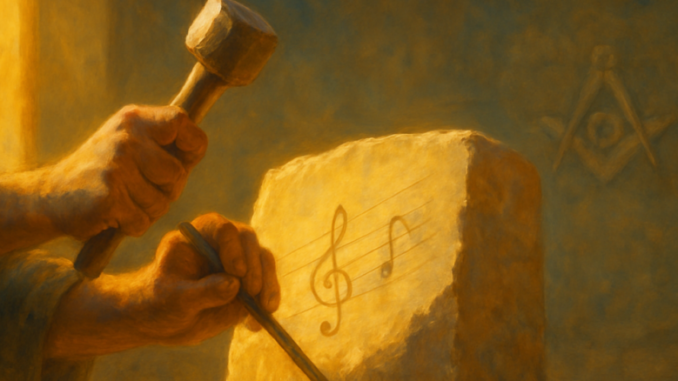
In Freemasonry, we know the concept of the rough ashlar — the unworked stone that represents who we are at the beginning of our journey. Every Brother and Sister starts with a foundation they did not choose: their upbringing, their cultural heritage, the melodies they heard as children. The question is not whether we have been influenced, but what we do with those influences.
Bill Withers and the Echo of Authenticity
Bill Withers, the American singer-songwriter who passed away in 2020, created music that transcends generations. His compositions — including the 1981 track at the heart of this dispute — are defined by a deceptive simplicity that conceals profound emotional depth. Withers grew up in poverty in West Virginia and spent years working in an aircraft factory before turning to music. His personality, shaped by hardship and perseverance, resonated through every note he ever wrote.
This points to an essential insight: music is not merely an arrangement of tones but an expression of character. The philosopher Arthur Schopenhauer regarded music as the most direct manifestation of the will — unmediated by concepts or images. When we compose a melody, we reveal something about ourselves that goes deeper than conscious intention.
Inspiration or Imitation: Where Does the Line Fall?
The boundary between inspiration and imitation is not a sharp line but a twilight zone. Johann Wolfgang von Goethe — himself a Freemason and creator of countless masterworks — wrote extensively about the sources of creativity. He openly acknowledged that he built upon the work of his predecessors, from Homer to Shakespeare. The difference, he argued, lay in transformation: what we absorb must pass through our own soul before it emerges again.
True originality is not the absence of influence, but the courage to let those influences flow through your own character and forge something new from them.
In Freemasonry, we recognize this process intimately. The symbols we use — the compasses, the square, the rough and perfect ashlars — were not invented by us. They come from a long tradition of stonemasons and master builders. Yet we continually invest them with new meaning, transforming them into vessels for personal insight. That is not plagiarism; that is living tradition.
The Test of Character
When an artist is accused of copying, her character is implicitly called into question. Is she a mere imitator without her own voice? Or is she a creative being who, consciously or unconsciously, drew from a collective reservoir of human expression? The answers to these questions do not lie in court rulings but in a deeper reflection on what personality truly means.
The Swiss psychiatrist Carl Gustav Jung introduced the concept of the collective unconscious — a layer of the psyche shared by all people, filled with archetypes and universal patterns. Melodies, one might argue, sometimes belong to this collective domain. They drift through the cultural atmosphere, waiting to be captured anew by a receptive mind.
The Rough Ashlar and the Polished Composition
Let us return to Freemasonry. The working of the rough ashlar is not an act of creation from nothing — it is the refinement of what already exists. We take our given material — our talents, our influences, our cultural inheritance — and we chisel, polish, and shape. The result is something new, yet it bears the traces of its origin.
Consider the Masonic metaphor in three stages: the rough ashlar represents raw talent and unconscious influences; the working tools represent discipline, reflection, and honest self-criticism; and the perfect ashlar represents a work that is authentic precisely because it has been consciously shaped. Each stage requires effort, honesty, and a willingness to confront what we have received before we can claim anything as our own.
The question this controversy truly raises is not whether certain chord progressions too closely resemble an older work. The real question is: has the artist allowed the material to pass through her own personality? Has she transformed it, added something of herself that makes it genuinely new?
Honesty Toward Yourself
Michel de Montaigne, the French essayist whose work we have explored elsewhere on this site, wrote about the necessity of radical honesty toward ourselves. He openly acknowledged his sources, his doubts, his shortcomings. That honesty was not a weakness but a wellspring of authenticity. An artist who admits to being inspired by a master does not reveal a lack of originality — she demonstrates depth of character.
The Freemason strives for that same honesty. We do not pretend that our insights are entirely new. We acknowledge that we stand on the shoulders of those who came before us. That acknowledgment is not weakness; it is the foundation of wisdom.
Whether the legal battle over melodic similarities is won or lost ultimately matters less than the lesson it teaches us. Originality is not a matter of creating in a vacuum — it is a matter of dealing honestly with what we have received. The true measure of our creativity, as of our character, lies not in the absence of influence but in the integrity with which we transform it. In the lodge and in life, the rough ashlar becomes the perfect ashlar not by denying its origins, but by embracing them with conscious purpose and authentic self-expression.
Copyright text & image: devrijmetselaar.nl
Texts are based on the ideas and content of the author of devrijmetselaar.nl, reviewed, corrected, and supplemented with the assistance of OpenAI. Images are created based on the ideas of the author of devrijmetselaar.nl using OpenAI/DALL-E.
Frequently Asked Questions
What is the connection between Freemasonry and the concept of originality in music?
The article draws a parallel between Freemasonry's concept of the 'rough ashlar' — the unworked stone representing our initial state — and musical creativity. Just as Freemasons work with the foundation they did not choose, musicians are influenced by their cultural heritage and the melodies they heard growing up. The key is not whether we are influenced, but what we do with those influences to create something authentic.
How does Bill Withers' life story relate to the discussion of musical authenticity?
Bill Withers' journey from poverty in West Virginia to becoming an acclaimed musician demonstrates how personal character and lived experience shape creative expression. The article argues that music is not merely an arrangement of tones but an expression of character. Withers' compositions reveal his personality and the hardship he overcame, suggesting that true authenticity in music comes from genuine personal experience rather than technical skill alone.
Is there a clear distinction between inspiration and imitation in creative work?
According to the article, the boundary between inspiration and imitation is not a sharp line but a 'twilight zone.' The piece references Johann Wolfgang von Goethe, himself a Freemason, who openly acknowledged building upon the work of his predecessors while still creating masterworks. This suggests that distinguishing between the two requires nuanced understanding rather than strict legal or technical definitions.


Be the first to comment