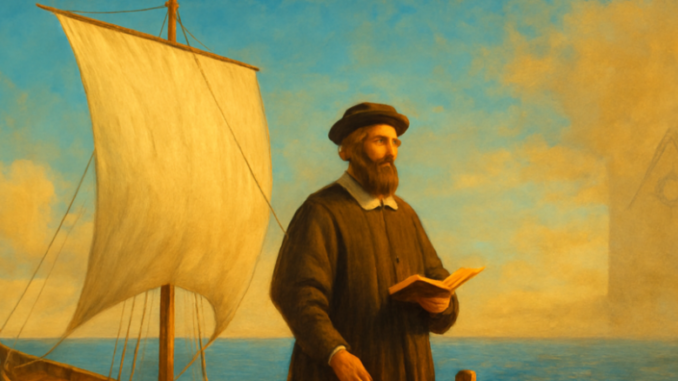
Why did Michel de Montaigne write so passionately about friendship? And which philosophical traditions whispered to him about the true meaning of human connection? His celebrated essay on friendship is not an isolated meditation — it is a tapestry woven from ancient wisdom, personal loss, and Renaissance humanism. The thinkers and traditions that shaped this text still resonate powerfully within brotherhoods such as Freemasonry, offering insights that are as relevant today as they were in the sixteenth century.
Which Classical Philosophers Influenced Montaigne the Most?
Montaigne was a voracious reader of classical texts. His library, housed in the tower of his château, contained works by Greek and Roman thinkers that he read and reread throughout his life. For his reflections on friendship, he drew most heavily on Aristotle, who distinguished three kinds of friendship in the Nicomachean Ethics: friendships based on utility, on pleasure, and on virtue. Only the last — the friendship between good people who admire each other’s character — did Aristotle consider complete and enduring.
But did Montaigne fully agree? Not quite. He went further than Aristotle by arguing that the highest friendship transcends even the friendship of virtue. The bond he described with his friend Étienne de La Boétie was so profound that rational explanations fell short. “Because it was he, because it was I” became his famous answer when asked why they were so deeply connected. Here we see Montaigne using classical frameworks as a springboard rather than a final destination.
What Did Montaigne Learn from the Roman Philosophers?
Beyond Aristotle, the Roman philosophers were indispensable to Montaigne’s thinking. Cicero’s Laelius de Amicitia was a direct source of inspiration. Cicero emphasized that true friendship can only exist between virtuous people and must be grounded in mutual trust and sincerity. We find this idea echoed when Montaigne writes that friendship leaves no room for calculation or self-interest.
Seneca, the Stoic philosopher whose letters Montaigne knew intimately, added another important dimension. Seneca wrote that a friend is an alter ego — a second self. You share not only joy and sorrow but also your deepest thoughts and moral aspirations. For Montaigne, this became literal truth in his relationship with La Boétie: two souls merging into one.
True friendship is not a transaction but a fusion of souls, in which the distinction between you and I dissolves in mutual recognition.
How Did Renaissance Humanism Shape His Vision?
Montaigne lived in an age when humanism was flourishing. This intellectual movement rediscovered classical texts and placed the individual at the center of thinking about ethics, knowledge, and society. Humanists such as Erasmus and Petrarch had paved the way by treating friendship as a moral and intellectual exercise, not merely a social convenience.
For Montaigne, friendship was therefore also a form of self-examination. By truly coming to know another person, you come to know yourself. This connects seamlessly with his broader project in the Essays: the investigation of one’s own mind and character. Friendship becomes a mirror — an instrument for personal growth and wisdom. Is this not something that also stands at the heart of Freemasonry? The fraternal bond as a path toward self-knowledge?
What Role Did Plutarch Play in Montaigne’s Thinking?
Plutarch, the Greek writer and moral philosopher, was one of Montaigne’s favorite authors. His Moralia contained essays on ethical subjects, including friendship and brotherly love. Plutarch stressed that friendship demands active commitment: it is not enough to be amiable — you must be willing to make sacrifices and stand by your friend in difficult times.
Montaigne took this idea to heart. His friendship with La Boétie was not a casual arrangement but a life choice. When La Boétie died, Montaigne lost not just a friend but a part of himself. The Essays, he wrote, were partly an attempt to fill that void and to continue the conversation that death had interrupted.
What Can Freemasons Learn from These Philosophical Roots?
The philosophical traditions that nourished Montaigne also form the invisible foundations of Freemasonry. The emphasis on virtue, self-knowledge, mutual trust, and fraternal connection can be found in Aristotle and Cicero just as readily as in the rituals and symbols of the lodge. When brothers meet, it is not merely a social convention but a continuation of an age-old conversation about what it means to be a good person.
Montaigne’s essay reminds us that friendship is not a peripheral luxury but a central element of a meaningful life. The philosophers he read, the questions he asked, and the answers he sought remain relevant for anyone who takes brotherhood seriously. Perhaps the highest wisdom is not found in books alone but in the living connection with another human being who challenges you to become better.
Montaigne’s essay on friendship is not an isolated meditation but a crossroads of philosophical traditions. From Aristotle’s virtue ethics through Cicero’s ideal of sincere connection to Seneca’s image of the friend as a second self — all these voices resound in his words. For Freemasons, this offers a rich source of reflection. The fraternal bond is not a modern invention but the continuation of a conversation that has lasted millennia — a conversation about what it truly means to be connected to another human being.
Copyright text & image: devrijmetselaar.nl
Texts are based on the ideas and content of the author of devrijmetselaar.nl, reviewed, corrected, and supplemented with the assistance of OpenAI. Images are created based on the ideas of the author of devrijmetselaar.nl using OpenAI/DALL-E.

Be the first to comment