When dozens of officers are injured during protests, when streets burn with collective outrage, an uncomfortable question arises: what happens to the human personality when a sense of justice tips over into destruction? The events in Bologna following a fatal arrest compel us not only to reflect on social tensions, but also on the fragile architecture of our own character.
The Paradox of Righteous Anger
Here lies a paradox that has fascinated philosophers throughout the ages: the person who rises up for justice can, in that very pursuit, become unjust. Those who protest against violence can themselves become violent. Those who cry out for humanity can lose their own humanity in the heat of the moment. This is not a judgment on protesters or authorities — it is an observation about the human condition itself.
The ancient Greeks had a concept called thumos, roughly translated as “spiritedness” or “wrath.” Plato placed this element of the soul between reason and appetite — a force that could be both constructive and destructive. Thumos could drive someone to courageous deeds, but also to blind fury. The question was never whether this force existed, but how it could be mastered.
Personality as Architecture
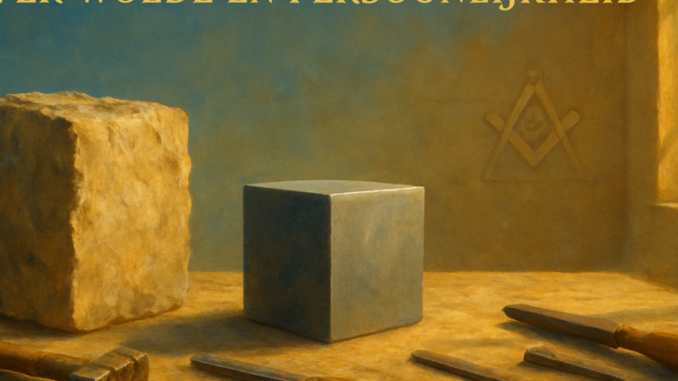
In Freemasonry, the individual is often compared to a rough ashlar — an unfinished stone that must be shaped into a perfect cube, fit to take its place in a larger structure. This metaphor does not speak of suppressing emotions but of giving them form. The rough stone already possesses every quality the finished stone will have; it simply lacks the conscious work that makes it useful.
Personality, seen in this light, is not a fixed trait but an ongoing project. It is the result of daily choices, of moments when we decide how to respond to injustice, to pain, to the actions of others. The question is not whether we are allowed to feel anger when we witness wrongdoing. The question is what we do with that anger — and who we become in the process.
Know thyself, it was written above the Temple of Delphi. Not become yourself, but know yourself — as though self-knowledge is the prerequisite for any meaningful action.
Collective Emotion as a Mirror
Yet there is a counterpoint worth considering. When a community rises up collectively, when emotions spill into the streets, we are not simply witnessing individual failure — we are also seeing a signal. A philosopher might argue that mass anger is a symptom of structural wounds that have been ignored for too long. The eruption, then, is not merely a problem; it is a diagnosis.
This leads us to a more complex understanding of personality. For who are we, truly, apart from the circumstances in which we live? Can we reasonably expect someone to achieve the perfect ashlar when the society around them is cracking at the seams? Freemasonry offers no simple answer here, but it does propose a method: begin with yourself, in the full awareness that you are part of a greater whole.
Building the Inner Temple Amid Chaos
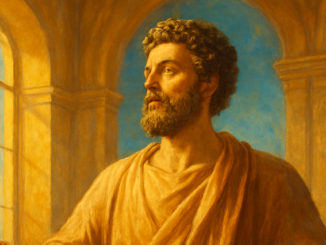
Marcus Aurelius, the Roman emperor and Stoic philosopher, wrote his Meditations while waging war at the frontiers of the empire. In the midst of violence and chaos, he worked on his inner architecture. This is not escapism — it is a paradoxical act of resistance: the refusal to let external circumstances dictate the shape of your character.
The events in Bologna remind us how fragile the social order is, but also how fragile we ourselves are. Every day, we are invited to choose: do we allow ourselves to be swept away by the emotions of the moment, or do we pause to consider who we want to be? This is not a call to passivity — conscious action can be profoundly powerful. It is a call to awareness.
Consider these guiding principles:
- Self-knowledge precedes meaningful action.
- Anger can be righteous, but it demands direction.
- Personality is a daily building project.
- The inner temple stands independent of external chaos.
The Unfinished Stone
Perhaps the most important lesson Freemasonry offers is not that we must become the perfect ashlar, but that we must have the courage to remain unfinished and keep working nonetheless. The rough stone is no disgrace — it is a beginning. And in times of collective tension, when emotions run high and the streets grow restless, it may be precisely this understanding that can sustain us: we are all works in progress.
The wounded in Bologna — officers and protesters alike — are symptoms of a world in struggle. But the question that lingers is more personal than any news headline can capture: who do I become when the pressure mounts? What kind of stone do I present at the end of this day? It is a question without a definitive answer, and perhaps that is precisely why it matters so much.
In the end, the turmoil in Bologna and the ancient Masonic allegory of the rough ashlar converge on a single, enduring truth: character is not revealed in comfort but forged under pressure. The work of shaping ourselves — of transforming righteous anger into purposeful action, of building an inner temple even when the world outside is in flames — is the most demanding and most essential labor any of us will ever undertake. It is lifelong, it is never complete, and it begins anew each morning with the simplest and most difficult of commands: know thyself.
Copyright text & image: devrijmetselaar.nl
Texts are based on the ideas and content of the author of devrijmetselaar.nl, reviewed, corrected, and supplemented with the assistance of OpenAI. Images are created based on the ideas of the author of devrijmetselaar.nl using OpenAI/DALL-E.
Frequently Asked Questions
What does Freemasonry teach about managing anger and strong emotions?
Freemasonry teaches that emotions like anger are natural and valid, but must be consciously shaped through self-reflection and daily choices. The tradition uses the metaphor of the rough ashlar—an unfinished stone—to represent how we must work deliberately to give our emotions constructive form rather than suppress them. This process of self-mastery is central to personal development within Masonic practice.
How does Freemasonry view the relationship between the individual and society?
Freemasonry teaches that while personal development begins with the individual, we must always remember that we are part of a greater whole. The tradition encourages members to pursue self-knowledge and self-improvement while remaining aware of the structural conditions and broader community that shape our circumstances. This balanced perspective helps Masons act responsibly both in their personal lives and within society.
What is the meaning of 'Know thyself' in Freemasonry?
The maxim 'Know thyself' emphasizes that self-knowledge is the essential foundation for meaningful action and personal growth. In Masonic teaching, understanding your own nature, motivations, and emotional responses is a prerequisite before you can contribute positively to your community. This principle guides members to develop wisdom and integrity in all their endeavors.
How does the ashlar metaphor help us understand personality development?
The rough ashlar represents the human personality—already possessing all necessary qualities, but requiring conscious work to be properly shaped and refined. This metaphor teaches that personality is not fixed or unchangeable, but rather an ongoing project of daily choices and deliberate self-improvement. Freemasonry offers methods and principles to help members engage in this vital work of personal transformation.

Be the first to comment