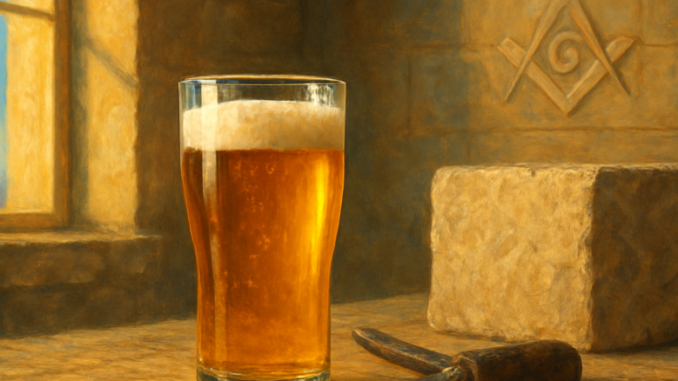
Picture the scene: you’re standing at the bar during a party and you order an alcohol-free beer. There might be a flicker of hesitation, a brief moment of self-consciousness. What will the others think? It’s a small gesture, but it touches on something much larger. The remarkable shift in drinking habits — with more and more people choosing alcohol-free alternatives — tells us something profound about how we shape our personality through the choices we make.
A Quiet Revolution in the Glass
You’ve probably noticed it yourself: the shelf space for alcohol-free beer keeps expanding while the traditional beer section shrinks. Breweries report declining sales for their alcoholic varieties, while their non-alcoholic versions break revenue records. This is more than a passing trend or a marketing gimmick. It’s a visible expression of shifting values — of people thinking more deliberately about what they consume and why.
Maybe you regularly drink alcohol-free beer yourself, or you know someone who does. The reasons are as diverse as the people who make the choice: health, mental clarity, athletic performance, pregnancy, religious conviction, or simply wanting to wake up fresh the next morning. What all these reasons share is that they emerge from a conscious moment of reflection. Instead of running on autopilot, these individuals pause to ask themselves a fundamental question: what do I actually want?
Personality as a Work in Progress
In Freemasonry, the concept of the ‘rough ashlar’ is central. You enter the lodge as a piece of unworked material — full of potential but still lacking refinement. The Freemason’s task is to shape that stone, layer by layer, choice by choice. In this view, personality is not a fixed trait you’re born with, but something you actively form through your actions.
Aristotle, whose ethics still resonate deeply within Masonic philosophy, emphasized that virtue is born through repetition. You don’t become courageous by being brave once — you become courageous by making the brave choice again and again until it becomes second nature. The same applies to temperance, one of the classical cardinal virtues. Every time you make a conscious choice, every time you resist simply following the well-trodden path, you chip away at another piece of that rough stone.
Your personality is not defined by what happens to you, but by the choices you make when no one is watching.
The Courage to Differ
There is something vulnerable about making a choice that sets you apart from the group. Ordering that alcohol-free beer while your friends all drink lager requires a subtle form of courage. Not the courage of grand heroic deeds, but the quiet courage of authenticity. You’re signaling that your own inner compass matters more than the expectations of others.
Goethe, himself a Freemason, wrote extensively about the tension between the individual and society. He saw personal development as an ongoing dance between adaptation and self-determination. The art lies not in completely isolating yourself from the group, nor in letting yourself be swept along entirely. It’s about finding your own voice within the chorus — consciously choosing when to join in and when to follow your own path.
Small Choices, Large Consequences
It would be an exaggeration to compare choosing alcohol-free beer with life’s great moral dilemmas. And yet, there is truth in the idea that character is formed in the accumulation of small moments. The Masonic tradition includes the concept of the ‘Secret Master’ — not someone who possesses hidden wisdom, but someone who quietly, without an audience, upholds the same principles as they do in public.
What you do when no one is watching, who you are in the everyday moments — that ultimately shapes the contours of your personality. The growth of alcohol-free beer suggests that more and more people intuitively sense this. They make choices that align with who they want to be, not who they’re expected to be.
Awareness as a Tool
The shift toward more conscious consumption fits into a broader pattern. From food choices to media diets, from work rhythms to relationships — everywhere you see people paying closer attention to whether their choices truly belong to them. This is hardly a new idea. Socrates urged his listeners toward self-examination with his famous declaration that the unexamined life is not worth living.
In Freemasonry, this self-reflection is given structure. The rituals, the symbols, the conversations within the lodge — they are all invitations to pause and examine your own actions and thoughts. Not to judge, but to understand. And from understanding comes the possibility of change, of growth, of further shaping the rough ashlar into something refined.
Consider these guiding principles:
Conscious choices strengthen your sense of self-worth. Small decisions together form the pattern of your character. Deviating from the group takes courage, but it builds authenticity. Self-reflection is the tool with which personality is forged.
The Taste of Freedom
Ultimately, this isn’t about beer — alcohol-free or otherwise. It’s about the freedom to choose and the responsibility that comes with it. Every choice you make is a statement about who you want to be. Not final, not irreversible, but deeply meaningful. The growing popularity of alcohol-free beer is, in this sense, a hopeful sign: it shows that people are willing to reconsider their habits and to live more deliberately.
The next time you stand at the bar, or in the supermarket, or anywhere else where you face a seemingly small decision, consider this: in that moment, you are engaged in the most important work there is. You are shaping your own personality — choice by choice, day by day. In Freemasonry, we call this working the rough ashlar. That work is never finished, but every conscious moment brings you one step closer to the best version of yourself.
Copyright text & image: devrijmetselaar.nl
Texts are based on the ideas and content of the author of devrijmetselaar.nl, reviewed, corrected, and supplemented with the assistance of OpenAI. Images are created based on the ideas of the author of devrijmetselaar.nl using OpenAI/DALL-E.
Frequently Asked Questions
What does the 'rough ashlar' concept in Freemasonry mean?
In Freemasonry, the rough ashlar represents a piece of unworked stone that symbolizes a person entering the lodge—full of potential but needing refinement. Through conscious choices and personal development, Freemasons shape this symbolic stone layer by layer, transforming themselves into refined individuals. This teaches us that personality and character are not fixed traits, but actively formed through deliberate actions and ethical choices.
How does Freemasonry view the connection between choices and character development?
Freemasonry embraces the Aristotelian principle that virtue is developed through repetition and conscious decision-making rather than being innate. Every choice we make—big or small—contributes to shaping our character and personality. By making deliberate, ethical choices consistently, we refine ourselves and develop the cardinal virtues that define true personal growth.
What role does courage play in Freemasonry beyond physical bravery?
Freemasonry recognizes that true courage extends beyond grand heroic acts to include the quiet courage of authenticity and standing by your convictions. This includes having the strength to make choices that align with your values, even when they differ from societal expectations or peer pressure. Masonic philosophy teaches that personal integrity requires this kind of subtle but meaningful courage in everyday decisions.
How does Freemasonry teach us to balance individual identity with social responsibility?
Freemasonry emphasizes that personal development is a dance between adaptation to society and self-determination, as reflected in the writings of Masonic thinkers like Goethe. This balance means respecting both your inner compass and your responsibilities to others, rather than blindly following the group or completely disregarding social connection. The goal is to become a refined individual who contributes meaningfully to their community while maintaining authentic personal values.

Be the first to comment