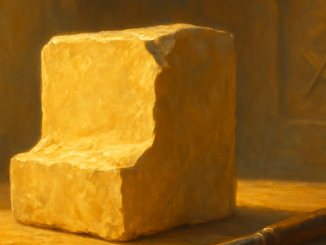
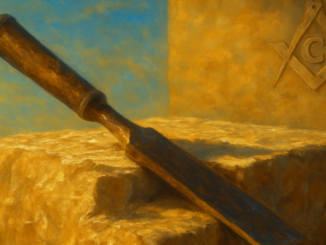
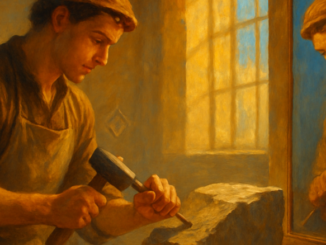
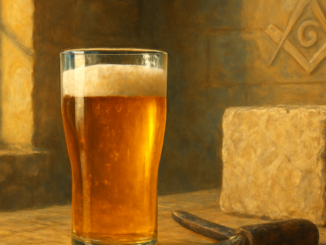
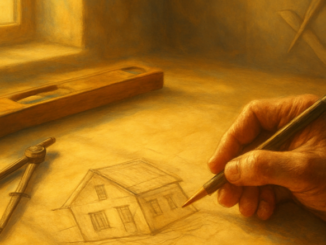
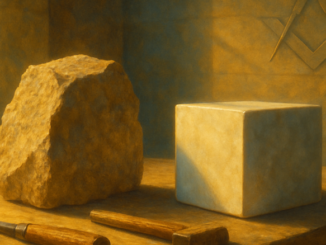
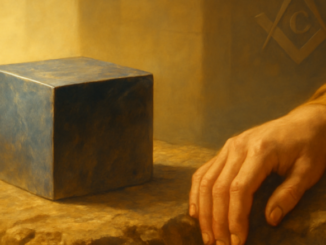
Symbolic rough ashlar and polished cube representing Masonic character formation
Personal Development & Leadership

War Fever and Character: Masonic Lessons from History

In 1914, a war broke out across Europe that nobody truly wanted but everyone had prepared for. The mechanisms of escalation, the collective war fever that swept entire nations into its grip, and the failure of individual judgment together form a cautionary tale that feels disturbingly relevant today. As modern defense analysts warn about escalation risks in ongoing conflicts, a deeper question emerges: what determines whether a person is swept along by collective hysteria or remains steadfast? Freemasonry has contemplated precisely this question for centuries — the formation of a character resilient enough to withstand the storms of any age. The Summer of 1914: Anatomy of an Escalation When Archduke Franz Ferdinand was assassinated in Sarajevo on June 28, 1914, almost no one predicted that this single event would spiral into a world war. Yet within six weeks, all of Europe was ablaze. The German philosopher Immanuel Kant had warned more than a century earlier about the tendency of states to let conflicts escalate when national pride and fear dominate the discourse. His 1795 treatise Perpetual Peace analyzed precisely the mechanisms that would prove so disastrous in 1914. What stood out in that fateful summer was how quickly rational statesmen […]
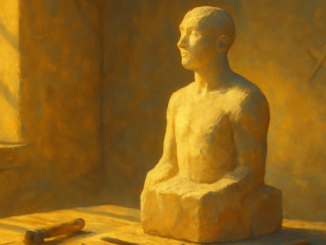
Rough ashlar stone being shaped symbolizing Masonic character building
Personal Development & Leadership

Young Life, Precious Time: Lessons From Tragic Loss

A seventeen-year-old motorcyclist lost his life in a tragic accident over the weekend. It’s the kind of news that stops you mid-scroll — a life barely begun, suddenly ended. Beyond the grief it brings to families and communities, it confronts us with an uncomfortable question: how do we shape who we are, knowing that our time here is finite and fragile? Freemasonry offers a framework for thinking about this — not as abstract philosophy, but as a daily practice of intentional living. The Rough Ashlar and the Unfinished Sculptor In Freemasonry, the rough ashlar represents the individual at the beginning of their life’s journey. This unworked stone must be shaped, refined, and polished until it can take its proper place in a greater structure. It’s a powerful symbol, but it also raises a haunting question: what happens when the sculptor cannot finish his work? What if life ends before the stone finds its final form? A seventeen-year-old stands at the very beginning of that shaping process. Personality is still developing, brimming with potential and possibility. The sudden end of such a young life reminds us that we cannot afford to postpone the work on ourselves. Every moment of conscious self-development […]

Vrijmetselarij - Mediaconflict en karakter: twee perspectieven op persoonlijkheid
Personal Development & Leadership

Media Conflict and Character: Two Perspectives on Personality

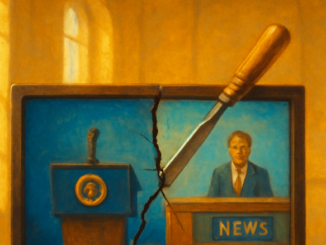
When major broadcasters decide to stop giving a head of state an unfiltered platform, we witness more than a political standoff. We see a clash of personalities — characters who cannot or will not tolerate each other. For the casual observer, it is spectacle, news that fades from memory within days. But for those willing to look deeper, a timeless question unfolds: what makes a person who they are, and how do we engage with others whose character fundamentally differs from our own? The Perspective of the Spectator For the average news consumer, the ongoing media conflict in the United States is primarily a matter of picking sides. People see two camps: the networks that refuse to broadcast certain statements without commentary, and a president who feels censored as a result. Personalities are reduced to caricatures. One is arrogant, the other cowardly. Judgments come quickly, are forgotten even faster, and life moves on. This perspective is understandable, but it is shallow. It reduces complex human beings to labels and, in doing so, misses the deeper question lurking beneath every conflict: why do people act the way they do? What drives someone to seek confrontation, and what compels another to draw […]

Railway tracks stretching to the horizon symbolizing Masonic self-reflection
Personal Development & Leadership

Accusation and Denial: What This Reveals About Character

A railway line. At first glance, nothing more than steel and gravel — a functional connection between two points. But when that line becomes the stage for accusations and denials, when organizations point fingers and deflect blame, something far deeper is revealed. Not about tracks, but about the human soul. About how we respond when our character is truly put to the test. The Railway as a Mirror of the Soul Recent accusations of sabotage on railway lines — and the emphatic denials that followed — touch on something universal. The moment a person or group is accused, a choice presents itself: how do I respond? That choice is a window into personality, into the character that lies beneath the surface. The railway itself, stretching across the landscape, becomes an unexpected mirror. In Freemasonry, we speak of the rough ashlar — the unworked stone that, through dedicated labor, is shaped into a perfect cube. That shaping does not happen in times of comfort but precisely under pressure. When the chisel strikes, when the hammer falls, only then does the true quality of the material reveal itself. An accusation is such a hammer blow. Not pleasant, but profoundly revealing. The Trial […]

Rough ashlar stone being shaped symbolizing Masonic character building
Personal Development & Leadership

Video Game Controversies and Character: What Our Reactions Reveal

A simple puzzle game became the center of an international controversy this week. The White House published an online game that satirically depicted immigrants, prompting the creator of the world-famous falling-blocks game to threaten legal action over copyright infringement. The game was swiftly removed. But beyond the headlines, what does an incident like this actually reveal about personality — about how people and institutions respond under pressure? And what might a Freemason learn from it about the lifelong work of building character? Why Does Conflict Reveal Our True Character? It is an ancient truth, one that Aristotle articulated long ago: we do not discover someone’s character in times of prosperity, but in moments of tension. When criticism arrives, when legal threats follow, when public opinion turns against you — that is when true nature surfaces. The speed with which the game was taken down tells us something. Was it wisdom or cowardice? Pragmatism or a lack of backbone? The answer depends entirely on how we define personality and character. In Freemasonry, there is a core principle that becomes deeply relevant here: a person is not born a finished character but shapes themselves through conscious, deliberate work. The rough ashlar must […]

Rough ashlar being shaped into a perfect cube symbolizing character through adversity
Personal Development & Leadership

Failure as a Teacher: What Adversity Reveals About Character

When a world-class athlete once again misses the podium at a major championship, an inevitable question arises: what does this tell us about their character? Is failure a sign of weakness — or does it reveal something far deeper about inner strength? In Freemasonry, there is an ancient teaching that the rough ashlar only reveals its true form through persistent work. Today, we explore what repeated adversity can teach us about personality and growth — not through the lens of sports commentary, but through a more profound question about human development. Why Does Adversity Strike Us So Deeply? There is something deeply fascinating about watching someone who belongs to the absolute elite in one arena fail repeatedly in another. It raises questions that reach far beyond sport. Why does a person keep returning to a discipline where success remains elusive? What drives someone to expose themselves to public failure again and again? The Greek philosopher Aristotle wrote extensively about what he called thumos — the driving force of ambition and spirited pride within the human soul. This is not blind ego but a deep longing to achieve something of genuine value. When that longing is repeatedly frustrated, a crucial choice […]

Industrial site aftermath symbolizing Masonic lessons on character and crisis
Personal Development & Leadership

Industrial Accident and Character: Masonic Lessons from Crisis

On August 13, 2026, the city of Rotterdam was shaken by a deadly explosion at an industrial site. Six people were injured, and one person lost their life. Early reports point to an industrial accident. As emergency services do their work and investigations get underway, a timeless question presses itself upon us: how does human character reveal itself in moments of crisis? Thinkers have wrestled with this question for centuries — and it lies at the very heart of Freemasonry. The Forge of Character In the eighteenth century, James Anderson — compiler of the first Constitutions of Freemasonry — wrote that a brother should distinguish himself by his conduct in all circumstances of life. This was not a novel idea. The Roman Stoic philosopher Seneca had already observed in antiquity that a person’s true nature is not revealed in comfort, but in adversity. An explosion, a fire, a sudden disaster: these are the moments when the façade falls away and the real character emerges. The Rotterdam explosion reminds us of this ancient truth. As the dust settles and chaos unfolds, we see people act. Some flee; others rush forward to help. First responders set aside their own safety. Colleagues search […]

Bicycle workshop symbolizing resilience and Masonic character in uncertain times
Personal Development & Leadership

Character in Times of Crisis: Masonic Lessons from Uncertainty

Somewhere in the Netherlands, a bicycle mechanic stands quietly in his workshop, absorbing the news. For thirty years, he repaired Batavus bicycles — he knew every bolt and nut by heart. Now, uncertainty looms over the parent company, and he finds himself asking: what remains when the ground shifts beneath your feet? This isn’t just a question for employees and customers. It’s a question Freemasonry has been posing for centuries: who are you, truly, when everything around you changes? When Certainties Evaporate Recent news about the uncertain future of the parent company behind the iconic Dutch bicycle brands Batavus and Sparta has sent shockwaves through thousands of lives. Workers fear for their jobs. Customers worry about warranties and spare parts. An entire network of suppliers and dealers holds its breath. In moments like these, a fundamental truth reveals itself: economic structures we assumed to be permanent turn out to be as fleeting as the seasons. For those initiated into Freemasonry, this situation raises a deeper question — one that goes beyond financial outcomes or legal restructuring. It’s a question about human character. How do you conduct yourself when the foundation shakes? Which part of you remains standing when external certainties […]

Rough ashlar stone symbolizing character building in Freemasonry
Personal Development & Leadership

Talent and Character: Masonic Lessons on True Greatness

When a major European football club expresses interest in a young talent, a familiar question surfaces: is this player ready for the next step? Rarely is the answer found in technical skill alone. It comes down to character — to who someone truly is when the pressure mounts and temptation grows. The recent interest of a Champions League–winning club in a promising young attacker from Amsterdam invites a deeper, philosophical exploration of a question Freemasons have grappled with for centuries: what makes a person truly valuable, and how does adversity shape who we become? The Paradox of Talent and Character Here we encounter a paradox that sits at the heart of both the sporting world and Freemasonry. Talent is a gift — something bestowed upon a person without any effort on their part. Character, on the other hand, is a structure built stone by stone through choices, setbacks, and self-reflection. The question is not whether talent matters, but whether talent without character can ever lead to true greatness. The ancient Greeks understood this well. Aristotle drew a careful distinction between potentiality and actualization. A person may possess the innate capacity for excellence, but without the right formation, that capacity remains […]

Alcohol-free beer glass symbolizing conscious choices and Masonic character
Personal Development & Leadership

Alcohol-Free Beer and Character: What Conscious Choices Say

Picture the scene: you’re standing at the bar during a party and you order an alcohol-free beer. There might be a flicker of hesitation, a brief moment of self-consciousness. What will the others think? It’s a small gesture, but it touches on something much larger. The remarkable shift in drinking habits — with more and more people choosing alcohol-free alternatives — tells us something profound about how we shape our personality through the choices we make. A Quiet Revolution in the Glass You’ve probably noticed it yourself: the shelf space for alcohol-free beer keeps expanding while the traditional beer section shrinks. Breweries report declining sales for their alcoholic varieties, while their non-alcoholic versions break revenue records. This is more than a passing trend or a marketing gimmick. It’s a visible expression of shifting values — of people thinking more deliberately about what they consume and why. Maybe you regularly drink alcohol-free beer yourself, or you know someone who does. The reasons are as diverse as the people who make the choice: health, mental clarity, athletic performance, pregnancy, religious conviction, or simply wanting to wake up fresh the next morning. What all these reasons share is that they emerge from a […]

A lone figure stepping from darkness into light symbolizing return and renewal
Personal Development & Leadership

Returning After Silence: What Absence Teaches About Character

Sometimes a person disappears from view — not out of weakness, but out of necessity. Recently, a well-known news anchor announced her return to work after months of absence. Her words touched on something universal: stepping back into the world after a period of silence is an act of courage. In Freemasonry, this principle is deeply familiar. Consciously stepping back in order to return stronger is not failure — it is an essential part of building character. How can we apply this insight in our own lives? The Courage to Temporarily Disappear We live in a culture that worships visibility. Be constantly present, stay productive, make yourself seen. When someone withdraws, questions follow almost immediately. What happened? Is something wrong? These reflexes reveal just how uncomfortable we have become with silence and absence. Yet philosophers through the ages have understood that withdrawal can be a precondition for growth. Marcus Aurelius wrote in his personal meditations about the importance of inner calm amid external pressure. Montaigne literally retreated to his tower study to reflect on life and the human condition. Freemasonry incorporates this principle directly into its rituals. The candidate entering the lodge for the first time is first isolated in […]

Masonic square and compasses resting on architectural blueprints of a home
Personal Development & Leadership

Home and Character: What Your House Says About Your Inner Build

Housing prices may be cooling off, but for many people, owning a home remains a distant dream. Yet beyond the economics, there’s a far more compelling question worth asking: what does it actually mean to dwell somewhere? And what does the place you build or buy reveal — not just about who you are, but about who you are becoming? Why Do We Long for a Home of Our Own? On the surface, the desire to own a home looks like a purely financial matter — security, equity, the freedom to shape your own space. But if we’re honest with ourselves, something deeper is at work. A house is more than walls and a roof. It is an expression of identity, a physical manifestation of how we wish to be seen and how we experience ourselves. In the Masonic tradition, each person is likened to a rough ashlar — an unfinished stone that must be shaped and refined. This metaphor extends beyond inner development. It also raises the question: what are you building with that stone once it’s been worked? What structure rises from the labor of your life? The home you inhabit, whether rented or owned, reflects something of […]

Rough stone being shaped into a perfect ashlar symbolizing Masonic character
Personal Development & Leadership

Strength vs Character: What Defense Debates Teach Us

You may have noticed the headlines: calls for more physical power, more hormone-driven toughness in the military. It’s the kind of rhetoric that makes you pause. Because what does such a call actually say about how we view human strength? And more importantly — what does it say about how you view your own character? The Exterior as the Measure When defense circles start treating physical strength as the ultimate measure of fitness for service, something fundamental is at play. It implies that the exterior — the measurable body — matters more than what lives within. Muscle mass becomes the standard. Hormone levels become the test. But is that really where strength comes from? You probably know this from your own experience. Those moments when you were physically exhausted but kept going. Not because your muscles carried you, but because something else held you upright. Willpower. Conviction. Or simply the refusal to let down someone who was counting on you. That is the kind of strength no laboratory can measure. Character as the Foundation In Freemasonry, there is an ancient piece of wisdom that speaks directly to this: you are not your body, you are not your title, you are […]

A gavel resting on a rough ashlar stone symbolizing Masonic decision-making
Personal Development & Leadership

What Eurovision Teaches Us About Character and Decision-Making

A national broadcaster faces a momentous choice: whether or not to participate in an international music competition that has stirred public debate for years. It’s a question that goes far beyond programming schedules or budgets. What does the act of deciding actually reveal about who we are? And how do such pivotal moments shape our character — as individuals or as organizations? Let’s examine this through the lens of an ancient tradition that has reflected on character formation for centuries. Why Is Decision-Making So Difficult? Ask yourself: when was the last time you postponed a decision — not out of laziness, but because the choice itself stirred something deep within you? The Dutch public broadcaster deliberating over its participation in the Eurovision Song Contest is a compelling illustration. It’s not merely a question of logistics or funding. It’s about values, identity, and the fundamental question: who do we want to be on the world stage? In Freemasonry, this moment of deliberate, weighed choosing is recognized as a fundamental element of personal growth. The rough ashlar — that symbol of the unpolished self — is not shaped into a perfect cube with a single blow. It requires reflection, careful consideration, and […]