
July 2026: a high-speed chase through the streets of Amsterdam ends in a crash, and a suspect carrying explosives is arrested. The news spread like wildfire. Most people scrolled past it within seconds, moving on to the next headline. But for others, an event like this raises deeper questions. What drives someone to make such destructive choices? And perhaps more importantly — how do we make our own moral decisions when the pressure mounts? This article explores how Freemasonry offers practical tools for developing a strong ethical compass, especially in times of chaos.
Moral Choices Under Pressure
Imagine standing before a decision that could change your life. The clock is ticking, the tension is rising, and you know that every option carries consequences. This is not some abstract philosophical thought experiment — it is the reality people face every single day. Sometimes the stakes are small. Sometimes the choices we make protect or harm others in ways we cannot take back.
The recent events in Amsterdam illustrate how destructive choices can become when someone takes a path that endangers others. But they also point to something more universal: without an inner compass, anyone can lose their way. The real question is not whether we will face difficult choices, but how well we have prepared ourselves when they arrive.
The Workshop of Conscience
Freemasonry regards the Lodge as a symbolic workshop where Brethren work on building themselves. This is not an abstract metaphor — it refers to the daily sharpening of character. Aristotle called this the cultivation of virtue through repetition. You do not become a just person by doing the right thing once. You become just by practicing it again and again until righteousness becomes second nature.
In Freemasonry, this process unfolds through ritual, dialogue, and self-reflection. Every meeting is an invitation to honest introspection: Where did I fall short? Where can I grow? This is not self-punishment — it is active maintenance of your moral compass. Just as a skilled craftsman cares for his tools, a Freemason tends to his inner guidance system.
Ethics is not a theory you read about in a book. It is a muscle you train through daily practice in honesty, courage, and self-discipline.
Three Practical Steps Toward a Stronger Moral Compass
How can you apply these principles in your own life? Here are three actionable practices drawn directly from Masonic tradition:
1. The Daily Review. Take five minutes every evening to reflect on your day. Not to judge yourself, but to learn. Where did you act in alignment with your values? Where did you stray? Marcus Aurelius practiced this in his Meditations and considered it an indispensable exercise for inner peace.
2. The Test of Respect. When facing a difficult decision, ask yourself this question: Could I explain this choice to someone I deeply respect? If the answer is no, reconsider your course of action.
3. The Honest Mirror. Surround yourself with people who are willing to hold you accountable. Not yes-men, but critical friends who will speak up when you veer off track. In Freemasonry, Brethren serve as this mirror for one another — but you can apply this principle anywhere in your life.
From Chaos to Construction
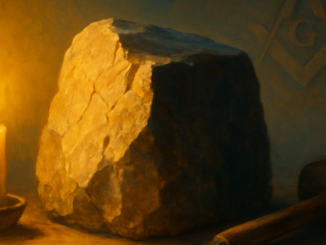
The chase through Amsterdam ended in destruction. But every destructive act simultaneously underscores the importance of its opposite: building up. Freemasonry uses the metaphor of the rough ashlar — the unfinished stone that is gradually shaped into a perfect cube. This is not escapism. It is an active choice to build something better in the midst of chaos.
Immanuel Kant formulated the categorical imperative: act only according to that maxim which you could at the same time will to become a universal law. Translated to everyday life, the question becomes simple but powerful: Would the world be better or worse if everyone did what you are about to do? This question cuts through every rationalization and self-justification we construct.
The Power of Small Choices
It is tempting to save the big ethical questions for the big moments. But ethics plays out primarily in small decisions. Do you speak up when someone behaves badly, or do you look away? Do you tell the truth when lying would be easier? Do you help a stranger, even when no one is watching?
Seneca wrote that every moment is an exercise in becoming who you want to be. Freemasonry echoes this insight: the temple you are building consists of thousands of small stones, not a single monumental act. Every honest deed, however small, strengthens your foundation.
A Lesson from the Lodge
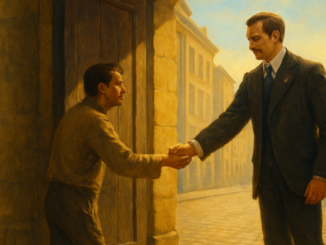
A Brother once shared a story about a situation at his workplace. He discovered that a colleague had made a costly mistake — but no one else knew about it. He could stay silent and protect his own position, or he could be honest and accept the risk. After a sleepless night, he chose honesty. It cost him some standing in the short term, but it strengthened his self-respect in a way no promotion could ever have matched.
Motivation for the Long Road
Living ethically is not a sprint — it is a marathon. There will be days when you fall short. Freemasonry acknowledges this reality and emphasizes the value of Brotherhood: you do not have to walk this path alone. Surround yourself with people who share the same direction, and help each other back up when someone stumbles.
The chaos that sweeps across our world — from car chases involving explosives to the smaller daily conflicts we all face — is not going away. But you can choose how you stand within it. By practicing daily, by asking yourself honest questions, by seeking truthful mirrors, you build an inner order that no external chaos can shatter.
The events in Amsterdam remind us how fragile order is and how quickly chaos can strike. But they also remind us of our own responsibility. Freemasonry does not offer ready-made answers — it offers a method: work on yourself every day, reflect honestly, and strive for something better alongside others who share that commitment. Start today. Take five minutes this evening to reflect on your day. It is a small step, but every temple begins with a single stone.
Copyright text & image: devrijmetselaar.nl
Texts are based on the ideas and content of the author of devrijmetselaar.nl, reviewed, corrected, and supplemented with the assistance of OpenAI. Images are created based on the ideas of the author of devrijmetselaar.nl using OpenAI/DALL-E.
Frequently Asked Questions
What is the connection between Freemasonry and ethical decision-making?
According to the article, Freemasonry views the Lodge as a symbolic workshop where members work on building and strengthening their character. Through ritual, dialogue, and self-reflection, Freemasons practice developing their moral compass. The article explains that ethics is not merely a theory to read about, but a skill that must be cultivated through daily practice in honesty, courage, and self-discipline, similar to how Aristotle described the cultivation of virtue through repetition.
How does the Amsterdam police chase incident relate to Freemasonry's teachings?
The article uses the July 2026 Amsterdam police chase as an example of how destructive choices can become when someone loses their inner moral compass. This real-world event illustrates the article's central theme: without proper preparation and an internal ethical foundation, anyone can lose their way when facing difficult decisions. The incident demonstrates why developing a strong moral compass through practices like those taught in Freemasonry is important for everyone.
What does Freemasonry teach about preparing for moral decisions?
The article emphasizes that difficult moral choices are not abstract philosophical exercises but a reality people face daily. Freemasonry teaches that the key is not whether we will face difficult choices, but how well we have prepared ourselves beforehand. The article suggests that preparation involves treating ethics like a muscle that must be trained through repetition and daily practice, rather than something learned from theory alone. This preparation helps ensure we have a strong ethical compass to guide us when pressure and tension mount.

Be the first to comment