
Picture yourself standing in a room full of strangers. Everyone is wearing a mask — not a literal one, but the invisible masks of social expectation. How often do you find yourself trying to impress rather than genuinely connect? In the sixteenth century, Michel de Montaigne wrote a penetrating essay on constancy that cuts straight to the heart of this question. His insights remain strikingly relevant for anyone reflecting on authentic human connection, and they resonate deeply with what Freemasons have pursued within their brotherhood for centuries.
The Paradox of Unyielding Resolve
In the twelfth essay of his first book, Montaigne examines what it truly means to be steadfast. He reveals how easily we confuse genuine inner stability with the outward appearance of immovability. That exterior can be deeply deceptive. Montaigne describes how people sometimes seem resolute out of pride or fear, while internally they are crumbling. True constancy, he argues, springs from self-knowledge and the acceptance of our human limitations.
This distinction matters enormously for anyone thinking about connection with others. When you know and accept your own weaknesses, there is no need to perform. You can allow yourself to be vulnerable without losing your foundation. Montaigne saw this as the bedrock of honest human relationships — not the pose of invincibility, but the honesty of someone who genuinely knows who they are.
Self-Reflection as the Foundation of Brotherhood
Freemasons are well acquainted with the principle of working the rough ashlar — the continuous effort to refine one’s own character. This inner labor bears a striking resemblance to what Montaigne describes. Before you can truly connect with others, you must first be willing to confront yourself. The Masonic lodge provides a space where brethren undertake this self-reflection together — not in isolation, but within a circle of like-minded individuals who support one another along the way.
Montaigne would likely have felt at home in such an environment. His essays overflow with the conviction that honest self-examination does not lead to loneliness but rather to deeper bonds. Those who know themselves recognize the struggles of others. That recognition creates a connection that far transcends polite small talk.
Steadfastness in the Storm
One of the most powerful insights from Montaigne’s essay is that true constancy reveals itself in moments of adversity. It is easy enough to remain calm when everything is going well. The real test comes when life presents unexpected challenges. Montaigne observed how some people collapse under pressure, while others discover their deepest strength precisely in those moments.
Steadfastness is not a wall against the world — it is an anchor that allows you to move with the waves without being destroyed.
This insight is echoed in the Masonic understanding that trials are not obstacles but schools of learning. The rituals and symbols within the brotherhood serve as constant reminders of this principle. Life will test you, and it is in those very moments that your true inner wealth becomes visible. That wealth is then shared with your brethren, strengthening the bonds between you.
The Search for Truth in Community
Montaigne was a seeker. His famous motto “Que sais-je?” — What do I know? — expressed his perpetual doubt and curiosity. He was not looking for absolute truths to impose on others but for insights he could share and test through conversation. This attitude aligns seamlessly with the Masonic value of seeking truth — a quest that is never solitary but always unfolds in dialogue with others.
In the lodge, people come together from different backgrounds and beliefs. That diversity is not a weakness but a strength. Like Montaigne, the founders of modern Freemasonry — figures such as James Anderson and Jean-Théophile Désaguliers — believed that truth reveals itself in the encounter between different perspectives. Steadfastness here does not mean clinging to a single viewpoint; it means remaining faithful to the process of searching together.
The Virtue of Being True to Yourself and Others
What Montaigne ultimately advocates is a form of integrity that works both inwardly and outwardly. You are steadfast when you act in accordance with your deepest values, even when it is uncomfortable. At the same time, that steadfastness means you are reliable for others. They can count on you — not because you are invulnerable, but because you are honest about who you are.
This dual faithfulness lies at the heart of brotherhood as Freemasons understand it. It is not about blind loyalty or superficial camaraderie. It is about the commitment of people working together on something greater than themselves: moral development, mutual support, and spreading light in a world that can often seem dark.
An Invitation to Reflect
Perhaps you recognize this feeling — those moments when a conversation remained on the surface, even though you longed for something real. Montaigne points us toward a path. Start with yourself. Examine honestly what drives you, what you fear, what you hope for. From that self-knowledge, you can meet others without a mask. And in that encounter, something precious is born: a connection that can withstand the uncertainties of life.
The Masonic brotherhood offers a structure for these kinds of encounters. But Montaigne’s invitation extends to everyone. Steadfastness and connection are not opposites — they reinforce each other. Those who are firmly anchored in themselves can truly open up to others.
Montaigne’s reflections on constancy reach far beyond their sixteenth-century origins. They touch on universal human questions about authenticity, vulnerability, and the possibility of genuine connection. Within the Masonic tradition, these ideas find a living framework — a brotherhood built on the conviction that knowing yourself is the first step toward truly knowing another. In a world that so often rewards performance over presence, Montaigne’s wisdom and the Masonic path both remind us that the strongest bridges between people are built not from the stone of pretended strength, but from the honest ground of who we really are.
Copyright text & image: devrijmetselaar.nl
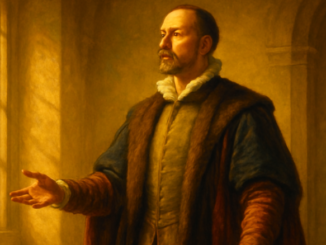
Texts are based on the ideas and content of the author of devrijmetselaar.nl, reviewed, corrected, and supplemented with the assistance of OpenAI. Images are created based on the ideas of the author of devrijmetselaar.nl using OpenAI/DALL-E.
Frequently Asked Questions
How does Freemasonry help members develop genuine connections with others?
Freemasonry creates a supportive environment where brethren engage in honest self-reflection together, rather than in isolation. By working on self-improvement and understanding their own vulnerabilities, members can connect with others authentically without the need to perform or pretend. This shared journey of personal growth and mutual support fosters deeper bonds that transcend superficial social interaction.
What does Montaigne's concept of 'constancy' have to do with Freemasonry?
Montaigne's true constancy comes from self-knowledge and acceptance of human limitations, which directly parallels the Masonic practice of working the rough ashlar—continuously refining one's character. Both emphasize that genuine stability comes from honest self-examination rather than outward pretense, creating a foundation for authentic brotherhood and meaningful relationships.
How does Freemasonry prepare members to face life's challenges?
The Masonic fraternity views trials not as obstacles but as schools of learning, teaching members that true steadfastness is revealed during adversity, not during calm times. Through rituals, symbols, and the support of fellow brethren, members develop an inner anchor that allows them to navigate life's storms without losing themselves.
Why is self-reflection important in Freemasonry?
Self-reflection is the foundation of brotherhood because it allows members to know themselves authentically and recognize their own limitations without shame. When individuals truly understand themselves, they can extend genuine compassion and understanding to others, creating connections based on honesty rather than pretense.



Be the first to comment