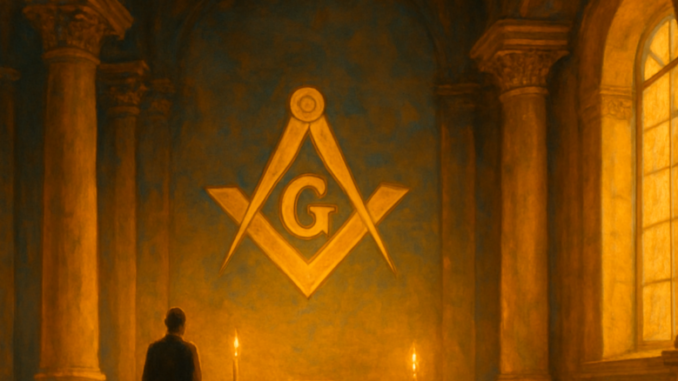
Freemasonry is one of the oldest and most influential fraternal organizations in the world, with roots stretching back to the early eighteenth century. It’s a question many people ask — what is Freemasonry, really? — and the answer is far richer and more nuanced than most expect. Freemasonry is not a religion, not a political movement, and not a secret society in the sensationalized way popular culture might suggest. It is an ethical and philosophical brotherhood that brings men — and in some lodges, women — together around shared values such as fraternity, truth, charity, and moral self-improvement. Through symbolism, ritual, and philosophical reflection, Freemasonry invites its members on a lifelong journey of personal growth and service to society.
The Historical Background of Freemasonry
From Stonemasons to Philosophers: The Medieval Guilds
The history of Freemasonry begins with the medieval craft guilds of masons and stonemasons. During the Middle Ages, the skilled craftsmen who built Europe’s great cathedrals, churches, and castles were organized into guilds that carefully guarded their trade knowledge, techniques, and tools. These guilds had their own rules, initiation ceremonies, and signs of recognition that allowed members to identify one another and distinguish themselves from outsiders. The so-called “operative masons” — the practicing stonemasons — worked in what were known as “lodges,” temporary wooden structures adjacent to building sites where they stored their tools, held meetings, and initiated new members.
As the era of grand cathedral building in Europe gradually declined, these guilds began to take on an increasingly symbolic character. By the seventeenth century, intellectuals, philosophers, and members of the nobility — men who never cut stone themselves — started joining these lodges. These newcomers became known as “speculative masons”: people who used the symbolism of the stonemason’s craft as a metaphor for moral and intellectual self-construction. The raw materials, tools, and building techniques of the stonemason became allegories for the building of one’s own character and for the construction of a better society.
The Founding of the First Grand Lodge in 1717
The official birth of modern speculative Freemasonry is generally dated to June 24, 1717, when four lodges in London united to form the first Grand Lodge of England. On that day — the Feast of St. John the Baptist, which remains an important date in Freemasonry to this day — the representatives of these lodges elected Anthony Sayer as their first Grand Master. With the establishment of the Grand Lodge came an organized structure that recognized lodges, standardized rituals, and created a shared identity for the fraternity.
In 1723, the Scottish-Irish clergyman James Anderson published the Constitutions of the Free-Masons, a document that laid down the fundamental rules of the brotherhood. Anderson’s constitution emphasized that Freemasons of different religions and backgrounds were welcome, provided they believed in a Supreme Being — referred to as the “Great Architect of the Universe.” Political and religious debates were deliberately kept outside the lodge, so that men of differing convictions could come together in peace and harmony.
The Spread of Freemasonry Across Europe and the World
From England, Freemasonry spread rapidly across Europe and eventually around the entire globe. In eighteenth-century France, a vibrant Masonic movement emerged that became closely intertwined with the Enlightenment. Philosophers such as Voltaire and encyclopedists like Denis Diderot moved in circles that were closely related to or overlapped with Freemasonry. In Germany, Austria, and the Habsburg lands, the lodge served as a meeting place for enlightened minds. Wolfgang Amadeus Mozart was a devoted Freemason whose opera The Magic Flute (1791) is steeped in Masonic symbolism.
Across the Atlantic, George Washington, Benjamin Franklin, and several other Founding Fathers of the United States were members of the fraternity, giving Freemasonry a prominent role in the early history of the American republic. The values of Masonry — liberty, equality, and moral virtue — resonated deeply with the ideals upon which the new nation was built.
In the Netherlands, Freemasonry established itself during the eighteenth century. The Order of Freemasons under the Grand East of the Netherlands, founded in 1756, is the oldest and largest Masonic organization in the country and continues to thrive today. From the Netherlands, Freemasonry also spread to former colonies in Asia, Africa, and the Americas.
Core Values and Philosophy of Freemasonry
Brotherly Love, Truth, and Charity
The three core values of Freemasonry are traditionally summarized as Brotherly Love, Truth, and Charity — or in the well-known French formulation: Liberté, Égalité, Fraternité, values that also left their mark on the Enlightenment and the democratic revolutions of the eighteenth and nineteenth centuries. While Freemasonry is not a political organization, its values have undeniably contributed to the intellectual foundations of modern democratic societies.
Brotherly Love in Freemasonry means more than friendship. It refers to a deep, reciprocal commitment in which members support one another through good times and bad, regardless of social class, nationality, or religious belief. In the lodge, a laborer and a lawyer, a Christian and a Muslim, sit side by side as equals. This principle of equality was truly revolutionary in the rigidly stratified societies of the eighteenth century.
Truth — or veritas — represents the ongoing search for insight into oneself and the world. Freemasons are encouraged to study, to ask questions, and to remain open to diverse perspectives. Charity, finally, is not simply about donating money to good causes. It is about actively contributing to the well-being of the community. Many Masonic lodges are deeply involved in local charitable efforts, supporting hospitals, schools, and social projects.
The Great Architect of the Universe
A central concept in Freemasonry is the Great Architect of the Universe (often abbreviated as GAOTU). This is not a specific deity belonging to any one religion. Rather, it is a universal, unifying symbol that allows men of different faiths to come together in mutual respect. Whether a Freemason is Christian, Jewish, Muslim, Hindu, or follows another spiritual path, the Great Architect represents the higher principle or creative force that each member may interpret according to his own beliefs. This deliberate openness is what makes Freemasonry distinct from a religion — it does not prescribe theology or doctrine, but asks only that its members acknowledge something greater than themselves.
In some Masonic traditions — particularly in Continental European Freemasonry — the requirement to believe in a Supreme Being has been relaxed or removed entirely, welcoming agnostics and freethinkers into the fraternity. This has been a point of difference between Anglo-Saxon Grand Lodges, which generally maintain the traditional requirement, and liberal or adogmatic obediences, which prioritize absolute freedom of conscience.
Freemasonry Today: Relevance and Continuing Influence
In the twenty-first century, Freemasonry continues to attract men and women who seek meaningful connection, philosophical reflection, and a framework for personal development. While membership numbers have fluctuated over the decades, the core appeal of Freemasonry remains remarkably consistent: it offers a space set apart from the noise of everyday life where individuals can engage with timeless questions about morality, purpose, and the human condition.
Lodges around the world continue their charitable work, often operating quietly behind the scenes. In the United States alone, Masonic organizations contribute hundreds of millions of dollars each year to charitable causes, including children’s hospitals, scholarship programs, and disaster relief. In Europe, lodges remain active in supporting local communities and fostering dialogue across cultural and religious boundaries.
The symbolism that once belonged to medieval stonemasons — the square, the compasses, the rough and perfect ashlar, the trowel — continues to serve as a powerful language for self-examination and moral aspiration. For those willing to look beyond the myths and misconceptions, Freemasonry reveals itself not as a shadowy conspiracy, but as a living tradition dedicated to making good people better.
Freemasonry is, at its heart, a journey — one that begins with curiosity and unfolds through a lifetime of learning, reflection, and brotherhood. Its origins in the medieval stonemasons’ guilds gave it a rich symbolic vocabulary, while its embrace of Enlightenment ideals gave it a philosophical depth that continues to resonate today. Whether you are drawn to its history, its values, or its enduring sense of community, understanding what Freemasonry truly is opens the door to appreciating one of humanity’s most remarkable and enduring institutions.
Copyright text & image: devrijmetselaar.nl
Texts are based on the ideas and content of the author of devrijmetselaar.nl, reviewed, corrected, and supplemented with the assistance of OpenAI. Images are created based on the ideas of the author of devrijmetselaar.nl using OpenAI/DALL-E.
Frequently Asked Questions
Is Freemasonry a religion?
No, Freemasonry is not a religion. It is an ethical and philosophical brotherhood that welcomes members of all faiths and backgrounds. Freemasonry focuses on shared values such as fraternity, truth, charity, and moral self-improvement rather than religious doctrine.
Why is Freemasonry called a 'secret society'?
Freemasonry is not secret in the sensationalized way popular culture suggests. Rather, it uses symbolism and ritual as tools for philosophical reflection and personal growth. The organization is open about its existence, values, and membership, though certain ceremonial details are private to members.
How did Freemasonry originate?
Freemasonry evolved from medieval stonemason guilds that built Europe's great cathedrals and castles. By the seventeenth century, intellectuals and philosophers began joining these lodges and used the symbolism of the stonemason's craft as metaphors for moral and character development. Modern Freemasonry was formally established in 1717 with the founding of the first Grand Lodge of England.
Can women join Freemasonry?
Yes, in many lodges today, women are welcome to join Freemasonry alongside men. The organization has evolved to become more inclusive while maintaining its core values of fraternity, personal growth, and service to society.
What are the main values of Freemasonry?
The core values of Freemasonry include fraternity, truth, charity, and moral self-improvement. Members are invited on a lifelong journey of personal growth and service to society through philosophical reflection, symbolism, and ritual practice.

Be the first to comment