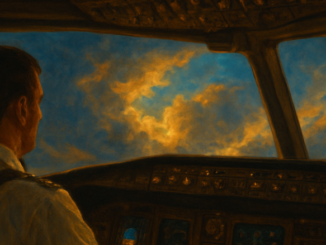
Aircraft cockpit instruments symbolizing trust in Freemasonry and aviation
Spiritual Traditions

Dive and Trust: Spiritual Lessons from Aviation for Freemasons

When an aircraft suddenly drops thousands of feet, the crew faces the ultimate test — not just of technical skill and training, but of inner trust. A recent incident in which a plane made an unexpected dive and landed safely was described by experts as a tribute to both machine and human capability. For the Freemason, this event raises a deeper question: what does trust mean when the ground beneath your feet disappears? And how does that relate to the spiritual journey every person undertakes? The Pilot: Trust in the Visible For a pilot, trust is never abstract. It is rooted in measurable quantities — instruments, checklists, years of rigorous training. When an emergency strikes, the pilot falls back on protocols rehearsed down to the smallest detail. There is no room for doubt, no moment for philosophical reflection. The pilot’s trust is horizontal in nature: directed toward colleagues in the cockpit, toward air traffic control, toward the engineers who designed the aircraft. This kind of trust is indispensable in crisis situations. It enables people to think clearly under extreme pressure and make the right decisions. The pilot does not rely on hope or luck but on proven methods and collective […]
Ancient Roman bust of Marcus Aurelius with Masonic square and compasses
Marcus Aurelius – Content & Summary

Marcus Aurelius Book IX: Prayer and the Higher Self

In the year 170 AD, a Roman emperor sat in his tent along the Danube, surrounded by war and death, writing about how a human being should relate to the divine. Marcus Aurelius — the philosopher-emperor whose private notebooks we know as the Meditations — devoted the ninth book of this work to a subject that still resonates deeply today: the nature of prayer and our relationship to a higher order. Written for himself alone and never intended for publication, this text offers a surprisingly modern perspective on spirituality that can inspire Freemasons and seekers of wisdom alike. The Historical Context of Book IX When Marcus Aurelius was working on his ninth book, the Roman Empire was enduring one of its most difficult periods. The Marcomannic Wars raged along the northern frontier, plague decimated the legions, and the emperor found himself far removed from the comforts of Rome. In these circumstances of profound uncertainty and ever-present mortality, he turned to the Stoic philosophy he had learned as a young man from masters such as Epictetus and Junius Rusticus. Book IX bears the unmistakable marks of this context. It is saturated with reflections on impermanence, the proper attitude toward fate, and […]

Masonic compasses and square with celestial design representing cosmic order
Plato – Freemasonry & Connection

Plato’s Timaeus and Freemasonry: The Creator as Architect

When Plato describes the creation of the universe in his dialogue Timaeus, he introduces a figure that would sound remarkably familiar to Freemasons centuries later: the demiurge — a divine craftsman who brings order out of chaos. Is this mere coincidence, or does Plato touch upon a universal truth that resonates deeply within the Lodge? This essay explores the striking parallels between Plato’s cosmology and the Masonic concept of the Great Architect of the Universe. The Paradox of the Creative Craftsman A fascinating tension lies at the heart of Plato’s creation narrative. His demiurge does not create from nothing. Instead, he works with pre-existing matter — much like a sculptor works with marble or a mason works with stone. The demiurge looks toward the eternal Forms, the Ideas, and impresses them upon the resistant substance of the material world. He is not an omnipotent god in the later monotheistic sense, but a skilled craftsman doing his best with the materials at hand. This image immediately raises a profound question: is creation not divine, but artisanal? And if so, what does this tell us about our own creative capacities as human beings? Plato seems to suggest that the highest form of […]

Platonic solids and cosmic order representing Plato's Timaeus and Freemasonry
Plato – Philosophical Background

Plato’s Timaeus: The Demiurge and the Ordered Universe

Imagine standing beneath a clear night sky, gazing at the stars, and asking yourself: who or what brought all of this into order? This very question drove Plato to compose his dialogue Timaeus, in which he envisioned a divine craftsman who shaped the cosmos. The idea of a creative, ordering force resonates powerfully to this day — particularly in Freemasonry, where the Great Architect of the Universe stands at the heart of the Craft. But what philosophical currents shaped Plato when he wrote this cosmic narrative, and why does it still matter to Freemasons today? The Timaeus in Its Historical Context Plato likely composed the Timaeus around 360 BCE, during the later phase of his life. It stands as one of his most ambitious works, weaving together cosmology, natural philosophy, and metaphysics into a single tapestry. Set after the events of The Republic, the dialogue presents a creation story that would permanently reshape Greek philosophy. Unlike the mythological explanations offered by Hesiod and Homer, Plato sought a rational account for the order we observe in the universe. He built upon the insights of his teacher Socrates, but went further by forging a connection between the world of the senses and […]

Vrijmetselarij - Voltaire over God: kerngedachten uit het Filosofisch Woordenboek
Symbolism & Rituals

Voltaire on God: Key Ideas from the Philosophical Dictionary

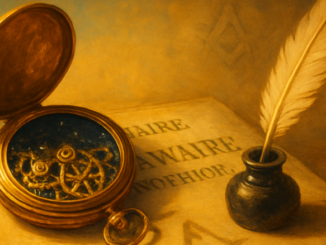
When the eighteenth-century thinker François-Marie Arouet — better known as Voltaire — picked up his pen to write about God, he did so with the precision of a surgeon and the wonder of a child. His entry “On God” in the 1764 Philosophical Dictionary remains one of the most influential texts ever written on the relationship between reason and faith. For Freemasons, who place the Great Architect of the Universe at the center of their philosophy without prescribing any specific religion, Voltaire’s approach offers remarkably familiar ground. The Core Idea: God as Watchmaker Voltaire opens his reflection with a question that has echoed through the centuries: can we know anything about God with certainty? His answer is characteristically nuanced. He rejects the personal, punishing God of orthodox religion, yet at the same time embraces the idea of a creative intelligence behind the universe. Nature itself, he argues, bears witness to an ordering principle. A watch implies a watchmaker, and the universe — with its laws and harmony — equally implies a designer. This position, known as deism, was a radical alternative in Voltaire’s time. Where the Church proclaimed a God who actively intervened in the world, Voltaire envisioned an architect […]

Open book showing Voltaire's Candide with Masonic square and compasses
Symbolism & Rituals

Voltaire’s Candide and Freemasonry: Building a Better World

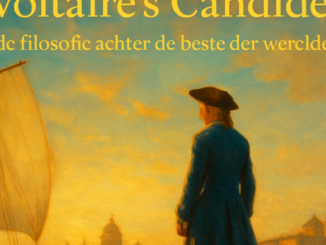
When Voltaire published his famous satirical novel Candide in 1759, he took aim at one of the most influential philosophical propositions of his era: Gottfried Wilhelm Leibniz’s optimism — the claim that we live in “the best of all possible worlds.” Voltaire dismantled this idea with relentless wit. But what drove him to this attack? And how does his critical thinking relate to the symbolism and values cherished by Freemasonry? This article places Candide in its intellectual context and compares two fundamentally different ways of looking at the world. Leibniz’s Optimism: A World of Divine Perfection To understand Voltaire’s satire, we first need to know its target. Gottfried Wilhelm Leibniz (1646–1716), the German philosopher and mathematician, developed a theodicy designed to explain the existence of evil in a world created by God. His answer was elegant but controversial: God, being omniscient and wholly good, had necessarily created the best of all possible worlds. Every evil we perceive, Leibniz argued, serves a higher purpose within the cosmic whole. This philosophy resonated widely in eighteenth-century Europe. It offered comfort to those struggling with suffering and injustice. In Candide, the tutor Pangloss embodies this optimism in its most caricatured form. He insists that […]

Masonic square and compasses symbol representing the fraternity of Freemasonry
Freemasonry & Society

What Is Freemasonry? Origins, Values, and Philosophy

Freemasonry is one of the oldest and most influential fraternal organizations in the world, with roots stretching back to the early eighteenth century. It’s a question many people ask — what is Freemasonry, really? — and the answer is far richer and more nuanced than most expect. Freemasonry is not a religion, not a political movement, and not a secret society in the sensationalized way popular culture might suggest. It is an ethical and philosophical brotherhood that brings men — and in some lodges, women — together around shared values such as fraternity, truth, charity, and moral self-improvement. Through symbolism, ritual, and philosophical reflection, Freemasonry invites its members on a lifelong journey of personal growth and service to society. The Historical Background of Freemasonry From Stonemasons to Philosophers: The Medieval Guilds The history of Freemasonry begins with the medieval craft guilds of masons and stonemasons. During the Middle Ages, the skilled craftsmen who built Europe’s great cathedrals, churches, and castles were organized into guilds that carefully guarded their trade knowledge, techniques, and tools. These guilds had their own rules, initiation ceremonies, and signs of recognition that allowed members to identify one another and distinguish themselves from outsiders. The so-called “operative […]

Symbolic representation of agnosticism and Freemasonry paths converging
Freemasonry & Society

Agnosticism and Freemasonry: Two Paths Toward the Unknowable

Agnosticism is often understood as a position of not-knowing — a philosophical stance that acknowledges certain questions about existence may be unanswerable. Freemasonry, on the other hand, is sometimes perceived as a fraternity defined by its rituals and symbols. But what happens when we place these two worlds side by side? Both share a fundamental recognition: that the human mind cannot fathom everything, and that within that very recognition lies a particular kind of wisdom. In this article, we explore how the agnostic outlook and Masonic philosophy mirror and enrich each other. The Agnostic Perspective: Living With Uncertainty The agnostic does not claim to know whether a higher power exists. This is not a weakness or a lack of conviction — it is a deliberate intellectual position. The term was coined in the nineteenth century by the British biologist Thomas Henry Huxley, who wanted to express that certain metaphysical questions lie beyond the reach of human knowledge. The agnostic stance demands humility: the ability to say “I don’t know” without abandoning the search for meaning. In modern society, agnosticism is frequently confused with indifference or atheism. Nothing could be further from the truth. Where the atheist asserts that no god […]